
1. Introduction: The Death Sentence

In the ruthless, blood-soaked ecosystem of Jujutsu Kaisen, the hierarchy of power is often decided by a single, terrifying metric: the ability to expand a Domain.
A Domain Expansion (Ryōiki Tenkai) represents the absolute pinnacle of Jujutsu sorcery. It is the act of manifesting one’s innate domain—the metaphysical landscape of their soul—into physical reality using a massive, overwhelming volume of Cursed Energy.
Once a sorcerer traps an opponent inside this metaphysical construct, the rules of the outside world cease to apply. The caster becomes a god within that space, receiving a significant statistical buff to all their abilities. But the true horror of a Domain Expansion lies in its most lethal, non-negotiable rule: the Sure-Hit Effect (Hichuu).
For the average sorcerer, stepping into a Domain is almost always a death sentence. It is a checkmate delivered before the first pawn has even moved. Against a technique that is guaranteed to hit regardless of speed, reflexes, or durability, standard evasion becomes statistically negligible.
- If you are trapped in Jogo’s Coffin of the Iron Mountain, you will burn, not because a fireball traveled to you, but because the concept of “burning” was spawned directly upon your skin.
- If you are caught in Mahito’s Self-Embodiment of Perfection, your soul will be reshaped instantly.
- If you stand within Sukuna’s Malevolent Shrine, you will be dismantled into dust before your synapses can fire a signal to flee.
The “Sure-Hit” mechanic bypasses the concept of trajectory entirely. In a standard battle, an attack travels from Point A (the attacker) to Point B (the target). Inside a Domain, the attack simply manifests at Point B.
This creates a brutal, unfair dichotomy in the Jujutsu world. There are the “Chosen” who can expand Domains (the 1% of the elite, like Gojo Satoru, Ryomen Sukuna, and Yuta Okkotsu), and there are the “Weak” who cannot. For centuries, the gap between these two groups was absolute. To fight a Domain user without a Domain of your own was widely considered suicide. The golden rule of Jujutsu was simple: The only way to counter a Domain is with a more refined Domain.
However, necessity is the mother of invention. Over the violent history of the Heian Era and through the chaotic lineage of curse users, humanity developed countermeasures. These are the Anti-Domain Techniques. They are the tools of the survivalist, the weapons of the underdog, and the only hope for the 99% of sorcerers who cannot reshape reality. They do not seek to overpower the Domain; they seek to hack its rules, jam its signal, and buy a few precious seconds of survival in a space designed to kill them.
This guide is not for the Special Grades who can simply overwhelm a Domain with a stronger one. This is the survival guide for the rest of us—an expert, deep-dive analysis of Simple Domain, Hollow Wicker Basket, Falling Blossom Emotion, and Domain Amplification.
2. The Barrier Problem: Understanding the “Canvas”
To truly understand Anti-Domain techniques, one must first understand the canvas upon which they are painted: Barriers.
Jujutsu battles are, at their core, battles of space manipulation. A Barrier (Kekkai) is a construct of Cursed Energy that separates the “inside” from the “outside.”
- Curtains (Tobari): Simple barriers that hide sorcery from civilians.
- Domain Expansion: The ultimate barrier that imposes an internal rule (Sure-Hit) on the enclosed space.
The “Sure-Hit” effect functions because the caster’s Cursed Energy saturates the entire enclosed coordinates of the barrier. The barrier acts as a closed circuit where the caster’s will is law.
The Anti-Domain Philosophy: If a Domain Expansion is the act of painting the entire canvas black (the enemy’s color), an Anti-Domain technique is the act of bringing a small umbrella. You cannot stop the rain from falling on the entire city, but you can create a dry zone 2 meters around your body.
By asserting your own small barrier within their massive barrier, you create a “hole” in their canvas. The Sure-Hit command crashes because it cannot distinguish who owns that specific pocket of space.
3. Simple Domain (New Shadow Style)

The Origin: The Legacy of Sadatsuna Ashiya
If Domain Expansion is the nuclear weapon of the gods, Simple Domain (Kan’i Ryōiki) is the bunker of the mortal.
The technique traces its lineage back to the Heian Era, the Golden Age of Jujutsu—a time when curses were far more vicious and sorcerers were constantly at war. It was created by a legendary sorcerer named Sadatsuna Ashiya, the founder of the “New Shadow Style” (Shin Kage-ryū).
Ashiya recognized a cruel truth about the world he lived in: powerful curses and evil sorcerers were rampant, and his disciples were dying in droves because they lacked the innate talent or massive Cursed Energy reserves required to cast their own Domains. They were lambs being led to the slaughter.
To save his students, Ashiya developed a technique that stripped away the complexity of a Domain Expansion. He removed the “Innate Technique” and the “Environmental Construction,” leaving only the raw chassis: the Barrier itself.
He bound the technique with a rigorous Binding Vow, forbidding its teachings to be spread to outsiders—a “monkey-see, monkey-do” protection to ensure the style remained a proprietary lifeline for his clan. This is why, for generations, it was derisively known as a “domain for the weak.”
The Mechanic: Interference over Erasure
Mechanically, a Simple Domain acts as a localized barrier technique. The user erects a small, spherical barrier around their body—usually with a radius of only 2 to 3 meters.
It is crucial to be precise about why this works to avoid common misconceptions. A full Domain Expansion works by imposing the user’s “innate domain” over the surrounding space. The Simple Domain user counters this by expanding their own miniature domain. By asserting their own magical space within the enemy’s larger magical space, they create a conflict of barriers.
In Jujutsu mechanics, a Domain’s Sure-Hit effect relies on the total domination of the enclosed space. When a Simple Domain is activated, it “jams” the signal. It creates a pocket of space where the enemy’s barrier authority is contested. Because the space is no longer solely under the enemy’s control, the Sure-Hit command is neutralized.
Critical Distinction: No Universal Technique Erasure Simple Domain does NOT universally neutralize the Cursed Technique itself. It specifically neutralizes the Sure-Hit function of the Domain barrier.
- Scenario: You are trapped in Jogo’s volcano (Coffin of the Iron Mountain).
- Action: You activate Simple Domain.
- Result: The automatic hit (where fire manifests on your skin instantly) is stopped because the barrier’s targeting system is jammed. However, the ambient heat remains, and the magma Jogo creates physically is still real. If Jogo picks up a giant rock and throws it at you manually, the Simple Domain does nothing to stop the rock. It only stops the “aim-bot.”
- Exception: In specific offensive applications (like Mechamaru’s canisters or Kusakabe’s parries), Simple Domain can be used to disrupt the shape of a technique or soul by injecting the barrier into the target, but its primary defensive utility is strictly “Sure-Hit Neutralization,” not “Power Nullification.”
The Cost: Binding Vows and The “Feet” Rule
Because Simple Domain is an artificial construct for those without innate talent, it imposes a tax on the user. It often requires Binding Vows to function effectively. The most common constraint seen in the standard New Shadow Style curriculum is the Grounding Rule.
We see this most clearly with Kasumi Miwa. Her usage of Simple Domain is tied to a specific posture. To maintain the domain, both of her feet must often remain planted. This limits mobility severely. The trade-off is clear: you gain high-level defense against sure-hits (or an automated offense), but you become a stationary turret. If you move your feet without sufficient mastery, the barrier dissipates, and you are vulnerable again.
Case Study: The Kusakabe Paradigm (The Strongest Grade 1)
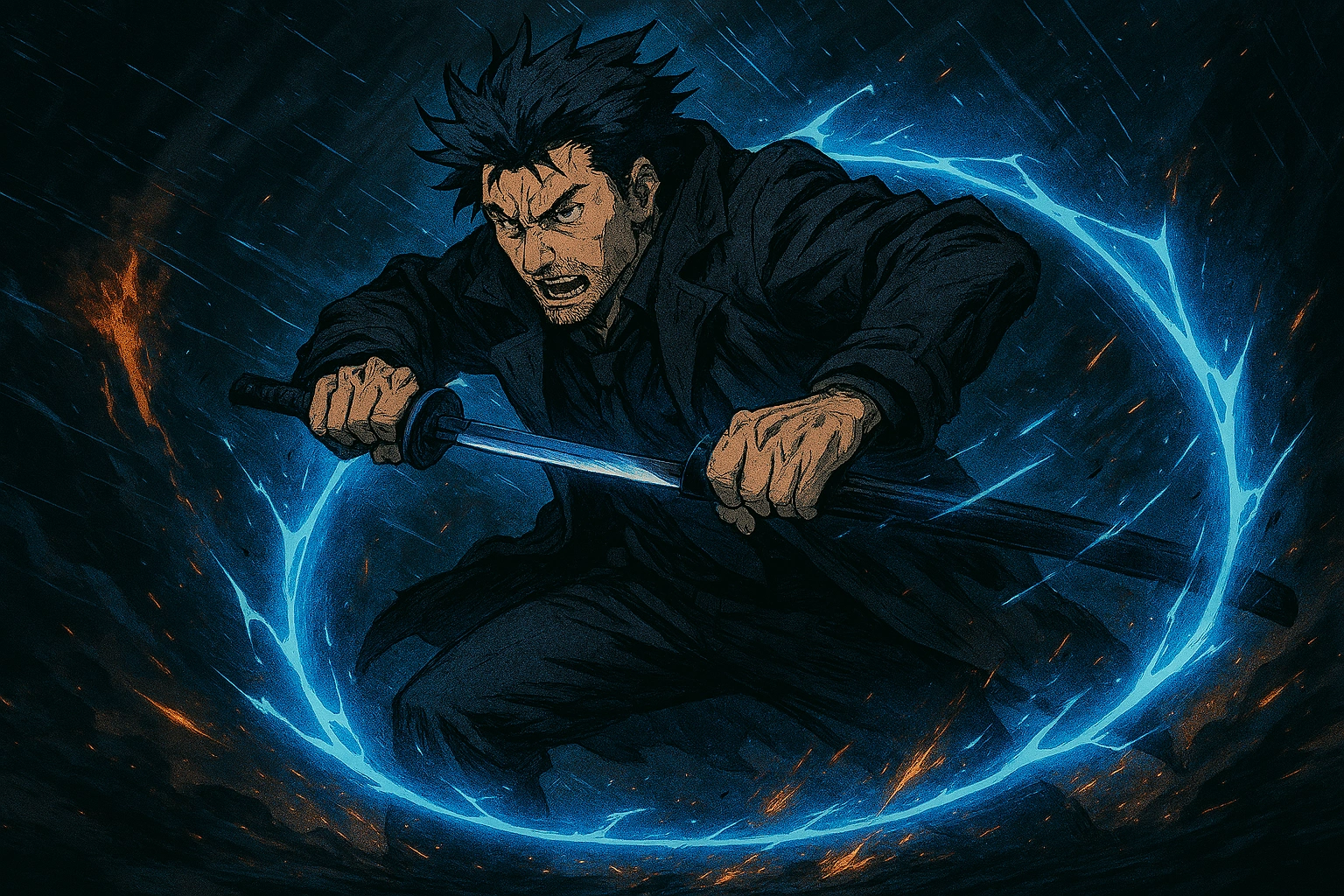
While Miwa demonstrates the “Student” level of Simple Domain, Atsuya Kusakabe represents the “Master” level. Kusakabe is a Grade 1 sorcerer with no innate technique. He has climbed to the top of the Jujutsu world solely through his mastery of swordplay and Simple Domain.
In the Shinjuku Showdown against Ryomen Sukuna, Kusakabe rewrote the textbook on what Simple Domain can do. He demonstrated that the “feet planted” rule is a training wheel, or a binding vow that can be modified by a master.
- Mobility: Kusakabe can maintain his Simple Domain while moving, sliding, and attacking. He does not need to be a sitting duck.
- Range Expansion: Unlike the standard 2-meter radius, Kusakabe can expand his Simple Domain to cover a significantly larger area, protecting allies or trapping enemies.
- Automated Parry: Kusakabe proved that Simple Domain can be used to parry attacks that are not sure-hits. By programming his barrier to react to fluctuations in Cursed Energy, he could deflect Sukuna’s “Dismantle” slashes by instinctively angling his sword/energy the moment they entered his domain. He turned the barrier into a radar-assisted defense system.
- Blocking the Unblockable: Kusakabe famously used Simple Domain to tank a point-blank Uzumaki from Kenjaku in Shibuya, and later survived a barrage of slashes from Sukuna that would have minced a Special Grade curse.
Kusakabe proves that Simple Domain is not just a shield; it is a programmable territory.
Offensive Applications: The Batto Sword Drawing
While primarily a defensive tool, the New Shadow Style weaponizes the Simple Domain concept through the “Batto Sword Drawing” technique.
This application flips the script. Instead of just neutralizing a sure-hit, the user sets a program into their barrier: “Whatever enters this radius gets cut.”
- Reaction Speed: By delegating the reaction to the automatic reflex of the Cursed Energy barrier, the user can strike faster than their own nervous system would allow. It is an interceptor system. The barrier detects the intrusion before the eyes see it.
- Miwa’s Application: Miwa uses this to intercept curses. The moment a spirit crosses the threshold of her 2-meter radius, her sword strikes automatically.
- Todo’s Application: Aoi Todo utilized a variation of Simple Domain to survive Mahito’s Self-Embodiment of Perfection. By expanding it the instant Mahito opened his domain, Todo bought himself the seconds needed to survive the idle transfiguration, though he still lost a hand because Mahito’s activation speed (0.2 seconds) was faster than Todo’s barrier deployment.
Case Study: Ultimate Mechamaru’s Innovation
Kokichi Muta (Mechamaru) introduced a terrifying evolution of this technique: The Simple Domain Canister. During his fight with Mahito, Mechamaru realized that he couldn’t just defend; he had to attack Mahito’s soul. He sealed Simple Domain barriers into small canisters/tubes.
- The Strategy: Instead of erecting the barrier around himself, he injected the canister into Mahito’s body.
- The Effect: The Simple Domain expanded inside Since Mahito’s technique maintains the shape of his soul, expanding a domain that neutralizes technique interference inside him caused his soul’s defense to crumble, dealing massive damage. This proved that Simple Domain could be weaponized as a “poison” to disrupt an enemy’s internal energy structure.
4. Hollow Wicker Basket (The Prototype)
History: The Ancient Relic
Before there was the New Shadow Style, and before Sadatsuna Ashiya refined the art of barrier defense, there was Hollow Wicker Basket (Yayaraku no Aikura).
This technique is the distinct ancestor of Simple Domain. It originates from the Heian Era, the bloodiest period of Jujutsu history. During the Culling Games, we see ancient sorcerers like Reggie Star and Hajime Kashimo recognize or utilize this technique, marking it as a relic of the past. It is the raw, unrefined grandfather of modern anti-domain measures.
The Mechanic: A Basket of Light
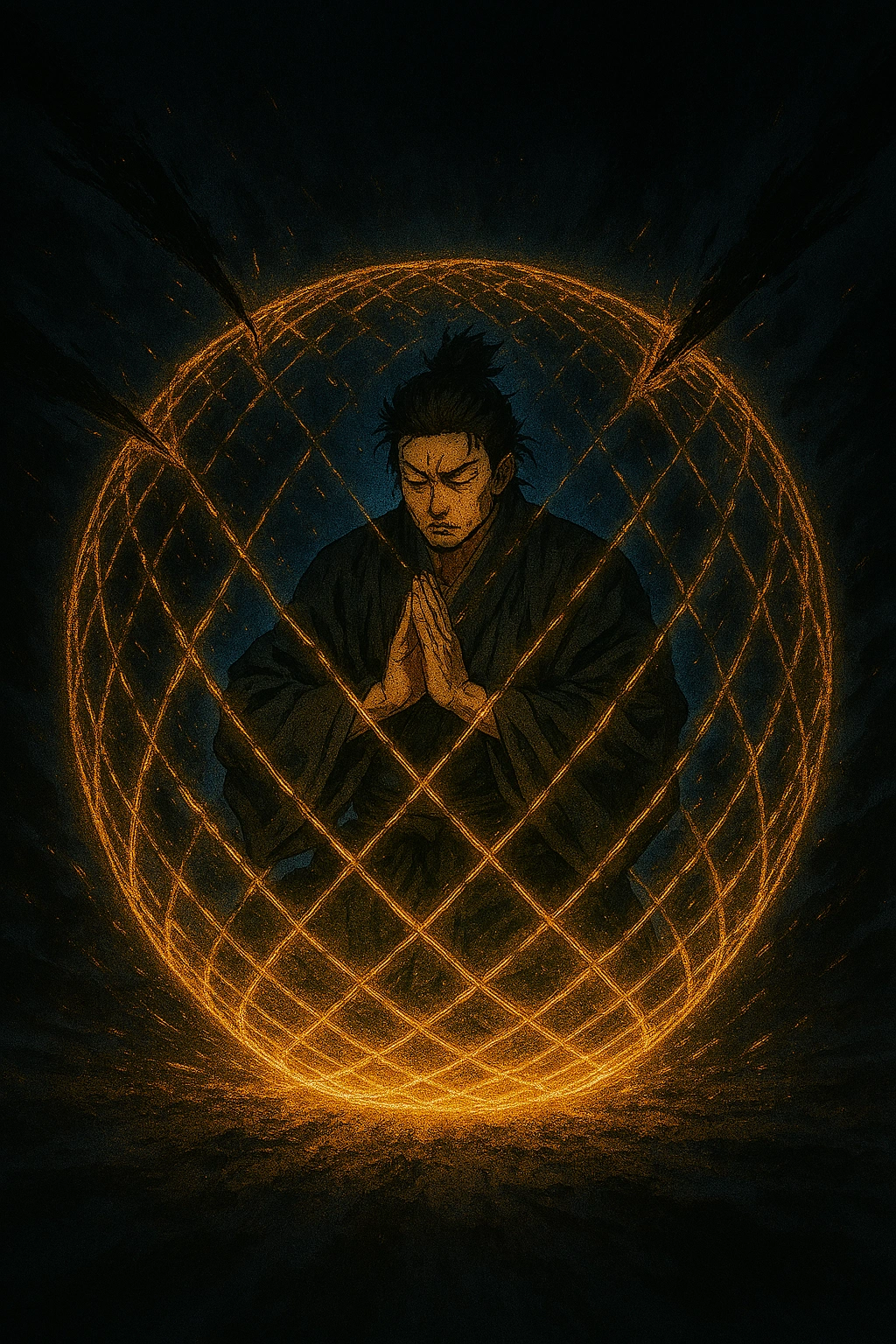
Visually, Hollow Wicker Basket appears as a spherical, woven lattice of cursed energy that surrounds the user—literally resembling an inverted wicker basket made of light.
Its function is identical to Simple Domain in principle: it neutralizes the Sure-Hit effect of a Domain Expansion by creating a small, interfering barrier. However, the architecture of the technique is different. While Simple Domain is often invisible or subtle (distorting the air), Hollow Wicker Basket is loud, visible, and tangible. It does not typically have the “offensive programming” capabilities of New Shadow Style. It is purely a shield.
The Critical Flaw: The Cost of Hands and Output
The primary difference—and the reason Simple Domain is considered the “evolution”—lies in the activation and maintenance requirements, particularly against high-output Domains.
To maintain the barrier’s integrity against the crushing pressure of a realized Domain, the user is typically required to maintain a specific hand sign (mudra) or continuous chant. It is a manually operated shield. While expert users might activate it quickly, sustaining it against a Special Grade domain often requires dedicating one’s hands to the technique.
This weakness was brutally exposed in the battle against Ryomen Sukuna. When fighting Sukuna, a sorcerer using Hollow Wicker Basket effectively handicaps themselves.
- The Defender: Has two arms. Both are occupied holding the “Basket” together to stop the sure-hit slashes.
- Sukuna: Has four arms and two mouths.
This matchup is a death sentence. Sukuna can use two of his arms to engage the defender in hand-to-hand combat while the defender is helpless. If the defender drops their hands to block a punch, the Basket dissolves, and they are instantly diced by the Shrine. If they keep their hands clasped, Sukuna beats them to death with blunt force.
Why Does Sukuna Use It?
Ironically, Ryomen Sukuna himself uses Hollow Wicker Basket (as seen in his fight against Yuta Okkotsu’s Domain). Why would the King of Curses use a “primitive” prototype? Because he has the anatomy for it. Sukuna can maintain the hand sign with two of his arms while using his other two arms to fight.
For a four-armed sorcerer, the “flaw” of Hollow Wicker Basket is negligible. It becomes a perfect, cost-effective defense that doesn’t require the complex vows of Simple Domain.
5. Falling Blossom Emotion (The Aristocrat’s Defense)
The Secret Art of the Big Three
If Simple Domain is the survival tool of the commoner, Falling Blossom Emotion (Rakuka no Jō) is the refined armor of the aristocracy.
This technique is a secret art passed down solely within the Big Three Families (The Zen’in, The Gojo, and The Kamo). We see it utilized most prominently by Naobito Zen’in against Dagon, by Ogi Zen’in, and later by Gojo Satoru against Sukuna.
Unlike Simple Domain and Hollow Wicker Basket, which are Barrier Techniques (creating a space), Falling Blossom Emotion is technically a Counter-Curse Technique. The distinction is vital.
The Mechanic: The Automatic Counter
Simple Domain works by creating a safe shelter where the rain cannot touch you. Falling Blossom Emotion works by shooting every individual raindrop out of the air before it hits your skin.
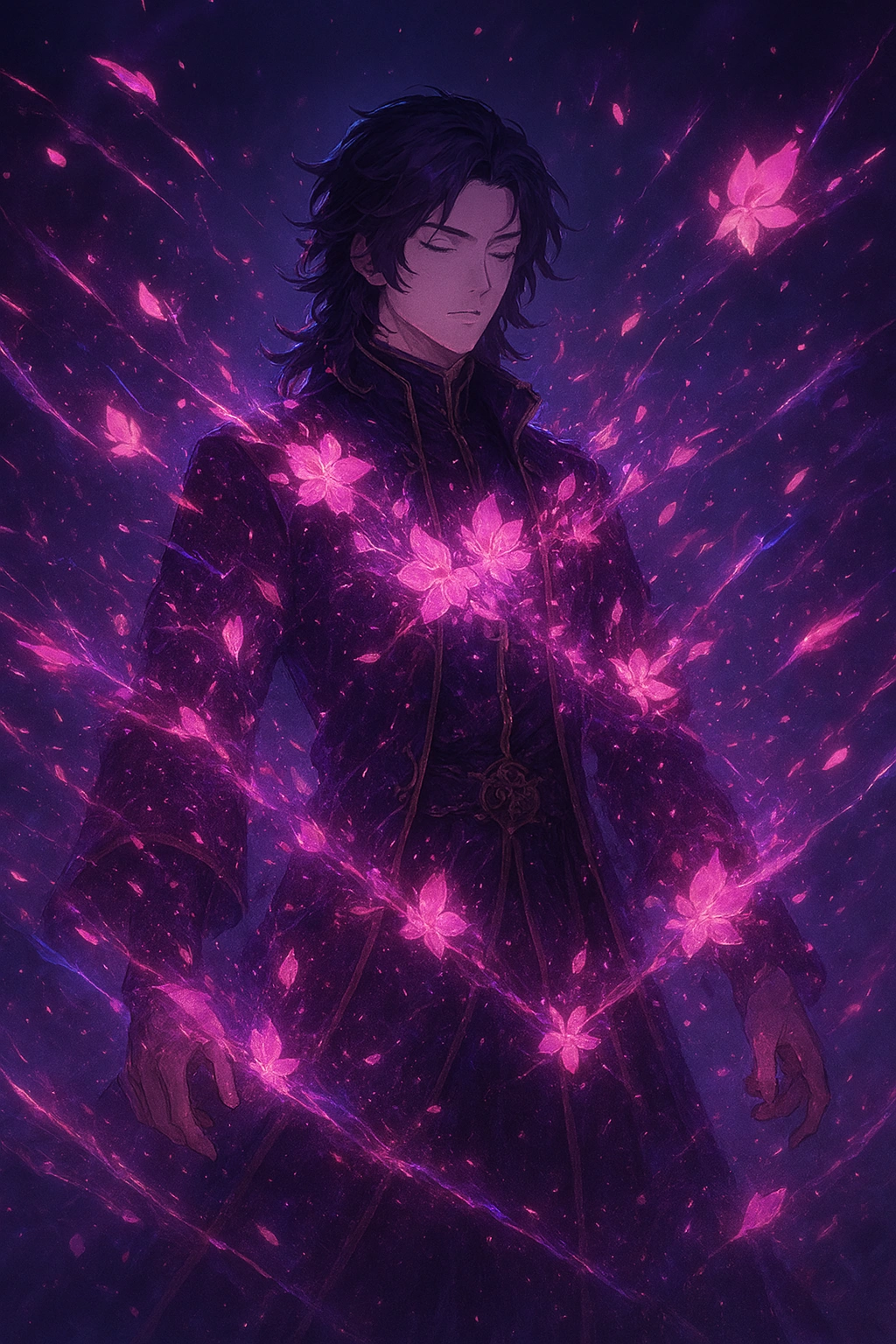
When activated, the user shrouds themselves in a fluid mantle of Cursed Energy. The technique is programmed to react the instant an enemy’s attack makes contact with the user’s aura. Before the Sure-Hit attack can fully manifest and inflict damage, Falling Blossom Emotion instinctively releases a burst of Cursed Energy to counter-attack the attack itself.
- Visuals: In the anime, this is depicted as petals or sparks of energy “blooming” off the user’s body at the point of impact.
- Physics: It strikes the hostile cursed energy with an equal and opposite force, deflecting or shattering it. It is an automated parry system for the entire body.
Strategic Advantages and Disadvantages
The Advantage: Mobility The primary benefit of Falling Blossom Emotion over Simple Domain is mobility and freedom. The user does not need to maintain a rigid posture (like Miwa) or hold a hand sign (like Hollow Wicker Basket). The energy coats them like a second skin. Naobito Zen’in was able to move at his blistering projection-sorcery speeds while Falling Blossom Emotion was active, allowing him to fight aggressively inside Dagon’s domain. He could run, kick, and punch without worrying about a barrier radius.
The Disadvantage: Power Threshold It does not “neutralize” the technique; it only protects against the hit. If the enemy’s Sure-Hit attack is overwhelmingly powerful or complex, Falling Blossom Emotion might fail to deflect it entirely. It turns a cannonball into a punch—survivable, but it still hurts.
Case Study: Gojo vs. Sukuna When Gojo used this inside Malevolent Shrine, he was constantly refreshing the technique. However, because Sukuna’s Cleave and Dismantle are relentless and possess incredible cutting power, Falling Blossom Emotion could not block all the damage. It merely reduced fatal slashes to shallow cuts. Gojo had to rely on his Reverse Cursed Technique (RCT) running at full output to heal the damage that slipped through the “blossoms.”
6. Domain Amplification (The Villain’s Shield)
The Cursed Spirit’s Innovation
During the Shibuya Incident, the disaster curses—specifically Jogo and Hanami—unveiled a technique designed specifically to kill the unkillable Gojo Satoru: Domain Amplification (Ryōiki Ten’en).
This technique is arguably the most advanced and dangerous of the anti-domain arts, requiring a mastery of barrier techniques that rivals supreme sorcerers. It was taught to the Disaster Curses by Kenjaku.
The Mechanic: The Empty Cup Theory
To understand Amplification, imagine a Domain Expansion as a cup filled with water (Cursed Technique).
- Domain Expansion: You pour your water over the enemy.
- Domain Amplification: You create the cup, but you leave it empty.
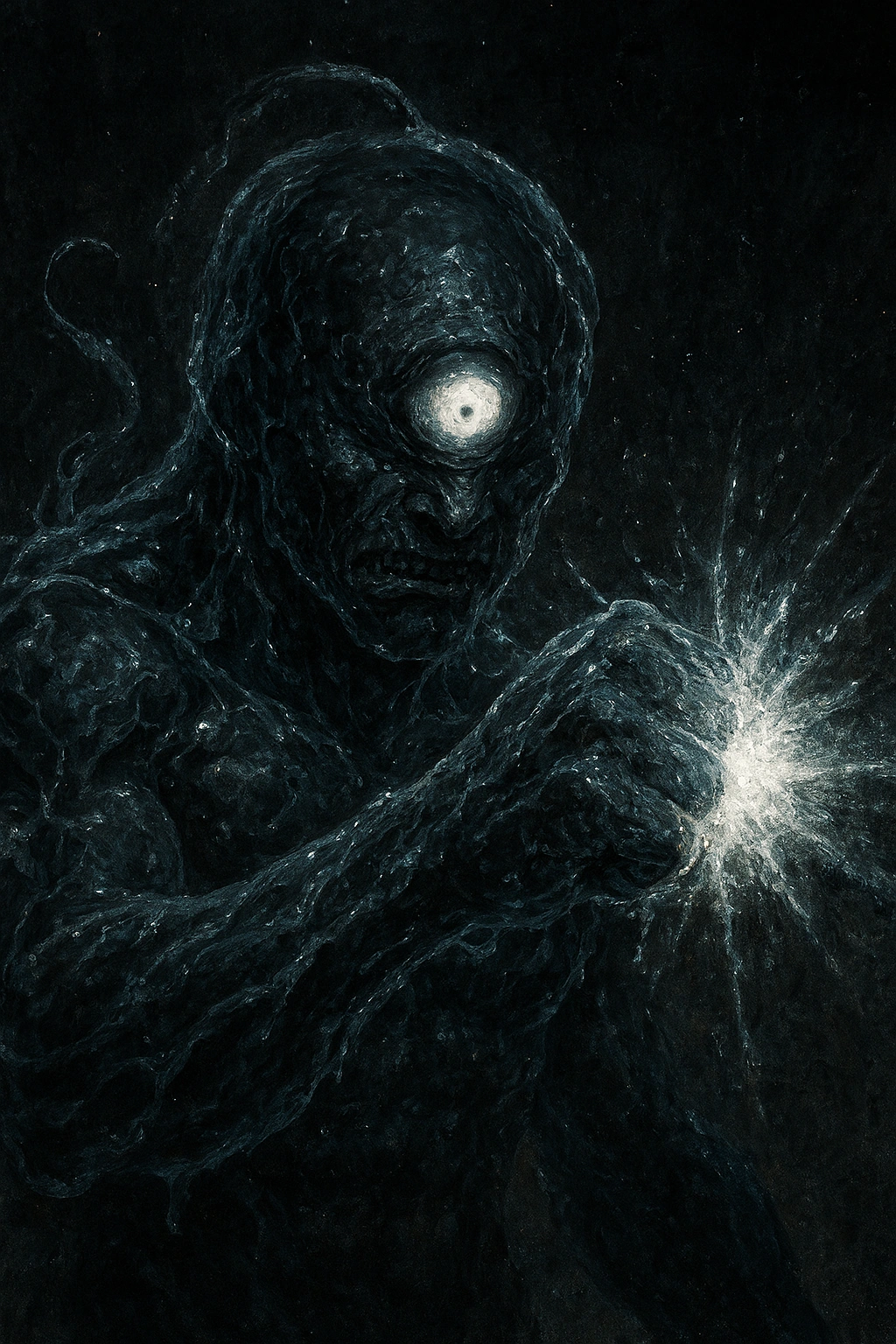
The user coats their body in this “empty” liquid-like domain barrier. Because the domain is empty, it naturally seeks to be filled to equalize pressure. When the user comes into contact with an opponent’s technique (like Gojo’s Infinity), the Amplification barrier “sucks up” or “neutralizes” the opponent’s technique to fill the void.
The Result: It neutralizes the opponent’s defensive or offensive technique on contact. It allowed Jogo and Hanami to physically touch Gojo, bypassing the infinite space that usually separates him from the world. It pulls the “Infinity” into the empty domain, nullifying it.
The Tactical Trade-off
The cost of Domain Amplification is steep. You generally cannot use your own Innate Technique while Amplification is active.
Because the “slot” in your domain must remain empty to absorb the enemy’s technique, you cannot fill it with your own.
- Jogo cannot shoot fire while using Amplification.
- Hanami cannot manipulate plants.
- Higuruma cannot use his gavel’s powers.
They are forced to rely solely on hand-to-hand combat (Taijutsu) reinforced with raw Cursed Energy.
The High-Stakes Game: Higuruma & Sukuna
This creates a high-stakes game of “red light, green light.”
- Active: The user is safe from the enemy’s technique (like Infinity) but can only punch and kick.
- Inactive: The user can use their powerful magic but is vulnerable to the enemy’s defense.
In the Shinjuku Showdown, Higuruma Hiromi—a prodigy who learned Jujutsu in weeks—utilized Domain Amplification to survive against Sukuna. He had to toggle it on and off in micro-seconds: “On” to survive Sukuna’s slashes, “Off” to try and execute him with the Executioner’s Sword.
Sukuna, the master, utilizes Amplification to touch Gojo, flicking it on and off to alternate between defense and utilizing the Mahoraga wheel adaptation. It is a technique that demands supreme Cursed Energy manipulation, turning the user into a nullifying void.
7. Special Cases & Anomalies
Yuki Tsukumo & Garuda
Special Grade sorcerer Yuki Tsukumo is a Simple Domain user, but she applies it differently. She does not just cast it around herself; she can cast it around her Shikigami, Garuda. This allows her to create a remote safe zone or a remote distraction.
Her Simple Domain was powerful enough to temporarily withstand Kenjaku’s Open-Barrier Domain (Womb Profusion), proving that sheer output matters. A Special Grade’s Simple Domain is vastly more durable than a Grade 2’s.
The “Sumo” Domain: Rokujuyon Miyo
While not strictly an “Anti-Domain” technique, the domain of Rokujuyon Miyo (the Sumo enthusiast) deserves mention for its philosophical similarity. Miyo creates a Domain that has no lethal sure-hit. Instead, the “Binding Vow” of the domain is simple: “We are going to wrestle, and time will move faster here.”
By removing the lethal sure-hit and the “inescapable” nature (anyone can leave if they want, but no one wants to leave a Sumo match), Miyo creates an invulnerable barrier. It shows that the best defense against a Domain is sometimes to change the rules of engagement entirely—to invite the opponent into a space where death is not the objective, confusing their lethal intent.
The Soul Swap Training
How did the modern sorcerers (Yuji, Choso, etc.) learn these advanced barrier techniques so quickly before the final battle? Ui Ui’s Soul Swap Technique. Ui Ui used his technique to swap the souls of the students (like Yuji) into the bodies of the masters (like Kusakabe).
- Yuji (in Kusakabe’s body) practiced Simple Domain. Because the body already “remembers” how to do it (muscle memory of Cursed Energy flow), Yuji could learn the sensation of casting Simple Domain instantly.
- When he returned to his own body, he retained that memory. This “cheat code” allowed the main cast to equip Anti-Domain techniques that usually take decades to master, leveling the playing field against Sukuna.
8. Strategic Synthesis: The Rock-Paper-Scissors of Jujutsu
To understand the tactical landscape of Jujutsu Kaisen, we must compare these techniques side-by-side to understand why a sorcerer would choose one over the other.
Simple Domain vs. Falling Blossom Emotion
- Defense Type: Simple Domain is a Wall. Falling Blossom Emotion is a Parry.
- Matchup – Mahito: You must use Simple Domain. Falling Blossom Emotion attempts to parry the technique. However, Mahito’s technique (Idle Transfiguration) reshapes the soul upon the slightest contact. A parry requires contact. Therefore, FBE is risky. You need the barrier interference of Simple Domain to prevent the technique from manifesting in your space at all.
- Matchup – Dagon: Dagon’s domain summons swarms of Shikigami (fish) as the sure-hit. These are physical constructs. Falling Blossom Emotion is superior here because it allows you to move and cut down the fish with auto-counters. Simple Domain might trap you in one spot, allowing the fish to swarm the outside of your barrier and crush it through sheer weight.
Hollow Wicker Basket vs. Simple Domain
- Refinement: Simple Domain is strictly better in almost every modern scenario. It allows for Binding Vows to automate offense (Batto Sword) and creates a cleaner disruption of the enemy domain.
- Availability: However, Hollow Wicker Basket is the “brute force” fallback. If you don’t know the intricate programming of New Shadow Style, you can still survive by weaving the basket, provided you have the stamina to hold the chant. It is the AK-47 of anti-domains: old, clunky, but it works if you pull the trigger.
Domain Amplification vs. The Rest
- Purpose: The other three are primarily for survival inside a Domain. Domain Amplification is primarily for neutralizing a technique in standard combat. While it can be used to mitigate a Domain’s sure-hit (by thinning out the attack), its true value is offensive—stripping a sorcerer of their innate advantages (like Gojo’s barrier) to force a brawl. It is the aggressor’s anti-domain technique.
9. Conclusion: The Triumph of the Weak
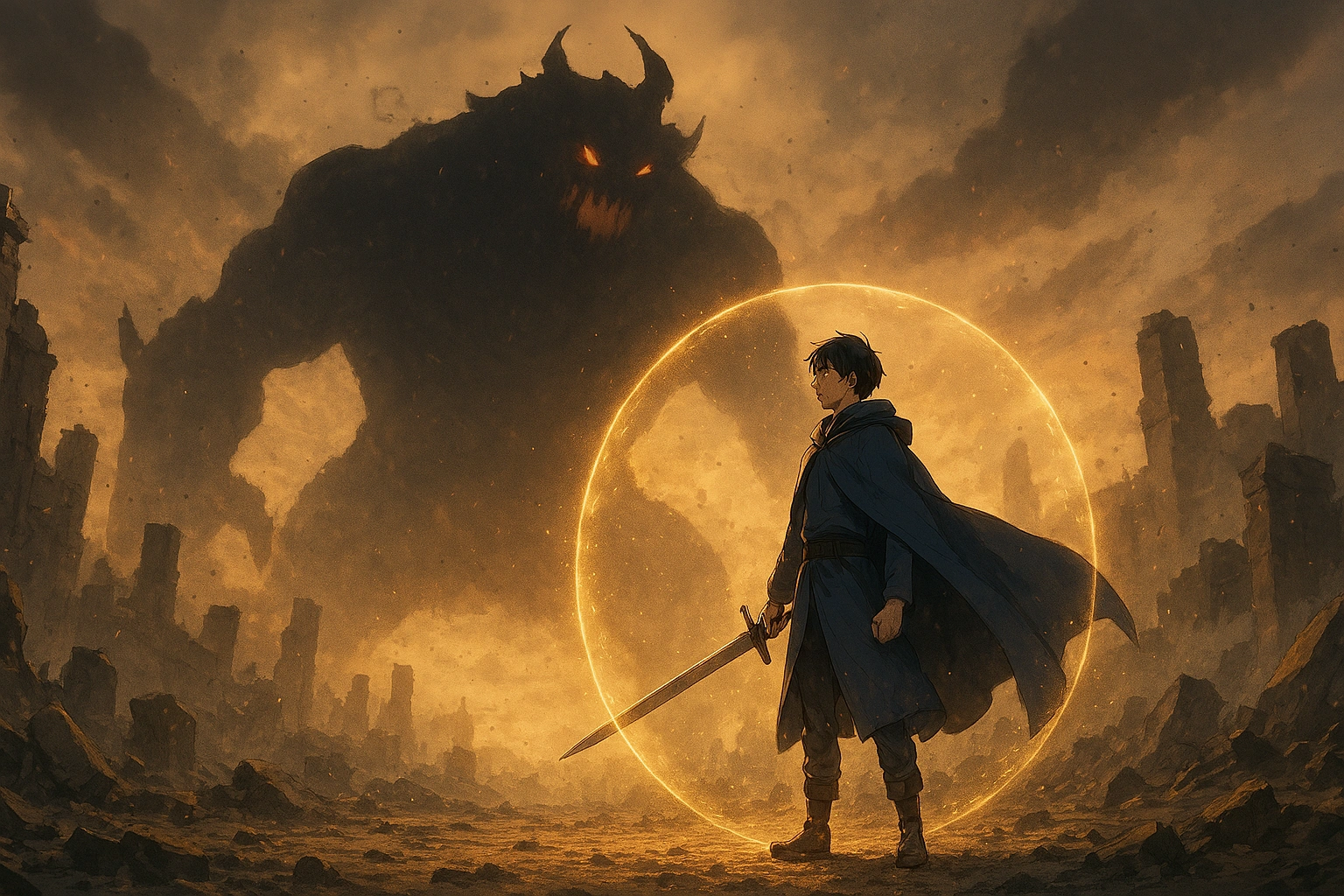
The existence of Anti-Domain techniques changes the fundamental thesis of Jujutsu Kaisen battles. It proves that raw power—while overwhelming—is not the only metric for victory.
Without these techniques, the series would be a simple equation: “Whoever has the Domain wins.” With them, the battlefield becomes a complex chess match of resource management, binding vows, and barrier interactions.
A Grade 1 sorcerer like Atsuya Kusakabe, who possesses no innate technique, can stand toe-to-toe with the King of Curses solely because his mastery of Simple Domain is so profound. He survives not by being stronger, but by being smarter—by understanding the laws of barrier mechanics and exploiting the loopholes. He turns his lack of talent into a fortress.
For the aspiring sorcerer, the lesson is clear. You may not be born with the “Six Eyes.” You may not harbor the “King of Curses” within you. You may not be able to paint the sky with a Domain Expansion. But if you master the New Shadow Style, if you learn to weave the Wicker Basket, or if you inherit the Falling Blossom Emotion, you can survive the death sentence.
In a world defined by curses, survival is the only victory that matters. The Anti-Domain techniques are the testament to human ingenuity—the refusal to accept “Game Over” just because the opponent changed the rules. They are the techniques that declare: My world exists here, inside your hell, and I will not be moved.