
Introduction: The Mountain of Death
The Dentora Region, situated within the vast and heavily forested expanses of the Padokea Republic, holds a geographic anomaly that defies all conventional logic of the underworld. Typically, criminal empires, secret societies, and elite syndicates go to extraordinary lengths to mask their locations.
They operate in the shadows, utilizing front companies, hidden bunkers, and layered degrees of separation to ensure their headquarters remain a ghost story. The Zoldyck family, universally feared as the most lethal, efficient, and unstoppable dynasty of assassins in the known world, completely inverts this paradigm.
Their base of operations is not hidden in a subterranean cavern or obscured by Nen-based illusions. Instead, it sits openly atop Kukuroo Mountain, an imposing, dormant volcano dominating the skyline, completely visible to the naked eye, and blatantly known to the entire world.
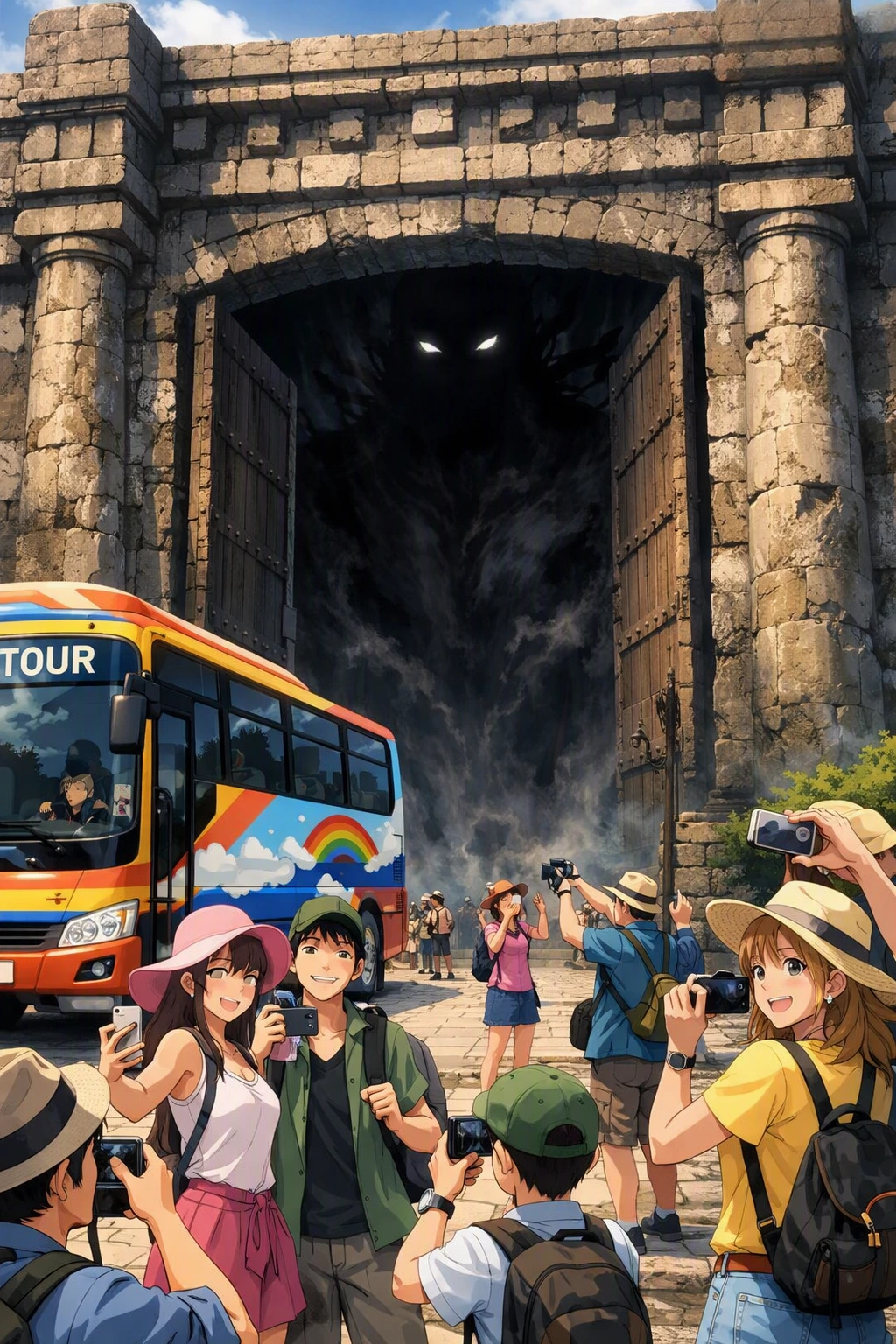
This brazen display of power introduces one of the most brilliant paradoxes in the Hunter x Hunter universe: the Zoldyck Estate functions simultaneously as an impenetrable fortress of death and a massive local tourist attraction. Every single day, brightly colored tour buses wind their way up the mountain paths, filled with gawking tourists clutching cameras and guidebooks.
Cheerful tour guides armed with megaphones point out the colossal walls and recount morbid trivia about the family, transforming the world’s deadliest bloodline into a macabre theme park. The Zoldycks actively leverage this public curiosity. By allowing the myth of their family to permeate pop culture, they create a steady stream of regional revenue and an aura of untouchable prestige.
The tourist trap serves a dual purpose: it feeds the Padokea Republic’s economy, likely securing the family political immunity and governmental blind eyes, while simultaneously acting as a smokescreen. The mundane reality of flashing cameras and chattering crowds violently contrasts with, and therefore perfectly masks, the true, unspeakable horrors taking place just beyond the walls.
However, beneath the veneer of this dark tourism lies a fortress of absolute isolation. The sprawling estate, covering the entirety of the mountain and its surrounding forests, was not constructed merely to keep the outside world at bay. It is, at its core, a meticulously engineered psychological pressure cooker.
The immense walls, the deadly flora and fauna, and the draconian rules governing the grounds are designed to isolate its inhabitants from the softening influences of normal society. For the Zoldycks, the estate is a forge. It is an environment calibrated to strip away empathy, crush ordinary human weakness, and temper the ultimate weapon.
This isolation was specifically weaponized to mold their heirs—most notably, the prodigious Killua—into perfect, unfeeling instruments of death, completely untethered from the world that exists beyond the shadow of Kukuroo Mountain.
The Perimeter Defenses and The Testing Gate
The boundary between the safe, mundane world of the tourists and the lethal reality of the Zoldyck property is marked by a massive, imposing set of doors. For the uninitiated, the estate presents a deceptive illusion of entry. The main gates, ornately decorated and highly visible, are what the tour guides point to, and they are what arrogant trespassers, bounty hunters, and foolish thrill-seekers attempt to breach.
This is the first and most fatal trap of Kukuroo Mountain. These doors are entirely accessible, unlocked, and easy to push open. However, stepping through this “tourist gate” guarantees immediate, gruesome death. It is a one-way threshold designed to quietly dispose of the overconfident, funneling them directly into the jaws of the estate’s internal biological defenses. The skeletal remains frequently carried out by the groundskeepers are a silent testament to the brutal efficiency of this false entry point.

The true entrance to the Zoldyck estate, reserved solely for the family, their sanctioned staff, and those worthy of stepping foot on the grounds, is known as the Testing Gate, or the Gate of Deliverance. This mechanism strips away all illusions, traps, and trickery, presenting a purely physical, insurmountable barrier to the average human.
The Testing Gate is a marvel of brutalist engineering, consisting of seven heavily reinforced doors layered within one another. The mechanics are simple yet mathematically terrifying. The very first door—the smallest and easiest to open—weighs a staggering 2 tons. From there, the weight scales exponentially.
The second door weighs 4 tons, the third 8 tons, the fourth 16 tons, the fifth 32 tons, the sixth 64 tons, and the seventh and final door weighs an unfathomable 256 tons. To even cross the threshold into the front yard of the estate, one must possess enough raw, kinetic power to casually push open a minimum of 4,000 pounds of solid metal.
This architectural marvel serves as a harsh, unyielding filter, establishing a baseline of strength that defines the reality of the Zoldyck world. The gates do not care about a person’s intent, their Nen abilities, or their stealth; they only respond to absolute physical dominance.
Opening multiple doors acts as a precise metric for a character’s raw power. When Killua, a mere child who had not yet even unlocked the concept of Nen, returned home, he casually pushed open three doors. This equated to moving 16 tons of weight simply to walk into his front yard. This singular feat mathematically quantifies the terrifying physical conditioning the Zoldyck children undergo.
For Gon, Leorio, and Kurapika, the Testing Gate represented their first true understanding of the chasm in power between themselves and the friend they were trying to rescue. They were forced to undergo weeks of grueling physical labor—wearing heavy weighted vests and using massive, lead-filled tea cups just to survive daily chores—simply to achieve the baseline strength required to open the two-ton door.
Overseeing this perimeter is Zebro, an elderly, seemingly frail man who presents himself as a lowly security guard and groundskeeper. Zebro’s initial appearance is incredibly deceptive; he offers the boys tea, speaks with a warm, grandfatherly tone, and seems genuinely concerned for their well-being.
However, this kindness masks his true, grim function. Zebro is not a guard in the traditional sense, as the estate needs no human protection. He is a spotter and a cleaner. His primary job is to observe those who arrive, warn away the innocent, and clean up the bloody remains of those who use the tourist gate.
Zebro’s very existence highlights the morbid reality of the Zoldyck ecosystem: even the most polite and hospitable member of their staff is inextricably tied to a machinery of death, completely desensitized to the constant loss of life happening just behind the walls.
The Ultimate Deterrent: Mike the Guard Dog
If the Testing Gate serves as a mechanical filter of physical strength, the immediate interior of the estate relies on a biological nightmare to enforce its absolute sovereignty. Roaming the dense, shadowed forests immediately inside the perimeter walls is Mike, the Zoldyck family’s “guard dog.” To call Mike a dog, however, is a gross understatement.
He is a colossal, monstrous beast with thick purple fur, towering over the trees, possessing paws large enough to crush a grown man with a casual step. Unlike the various Magical Beasts that inhabit the wider world of Hunter x Hunter—creatures like the Kiriko who possess high intelligence, speech, and a capacity for human emotion—Mike is an entity of pure, terrifying instinct.
He is a biological machine, completely devoid of empathy, playfulness, or the capacity to be reasoned with. There is no Nen-based trickery involved in his existence; he is simply the apex predator of Kukuroo Mountain, genetically and behaviorally refined to perfection.
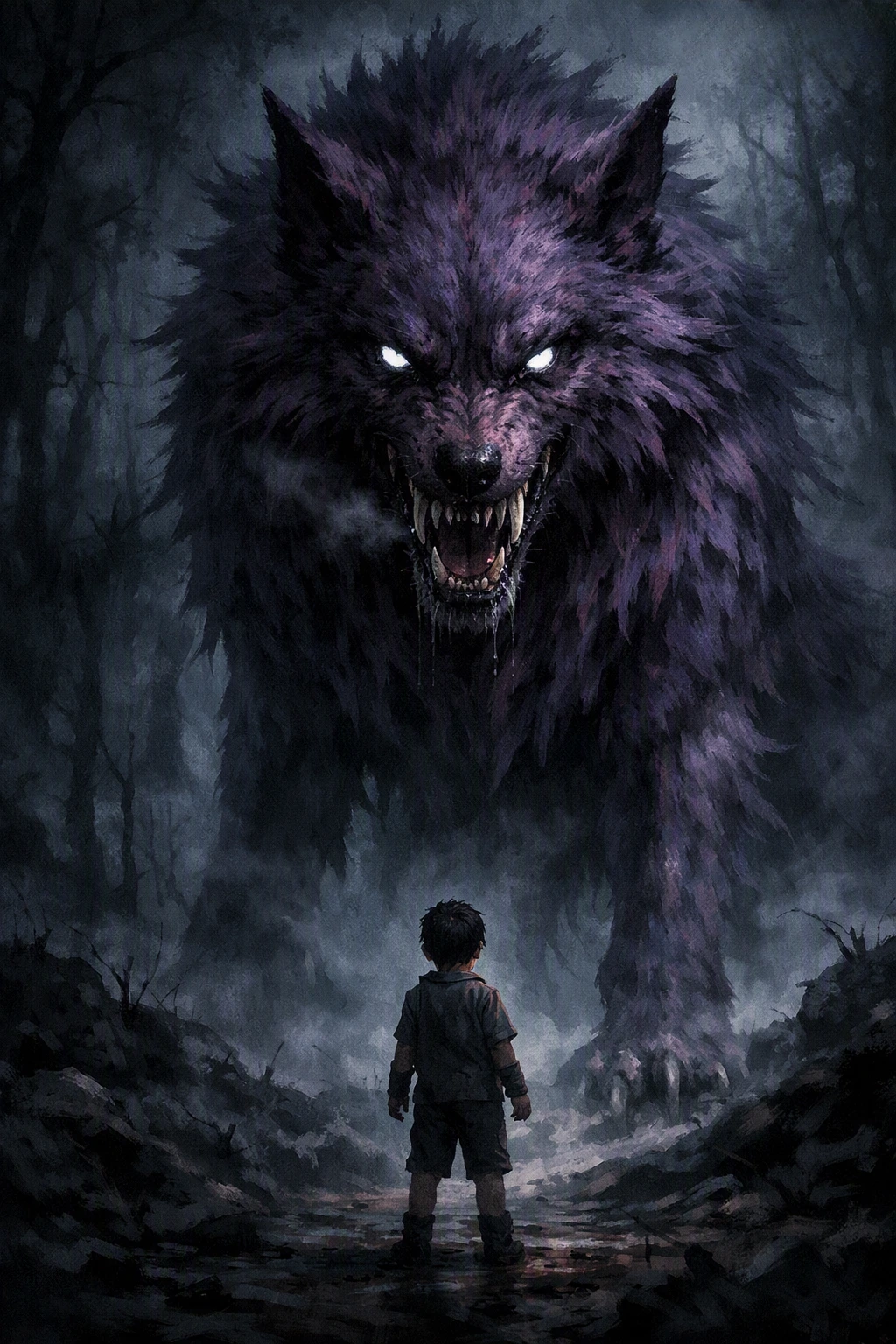
The true horror of Mike lies in his absolute, unshakeable programming. He has been trained with a level of rigor that borders on the supernatural, hardwired to obey only the direct bloodline of the Zoldyck family. No amount of animal whispering, Nen coercion, or bribery can override his foundational conditioning.
His standing order is elegantly simple and unspeakably brutal: he is to instantly and mercilessly consume anyone who enters the estate through the tourist gate, while completely ignoring those who enter through the Testing Gate. He does not kill for sport, out of anger, or for sustenance—he kills because it is the binary code of his existence. He operates with the cold, mechanical efficiency of a motion-activated death trap, making him the ultimate deterrent against unwanted intruders.
The psychological dominance Mike exerts is profound, perfectly illustrated during Gon’s first, harrowing encounter with the beast. Throughout his journey, Gon Freecss had consistently demonstrated a preternatural affinity for animals.
He could tame wild Foxbears, communicate with fierce forest creatures, and effortlessly bridge the gap between human and beast using his pure, empathetic spirit. However, when Gon locked eyes with Mike, that worldview was violently shattered. Looking into Mike’s massive, unblinking eyes, Gon found nothing. There was no soul, no spark of primal connection, no underlying emotion that he could appeal to.
For the first time in his life, Gon experienced genuine, paralyzing terror. The beast’s calculating, dead gaze communicated a chilling truth: to Mike, Gon was not a friend, an enemy, or a curiosity; he was simply meat that had not yet crossed the designated threshold of death. This encounter reinforced the terrifying nature of the Zoldyck environment—it is a place that extinguishes nature, empathy, and humanity, replacing them with cold, calculated violence.
The Butler System and Internal Hierarchy
The functioning of the Zoldyck estate relies on an army of highly trained staff, but to call them mere “servants” drastically undersells their reality. The butlers of the Zoldyck family operate under a strict, cult-like doctrine that dictates every facet of their existence. Many of these butlers are recruited from Meteor City, the outcast society where human life has no official record, making them phantoms deeply indebted to the Zoldyck family for providing them with a purpose and a home.
The fundamental law governing their service is the absolute prohibition against showing personal emotion, displaying individual desires, or, most importantly, fraternizing with their employers. They are expected to be extensions of the Zoldyck will—impeccably dressed, flawlessly polite, and utterly lethal machines who exist solely to facilitate the family’s needs. Any deviation from this doctrine, particularly showing affection toward a Zoldyck family member, is considered a severe transgression, often punishable by death.
This tragic dynamic is perfectly encapsulated in the character of Canary, a young apprentice butler tasked with holding a designated defense line on the estate grounds. Canary represents a terrifying level of efficiency; armed only with a customized walking cane and utilizing the “Rhythm Echo” assassination technique, she is capable of obliterating scores of armed intruders without breaking a sweat.
Yet, beneath her stoic, violent exterior lies a profound internal conflict. Canary harbors a deep, suppressed affection for Killua, who, in his moments of childhood rebellion, treated her not as a servant, but as a friend. When Gon attempts to cross her boundary, Canary is forced to brutally beat him, striking him repeatedly with her cane. However, Gon’s unwavering resolve breaks through her conditioning.
The tears that stream down Canary’s face as she asks Gon to save Killua highlight the agonizing paradox of the Zoldyck butler: they are humans forced to act as unfeeling objects, breaking their own hearts to adhere to the estate’s tyrannical laws.
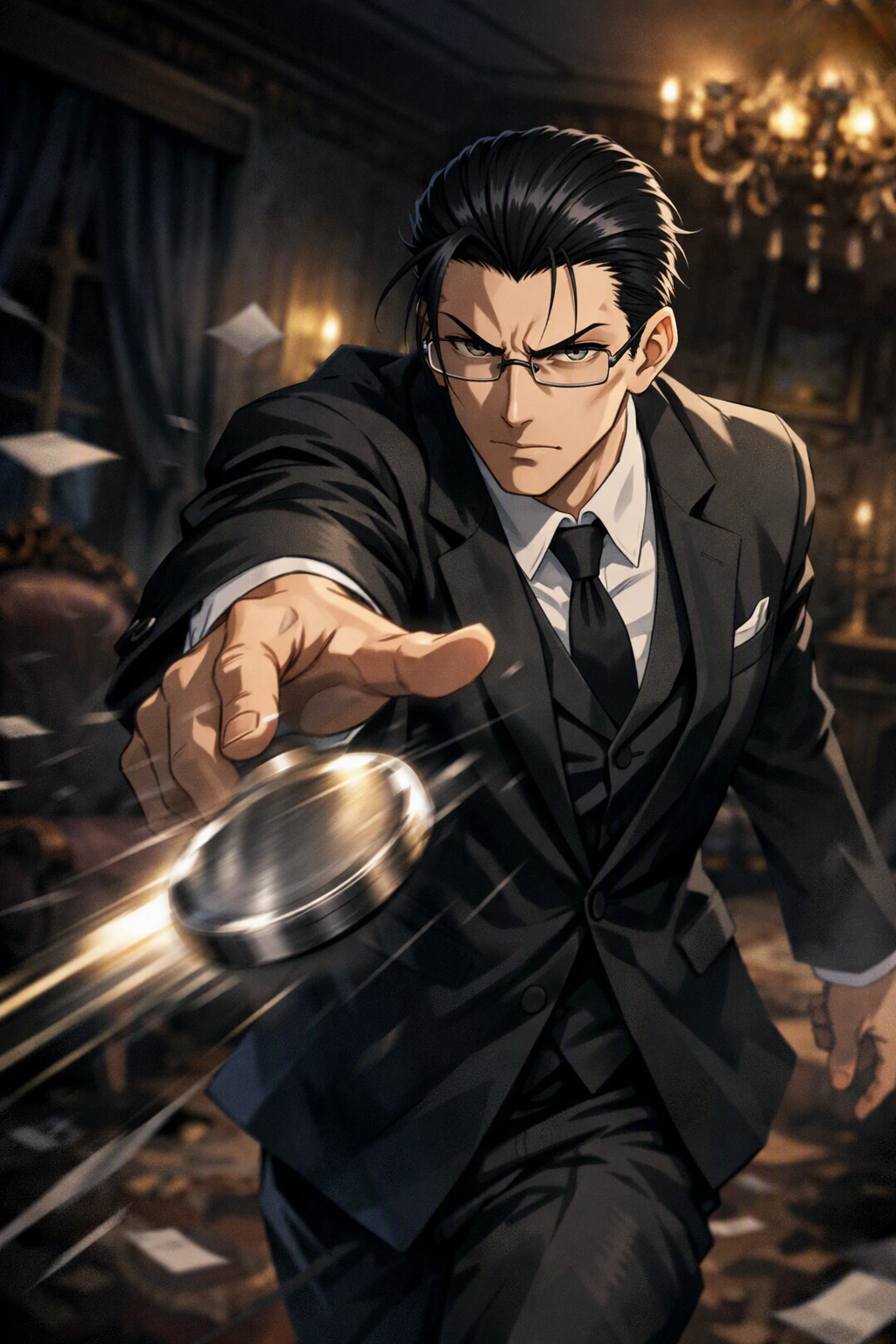
As one moves deeper into the estate’s hierarchy, the danger and complexity of the staff increase. Gotoh, the imposing head butler, serves as the ultimate gatekeeper to the inner sanctum. Gotoh operates with a menacing formality, demanding absolute respect for the rules of the house. His deadly coin-tossing game, played with Gon, Kurapika, and Leorio, is a masterclass in psychological warfare and martial prowess.
By firing coins from his fingers with the velocity of sniper bullets, Gotoh turns a simple parlour trick into a lethal test of observation, nerve, and resolve. However, Gotoh’s terrifying demeanor masks a fierce, almost fatherly overprotectiveness of Killua. He tests Gon not merely to fulfill his duty, but to ensure this outsider is truly worthy of being Killua’s friend.
Gotoh hates the fact that Killua is leaving, but his strict adherence to his role prevents him from showing it in any way other than a deadly test of skill, revealing the twisted ways love and loyalty manifest within the Zoldyck household.
Beyond Gotoh lies the true Inner Circle of the butler hierarchy, represented by formidable figures like Tsubone and Amane. These are elite, Nen-using veterans who do not answer to the general household, but report strictly to the current patriarch, Silva, and his wife, Kikyo. The existence of this upper echelon showcases the deep-seated paranoia and intense internal surveillance that plagues the family.
Tsubone, a massive, imposing woman capable of transforming into a Nen-powered motorcycle, and her granddaughter Amane, represent the ultimate enforcers of the Zoldyck will. Their presence during the Dark Continent expedition arc underscores a fundamental lack of trust even within the household.
The Zoldycks do not just spy on their enemies; they aggressively monitor their own children and their own staff. The butler system is ultimately a microcosm of the Zoldyck family itself: a hierarchy built on power, enforced by violence, and devoid of genuine, unpunished human connection.
The Business of Assassination and Family Dynamics
To truly understand the Zoldyck family, one must stop viewing them merely as a clan of murderers and start viewing them as a highly efficient, multi-generational corporate entity. The Zoldyck Estate is the headquarters of a global monopoly on high-end assassination. Their operations are strictly business. They are not serial killers, psychopaths who kill for pleasure, or zealots driven by ideology.
The Zoldycks operate on a rigid set of professional ethics: they only kill when a contract is signed, the exorbitant fee is paid, and the target is clearly defined. This corporate detachment is evident in Zeno Zoldyck’s philosophy. He views his lethal abilities not as a source of pride or malice, but simply as a trade, complaining about the physical toll of his work like a weary salaryman.
If a client dies before a contract is fulfilled—as seen during the Yorknew City arc when the Ten Dons are eliminated—the Zoldycks instantly cease fighting, pack up their gear, and walk away, perfectly willing to leave their targets (like Chrollo Lucilfer) alive because the financial imperative has vanished.

Within this corporate structure exists a rigid, genetically predetermined hierarchy that dictates the destiny of every family member. The Zoldyck bloodline places immense, almost mystical significance on hair color, which serves as a biological indicator of potential and status.
The silver/white-haired members of the family—historically represented by Maha, Zeno, Silva, and now Killua—are inherently recognized as supreme prodigies. They are born with unmatched latent talent, physical durability, and the innate ruthless temperament required to lead the family. They are the destined Patriarchs, the CEOs of the bloodline.
In stark contrast, the black-haired siblings—Illumi, Milluki, and Kalluto—are fundamentally understood to be subordinates. Regardless of their individual power or Nen mastery, they are relegated to supporting roles, designed to protect the estate, gather intelligence, or serve the eventual white-haired heir. This genetic caste system breeds an intense, inescapable pressure, forcing Killua to carry the weight of a centuries-old empire on his adolescent shoulders simply because of his genetic lottery.
This pressure is compounded by the deeply toxic, highly manipulative emotional environment fostered by the current generation of parents, particularly Kikyo and the eldest son, Illumi. In any normal family, love is a nurturing force; in the Zoldyck household, love is weaponized. Kikyo’s maternal affection is hysterical and deeply twisted.
When Killua rebels, violently stabbing his mother in the face to escape the estate, Kikyo does not react with horror or grief; instead, she shrieks with ecstatic joy, genuinely thrilled that her son has demonstrated such ruthless, cold-blooded violence. She views his murderous rebellion as proof that her child-rearing methods are succeeding. This is a mother who equates lethality with perfection.
Illumi’s “love” for Killua is even more insidious and damaging. Operating under the guise of brotherly protection, Illumi employs intense psychological conditioning, mind control, and physical torture to ensure Killua never deviates from the path of the assassin.
Illumi views Killua not as a brother with free will, but as a prized possession and the ultimate asset of the family that must be safeguarded at all costs. To achieve this, Illumi physically implants a Nen-infused needle into Killua’s brain.
This needle acts as a parasitic override, forcing Killua into a state of paralyzing fear and forcing him to flee whenever he faces an opponent he is not 100% mathematically certain he can defeat. Illumi rationalizes this horrific violation of autonomy as an act of profound love, a mechanism designed solely to keep Killua alive.
This dynamic reveals the ultimate tragedy of the Zoldycks: they are incapable of separating affection from absolute, tyrannical control. Their love is a cage, forged from manipulation, trauma, and a fundamental denial of the victim’s humanity.
The Vault: Containing the Dark Continent
Deep within the subterranean levels of the Zoldyck estate, far removed from the tourist gates, the testing doors, and the butler quarters, lies the most secure location on the mountain: the Isolation Ward. This vault is not designed to protect vast wealth, ancient artifacts, or classified assassination records.
It is a highly reinforced, terrifyingly secure playroom built for a single purpose: to contain the fourth Zoldyck child, Alluka, and the mysterious entity that shares her body, Nanika. The architecture of this vault is a testament to the sheer terror the Zoldycks feel toward their own blood. It features multiple layers of blast doors, complex password systems, and 24/7 intensive camera surveillance monitored directly by the family’s elite.
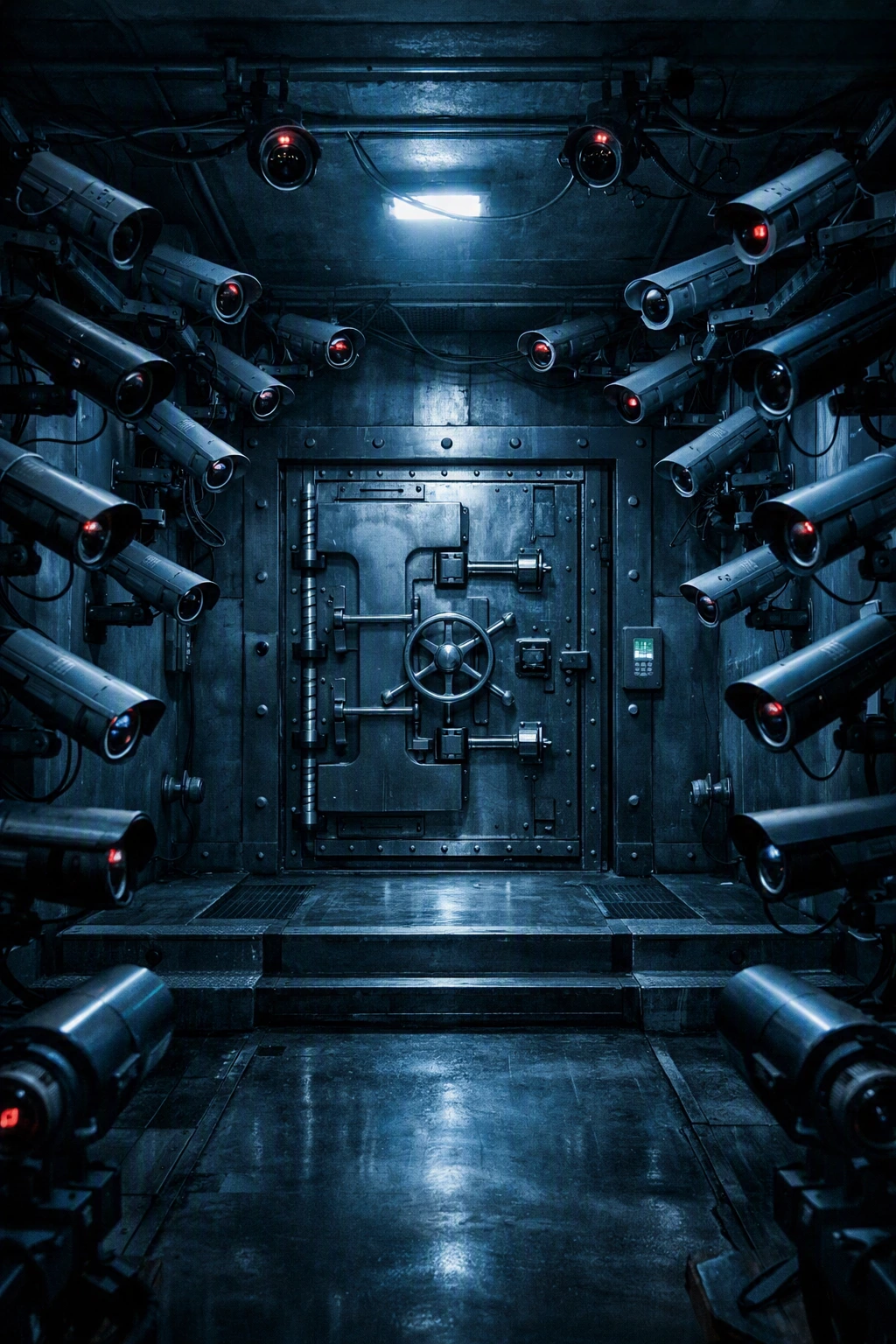
The existence of this vault exposes a profound hypocrisy and a deeply rooted fear within the invincible Zoldyck family. While they pride themselves on mastering death and overcoming any earthly threat, they treat Alluka as a foreign, apocalyptic object.
Silva Zoldyck explicitly forbids Killua from referring to Alluka as human, labeling the child as “something that came from the darkness.” The strict rules surrounding Nanika’s wish-granting abilities—where granting a massive request results in increasingly horrific, unavoidable “demands” that can result in the catastrophic squashing of dozens of innocent lives—terrify the assassins.
The security measures of the vault are entirely inverted. They are not designed to keep intruders out of the estate; they are designed to lock a localized calamity in. The Zoldycks, who casually control the lives and deaths of global political figures, are completely powerless against the reality-warping mechanics of Nanika.
It is heavily implied that Nanika is an entity known as “Ai,” a gaseous lifeform originating from the uncharted, nightmarish realm of the Dark Continent. By locking Alluka in this subterranean vault, the Zoldycks are essentially trying to put a lid on an eldritch horror, sweeping an unmanageable cosmic variable under the rug of their meticulously controlled existence. The vault stands as proof that even the most powerful human institution is fundamentally helpless when faced with the incomprehensible terrors of the unknown world.
Conclusion: The Cage Killua Broke
Ultimately, the Zoldyck Estate on Kukuroo Mountain is much more than a geographical location or a stronghold; it is a towering monument to fear, absolute control, and the commodification of human life. From the deadly illusion of the tourist gates and the bone-crushing reality of the Testing Doors, to the soulless gaze of Mike and the tragic, emotionless servitude of the butler staff, every single square inch of the property is engineered to suppress humanity and manufacture death. The family dynamics, ruled by genetic determinism, toxic manipulation, and weaponized love, create an environment where the greatest threat to a child’s soul is their own bloodline.
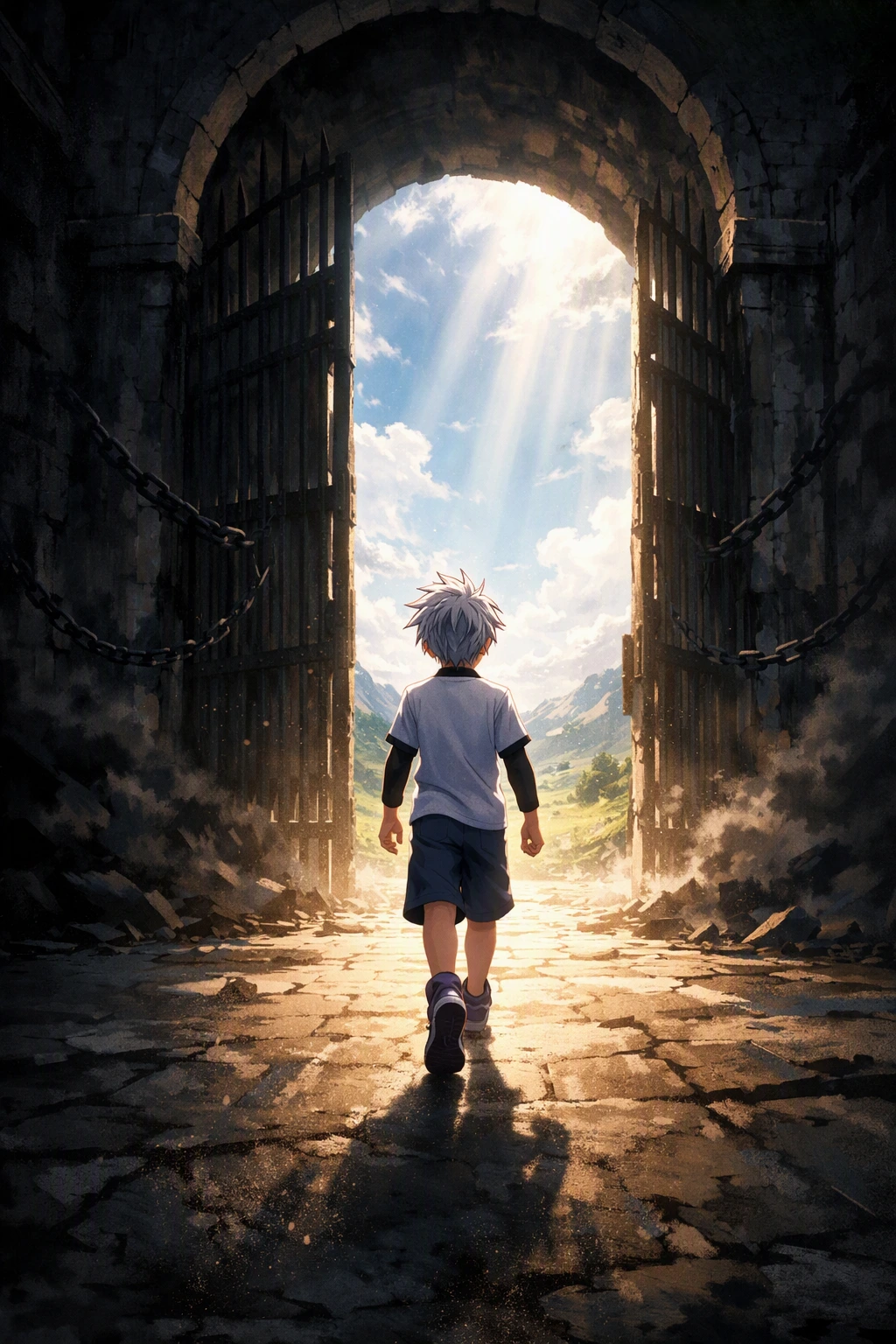
Understanding the sheer magnitude, psychological terror, and inescapable gravity of this environment is crucial to understanding the narrative weight of Killua Zoldyck’s journey. When Killua left the estate to take the Hunter Exam, he was not simply a rebellious teenager sneaking out of the house.
He was attempting an impossible escape velocity. Leaving the estate wasn’t just walking out of a heavy front door; it was the monumental act of tearing his mind and body away from a meticulously engineered, multi-generational psychological prison. Every step Killua takes alongside Gon in the outside world is a defiance of Kukuroo Mountain, a rejection of his predetermined destiny, and a slow, agonizing, but ultimately triumphant dismantling of the ultimate cage.