
Introduction
The Pillar of the League: Defining Kurogiri In the sprawling, chaotic pantheon of villains that populate the universe of My Hero Academia, few figures cast as long, as dark, or as structurally vital a shadow as Kurogiri. To casually dismiss him as merely a villainous chauffeur, a convenient plot device utilized to move antagonists from point A to point B, is to fundamentally misunderstand the architecture of the League of Villains.
Kurogiri is not merely an accessory to the early iterations of the League; he is its absolute foundational pillar. Without his presence, Tomura Shigaraki’s early reign of terror mathematically and logistically could not have existed. In the nascent stages of Shigaraki’s development, when the young villain was little more than a petulant, rage-driven man-child lashing out at a society he barely understood, Kurogiri was the stabilizing force that allowed that rage to survive against the overwhelming power of Pro Hero society.
If Tomura Shigaraki was the poisoned blade aimed at the heart of the hero system, Kurogiri was the hilt that prevented the wielder from cutting his own hands, and the sheath that protected the blade when it inevitably needed to be withdrawn. Before the acquisition of Gigantomachia, before the financial and numerical backing of the Meta Liberation Army, the League of Villains survived solely because Kurogiri existed to facilitate their impossible strikes and guarantee their survival.
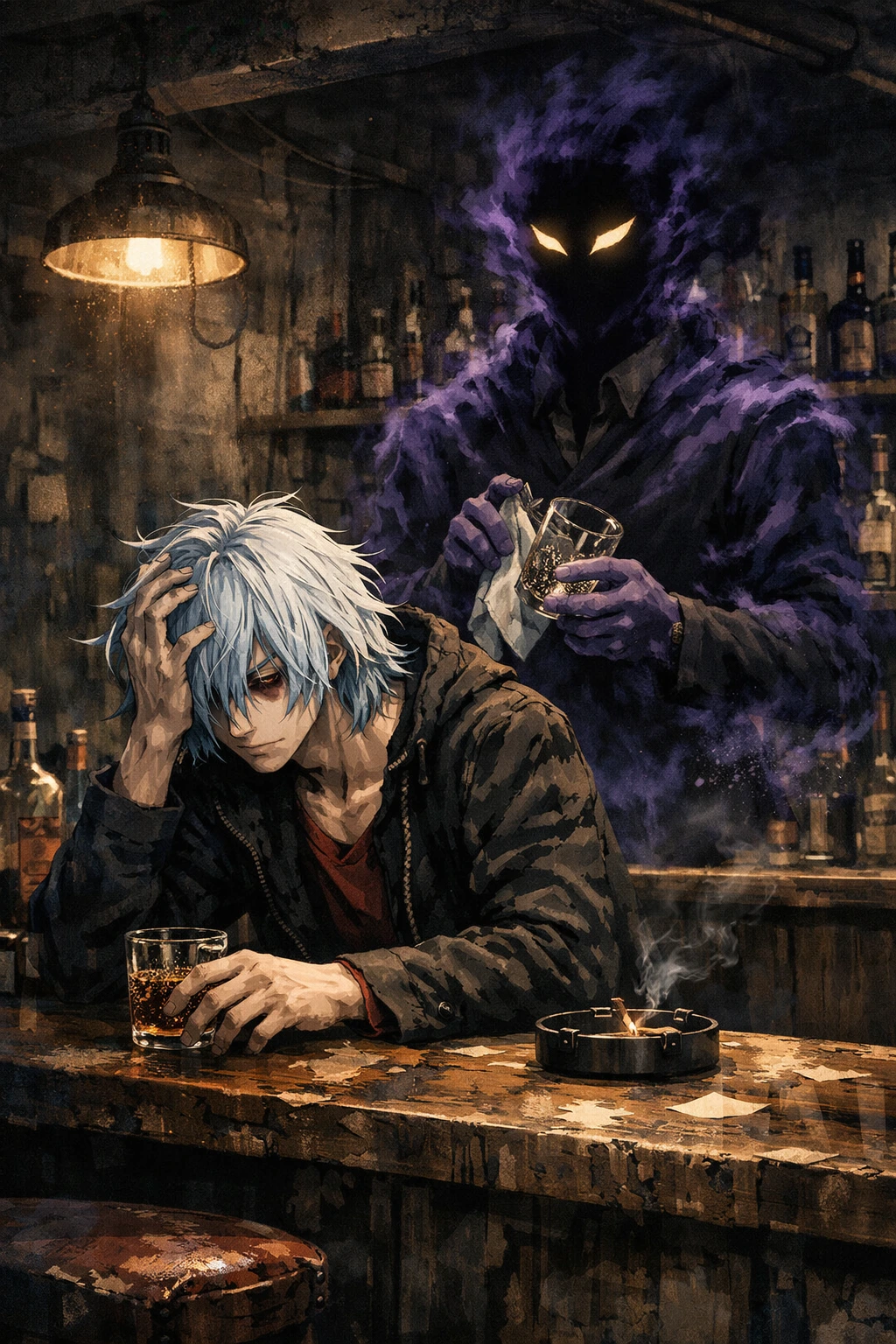
The Ultimate Violation of Humanity: A Brief Overview Yet, beneath the hyper-polite demeanor, the pristine bartender’s uniform, and the swirling, sophisticated mist that comprises his physical form, lies one of the darkest, most macabre secrets in the entirety of the series. The true horror of Kurogiri is not found in his villainous actions, but in his very existence. He is a walking, speaking crime against nature—the ultimate violation of humanity.
Kurogiri is not a man who chose the path of evil, nor is he a villain born from societal neglect like so many of his peers. He is a masterpiece of dark bio-engineering, a high-end Nomu meticulously constructed from the desecrated, stolen corpse of a teenage hero-in-training. This revelation fundamentally retroactively alters every single interaction, every polite bow, and every protective maneuver he performs.
The calm, mist-like exterior hides a grotesque scientific achievement, a Frankenstein’s monster built by All For One and Dr. Kyudai Garaki. To look at Kurogiri is to look at a tomb; he is a walking mausoleum trapping the soul of a boy who only ever wanted to save people, now biologically shackled into a state of perpetual servitude to the very monsters who murdered him.
Article Scope This article serves as the definitive, expert-level breakdown of Kurogiri’s existence. It will meticulously deconstruct the complex physics and spatial logistics of his “Warp Gate” Quirk, analyzing how his powers operate on a terrifyingly precise mathematical level. It will explore his programmed psychological devotion to Shigaraki, dissecting the engineering of absolute loyalty.
We will then transition into the gruesome, horrifying science of his Nomu creation, pulling back the curtain on the Oboro Shirakumo revelation that bridges My Hero Academia with its prequel, Vigilantes. Finally, we will examine the profound emotional devastation of his Tartarus interrogation and his critical, game-changing role in the Final War. This is the complete anatomy of a tragedy—the story of a hero weaponized against his own heart.
“Warp Gate” Physics: Spatial Logistics & Limitations
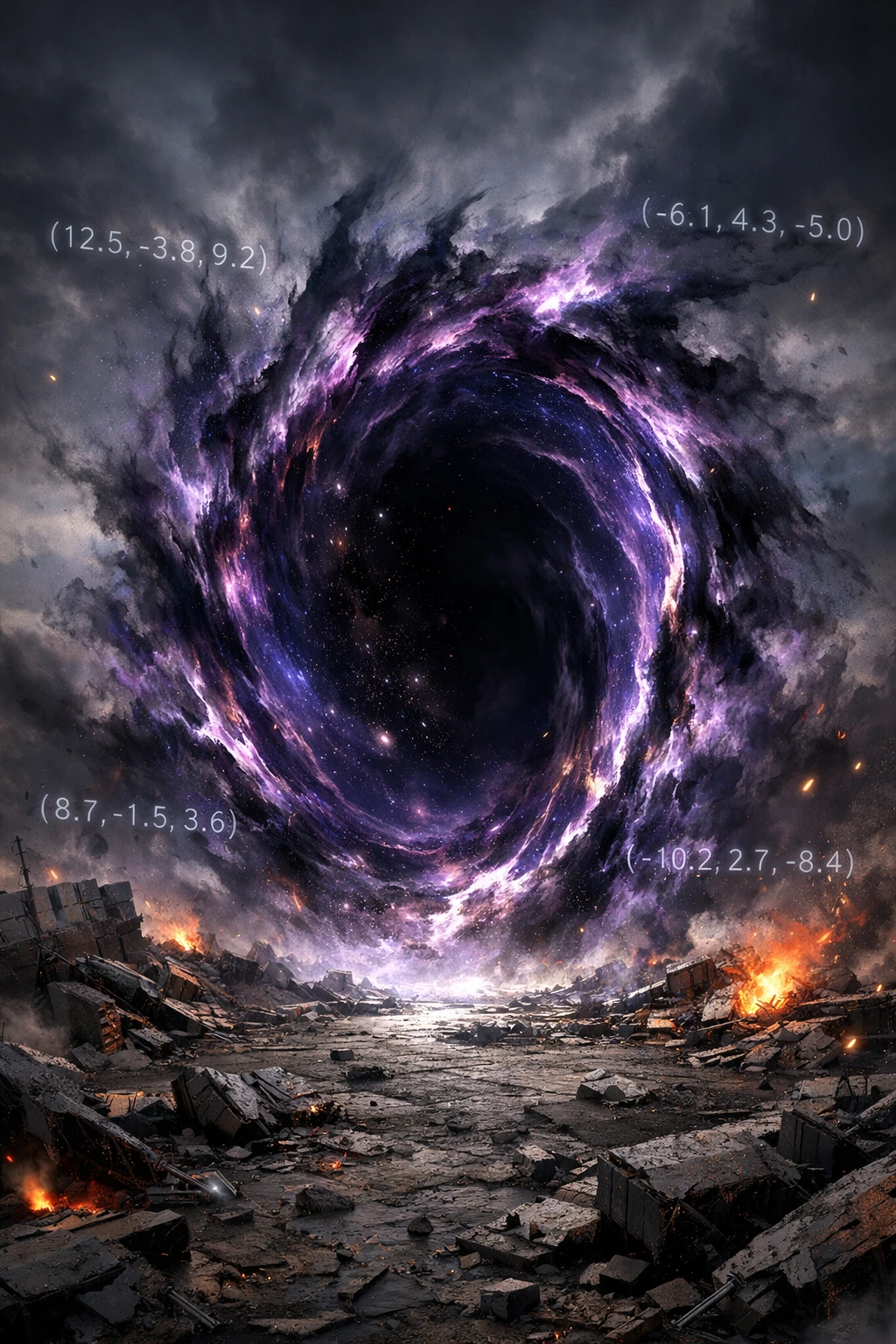
Coordinate-Based Teleportation: Deconstructing the Mechanics To understand Kurogiri’s value on the battlefield, one must first deconstruct the mechanics of his terrifyingly versatile Quirk: Warp Gate. Unlike conventional, instantaneous teleportation seen in various speculative fictions—where a user simply disappears and reappears at will—Kurogiri’s power operates strictly as a spatial conduit.
He does not instantaneously travel; rather, he folds space, creating a physical bridge between two disparate points. This operates on a highly strict, mathematically precise X-Y-Z coordinate system. To safely and effectively open a gate to a remote location, Kurogiri must possess a precise, cartographic understanding of his destination. He cannot blindly throw a portal into the unknown. He requires either direct, unobstructed line-of-sight or specific, absolute coordinates.
This mechanical limitation is paradoxically what makes his power so devastatingly effective. Because his portals are physical tears in space, they act as immediate, two-way doors. When he attacks the Unforeseen Simulation Joint (USJ), he does not merely teleport villains; he opens a massive, yawning chasm that allows an entire army to walk from a localized hideout directly into a heavily secured U.A. facility in mere seconds. Furthermore, his spatial manipulation can be used offensively.
By closing a portal while an object or person is halfway through it, he possesses the theoretical capability to bisect almost any material in the world—a spatial guillotine that ignores conventional durability. The fact that he rarely utilizes this lethal application speaks directly to his primary programming as a captor and facilitator rather than an outright assassin, but the ever-present threat of his spatial physics dictates the pace of any battle he enters.
The Anatomy of the Mist: Analyzing His Physical Form Kurogiri’s physiology is intrinsically tied to his Quirk, effectively making his body an extension of his power. Unlike a traditional human emitting an energy blast, Kurogiri’s actual form appears to be composed entirely of a dark, viscous, purple fog. This fog is not merely a visual effect; it is the physical manifestation of the portal itself.
The tactical advantage of this biology cannot be overstated. Because the vast majority of his visible “body” is an intangible spatial rift, he is nearly completely immune to conventional blunt-force trauma, slashing attacks, and explosive impact. When a hero strikes the mist, their fist, weapon, or blast simply passes through the portal, often being harmlessly redirected to another location or ejected elsewhere.
This gives Kurogiri an overwhelming defensive superiority in close-quarters combat. He can comfortably stand in the center of a chaotic battlefield, absorbing explosions, physical strikes, and projectile fire without sustaining a scratch. During the USJ incident, he easily neutralizes the physical assaults of highly trained U.A. students, absorbing their kinetic energy and dispersing it.
He becomes an omnipresent, untouchable phantom on the battlefield. This intangible anatomy forces Pro Heroes to entirely rethink their engagement strategies; you cannot punch a hole in space, and you cannot arrest a cloud of smoke. He acts as a perfect, impenetrable shield for Tomura Shigaraki, capable of enveloping his master in a shroud of untouchable space at a moment’s notice.
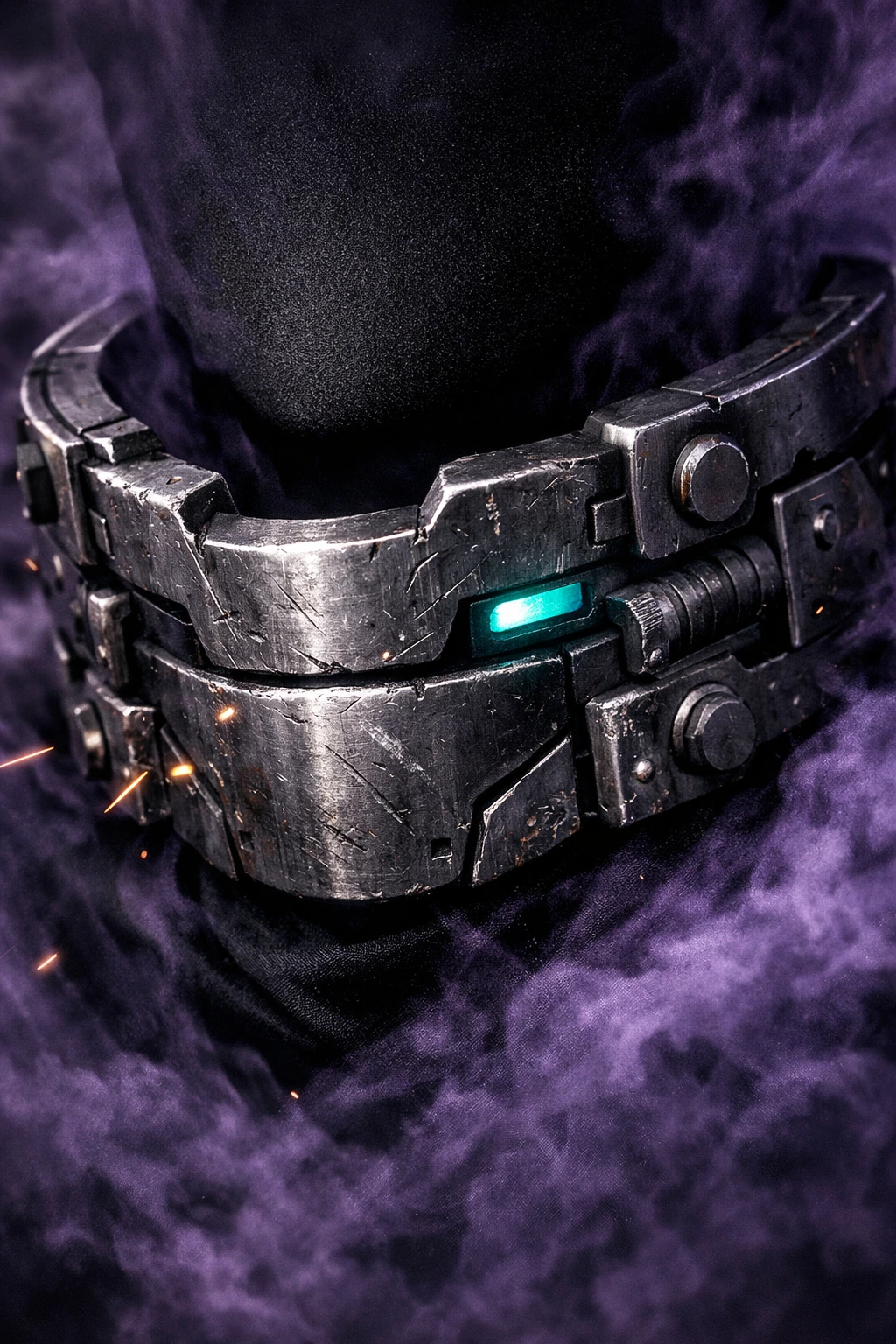
The Hardware Vulnerability (The Neck Brace) However, no Quirk in the My Hero Academia universe is without its absolute limitations, and Kurogiri possesses a single, fatal flaw in his design—a hardware vulnerability that anchors his god-like spatial powers to the mortal realm.
This vulnerability was brilliantly deduced by Katsuki Bakugo during the chaotic climax of the USJ invasion. Bakugo realized that for Kurogiri to generate and direct the mist, and more importantly, to wear the clothes and metal accoutrements that adorned his body, he must possess a solid, physical core. The mist is merely an emission, a smokescreen hiding a tangible, physical epicenter.
This core is located centrally within his form, heavily protected by the signature metal brace wrapped entirely around what would anatomically be his neck and upper torso. This brace is not a stylistic choice; it is heavy, reinforced armor protecting the only tangible, vulnerable part of his actual body.
When Bakugo manages to pin Kurogiri to the ground by grabbing this metal collar and threatening to unleash an explosion directly into the physical core, the seemingly invincible villain is instantly paralyzed. This physical anchor proves that Kurogiri is not a phantom, but a biological entity that relies on a central nervous system—or whatever horrific approximation of one Dr. Garaki installed—to operate. To defeat the Warp Gate, one must bypass the infinite expanse of the mist and strike the physical hard drive hidden within.
The Programmed Caretaker (Engineering Loyalty)
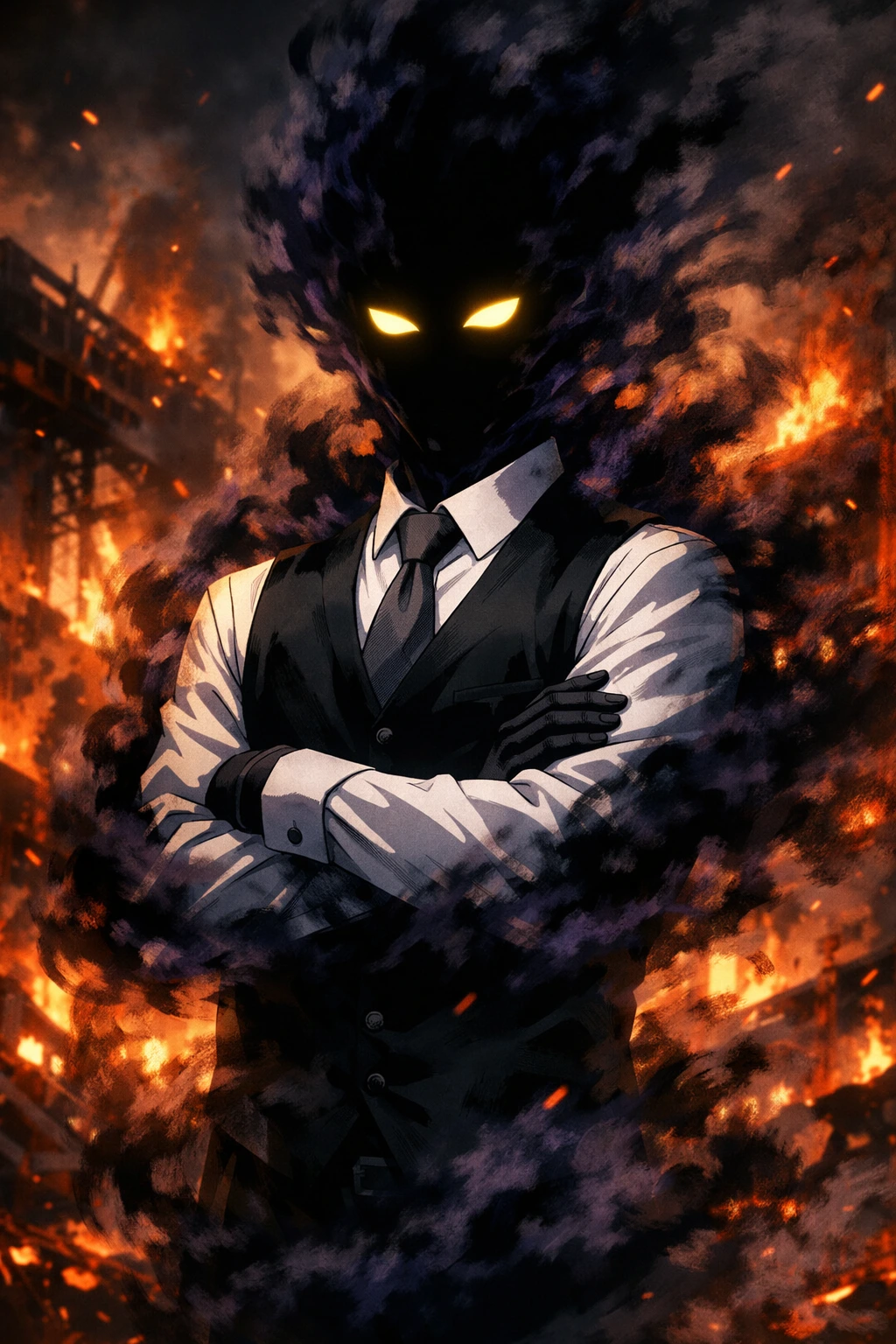
The Babysitter of Chaos: Exploring His Designated Role To observe Kurogiri in the early arcs of the narrative is to observe a masterclass in programmed patience. He is, in every practical sense, the babysitter of chaos. When All For One and Dr. Kyudai Garaki conceptualized and constructed Kurogiri, they did not design him to be a frontline warlord, an ideological leader, or a mass murderer.
They specifically and intentionally programmed him with a hyper-polite, meticulously logical, and utterly subservient personality. He was built to serve a very specific, singular purpose: to be the stabilizing anchor for Tomura Shigaraki’s incredibly volatile, dangerously childish rage.
In the beginning, Shigaraki is not a mastermind; he is an overgrown, traumatized child lashing out at a world he despises, prone to lethal temper tantrums that threaten to destroy his own allies as often as his enemies. Kurogiri acts as the adult in the room.
He operates the bar, cleans the glasses, respectfully addresses Shigaraki, and gently guides the young villain’s chaotic impulses into vaguely tactical directions. When Shigaraki wishes to kill his own recruits out of sheer annoyance, it is Kurogiri who physically intervenes, using his Warp Gate to separate them and offering logical, calculating counsel on why allies are necessary.
All For One knew that Shigaraki’s hatred was a potent but untamed fire. Left to his own devices, Shigaraki would have burned himself out or gotten himself captured within weeks. Kurogiri was the hearth constructed to contain, nurture, and eventually direct that fire.
Apathy and Subservience: The Absence of Ambition What makes Kurogiri so chilling as a villainous entity is his complete and total lack of personal malice. Most villains in the series are driven by deeply personal, often sympathetic, or ideologically extreme motivations. Stain operates on a twisted code of honor; Overhaul is driven by a desire to return the Yakuza to power and eradicate Quirks; Re-Destro is fueled by a generational belief in absolute Quirk liberation.
Kurogiri possesses absolutely none of this. He operates completely devoid of personal ambition, hatred, or ideology. He does not hate hero society. He does not actively desire the destruction of the world. He does not take sadistic pleasure in causing pain.
His entire existence is a rigid, unbreakable line of biological code constantly executing a singular, overriding command: Protect and nurture Tomura Shigaraki. Every polite word he speaks, every portal he opens, every calculated risk he takes is filtered exclusively through this directive. He is apathy weaponized.
Because he has no personal ego to bruise and no grand ambitions to distract him, he cannot be taunted, intimidated, or negotiated with. He views the Pro Heroes not as hated enemies, but merely as obstacles interfering with his prime directive. This absolute subservience makes him the perfect tool for All For One—a loyal dog that will never bite its master, entirely because the concept of rebellion was surgically excised from his brain.
The Tactical Retreat: His Role as the Ultimate Escape Route In the theater of war, the ability to retreat and fight another day is often more valuable than the ability to strike a lethal blow. Kurogiri’s presence provided the League of Villains with a tactical luxury that almost no other criminal organization possessed: a 100% guaranteed exfiltration strategy. It is this absolute guarantee of escape that allowed the League to launch incredibly brazen, suicidal, high-risk attacks that should have resulted in their immediate capture or death.
Consider the invasion of the USJ or the Vanguard Action Squad’s assault on the U.A. Training Camp. In both scenarios, an outgunned, outnumbered, and largely inexperienced group of villains willingly walked directly into the heart of Pro Hero territory, facing down titans like All Might, Eraser Head, and a swarm of highly trained students. In a conventional tactical scenario, this is a death sentence.
But Kurogiri’s presence completely rewrites the rules of engagement. He allows the League to strike with maximum ferocity, knowing that the very second the tide turns, or the second their objective is achieved, a Warp Gate will instantly open to swallow them back into the shadows.
He completely negates the consequences of failure. The heroes can win the physical battle, they can overpower the villains, but as long as Kurogiri is active, they can never secure the victory. He is the ultimate reset button for Shigaraki’s violent experiments, ensuring that no matter how badly the League miscalculates, they will always survive to learn from their mistakes.
The Bio-Mechanical Horror (The Shirakumo Reveal)
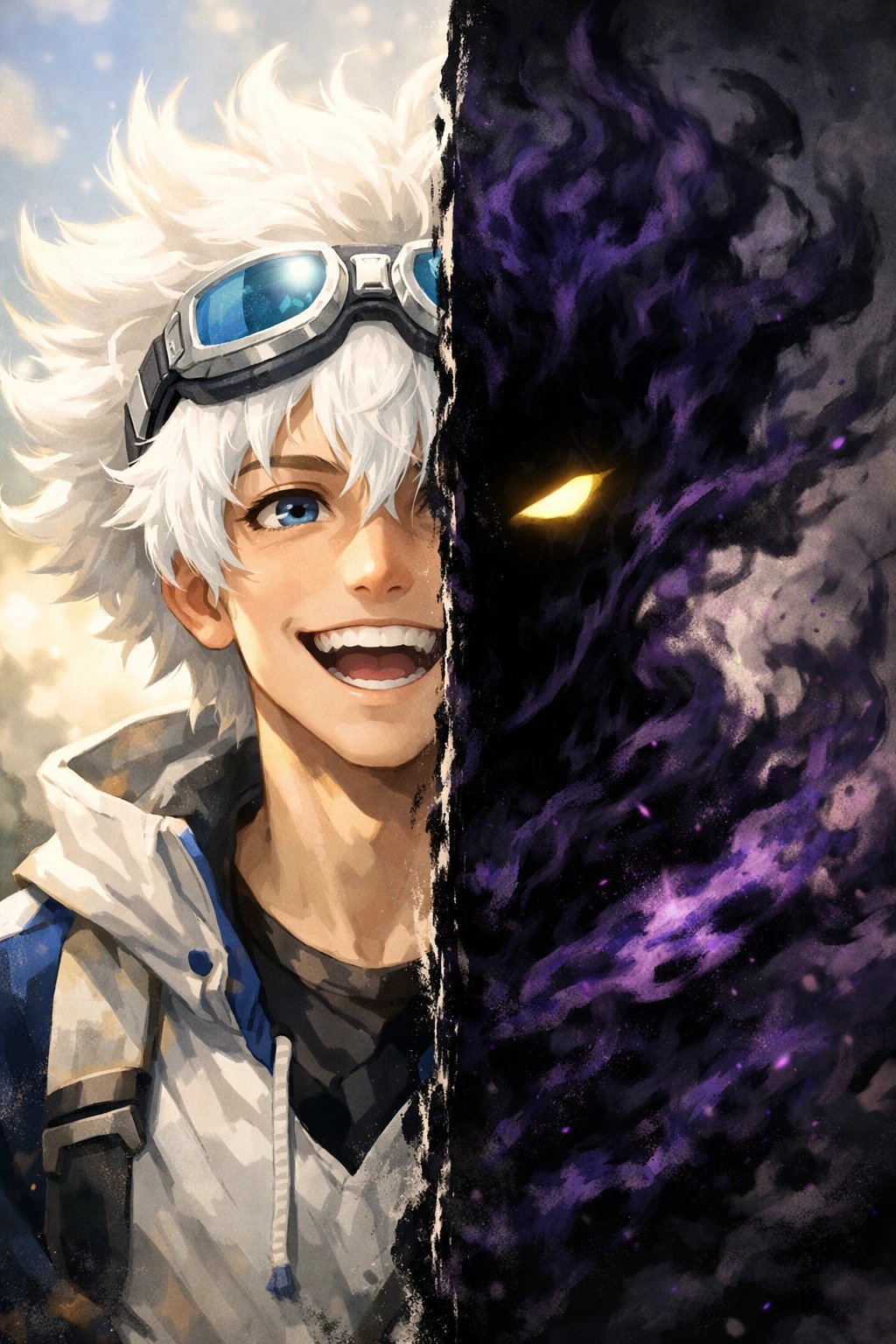
The Missing Corpse: Deep Lore and Horrifying Truths To truly comprehend the tragedy of Kurogiri, one must pivot from tactical military analysis into the realm of pure, psychological body horror. The revelation of Kurogiri’s true identity is not just a plot twist; it is a sickening drop into the deepest, darkest lore established in the spin-off series, My Hero Academia: Vigilantes.
Before he was a swirling mass of shadowy portals, Kurogiri was a vibrant, endlessly optimistic U.A. student named Oboro Shirakumo, who operated under the hero name “Loud Cloud.” Shirakumo was the very antithesis of everything Kurogiri represents. He was the glue that held his friend group together—the bright, laughing third of the trio comprised of himself, Shota Aizawa (Eraser Head), and Hizashi Yamada (Present Mic).
During their hero work-study, tragedy struck. In a devastating villain attack, a building collapsed, and Shirakumo was crushed to death beneath the rubble, dying instantly while protecting the civilians he had sworn to save. It was a tragedy that broke Aizawa, shaping his entire gruff, hyper-protective teaching philosophy for the rest of his life. But the horror does not end with Shirakumo’s death; it begins there.
While Aizawa and Mic mourned their fallen brother, the villainous underworld was moving in the shadows. Dr. Kyudai Garaki, the architect of All For One’s monstrous Nomu army, intercepted and stole Shirakumo’s desecrated corpse from the morgue before it could be properly laid to rest. The boy who died a hero was dragged into a subterranean laboratory, his lifeless body placed on a slab, destined to become the canvas for a mad scientist’s greatest masterpiece.
Splicing the Quirk Factor: The Dark Science of “Warp Gate” Dr. Garaki’s objective was not simply to resurrect a dead teenager; it was to engineer a god-tier power that All For One desperately required—a reliable, far-reaching teleportation Quirk.
The dark science behind the creation of the “Warp Gate” Quirk is a testament to Garaki’s twisted genius and complete lack of ethical boundaries. Shirakumo’s original Quirk, “Cloud,” allowed him to generate dense, floating clouds that could carry physical weight and fly. Garaki viewed this not as a power, but as a base foundation.
In a gruesome process of genetic and Quirk-factor splicing, Garaki took the base biological mechanism of Shirakumo’s “Cloud” and aggressively infused it with multiple different Quirks stolen by All For One—specifically Quirks related to spatial manipulation, teleportation, and coordinate mapping. The result was a horrific, artificial cocktail of DNA.
The “clouds” Shirakumo once used to playfully transport his friends were forcefully mutated into dense, dark matter capable of tearing through the fabric of space itself. “Warp Gate” is not a natural Quirk; it is a stitched-together chimera of stolen powers built upon the hijacked biological framework of a dead hero. The very power Kurogiri uses to aid the League of Villains is fueled by the corrupted, mutated cells of Oboro Shirakumo.
The Base Personality: Deconstructing Nomu Sentience What separates Kurogiri from the mindless, hulking Nomu that terrorized the USJ or Hosu City is his capacity for sentience. Kurogiri speaks with eloquence, formulates complex strategies, and displays a high degree of independent thought. He is, chronologically, the prototype for the “High-End” Nomu line.
However, this sentience is not a gift; it is a cruel, calculated manipulation by Dr. Garaki. To ensure that Kurogiri could effectively manage the volatile Tomura Shigaraki, a mindless brute would not suffice. Garaki needed a caretaker.
To achieve this, the doctor intentionally dug into the remnants of Oboro Shirakumo’s brain. He sifted through the deceased boy’s personality traits and isolated Shirakumo’s deeply ingrained, heroic instinct to protect his friends and care for others.
Garaki then took that beautiful, selfless trait and violently severed it from its original context. He suppressed Shirakumo’s memories, his laugh, his love for Aizawa and Mic, but he kept the drive to protect completely intact. He simply reprogrammed the target of that protection. Instead of protecting “innocent citizens” or “friends,” the biological imperative was redirected to point solely at “Tomura Shigaraki.”
Kurogiri’s unending patience, his desperate desire to keep Shigaraki safe, and his willingness to sacrifice himself for the League are not villainous traits—they are the corrupted, twisted remnants of Oboro Shirakumo’s heroic heart, trapped in a cage of dark mist and forced to serve the devil.
The Tartarus Interrogation (The Ghost in the Machine)
The Gran Torino Capture: Removing the Queen from the Board The turning point in the war against the League of Villains did not come with a massive, explosive battle, but with a highly tactical, surgical strike deep in the woods. Pro Hero Gran Torino, alongside the police force, successfully ambushed and captured Kurogiri. In the grand chessboard of the heroes vs. villains conflict, capturing Kurogiri was akin to removing the opponent’s Queen.
The tactical fallout was immediate and devastating for the League. Stripped of their instantaneous mobility and their guaranteed escape route, Shigaraki and his crew were instantly grounded. They were forced into hiding, forced to travel on foot or rely on the chaotic, uncontrollable transportation of Gigantomachia.
Kurogiri’s removal isolated the League, pushing them into the desperate circumstances that would eventually ignite the Meta Liberation Army arc. Kurogiri was subsequently locked away in Tartarus, the most secure, inescapable maximum-security prison in Japan, strapped to a chair and heavily monitored, his warp capabilities entirely neutralized.
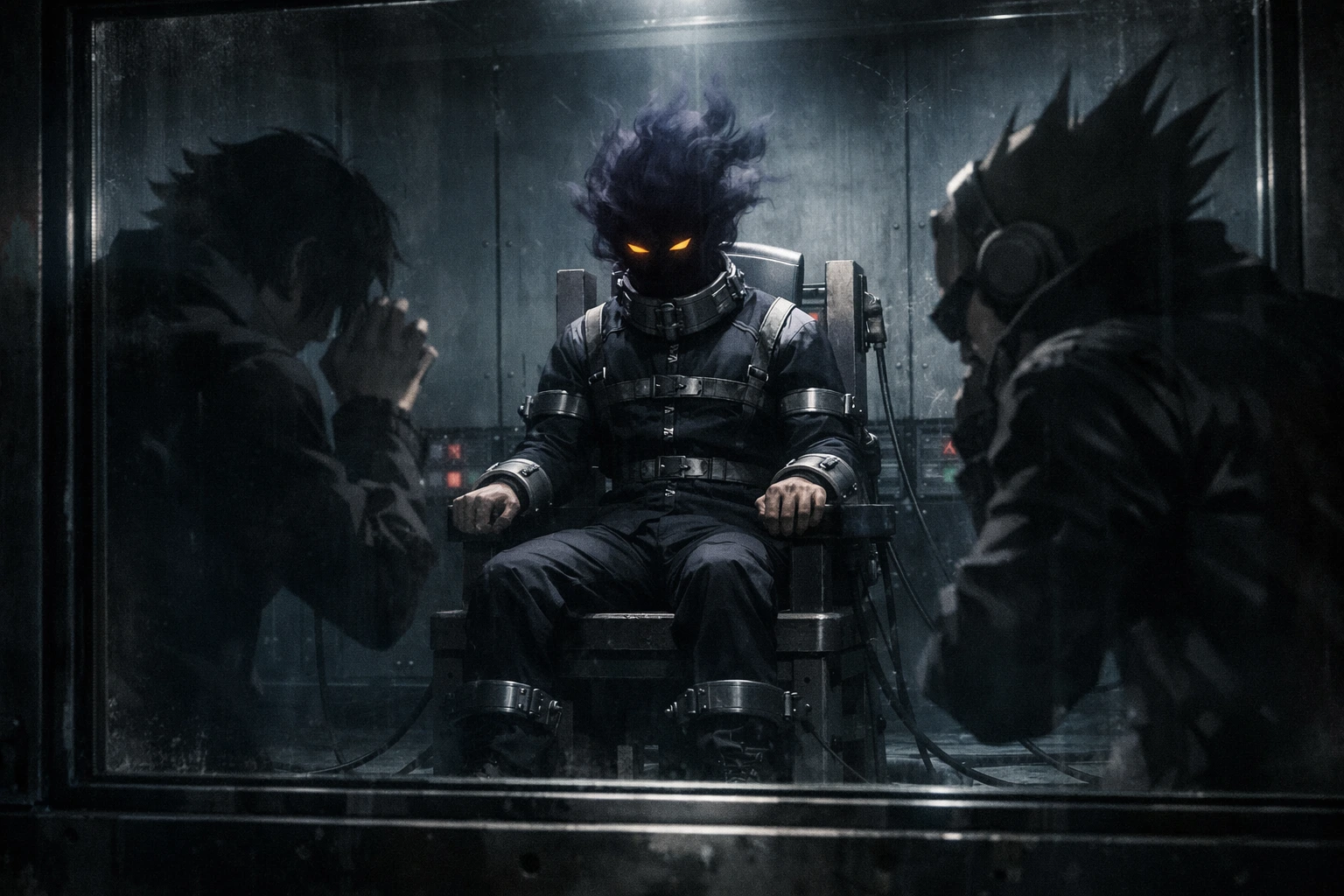
The Room of Despair: A Psychological Breakdown It is within the cold, sterile, heavily armored walls of a Tartarus interrogation room that Kurogiri’s storyline reaches its absolute emotional climax. The tactical necessity of understanding the Nomu project forces the authorities to call in the only two men who might have a connection to the biological core hidden beneath the mist: Shota Aizawa and Hizashi Yamada. The ensuing scene is a masterwork of psychological despair. Aizawa and Mic are forced to sit across a thick pane of reinforced glass and confront the literal monster wearing their dead best friend’s Quirk factor.
The emotional dissonance is suffocating. Kurogiri speaks to them with his customary, chillingly polite detachment, inquiring about Tomura Shigaraki’s well-being, completely oblivious to the utter devastation etched into the faces of the heroes before him. For Aizawa and Mic, it is a living nightmare. They are staring at a walking corpse, a horrific desecration of the boy they loved, who has been manipulated into becoming the very thing they dedicated their lives to fighting. The interrogation is not about extracting military secrets; it is a desperate, heart-wrenching attempt to see if a ghost still haunts the machine.
Breaking the Code: The Weight of the Past What follows is one of the most sheerly powerful emotional sequences in the narrative. Aizawa, dropping his stoic, logical facade, uses the sheer weight of his shared trauma and the memories of their youth to try and bypass Garaki’s impenetrable brainwashing. He doesn’t interrogate Kurogiri the villain; he speaks directly to Shirakumo the hero. He brings up the sunny days on the U.A. roof, he talks about their old stray cat, Sushi, and he desperately reminds the monster in the chair of the hero he used to be. Aizawa’s plea is a masterclass in raw vulnerability: “If you’re still in there… let’s become heroes together.”
And for one fleeting, agonizing, impossible moment, the biological programming fractures. The intense emotional stimulus forces a glitch in Garaki’s flawless code. The dark, swirling mist covering Kurogiri’s head physically parts, clearing just enough to reveal the top half of a human face—Oboro Shirakumo’s face, battered and struggling. The ghost in the machine fights through layers of genetic mutation, through years of absolute subservience to All For One, pushing past an unfathomable wall of mental conditioning. The sheer agony of that internal war is palpable as Shirakumo manages to seize control of his vocal cords for a single second to scream a single, desperate clue: “Hospital.”
With that one word, the mist violently closes back up, the programming reasserts control, and Kurogiri slumps back, unaware of what just happened. But the damage is done. The ghost proved it was real. That single, agonizingly extracted word becomes the linchpin that allows the heroes to locate Dr. Garaki’s secret laboratory, directly triggering the events of the Paranormal Liberation War. Even in death, even as a mutilated monster, Shirakumo managed to save the day one last time.
The Final War: The Master Key of the Battlefield
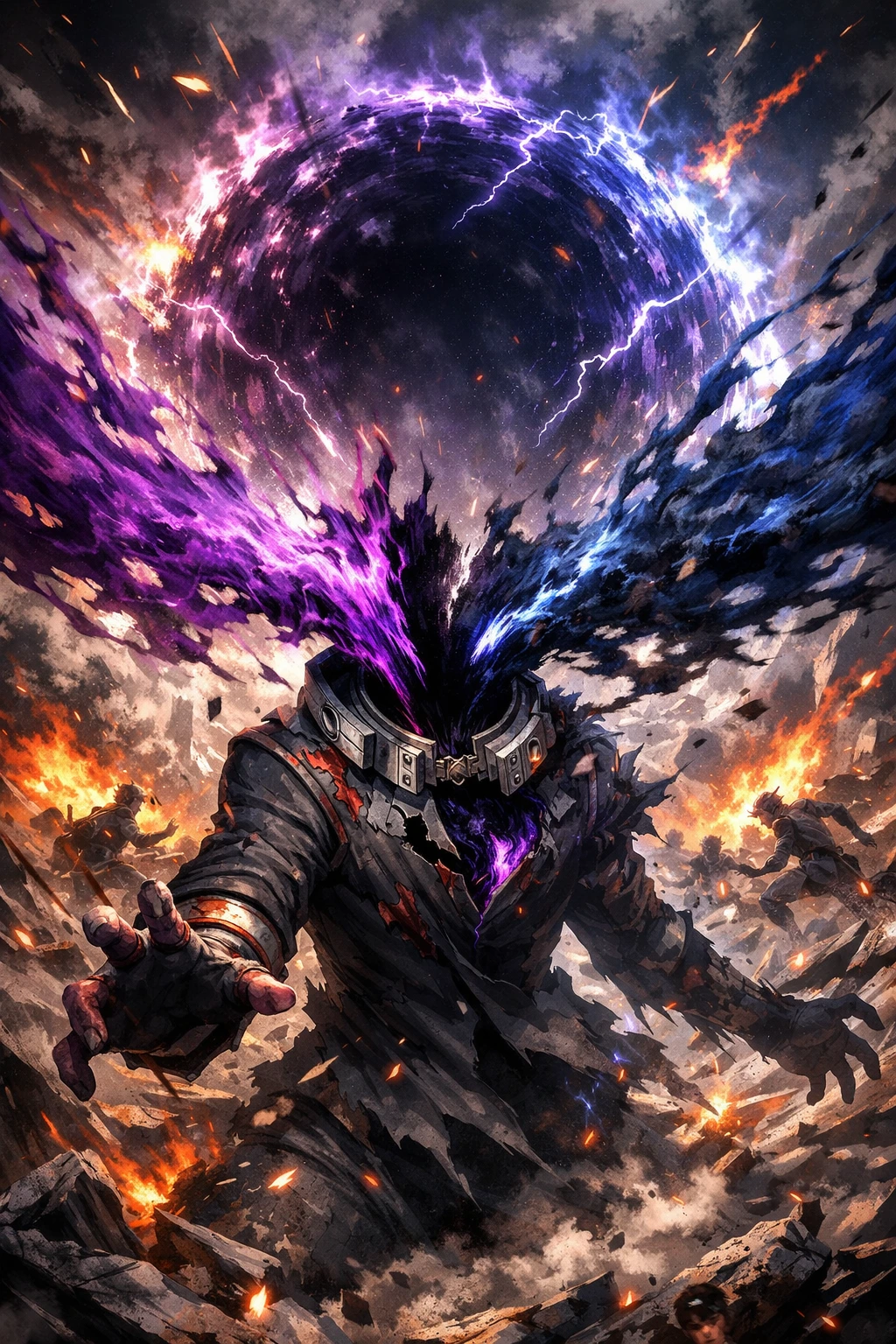
The Central Hub of Victory: Control of the Prisoner As the narrative escalates into the Final War arc, the tactical landscape shifts dramatically, but Kurogiri’s value remains absolute. He is no longer just a babysitter; he becomes the master key to the entire global conflict.
Both All For One and the Pro Heroes arrive at the exact same terrifying realization: whichever side controls Kurogiri’s Warp Gates controls the flow of the entire battlefield. The Heroes’ overarching strategy to win the war—the “Troy” system—relies entirely on dividing the heavy hitters of the villain side (Shigaraki, AFO, Dabi, Toga) into isolated, heavily contained arenas, preventing them from combining their devastating powers.
This brilliant “Divide and Conquer” strategy holds firm only as long as Kurogiri remains locked away. If the villains manage to retrieve him and activate his Warp Gates, the heroes’ isolated cages become meaningless. Kurogiri could instantly reunite the villainous forces, pulling AFO to Shigaraki, dropping Dabi into civilian centers, and instantly overturning the heroes’ massive tactical advantage. He is the ultimate wildcard, a singular prisoner whose very activation dictates victory or defeat for the entire world.
The Mutant Raid (Spinner’s Desperation) Recognizing this, All For One orchestrates a visceral, incredibly bloody assault on the Central Hospital where Kurogiri is being secretly held. He manipulates Spinner, Shigaraki’s most loyal follower, transforming him into a massive, heavily mutated figurehead to lead an army of disenfranchised heteromorphs against the hospital doors. This raid is not about ideology; it is a desperate, brute-force sprint to the vault holding the Warp Gate. The heroes, including Present Mic and Tentacole, fight a desperate, bloody defensive action, knowing the fate of the world rests on a single door.
Spinner, battered, physically breaking down from multiple Quirks, and barely holding onto his own sanity, finally breaches the containment unit. The heroes attempt to stop him, but Spinner possesses the ultimate override key. He does not use violence to wake Kurogiri; he plays a recorded command. He holds out a gruesome, severed hand—a relic of Shigaraki’s past—and plays a recording of Shigaraki’s voice. The biological programming etched into Kurogiri’s DNA reacts instantly to the voice of his master. The chains break. The mist erupts. The villain is awakened.
The Dual Directive: A Fractured Mind on the Battlefield When Kurogiri finally enters the final battlefield, warping directly into the floating U.A. fortress, the climax of his character arc is realized not in a display of overwhelming power, but in a display of profound, chaotic psychological trauma. He is no longer the calm, collected bartender. He enters the war with a completely fractured mind.
The activation by Spinner reignited the absolute programming to “Protect Tomura,” forcing him to open portals that threaten to destroy the heroes’ plans. But the confrontation in Tartarus, the tears of Aizawa, and the memories of his past have permanently damaged his code.
The lingering soul of Oboro Shirakumo is fully awake, desperately trying to fight the programming from the inside. Kurogiri becomes a being violently torn in half. In one of the most chaotic moments of the war, as Shigaraki and Dabi threaten to annihilate the heroes, Kurogiri’s actions become paradoxical.
He warps to Aizawa, seemingly to attack him, but instead physically shields him from lethal debris, his mist screaming in absolute agony as his body attempts to execute the villainous command to “Protect Shigaraki” while his soul screams the heroic command to “Protect Aizawa.” He is the master key to the battlefield, but the key has been broken in the lock, serving as a tragic, chaotic force that perfectly encapsulates the blurring lines between hero and monster.
Conclusion
The Ultimate Victim: Denied Peace Even in Death When examining the vast roster of antagonists within My Hero Academia, it becomes abundantly clear that Kurogiri must be viewed through a fundamentally different lens than figures like Dabi, Toga, or even Shigaraki. He is not a villain who made poor choices; he is not a victim of a society that turned its back on him.
Kurogiri is the ultimate, absolute victim of All For One’s reign of terror. He is a heroic soul who made the ultimate sacrifice to save lives, only to be denied the peace of death. His corpse was violated, his soul imprisoned, and his heroic instincts surgically mutilated and weaponized to facilitate the destruction of everything he once swore to protect. The tragedy of Oboro Shirakumo is that his greatest strength—his unwavering desire to care for his friends—was the exact trait used to forge the chains of his eternal servitude to a monster.
Closing Thoughts: The Apex of Villainous Cruelty As an analytical subject, Kurogiri stands as the ultimate proof of Dr. Kyudai Garaki’s psychotic, godless genius. The bio-mechanical engineering required to splice a human soul into a subservient, spatial-warping engine of war represents the absolute lowest moral point of the villainous underworld.
All For One’s theft of Quirks is a violation of the body, but the creation of Kurogiri is a violation of the spirit. He is the quiet, polite, endlessly loyal ghost haunting the narrative from its very first arc to its explosive finale. Kurogiri proves that in the world of My Hero Academia, the greatest horrors do not come from those who want to destroy society, but from those who view humanity itself as nothing more than raw material waiting to be molded into a weapon. He is a masterpiece of tragedy, wrapped in a shroud of impenetrable mist.