
Introduction
The Ghost of U.A. High: Defining Oboro
In the sprawling, superhuman society of My Hero Academia, casualties are an unfortunate but accepted reality of the heroic profession. Statues are built, memorials are held, and the world moves on to the next shining symbol of peace. However, no single death has cast a longer, darker, or more profoundly defining shadow over the current generation of U.A.
High School educators than that of Oboro Shirakumo. To categorize Shirakumo merely as a fallen hero or a tragic backstory is to fundamentally misunderstand his narrative weight. He is the ghost that haunts the halls of U.A., the invisible architectural support holding up the ideologies of Eraser Head (Shota Aizawa) and Present Mic (Hizashi Yamada).
Shirakumo was the emotional anchor that defined their youth, the catalyst for their adult methodologies, and, ultimately, the subject of a horrifying resurrection that weaponized their deepest trauma. He represents the ultimate loss of innocence for the generation that would go on to teach Izuku Midoriya and Class 1-A.
The Ultimate Desecration
The tragedy of Oboro Shirakumo is not just that he died young; it is what happened to him after he was forced to leave the mortal coil. The stark, nauseating contrast between the bright, endlessly optimistic student he was and the cold, unfeeling, programmed biological machine he became stands as the most macabre element of Kohei Horikoshi’s entire masterwork.
Shirakumo, the boy who wanted to lift everyone up to the clouds, was dragged into the deepest, darkest depths of villainous bio-engineering to become Kurogiri—the High-End Nomu and the ultimate tool of the League of Villains. His desecration is a thematic mirror to the core of the series: if heroism is about self-sacrifice and preserving life, then All For One and Dr. Garaki’s villainy is absolute because it strips away autonomy, violates the sanctity of death, and recycles human souls into weapons of mass destruction.
Article Scope
This document serves as the definitive, expert-level breakdown of the life, death, and horrifying resurrection of Oboro Shirakumo. We will go far beyond surface-level character summaries. This comprehensive analysis will explore his untold past detailed in the My Hero Academia: Vigilantes prequel, diving deep into the golden days of the U.A. trio.
We will dissect the dark, pseudo-scientific methodologies used to hijack his corpse, the bio-engineering genius required to synthesize the “Warp Gate” Quirk from his original abilities, and the agonizing psychological warfare of his Tartarus interrogation. This is the complete autopsy of a hero’s soul—how it was broken, how it was twisted, and how, against all biological impossibility, it fought back.
The Golden Trio: Aizawa, Yamada, and Shirakumo
The Sunshine and the Shadows
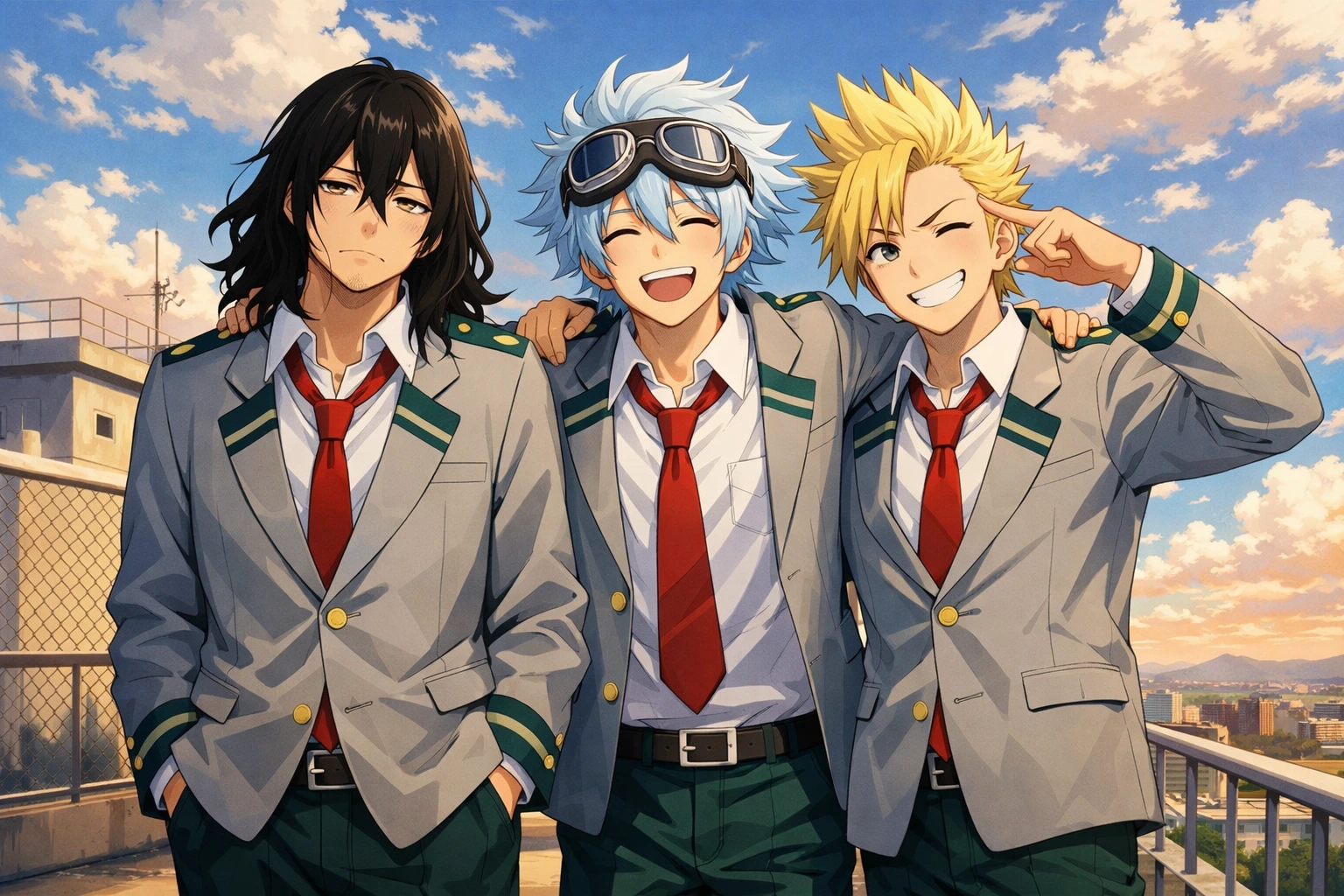
To understand the profound impact of Kurogiri’s existence, one must first look back at the era meticulously chronicled in My Hero Academia: Vigilantes. During their time in Class 2-A at U.A. High School, Shota Aizawa, Hizashi Yamada, and Oboro Shirakumo formed a trio that was as deeply contradictory as it was perfectly balanced.
Yamada (Present Mic) was the abrasive, loud, high-energy extrovert. Aizawa (Eraser Head) was deeply entrenched in the shadows—a pessimistic, self-doubting, hyper-logical teenager who viewed his own Quirk (Erasure) as fundamentally flawed because it lacked offensive physical capabilities.
Between these two extremes stood Oboro Shirakumo. He was the sunshine that cut through Aizawa’s shadows and the grounding force that tempered Yamada’s chaotic noise. Shirakumo possessed a blinding, infectious optimism, paired with an intense heroic drive that refused to accept limitations. While Aizawa constantly questioned his own worth as a hero, Shirakumo never allowed him to wallow in self-pity.
He recognized Aizawa’s tactical genius and continually pushed him to step out of his comfort zone. The dynamic was not just friendship; it was a symbiotic psychological support system. Shirakumo was the glue that bound them, operating on the belief that a hero’s worth is not measured by the destructive power of their Quirk, but by their willingness to act when others freeze.
The Cloud Quirk
Shirakumo’s original power, the “Cloud” Quirk, was a remarkably versatile and visually striking ability that perfectly mirrored his personality. He could generate dense, semi-solid clouds from his body. These were not mere vapor; they possessed enough physical density and tensile strength to sustain significant weight. In combat and rescue operations, this Quirk was a Swiss Army knife of utility.
For high-speed mobility, Shirakumo could ride these clouds like a surfer on the sky, granting him unparalleled aerial maneuverability. For rescue operations, he could generate massive cloud cushions to catch falling debris or safely transport large groups of civilians away from danger zones.
Defensively, the clouds could act as blinding smokescreens or physical barriers to absorb impact. The Quirk required immense concentration to maintain density, but in Shirakumo’s hands, it was an extension of his desire to lift others up—both literally and metaphorically. The clouds were soft enough to comfort, yet firm enough to save lives, a biological manifestation of his “Loud Cloud” persona.
The “Loud Cloud” Ideology
Oboro Shirakumo operated under the hero name “Loud Cloud,” and his ideology was simple yet profound: a hero’s primary job is to inspire. While Aizawa believed in logic, efficiency, and defeating the villain as quickly as possible, Shirakumo believed that saving a life meant nothing if you didn’t also save their spirit. He believed in smiling through the pain, projecting confidence so that victims would know everything was going to be alright.
This philosophy fundamentally shaped Aizawa’s understanding of heroism. When Aizawa struggled with close-quarters combat, feeling inadequate due to his lack of physical enhancement, it was Shirakumo who taught him to push past those personal limits.
Most crucially, it was Shirakumo who gave Aizawa his signature goggles. During a training exercise, Shirakumo noticed Aizawa was constantly getting debris in his eyes, which deactivated his Erasure Quirk. Shirakumo handed over his own aviator-style goggles, telling Aizawa to protect his vision so he could keep looking forward.
Those goggles, which Aizawa still wears to this day, are not just a tactical tool; they are a permanent, physical manifestation of Shirakumo’s belief in him. Every time Eraser Head puts them on, he is carrying Oboro’s legacy into battle.
Ground Zero: The Tragedy of the Internship
The Villain Garvey
The trajectory of the golden trio was violently permanently derailed during a seemingly routine work-study patrol. In the era before the hyper-regulated, intricately managed heroism seen at the start of the main series, the streets were vastly more unpredictable.
Villain encounters could escalate from minor disturbances to city-leveling catastrophes in a matter of seconds. During their internship under the pro hero His Purple Highness, the trio encountered a monstrous villain named Garvey.
Garvey was a hulking, terrifyingly powerful entity with a Quirk that allowed him to emit massive shockwaves and cause widespread structural destruction. He was not a mastermind with a grand plan; he was a chaotic force of nature, a living wrecking ball.
The suddenness of the attack highlighted the raw, unfiltered terror of villainy. There was no grand monologue, no ideological clash—just sudden, brutal violence. For young students still learning the ropes, the encounter quickly transitioned from a training exercise into a desperate fight for survival, forcing them to operate entirely on instinct.
The Falling Debris
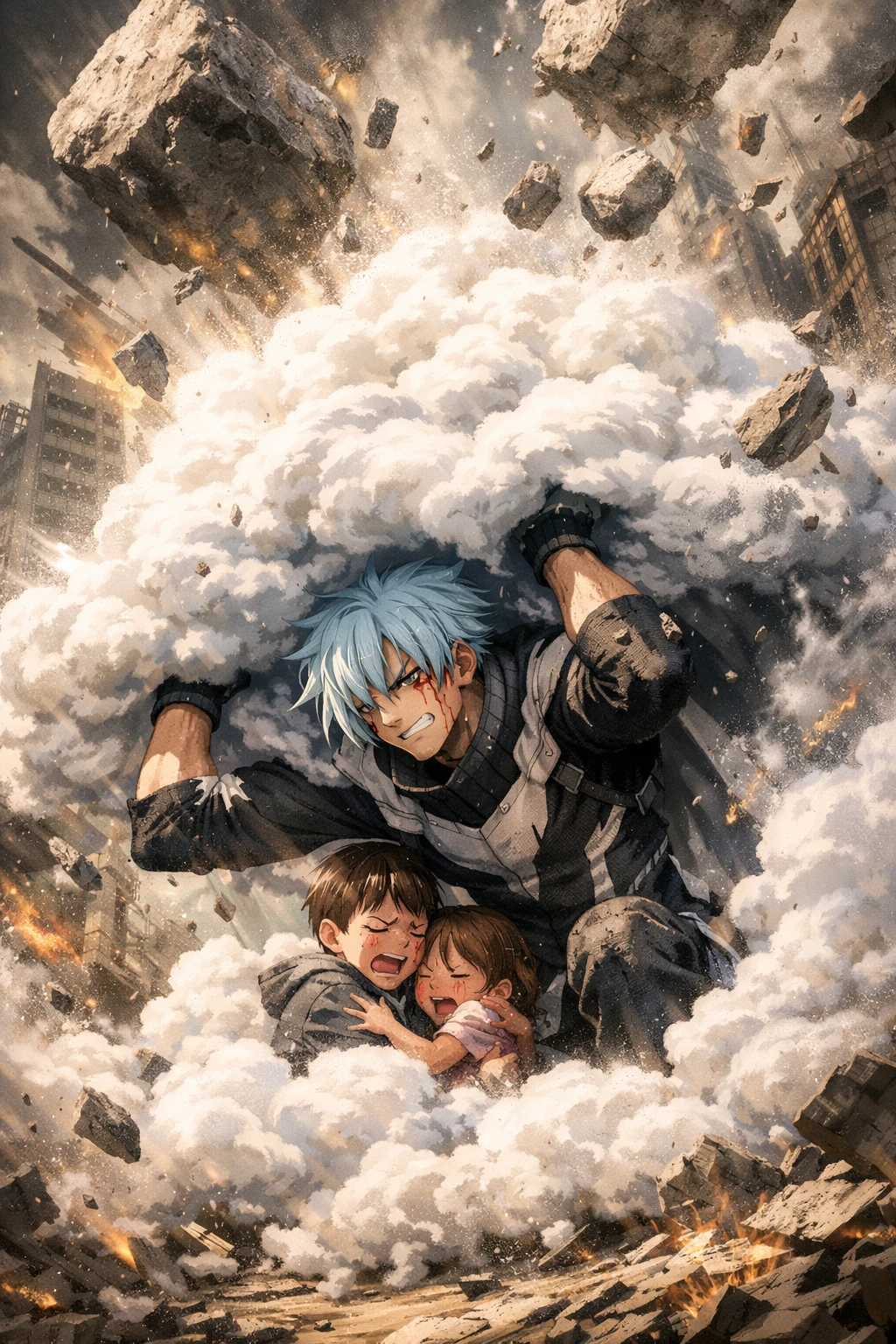
The climax of the Garvey encounter remains one of the most visceral and heart-wrenching moments in the My Hero Academia mythos.
As Garvey unleashed a massive attack, the structural integrity of a nearby building completely failed. Massive concrete slabs, steel rebar, and shattered glass began to rain down on a group of helpless civilian children trapped in the crossfire.
In a fraction of a second, tactical logic ceased to exist for Oboro Shirakumo. Aizawa, whose Quirk was useless against gravity and falling rock, could only watch in frozen horror. Shirakumo deployed his Cloud Quirk, not to move himself to safety, but to generate a massive, dense cloud canopy over the children.
He sacrificed his own mobility, anchoring himself directly beneath the collapsing structure to maintain the density of the cloud barrier. The children were shielded, entirely unharmed. But the sheer, localized weight of the collapsing building was too much. The debris crushed Shirakumo instantly. There was no lingering final speech, no heroic final breath. The light was simply snuffed out. He died exactly as he lived: putting the safety of others above his own existence.
The Psychological Fallout
The exact moment of Oboro’s death permanently scarred Shota Aizawa. The psychological fallout was immediate and catastrophic. Aizawa watched his best friend—the brightest light in his life—get crushed into the pavement while his own “logical” and “efficient” Quirk proved utterly useless. This trauma fundamentally altered Eraser Head’s personality.
He withdrew into himself, abandoning the flashy, spotlight-chasing aspects of heroism. He became an underground hero, operating entirely in the shadows, fighting in a way that ensured fights ended before they could escalate to the point of collateral damage.
More importantly, it defined his entire teaching philosophy at U.A. High School. The reason Aizawa is so utterly ruthless, the reason he famously expels entire classes of students on the first day if they show a lack of potential or logical self-preservation, is entirely rooted in Shirakumo’s death.
Aizawa expels them to protect them. He would rather crush a student’s dream of becoming a hero than attend another funeral for a teenager who smiled too brightly and leaped into danger without thinking. Every harsh word Aizawa speaks to Class 1-A is a desperate, trauma-driven attempt to prevent the creation of another Oboro Shirakumo.
The Grave Robber: Dr. Garaki’s Masterpiece
The Harvesting of Heroes
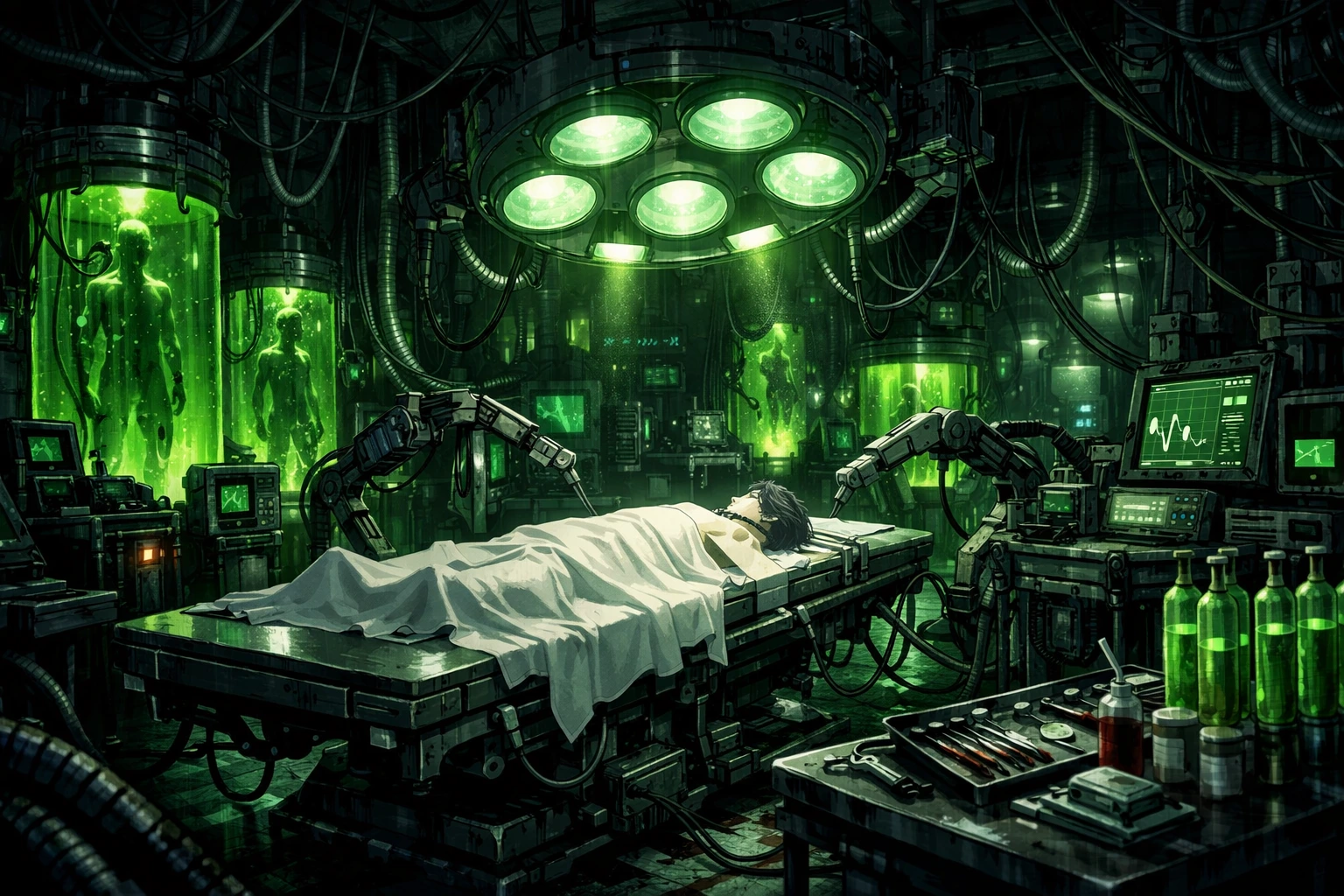
While the students and faculty of U.A. grieved the loss of a shining star, an entirely different, far more sinister operation was taking place in the shadows. The true horror of the Shirakumo tragedy is the revelation of the villains’ logistical operations. Dr. Kyudai Garaki (also known as Daruma Ujiko) and his master, All For One, were not merely conquering the underworld; they were actively harvesting it.
Dr. Garaki’s research into the Quirk Singularity Doomsday Theory and his creation of the Nomu required biological raw materials of the highest caliber. They did not just want random corpses; they specifically targeted the bodies of young, high-potential heroes and underground fighters whose physical vessels were in peak condition, hardened by intense Quirk training.
A young, powerful U.A. student whose Quirk involved generating dense, manipulable mass was an absolute goldmine. Shirakumo wasn’t just a casualty of a villain attack; in the grand, terrifying scheme of All For One, he was a freshly acquired asset.
The Empty Coffin
The cruelty inflicted upon Shirakumo’s loved ones extends far beyond his murder. After the rubble was cleared and the body was supposedly recovered, the U.A. faculty, his classmates, and his family held a funeral. They mourned, they cried, and they buried a casket.
But the agonizing reality, revealed years later, was that they were mourning an empty coffin—or perhaps a highly convincing fake body constructed by Dr. Garaki’s advanced cloning and bio-engineering techniques.
Completely unaware, Aizawa and Yamada spent their entire adult lives visiting a grave that held nothing but dirt and lies. In the critical window between the morgue and the funeral parlor, Garaki’s agents had stolen Shirakumo’s corpse.
The psychological devastation of this realization—that their friend was never allowed to rest in peace, that his body was immediately taken to a cold, sterile laboratory to be butchered—is a violation so profound it defies basic human comprehension. It adds a layer of absolute, stomach-churning horror to the already tragic loss.
The Brainwashing Process
Once in Dr. Garaki’s possession, Oboro Shirakumo ceased to be a human being and became a canvas for mad science. The creation of a High-End Nomu is a process of systematic biological and psychological erasure. Garaki surgically opened the deceased boy’s skull and began the agonizing process of expanding the dead brain to hold multiple powerful Quirks.
But physical modification was only half the battle. To ensure absolute loyalty and obedience to All For One and Tomura Shigaraki, Shirakumo’s mind had to be completely purged. Garaki systematically wiped away his memories, his personality, his infectious laugh, and his “Loud Cloud” ideology.
He severed the pain receptors to ensure the new entity would not flinch in battle. The vibrant, heroic soul of a boy who wanted to save everyone was suppressed, overwritten, and reduced to a blank, biological hard drive. Dr. Garaki installed a new operating system, turning a hero into a compliant, sophisticated monster. Oboro Shirakumo was dead; Kurogiri was born.
The Bio-Engineering of “Warp Gate”
The Synthetic Quirk
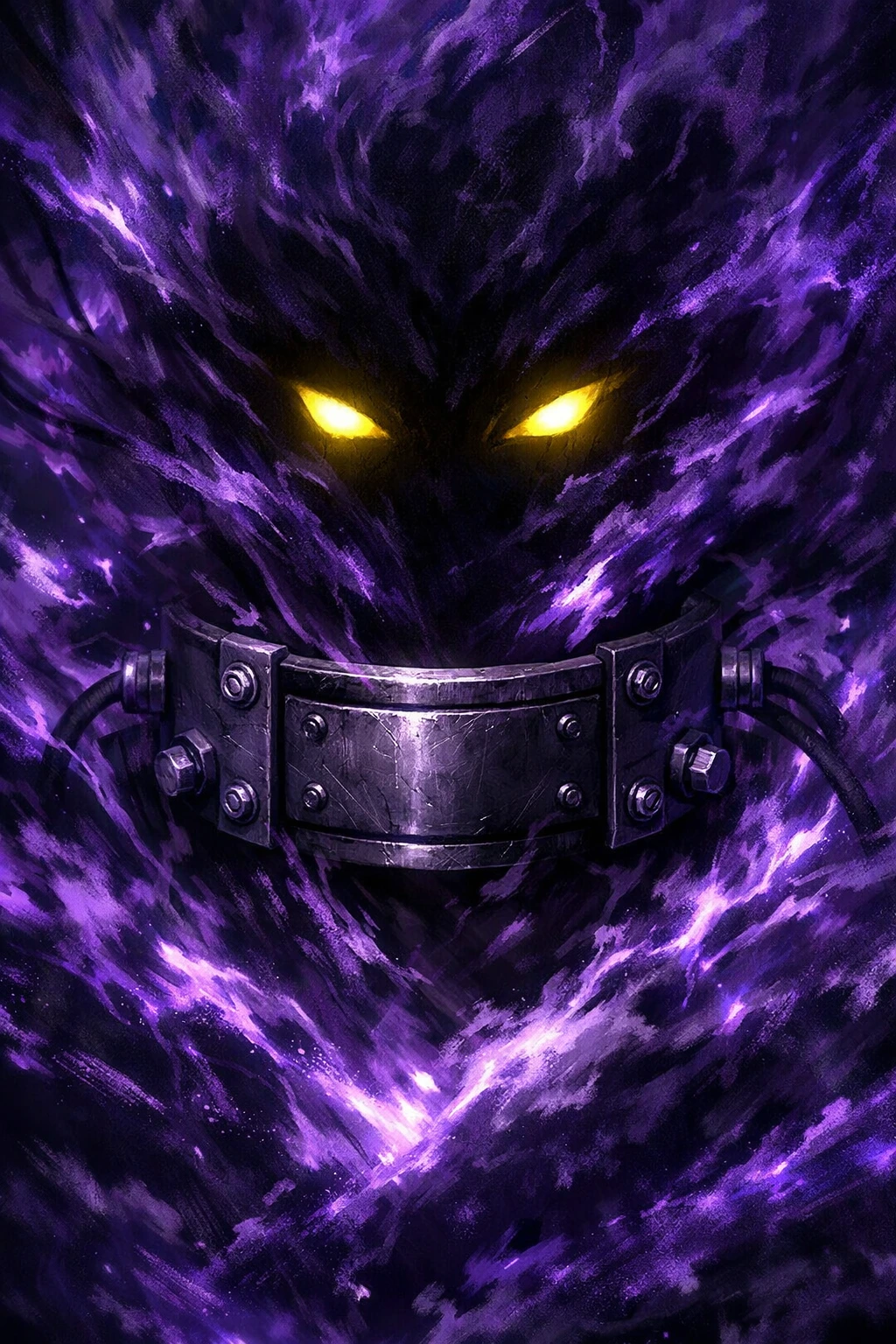
The most terrifying aspect of Kurogiri is not just his appearance, but the very nature of his power. “Warp Gate,” the Quirk that allows the League of Villains to strike anywhere in Japan without warning, is not a naturally occurring phenomenon.
It is a synthetic masterpiece, a horrifying achievement of genetic engineering and Quirk splicing. Dr. Garaki understood that true spatial teleportation Quirks are incredibly rare and often come with severe biological limitations (as seen with All For One’s own muddy teleportation). To create the ultimate transportation system for Shigaraki, Garaki needed to build a Quirk from scratch using multiple stolen abilities.
The Cloud Foundation
The genius of Garaki’s engineering was how he utilized Shirakumo’s original power. The “Cloud” Quirk was used as the physical base, the biological medium necessary to house the spatial abilities. Shirakumo originally generated dense, manipulable moisture. Garaki twisted this concept, corrupting the white, fluffy clouds into a dark, swirling, semi-liquid mist.
This black fog is not just an aesthetic choice; it is the physical manifestation of Shirakumo’s altered DNA. The mist serves as the event horizon for the teleportation. Because Shirakumo’s body was already biologically adapted to generating and sustaining large volumes of this cloud-like matter, it was the perfect vessel to host a spatial manipulation Quirk that required a physical gateway to function.
The Coordinate Splicing
Into this dark mist, Dr. Garaki surgically integrated multiple stolen Quirks. The exact combination remains a closely guarded secret of All For One’s empire, but it involved merging spatial distortion abilities with complex coordinate-based targeting Quirks.
This terrifying cocktail allowed Kurogiri to do what no other teleporter could: he could envelop anything—people, objects, or even incoming attacks—within his mist and instantly transport them to an exact, pre-determined set of coordinates.
This splicing process fundamentally altered his cellular structure. Kurogiri does not just use Warp Gate; he is the Warp Gate. His entire physical form is a living, breathing portal, held together by the dark science of multiple Quirks forcefully grafted onto the corpse of a dead teenager.
The Physical Weakness
However, Dr. Garaki’s design was not entirely flawless; it contained a singular biological vulnerability. The process of turning a human body into a localized spatial distortion field threatened to rip the physical form apart. To counter this, Garaki had to leave a small, highly condensed portion of Shirakumo’s original physical body intact at the core of the mist to serve as an anchor point.
This is the purpose of the physical metal neck brace Kurogiri constantly wears. It is not a fashion statement; it is a structural necessity. The brace houses and protects the only solid, vulnerable part of his actual body left inside the mist—likely his spinal column and the heavily modified brain.
If this core is struck or disabled, the entire mist form collapses. This biological flaw is the only reason heroes like Katsuki Bakugo (during the USJ arc) and Gran Torino were ever able to physically apprehend the otherwise untouchable entity.
The Caretaker Program: Kurogiri’s Directive
The Nanny of Destruction
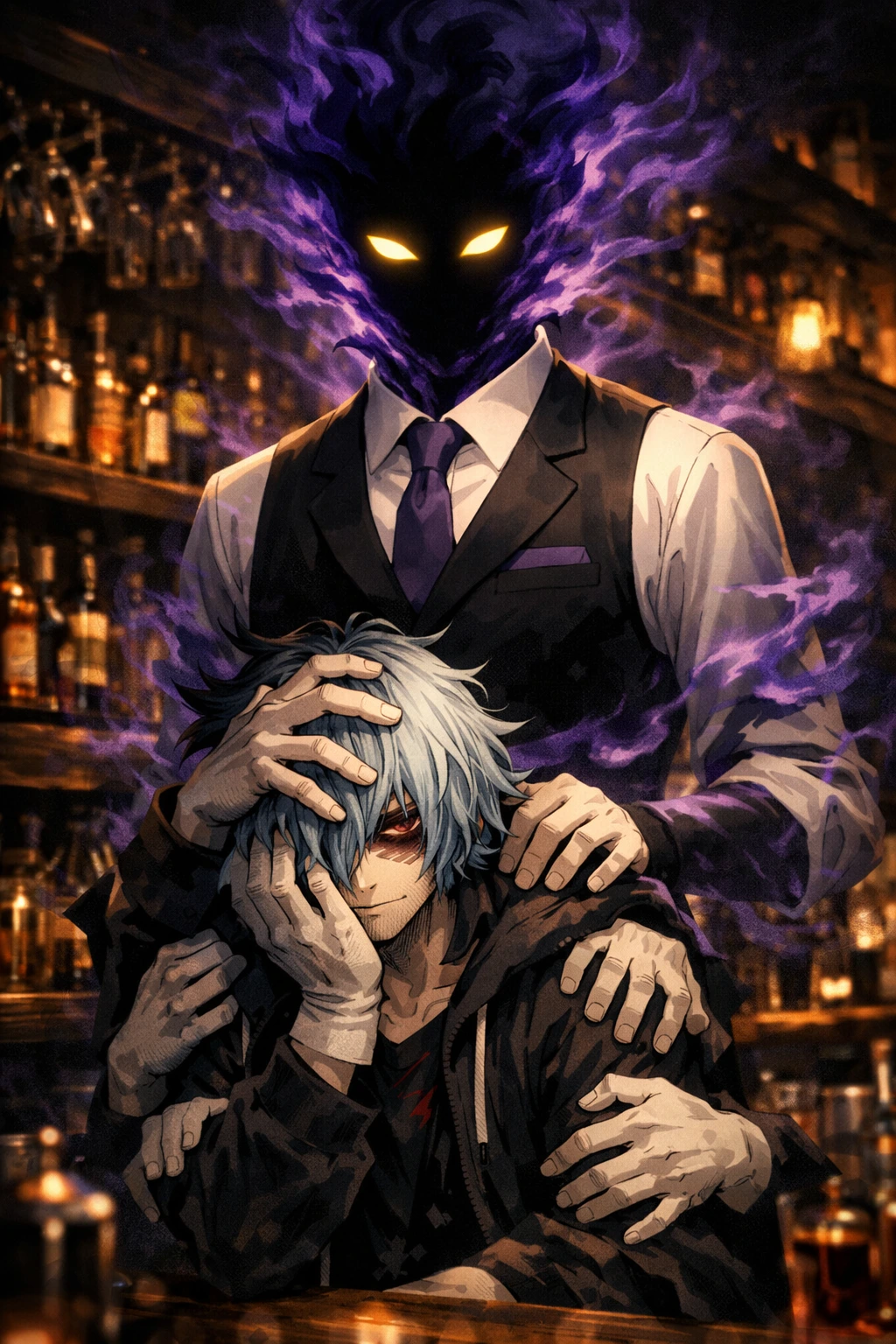
When Kurogiri was deployed to serve the League of Villains, he was assigned a very specific role that went far beyond mere transportation. He was designated as the “Caretaker.” Dr. Garaki and All For One recognized that Tomura Shigaraki was a volatile, emotionally unstable man-child whose destructive Quirk (Decay) could easily backfire or result in his own premature death before he was ready to inherit All For One’s empire.
Kurogiri was programmed to be Shigaraki’s ultimate shield, his mentor in the underworld, and his emergency exit. He was the “Nanny of Destruction.” Kurogiri managed the bar, poured the drinks, mediated disputes between volatile villains, and always ensured that Shigaraki had a way out when hero forces overwhelmed them. He was a calming, sophisticated presence, a chilling contrast to the chaotic violence of the League. The irony is sickening: a U.A. student whose dream was to protect children was reprogrammed to protect and nurture the greatest mass murderer of his generation.
Absolute Loyalty
The programming inscribed onto Shirakumo’s modified brain was absolute. Kurogiri possesses an unbreakable code written into his very neurons by Dr. Garaki: prioritize the safety, growth, and survival of Tomura Shigaraki above all else. This loyalty is not born of affection or shared ideology; it is a biological mandate.
Kurogiri is literally incapable of betraying Shigaraki. If forced to choose between his own life and Shigaraki’s, the programming automatically forces Kurogiri to sacrifice himself. This absolute obedience makes him the perfect servant, a machine that cannot be reasoned with, bribed, or intimidated. He does not fear death, prison, or pain—he only fears failing his primary directive.
The Vestige Bleed-Through
Despite Dr. Garaki’s surgical perfection, the human soul is remarkably resilient. Deep within the core of the High-End Nomu, the vestige of Oboro Shirakumo was never fully extinguished. Throughout the early arcs of the series, subtle, almost imperceptible hints of Shirakumo’s original personality began to leak through the dark programming.
Kurogiri’s polite, almost formal demeanor—even when addressing enemies—is a twisted reflection of Shirakumo’s inherent respect for others. More tellingly, during the USJ attack, when the villains breached the rescue training facility, Kurogiri isolated the students. However, his actions were oddly restrained compared to the murderous intent of the other villains.
His primary action was to scatter them, not execute them outright. In a profound, subconscious bleed-through, Kurogiri’s actions mirrored Shirakumo’s final moments: his instinct was heavily focused on the management and positioning of children in a disaster zone, an echoing trauma of the falling rubble that ended his first life.
The Tartarus Interrogation: Breaking the Code
The Cruelest Reunion
The discovery of Kurogiri’s true identity led to one of the most psychologically harrowing sequences in modern manga: the Tartarus interrogation. Held in the deepest, most secure level of the ultimate maximum-security prison, Kurogiri was strapped to a chair, his Quirk suppressed. Across from him, separated by thick bulletproof glass, sat Shota Aizawa and Hizashi Yamada.
This was the cruelest reunion imaginable. Two men in their thirties, burdened by a lifetime of regret and the heavy responsibilities of shaping the next generation, were forced to look at the reanimated, monstrous corpse of their best friend.
The visual juxtaposition—the tired, emotionally exhausted Aizawa and the bright, loud Yamada facing the swirling black mist of their darkest trauma—was a masterclass in atmospheric tension. Gran Torino and Detective Tsukauchi watched from the monitors, knowing they were asking these teachers to endure unspeakable psychological torture for the sake of national security.
Emotional Resonance vs. Artificial Intelligence
The tactical approach to this interrogation was entirely unprecedented. Tsukauchi and the police had exhausted all traditional methods. They recognized that Kurogiri was, for all intents and purposes, an advanced biological artificial intelligence. Logical questioning, threats, and standard interrogation tactics were useless against a programmed Nomu; his base code simply wouldn’t allow him to divulge the League’s secrets.
Aizawa, demonstrating his unparalleled analytical mind even amidst severe emotional distress, realized that logic would fail. The only way to bypass Dr. Garaki’s firewall was to overload the system with something it wasn’t programmed to process: intense, shared emotional trauma.
They had to speak to the vestige trapped beneath the code. Aizawa and Yamada abandoned their roles as pro heroes and reverted to the desperate teenagers they once were. They weaponized their own grief, recounting their shared past, their dreams, and the agonizing void left by Oboro’s death, attempting to spark a connection strong enough to override the villainous programming.
The Goggles and the Memories
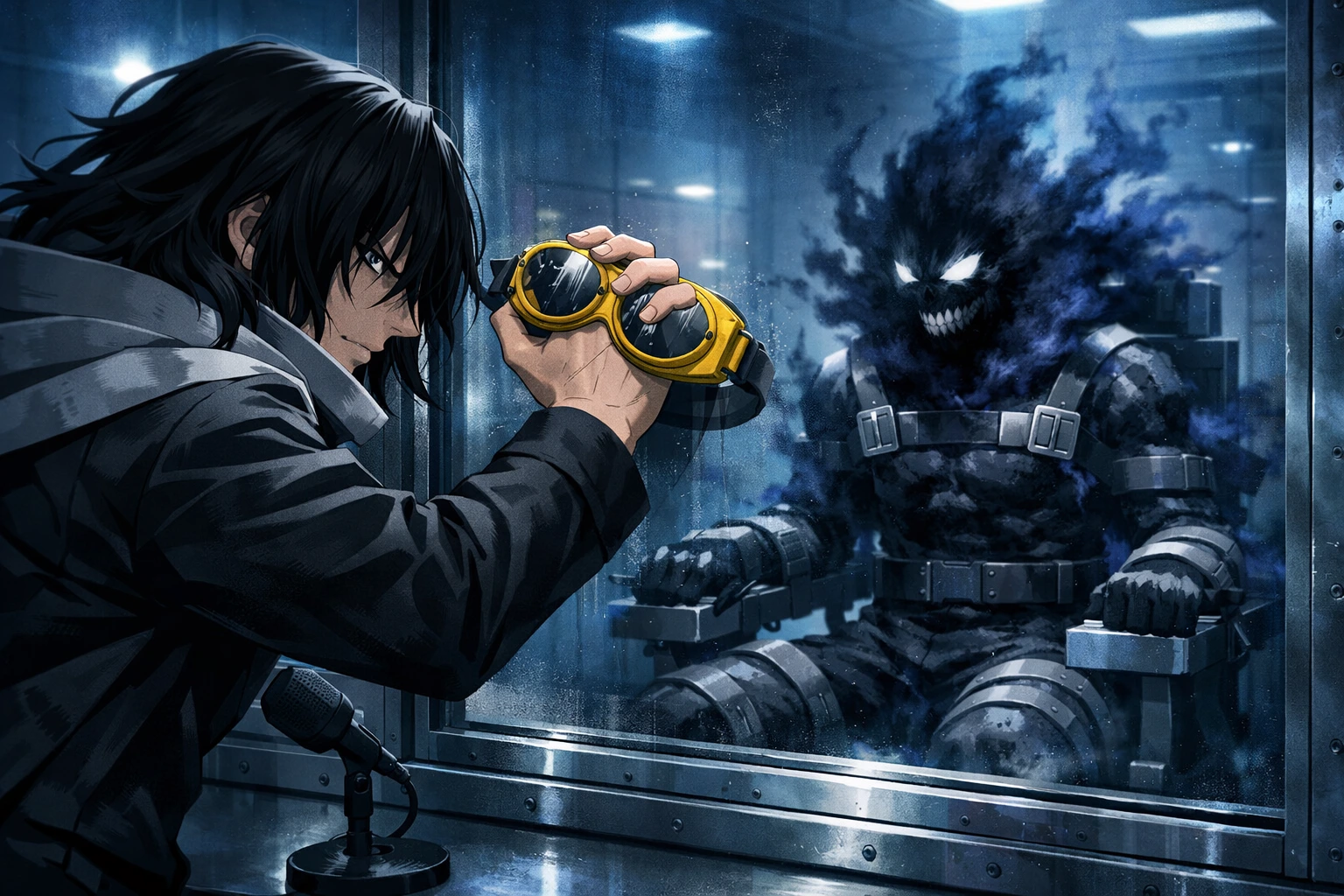
The turning point of the interrogation centered around a physical totem of their bond: Aizawa’s goggles. Aizawa removed the very goggles Shirakumo had given him all those years ago and pressed them against the bulletproof glass.
He didn’t ask Kurogiri a question; he delivered a desperate plea. He reminded Oboro that they still needed him, that the three of them were supposed to become heroes together, and that his students at U.A. still needed the light that “Loud Cloud” once provided.
This act was the psychological trigger. The presentation of the goggles, combined with the raw, unfiltered agony in Eraser Head’s voice, forced a massive system error in Kurogiri’s brain. The memories of his youth, the sensation of the wind, the laughter on the U.A. roof—it all violently clashed with the “Caretaker” directive.
The logic circuits of the High-End Nomu began to critically malfunction as the suppressed human soul violently clawed its way toward the surface.
The Awakening of the Vestige
The Face in the Mist
What followed was a biological and emotional climax that redefined the boundaries of Quirk science and the power of human connection within the series. The sheer power of Aizawa and Yamada’s grief successfully bypassed the surgical alterations. The dark, swirling mist of Kurogiri’s form began to violently churn and break apart.
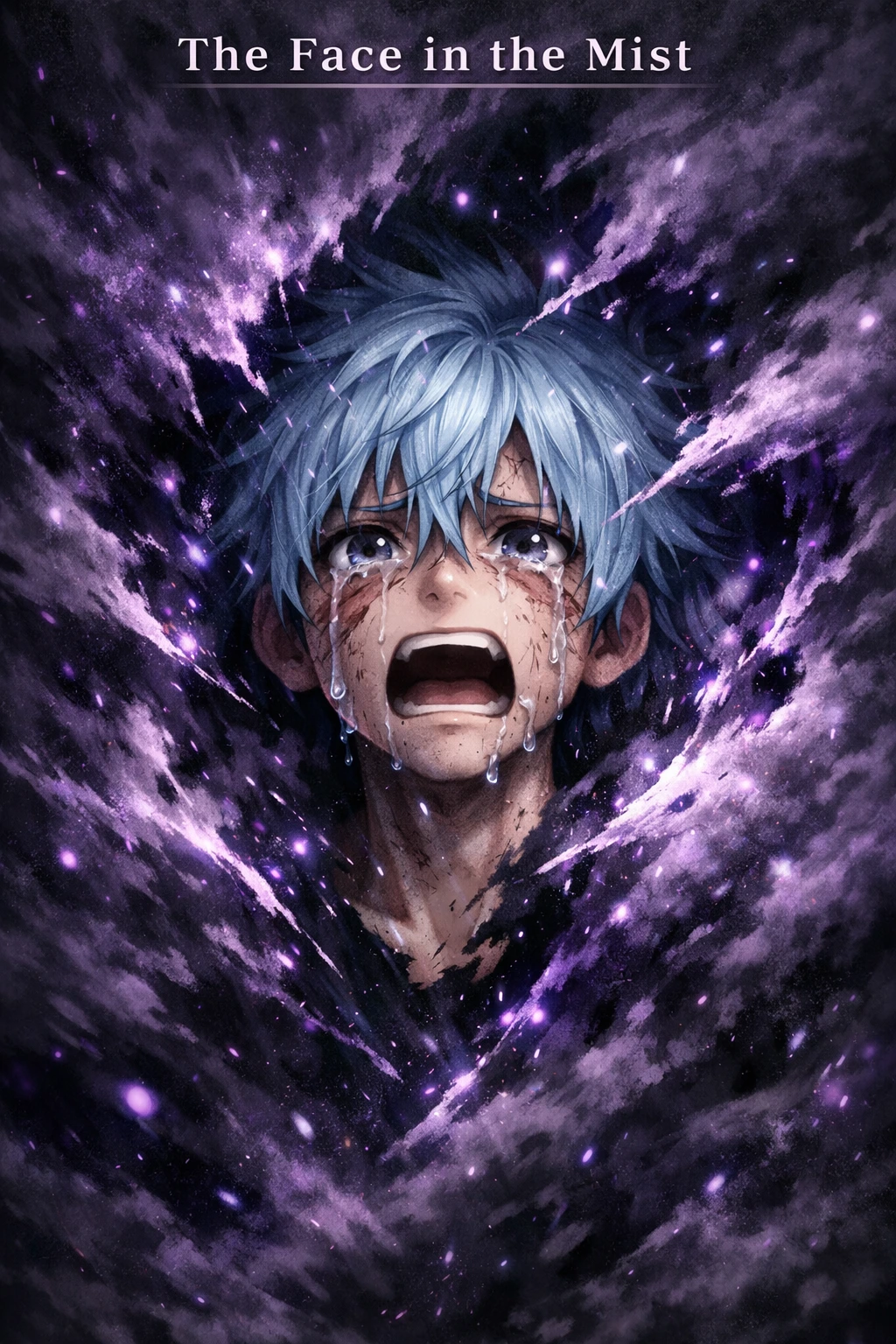
In a moment of sheer, terrifying awe, the mist receded just enough to reveal the physical truth hidden beneath. A face forcefully manifested out of the dark fog—not the glowing yellow eyes of a monster, but the scarred, agonizingly recognizable face of Oboro Shirakumo.
He was weeping. It was a visceral, horrifying image: a dead boy tearing through the fabric of his own monstrous prison, desperately trying to look at his best friends one last time. It proved that Garaki had not destroyed the soul; he had only buried it alive.
The Final Warning
This victory of the human spirit, however, was tragically temporary. The programming of a High-End Nomu is incredibly robust, and the system immediately began to forcefully repress the anomaly. Shirakumo knew he only had a fraction of a second before the darkness swallowed him again. He didn’t ask for help, and he didn’t apologize. In his final moments of lucidity, the hero “Loud Cloud” returned to do the only thing that mattered: protect others.
Pushing through immense biological agony, Shirakumo managed to scream a single word: “Hospital.”
That single word was the key to the entire war. It gave the heroes the exact piece of actionable intelligence they needed. It confirmed that Dr. Garaki and the sleeping, evolving Tomura Shigaraki were hidden beneath Jaku General Hospital.
Shirakumo’s temporary awakening allowed the Hero Public Safety Commission to organize the massive preemptive strike that would define the Paranormal Liberation War arc. Even in death, even while trapped in the body of a monster, Oboro Shirakumo saved thousands of lives.
The Internal War
Following the Tartarus interrogation, the mist swallowed Oboro’s face once more, and Kurogiri powered down, returning to his dormant, captive state. But the implications of that scene are utterly terrifying. The heroes left Tartarus with the intelligence they needed, but they also left with a horrifying realization: Shirakumo’s soul is still in there.
He is fully aware. He is trapped inside a sensory deprivation tank of his own corrupted flesh, constantly fighting a losing, agonizing battle against his own synthetic programming. The tragedy of Oboro Shirakumo is ongoing. He is a prisoner of war in his own mind, a ghost haunting the shell of a monster, waiting in the darkness for a rescue that may never be scientifically possible.
Conclusion
The Ultimate Violation of Humanity
The saga of Oboro Shirakumo stands as the darkest, most irredeemable crime committed by All For One and the League of Villains in the entirety of My Hero Academia. It transcends typical villainy—bank robberies, assassinations, or desires for societal collapse. The creation of Kurogiri is an assault on the very concept of human dignity.
To take a boy whose sole desire was to be a beacon of hope, to murder him, to defile his corpse, and to twist his soul into a subservient chauffeur for the architects of global destruction is a violation so profound it cements the League’s masterminds as absolute, irredeemable monsters. Shirakumo’s fate elevates the stakes of the series from a battle over society to a battle over the sanctity of the human soul itself.
Closing Thoughts
From a narrative perspective, Kohei Horikoshi’s handling of Oboro Shirakumo is nothing short of masterful storytelling. By taking a tragic backstory introduced in the spin-off manga Vigilantes and weaving it directly into the core emotional climax of the main series’ final act, Horikoshi rewarded dedicated readers while simultaneously deepening the emotional complexity of his adult cast. Shirakumo is the emotional crux of U.A.
High. Every time Shota Aizawa puts his life on the line for Izuku Midoriya, every time Present Mic screams into the void, they are doing it in defiance of the darkness that swallowed their friend. Oboro Shirakumo may have died beneath the rubble as a student, but the hero “Loud Cloud” continues to fight, surviving as a vestige of hope in the heart of a monster, and as the foundational bedrock of the greatest heroes of the modern era.