
Introduction
The Ideological Earthquake
In the sprawling, hyper-commercialized world of My Hero Academia, where superpowers are commodified and life-saving is monetized via billboard rankings, a singular, terrifying force emerged to challenge the status quo. Chizome Akaguro, globally feared as the Hero Killer Stain, cannot be accurately defined merely as a serial killer, a rogue villain, or a deranged antagonist.
To understand Stain is to understand him as a violent, necessary immune response to a corrupt and complacent Hero Society. Before Stain’s blade ever tasted the blood of a Pro-Hero, the societal ecosystem was suffocating under the weight of its own capitalist arrogance.
Heroes were acting as corporate mascots, their faces plastered on energy drinks and billboards, prioritizing public relations and paycheck bonuses over the sanctity of human life. The title of “Hero” had been diluted from a sacred vow of protection into an accessible career path for the fame-hungry. Stain was the ideological earthquake that shattered this foundation, acting as a brutal mirror held up to a society that had lost its moral compass.
The Death of the Illusion
The death of Hero Society’s grand illusion did not come at the hands of an all-powerful warlord with a god-tier Quirk, but from a single, ragged man armed with sharpened blades and absolute, terrifying conviction. Stain managed to expose the shallow, fame-driven reality of modern Pro-Heroes with surgical precision. He operated in the dark, dirty alleyways that the shining, spotlight-chasing heroes ignored.
Every time he paralyzed and executed a “fake” hero, he stripped away the glossy veneer of the Hero Public Safety Commission’s carefully curated narrative. He proved that underneath the spandex and the marketing campaigns, many of these supposed saviors were cowards, opportunists, or simply incompetent when faced with true, unadulterated lethal intent.
He proved that the illusion of absolute safety was bought and paid for by a system that ignored genuine justice, and with every drop of blood he consumed, he forced the world to wake up from its profitable dream.
Article Scope
This comprehensive analysis serves as the definitive, expert-level breakdown of Chizome Akaguro. We will transcend surface-level plot summaries to dissect his psychological descent from an idealistic student to a blood-soaked zealot.
We will examine the intricate, tactical biology of his Bloodcurdle Quirk, exploring how he weaponized a fundamentally weak ability into a tool of absolute terror. Furthermore, we will chart the viral spread of his weaponized ideology, his complex interactions with the criminal underworld and Tartarus, and finally, his ultimate, tragic redemption. This is the complete autopsy of the man who forced a world of gods to remember what it means to be a hero.
The Origin of a Zealot (The Vigilantes Lore)
The Disillusioned Student
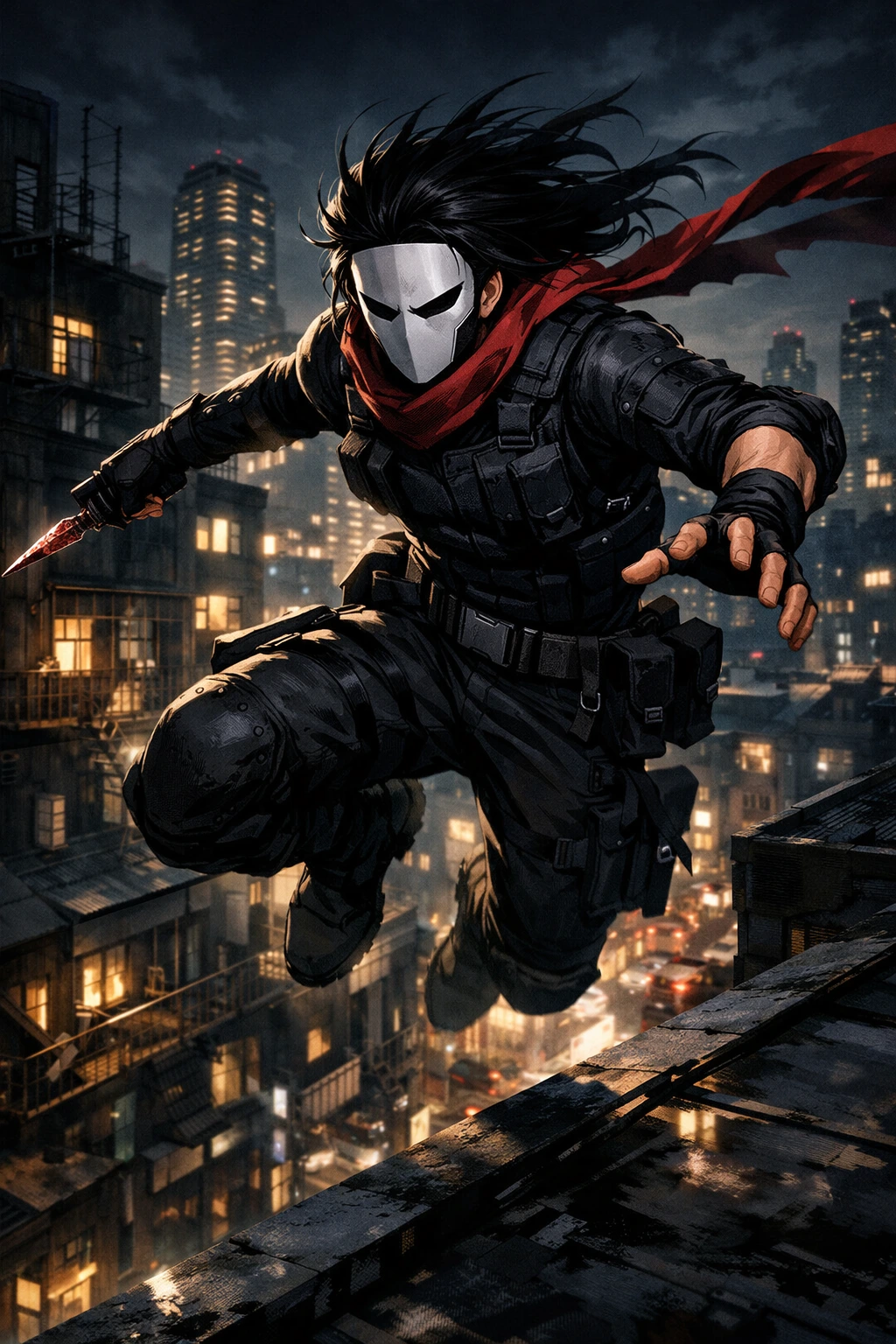
To trace the genesis of the Hero Killer, one must look deep into the lore established in the My Hero Academia: Vigilantes prequel. Chizome Akaguro was not born a monster; he was born an idealist. As a teenager, he was inspired by the sheer, unadulterated heroism of All Might, enrolling in a private hero academy with the earnest dream of becoming a savior.
However, the educational system he entered was a factory designed to produce corporate mascots rather than true saviors. He witnessed firsthand the curriculum’s emphasis on media training, Quirk flashiness, and brand marketability over rescue operations and moral fortitude. The academic environment rewarded vanity and punished selflessness if it wasn’t profitable.
Disgusted by his peers, who openly discussed salary expectations and merchandising deals while studying to be “heroes,” Chizome experienced a profound ideological crisis. He realized that the school was not forging shields for the innocent, but forging celebrities for a ravenous, consumerist public. He dropped out, realizing that true heroism could never be taught in a classroom obsessed with profit margins.
The Stendhal Persona
Following his departure from the hero academy, Chizome spent a decade honing his physical skills and steeping himself in radical street preaching, trying to warn the public of the rotting core of their society. When words failed to enact change, he took up arms, adopting the masked persona of “Stendhal.” As Stendhal, he became a lethal vigilante operating outside the law, specifically targeting and executing criminals that the Pro-Heroes deemed too dangerous or unlucrative to pursue.
In this era, his psychological rigidity was absolute. His worldview was a frictionless plane of black and white: there was evil, and there was justice. Stendhal believed that anyone who committed a crime, regardless of circumstance, had forfeited their right to live, and anyone who opposed his brand of lethal justice was equally guilty.
The mask he wore was not just to hide his identity, but to depersonalize himself, turning him into a cold, emotionless instrument of execution. He was a zealot finding his footing, mistaking sheer brutality for ideological purity.
The Knuckleduster Clash
The crucible that forged the Hero Killer was a brutal, ideology-shattering clash with another vigilante: the Quirkless, heavily armed brawler known as Knuckleduster. During their violent encounter, Knuckleduster did not just fight Stendhal physically; he deconstructed him psychologically. Knuckleduster realized that Stendhal’s rigid, black-and-white morality was a crutch, a way to avoid the complex, messy reality of true justice.
In a defining moment of violence, Knuckleduster shattered Stendhal’s mask and broke his nose (a physical disfigurement Stain would permanently retain). Knuckleduster boldly proclaimed that Stendhal was just a cosplayer hiding behind a mask to justify his own bloodlust. This physical and philosophical defeat shattered Chizome.
Having his philosophy challenged and dismantled forced him to re-evaluate his entire crusade. He realized his focus was wrong: killing petty criminals did not fix the systemic rot; it only pruned the leaves. The true root of the disease was the fake heroes who allowed society to fester. Discarding the Stendhal persona entirely, he embraced his disfigured face, wrapped himself in blood-red tatters, and was reborn from the ashes of his broken ideology as the Hero Killer: Stain.
Core Mechanics: The Biology of Bloodcurdle
The Activation Requirement
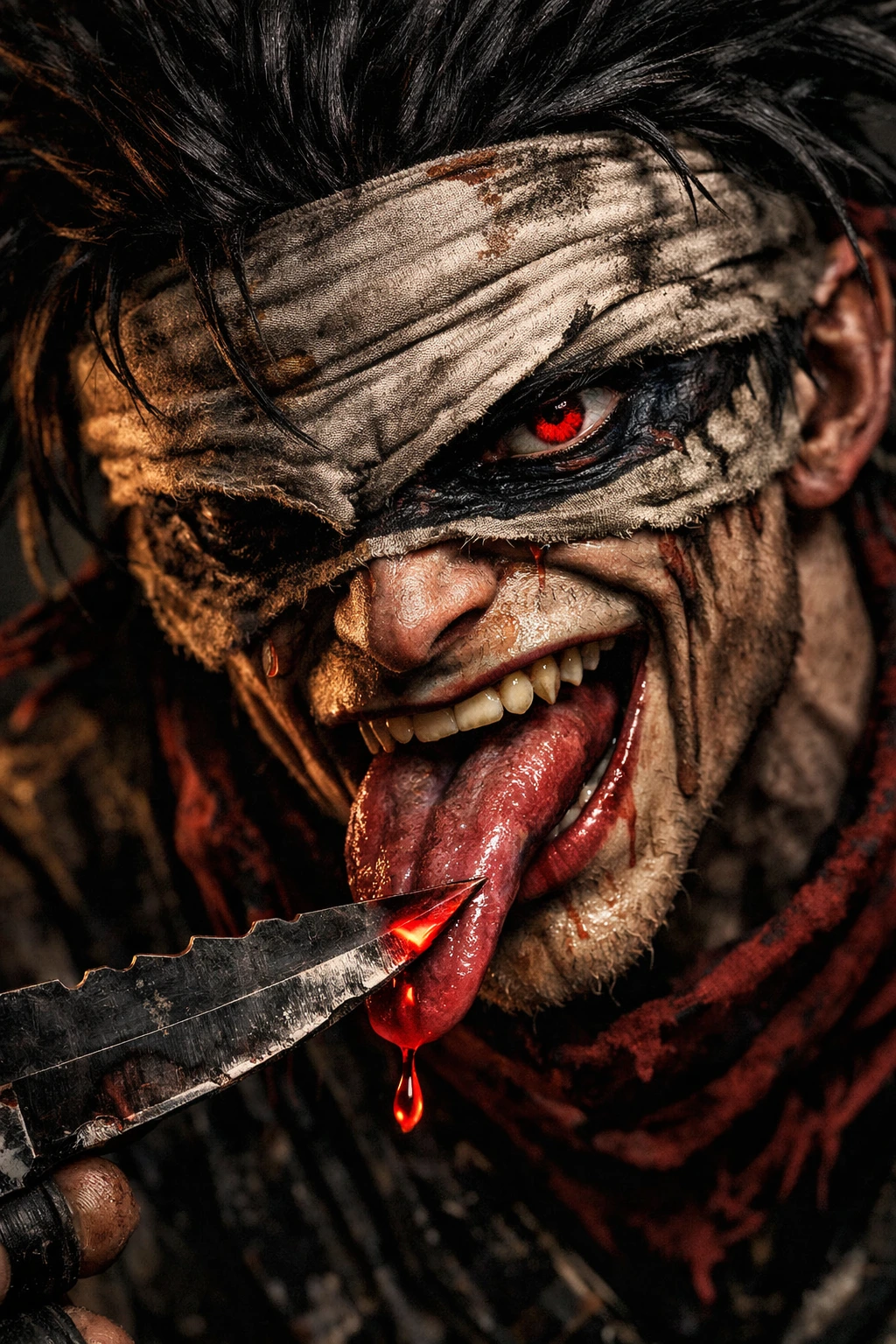
To understand Stain’s reign of terror, one must analyze the biological and mechanical realities of his Quirk: Bloodcurdle. Unlike the devastating, city-leveling Quirks possessed by top-tier heroes and villains, Bloodcurdle is inherently intimate, visceral, and horrifyingly personal. The activation requirement is strict and absolute: Stain must physically ingest the target’s DNA, specifically their blood, to paralyze their motor functions.
He cannot shoot lasers, he cannot control minds from afar, and he cannot manipulate the elements. He must get close enough to cut his opponent and taste their life force. This biological necessity dictates his entire combat style. It turns every battle into a high-stakes, close-quarters dance of death, where a single, shallow graze from one of his rusted blades spells immediate defeat for the victim.
The psychological terror of this activation requirement cannot be overstated. Heroes are used to trading massive elemental blows; they are not used to a shadowy phantom appearing behind them, nicking their skin, and licking the blade to render them entirely helpless.
The Blood-Type Loophole
The most fascinating aspect of Bloodcurdle is its genetic limitation, a bizarre evolutionary quirk that introduces a strict tactical loophole. The duration of the victim’s paralysis is not uniform; it is strictly dictated by the victim’s blood type. The hierarchy of paralysis duration operates in the following order, from longest to shortest: Type B, Type AB, Type A, and finally Type O. At maximum duration (Type B), a victim can be paralyzed for up to eight minutes—an eternity in combat.
At its shortest (Type O), the paralysis might only last a fraction of a minute. This biological lottery profoundly shapes Stain’s engagements. He cannot know a target’s blood type before tasting it, introducing a lethal variable into his executions. Interestingly, Stain’s own blood type is B, which means his Quirk is most effective against those who share his biological makeup.
This limitation prevents Bloodcurdle from being an omnipotent, game-breaking power. It requires Stain to be incredibly efficient, forcing him to strike for the kill immediately after paralysis sets in, never resting on his laurels, because the timer of his victim’s recovery is entirely unknown to him until the moment of consumption.
A “Weak” Quirk Weaponized
In the grand hierarchy of the My Hero Academia universe, Bloodcurdle is, objectively, a “weak” Quirk. It offers no enhanced durability, no super speed, and no destructive power. If a user of Bloodcurdle is caught in the open by an emitter Quirk like Endeavor’s Hellflame, they are instantly incinerated. Yet, Stain became the most feared man in Japan.
This is the hallmark of his genius: analyzing the reality that he possessed a non-combat-oriented Quirk and overcompensating to a terrifying degree. Stain transformed himself into an apex predator through sheer, agonizing physical conditioning.
He mastered stealth, parkour, and urban traversal, turning the verticality of alleyways into his domain. He wielded an arsenal of bladed weaponry—katanas, throwing knives, daggers—to ensure he could draw blood from any angle. But his greatest weapon was psychological intimidation. He cultivated an aura of pure, paralyzing bloodlust.
He moved erratically, overwhelmed his opponents with sheer aggression, and terrified them so profoundly that they made fatal mistakes. He proved that a weak Quirk, when paired with an unbreakable will and lethal mastery of fundamental combat, can bring down the mightiest of titans.
The Ideological Virus
The Definition of a “Fake Hero”
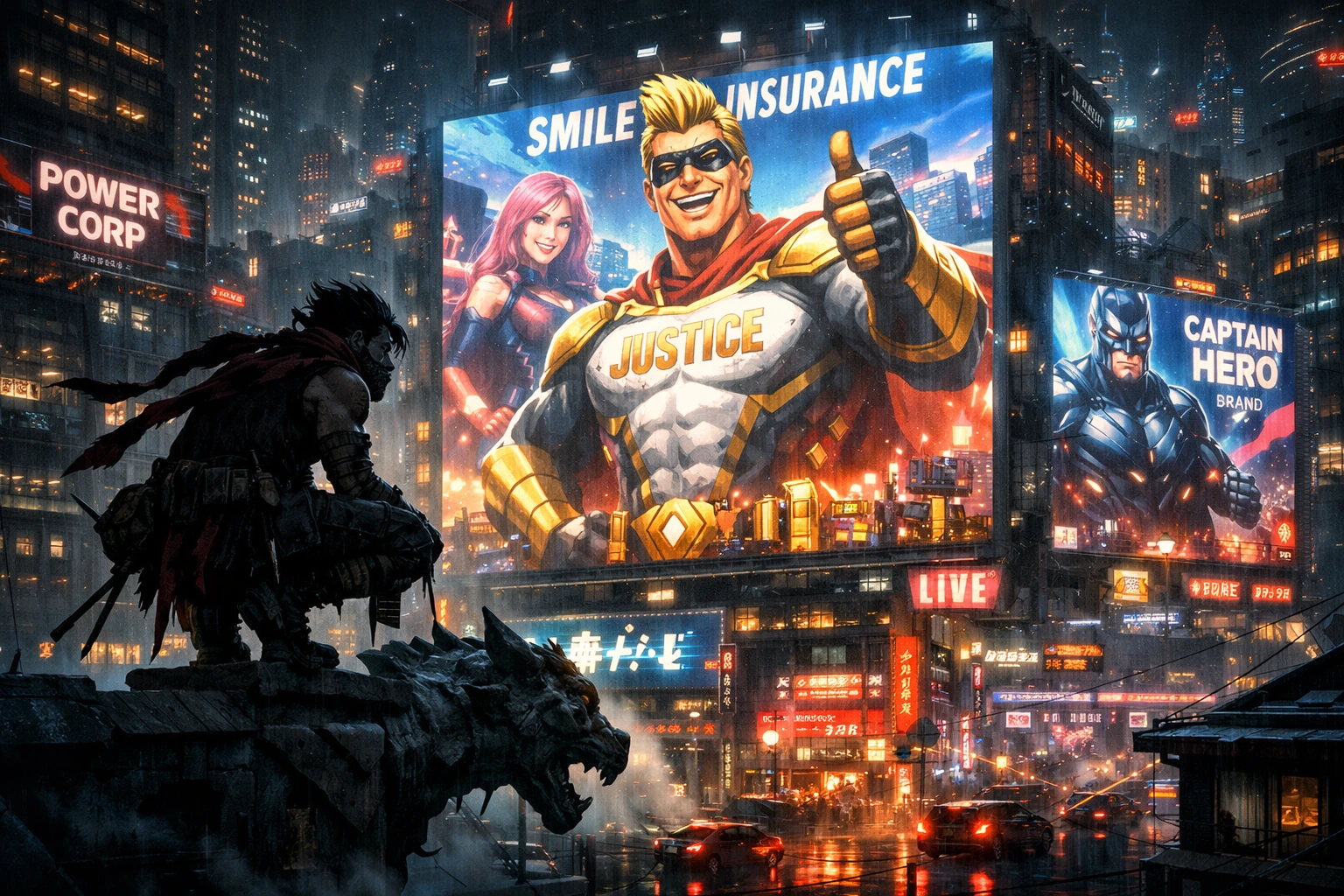
Stain’s reign was not random; it was a targeted purge driven by a meticulously constructed philosophy. To break down his ideology is to understand his absolute, uncompromising hatred for the “Fake Hero.” To Stain, the title of Hero is a sacred, heavy mantle that can only be worn by the exceptionally selfless. A Fake Hero, in his eyes, is anyone whose motivations are polluted by worldly desires. If a hero works primarily for a government salary, they are a mercenary.
If a hero focuses on media presence, billboard rankings, or merchandising, they are a corporate shill. If a hero uses their power for personal vengeance, they are a hypocrite wielding justice as a weapon for their ego. He uses Pro-Heroes like Native (who was weak and easily captured) and heroes who ran agencies purely for profit as examples of the rot.
But his ultimate test case for hypocrisy became the Ingenium family line, and specifically Tenya Iida, who abandoned his heroic duties purely to seek violent, personal revenge. To Stain, these individuals were worse than villains, because villains at least wore their malice openly, while Fake Heroes profited off the deception of the public.
The Standard of All Might
Stain’s worldview is inherently fanatical, and every fanatic needs a deity. For Stain, that deity was the Symbol of Peace: All Might. Why was All Might the only person alive that Stain deemed worthy of the title “Hero”? Because All Might represented the absolute, impossible standard of self-sacrifice without the expectation of reward. All Might smiled through the pain, threw his life on the line daily, and never asked for compensation, fame, or gratitude—the fame was merely a byproduct of his overwhelming goodness.
Stain held up the golden image of All Might like a religious text, measuring every other hero against it. Naturally, ordinary humans fell short of this god-like standard, which justified Stain’s executions in his own mind. He believed that society had become too lenient, allowing mediocrity to infiltrate the hero ranks. His killings were, in his twisted logic, acts of devotion to the true concept of heroism that All Might embodied. He was culling the herd to ensure that only the worthy remained.
The Viral Dissemination
Stain’s true destructive power was not realized in the alleyways, but on the internet. Following his eventual capture in Hosu City, a leaked video of his arrest, coupled with a monologue detailing his philosophy, hit the web. This video acted as an unprecedented ideological virus.
The chilling realization for the government and the Pro-Hero association was not just that a serial killer existed, but that the civilian populace subconsciously agreed with him. Society was already exhausted by corporate heroes, tired of the collateral damage caused by flashy Quirk fights, and cynical about the monetization of their safety.
Stain said the quiet part out loud. His charisma, his raw conviction, and his terrifying aura resonated with the disenfranchised, the outcasts, and those who felt let down by the system. The video birthed a movement. By executing him socially, the media inadvertently immortalized him. The ideological virus spread through forums, news networks, and the criminal underworld, proving that the golden age of heroes was already rotting from the inside, and Stain was merely the one who exposed the corpse to the sunlight.
The Hosu Incident: The Clash of Convictions
The Vengeance of Iida
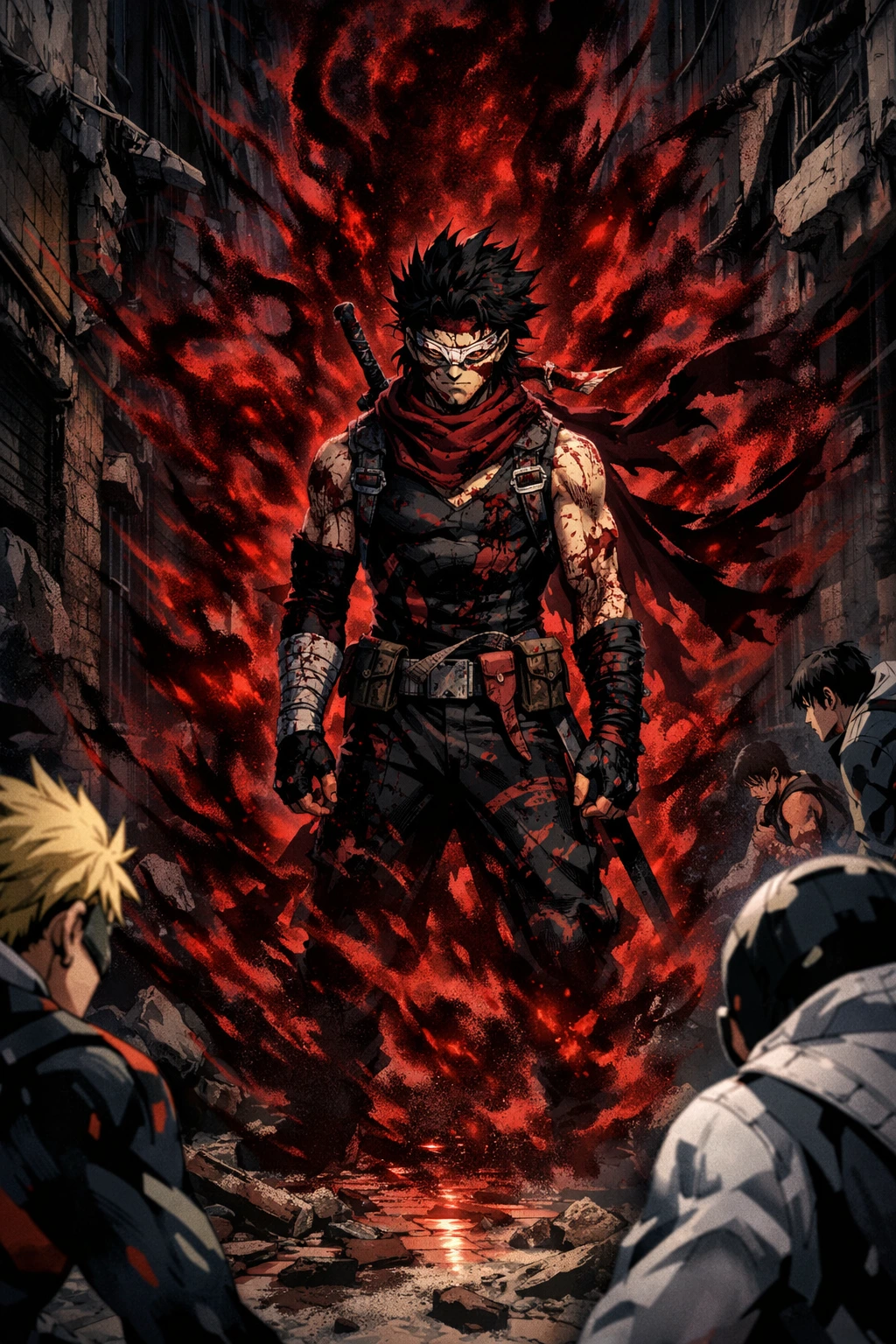
The alleyway fight during the Hosu Incident serves as the narrative climax of Stain’s philosophy put to the ultimate test. It is here that we must deconstruct the catastrophic failure of Tenya Iida. Iida tracked down Stain not to protect citizens, not to uphold the law, but purely to exact violent, personal revenge for his older brother, the paralyzed Pro-Hero Ingenium.
Iida’s blind rage completely validated Stain’s philosophy right in front of him. When Iida declared his intent to kill, ignoring the bleeding hero Native lying on the ground behind him, Stain saw everything he despised: a privileged, supposed “hero” prioritizing his own selfish ego and bloodlust over the life of an innocent. Stain’s brutal dismantling of Iida was both physical and philosophical.
He pinned the boy to the ground, verbally destroying his legacy, proving that a hero fueled by vengeance is instantly fragile when faced with a man fueled by conviction. Iida became the living, breathing embodiment of the “Fake Hero” that Stain had sworn to eradicate, an irony that almost cost the young student his life.
The Midoriya Anomaly
If Iida represented the disease, Izuku Midoriya represented the cure. When Midoriya burst into the alleyway, his actions completely disrupted Stain’s worldview. Midoriya did not attack to gain glory or to exact revenge; his body moved on its own before he even had time to think, driven by the raw, selfless instinct to save his friends. Stain immediately recognized this anomaly.
During the chaotic, high-speed battle that followed, an incredible dynamic emerged: Stain was actively holding back against Midoriya. While he was actively trying to execute Iida and Todoroki (whom he deemed polluted by lineage and arrogance), he actively protected Midoriya from lethal blows, warning the boy to leave. Stain recognized the raw, selfless instinct of a “True Hero” in the first-year student. Midoriya, who mirrored the self-sacrificial nature of All Might, passed Stain’s impossible test.
This profound interaction demonstrated that Stain was not a mindless murderer; he was a fanatic with a strict code. He would gladly spare someone he believed could carry the true will of heroism into the future.
The Aura of Death
The aftermath of the Hosu Incident stands as one of the greatest psychological masterpieces in anime and manga history. After taking a brutal beating, having his ribs broken, and being knocked unconscious by Midoriya and Todoroki, Stain recovers just as a flying Nomu attempts to kidnap Midoriya. Moving faster than the top Pro-Heroes present, Stain assassinates the Nomu to save the boy.
What happens next defies logic and enters the realm of sheer mythological terror. A broken, bleeding, weaponless Stain stands before a crowd of top Pro-Heroes, including the current Number Two, Endeavor. With his Quirk completely inactive, Stain unleashes an aura of killing intent so dense, so suffocating, and so fundamentally terrifying that it physically paralyzes the heroes.
Grown men, veterans of countless wars, take an involuntary step back in sheer horror. Stain yells that only All Might is worthy of killing him, his conviction manifesting as a physical weight that crushes the courage of everyone present. He falls unconscious immediately after, remaining standing. He defeated the Pro-Heroes not with his Quirk, but entirely through the sheer pressure of his unbreakable will, cementing his legend forever.
The Unintentional Godfather of the League
The Hijacked Martyrdom
Following his imprisonment in Tartarus, a profound irony unfolded: Stain, a man who despised villains almost as much as fake heroes, became the unintentional godfather of the League of Villains. The mastermind All For One and his protégé, Tomura Shigaraki, recognized the volatile power of Stain’s message.
Shigaraki, who initially hated Stain for stealing his spotlight during the Hosu attack, eventually learned to co-opt the Hero Killer’s legacy. The media, in their desperate scramble for ratings, endlessly analyzed Stain’s manifesto, effectively doing the League’s marketing for them. All For One and the League manipulated Stain’s martyrdom, stripping away his nuance and his demand for better heroes, and instead twisting his message into a blanket justification for the destruction of Hero Society altogether.
Stain was silenced in a maximum-security cell, unable to correct the record, while his face and ideology were hijacked by the very people he would have gladly executed in the streets.
The Vanguard Action Squad
The most devastating consequence of this hijacked martyrdom was the formation of the League’s Vanguard Action Squad. The irony is deeply tragic: Stain despised the League of Villains as a group of aimless, destructive children with no overarching philosophy. Yet, it was precisely Stain’s ideology that acted as the magnet, recruiting the most dangerous and fanatical members to Shigaraki’s banner.
Dabi, a man consumed by his own tragic past and hatred for Endeavor, adopted Stain’s rhetoric as a convenient vehicle for his arsonist crusade against hero hypocrisy. Himiko Toga, a deeply disturbed girl marginalized by society due to her blood-related Quirk, saw Stain—a man who lived freely while covered in blood—as a twisted romantic idol. These powerful individuals did not join Shigaraki for Shigaraki; they joined because the League falsely promised to carry out the will of the Hero Killer. Stain’s attempt to cleanse society had inadvertently given its greatest enemies the army they needed to burn it down.
Spinner’s Devotion
To truly understand the radicalization of the masses caused by Stain, one must take a specific look at Shuichi Iguchi, known as the villain Spinner. Spinner is the ultimate representation of the disenfranchised, mutant-class citizens who felt abandoned by a society that favored traditionally attractive heroes. Spinner based his entire life, his makeshift weaponry (a massive sword of bound blades), and his clothing (a scarf modeled after Stain’s torn mask) entirely on the Hero Killer’s teachings. He was a cosplayer who took the ideology to its absolute extreme. Spinner’s devotion highlights the tragedy of Stain’s viral spread.
Spinner was not inherently evil; he was lost, searching for a purpose, and he found it in the angry, violent rhetoric of a madman. Throughout his tenure in the League, Spinner constantly questions if Shigaraki’s actions align with Stain’s will, serving as the conscience of the group. Spinner represents the thousands of ordinary citizens whose frustration with the system was weaponized, proving that an idea, once released, belongs to those who interpret it, no matter how deeply they misunderstand the original author’s intent.
Tartarus and the Purge of Hypocrisy
The Proximity to Absolute Evil
Stain’s imprisonment in Tartarus, Japan’s most impregnable fortress for supervillains, is a masterclass in psychological storytelling. By design, Tartarus is meant to break the human spirit, sensory-depriving inmates to prevent Quirk usage.
Yet, Stain remained entirely unbothered. The most fascinating dynamic of his incarceration is his physical and psychological proximity to Absolute Evil: he was imprisoned in a cell directly adjacent to All For One, the Demon King himself. All For One is a master manipulator, a man who has broken the wills of thousands using silver-tongued rhetoric and promises of power. However, during their time as neighbors, Stain remained entirely immune to the Demon King’s manipulation.
Why? Because Stain’s conviction was pure, unbreakable, and entirely devoid of selfish desire. AFO manipulates greed, fear, and ambition; Stain possessed none of these. Stain saw exactly what AFO was: a parasite that represented the ultimate decay of society. In the darkest pit of the world, sitting next to the devil, Stain’s ideological armor proved completely impenetrable, marking him as one of the few minds All For One could never conquer.
The Tartarus Escape
When Shigaraki and the League successfully breached Tartarus, unleashing a catastrophic prison break that freed the nation’s worst criminals, a defining moment for Stain’s character occurred. The doors to his cell opened, offering him total freedom to join the new, villain-ruled world order. Yet, Stain chose not to align with the escaping villains. He calmly assessed the chaos around him and made a calculated choice. He recognized that Shigaraki’s desire for mindless destruction, chaos, and nihilism directly opposed his own desire to “cleanse” and fix society.
Shigaraki wanted to burn the house down to the ashes; Stain merely wanted to exterminate the termites. Walking through the burning wreckage of the prison, Stain grabbed his signature weaponry from the evidence lockers and walked away from the League.
He understood that in a world without heroes, his role as the Hero Killer was obsolete. His new mission was not to kill heroes, but to ensure that the concept of heroism survived the impending apocalypse. He transitioned from society’s greatest threat to a rogue, independent agent operating by his own unfathomable moral code.
The Final Redemption (The All Might Encounter)
The Kamino Statue
The emotional climax of Chizome Akaguro’s character arc—and arguably one of the most profound moments in the entirety of My Hero Academia—takes place in the pouring rain in Kamino Ward, at the foot of the bronze statue built to honor All Might’s final battle.
Toshinori Yagi (All Might), now completely Quirkless, emaciated, and consumed by crippling depression over his failure to protect society from the fallout of the war, visits his own monument. He is a broken man, believing his legacy is nothing but ashes and that his existence is now a burden.
It is here, in the cold and the dark, that Stain emerges from the shadows. The confrontation is not one of violence, but of immense psychological weight. The serial killer, the man who murdered dozens in the name of the Symbol of Peace, finally comes face-to-face with the broken shell of his god.
Validating the God
What follows is a brilliant inversion of roles. The serial killer becomes the only person capable of saving the Symbol of Peace’s soul. When Toshinori admits his failures and his weakness, Stain violently rejects this reality. In a masterful display of psychological warfare, Stain refuses to acknowledge the frail, depressed man standing before him as All Might.
He holds a blade to Toshinori’s throat and declares that he is an imposter, a weak old man who does not understand the fire of the true Symbol of Peace. By attacking Toshinori verbally, Stain forces the former Number One hero to defend his own legacy, to remember the unyielding spirit that once saved millions.
Stain articulates that heroism is not about having power; it is about the fire in the soul that compels one to step forward when all is lost. Stain validates the god, reigniting the dying embers of Toshinori’s spirit, ensuring that the man who inspired his twisted crusade remembers exactly who he is.
The Information Transfer
This encounter was not merely a philosophical debate; it was a highly calculated tactical maneuver. Before leaving, Stain performs an act that fundamentally shifts the tide of the final war. He hands Toshinori a blood-stained data drive. During his escape from Tartarus, Stain had not just walked out; he had utilized his unique skill set to breach the prison’s security mainframe, stealing the encrypted communication logs and location data related to All For One’s network.
By handing over this Tartarus security data, the Hero Killer effectively gives the remaining heroes the blueprint they desperately needed to track down All For One and the League. He arms the heroes with the intelligence required to win the war. In this single action, Stain transcends his role as a killer and acts as an ultimate intelligence operative for the side of true justice, recognizing that the destruction of All For One is paramount to the survival of the hero ideal.
The Noble Death
The culmination of Stain’s journey ends not in a prison cell, but on the battlefield of the final war. In a desperate bid to buy time for the heroes against the overwhelming power of All For One, Stain enters the fray one last time. He utilizes his Quirk, his blades, and his unmatched agility to strike at the Demon King. Though he knows he is wildly outmatched, his conviction does not waver.
In the ensuing clash, Stain suffers fatal injuries. However, he does not die screaming, nor does he die as a villain. He dies a noble death, acting as a silent, bloody guardian of the “True Heroes.” His final thoughts are not of hatred, but of a pure, almost religious peace, knowing that he sacrificed his life so that the true heroes—Midoriya, All Might, and the next generation—could survive to build a better world.
He proved in his final breaths that his conviction was never an act, cementing his legacy as a deeply flawed, incredibly violent, yet undeniably pure martyr for the cause of true heroism.
Conclusion
The Necessary Evil
To analyze Chizome Akaguro is to stare into the darkest reflections of hero society. Stain was the brutal scalpel that cut the rot out of the Pro-Hero industry. While his methods were undoubtedly abhorrent, sociopathic, and drenched in the blood of both the innocent and the guilty, his underlying diagnosis of society was fundamentally correct.
He recognized that a system built on commercializing safety would inevitably collapse under the weight of its own hypocrisy. He was a necessary evil, a violent wake-up call that forced the Pro-Hero administration, the students of U.A., and society at large to return to their roots. Without the ideological earthquake of the Hero Killer, hero society would have remained fat, happy, and entirely unprepared for the existential threat of Tomura Shigaraki and All For One. He burned down the false idols so that the true ones could be forged in the fire.
Closing Thoughts
From an analytical standpoint, Kohei Horikoshi’s introduction and execution of Hero Killer Stain represents the exact moment My Hero Academia transcended its own genre. Horikoshi used Stain as the narrative pivot point to transition the story from a lighthearted, optimistic school anime into a dark, complex socio-political thriller.
Stain introduced the concept of moral gray areas into a world that previously only dealt in primary colors. He remains one of the most compelling, terrifying, and philosophically dense characters in modern fiction—a man who committed unforgivable atrocities in the name of an impossibly pure ideal, forever changing the world by carving his truth into it with a rusted blade.