
Introduction
The Apex of Matter Manipulation
Within the expansive, constantly evolving, and heavily saturated superpower ecosystem of My Hero Academia, Quirks are generally categorized into distinct, recognizable classes: Emitter, Transformation, and Mutant. Most abilities have clear, defined boundaries—a fire user generates flames, a strength enhancer punches harder, a gravity manipulator alters weight.
However, every so often, author Kohei Horikoshi introduces a Quirk that shatters these conventional classifications, existing on an entirely different plane of reality. The Quirk known as “Overhaul,” wielded by the Yakuza leader Kai Chisaki, is the absolute pinnacle of this phenomenon. To define Overhaul merely as a powerful villain’s tool is a gross understatement; it is, unequivocally, the most versatile, god-like transmutation Quirk in the entire My Hero Academia universe.
Overhaul grants its user the supreme authority over the fundamental building blocks of reality. It is not just destruction, and it is not just creation; it is the absolute sovereign control over matter itself. The ability to disassemble and reassemble anything—living flesh, solid concrete, complex machinery, or genetic anomalies—at a molecular level with a single touch borders on divine power.
It is an alchemical force that laughs in the face of the laws of thermodynamics, mass conservation, and biological science. In the hands of a martial artist or a heroic paragon, this Quirk could have propelled humanity into a utopian age, instantly curing diseases, constructing mega-cities in seconds, and eradicating the concept of physical limitations. Instead, it was placed in the hands of a man who viewed the world as a diseased wasteland.
The Paradox of the User
The true narrative genius of Overhaul lies not just in its devastating mechanics, but in the terrifying, poetic irony of its wielder. This is a god-tier power capable of touching, cleansing, reshaping, and purifying any filth in the world, yet it is possessed by Kai Chisaki—a man crippled by an extreme, debilitating case of mysophobia (germaphobia). Chisaki is obsessed with “cleansing” society, not just of physical dirt, but of the metaphorical “disease” of Quirks and the “hero syndrome” that plagues the modern world.
Herein lies the ultimate paradox: to use his Quirk, to enact his grand vision of a purified world, Chisaki must physically touch the very filth he despises. His power demands intimate, skin-to-skin contact with the grime, the blood, and the diseased humanity he so thoroughly loathes.
He wears plague doctor masks and surgical gloves to isolate himself from the world, yet his true power is entirely dependent on removing those barriers and immersing his hands in the visceral reality of organic and inorganic matter. This psychological dissonance creates a villain who is constantly at war with his own biology, limiting his god-like potential through sheer neurotic disgust. He possesses the ultimate cure, but believes the patient is already too rotten to be saved by conventional means.
Article Scope
This article serves as the definitive, expert-level breakdown of the Overhaul Quirk. Moving far beyond surface-level wikis or basic character summaries, we will delve deeply into the hard mechanics of molecular transmutation.
We will dissect the strict biological conditions required to activate the Quirk, the horrifying realities of its biological fusion capabilities, and its chilling role as the ultimate medical anomaly. Furthermore, we will analyze the dark science behind the creation of the Quirk-Destroying bullets—a feat only possible through Chisaki’s mastery of his ability. Finally, we will examine the fatal psychological flaws that held Chisaki back and the ultimately poetic, tragic destruction of a man who held the power of a god but was bound by the neuroses of a mortal.
Core Mechanics: The Science of Transmutation
The Absolute Requirement
Despite its near-omnipotent capabilities, the Overhaul Quirk operates under a strict, unforgiving biological limiter: it requires direct, skin-to-skin physical contact specifically from the user’s hands. This is not a telekinetic ability, nor is it an area-of-effect aura. The power is localized entirely within the somatic network of Chisaki’s palms and fingers. If his hands are covered by his signature white gloves, the Quirk is completely neutralized.
This strict activation requirement dictates Chisaki’s entire combat style and lifestyle. Because the Quirk relies on tactile transmission, the user must physically bridge the gap between themselves and their target. In the realm of superhero combat, where ranged attacks and immense speed often dominate, this is a significant bottleneck. However, Chisaki turns this limitation into a psychological weapon.
The mere threat of his touch is enough to paralyze opponents with fear. The requirement of the hands also means the Quirk factor is intrinsically linked to his upper extremities. The biological pathways that channel the massive energy required to alter molecular bonds flow directly through his arms, making them the ultimate catalyst—and the ultimate weak point—of his entire existence.
Deconstruction (The Breakdown)
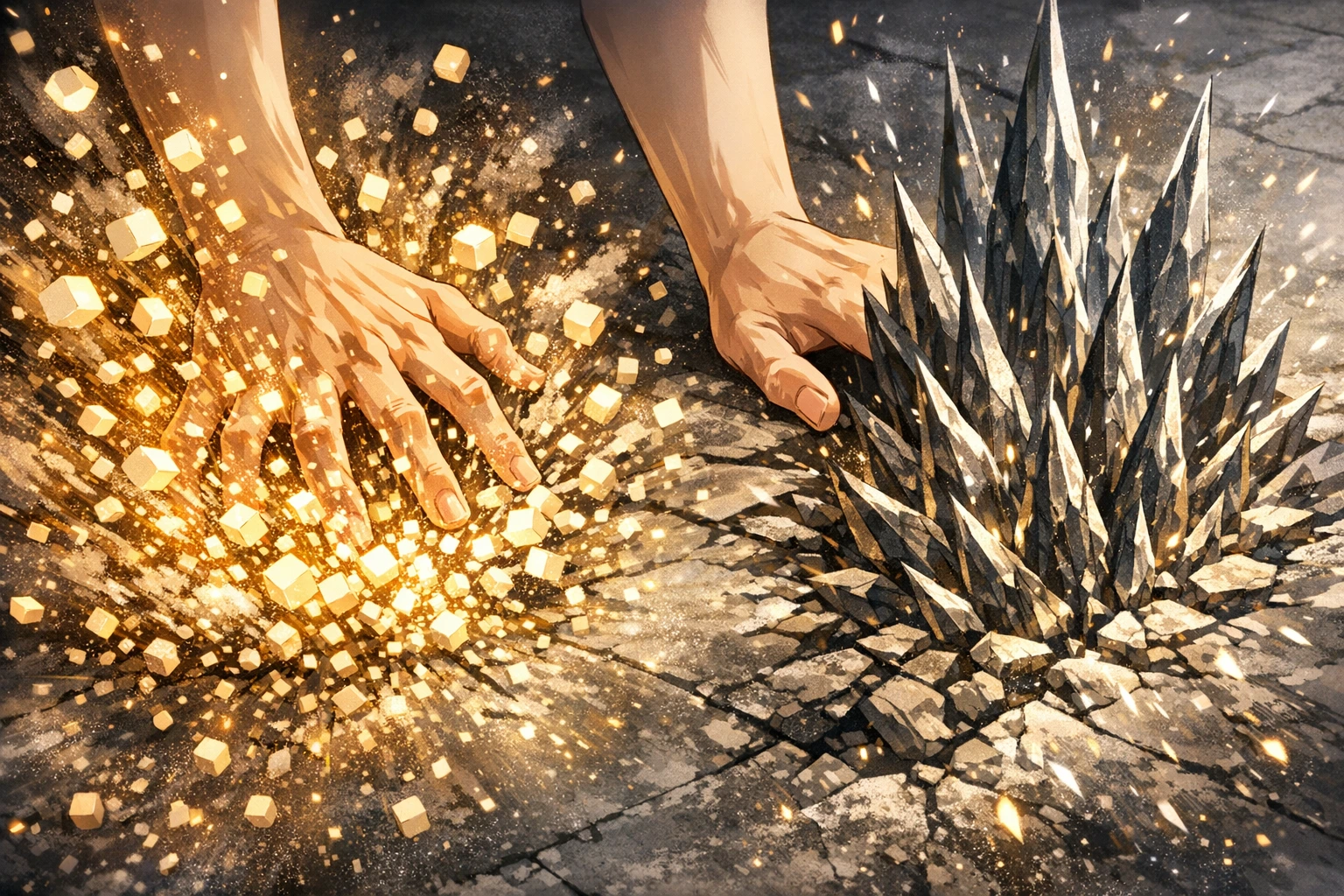
The first, and most terrifying, phase of the Overhaul Quirk is Deconstruction. When Chisaki’s bare hands make contact with a target, he can choose to violently disassemble their molecular structure. This is not a slow, corrosive decay, nor is it a blunt-force shattering; it is an instantaneous, sub-atomic unzipping of matter.
The horror of this ability was brutally demonstrated upon its introduction, when Chisaki touched Kenji Hikiishi (Magne). In less than a second, a seasoned, durable villain was reduced to a localized explosion of blood, viscera, and bone fragments.
The Deconstruction ignores conventional durability. It does not matter if a hero possesses hardened skin, armor, or enhanced physical toughness. Overhaul does not attack the macro-structure of the target; it attacks the chemical bonds holding the molecules together. By severing these bonds, solid matter loses its cohesion instantly. In inorganic targets, this results in concrete crumbling to dust or metal splintering into shrapnel.
In biological targets, the result is a grotesque, instantaneous liquidation. It is a flawless, unblockable instant-kill technique. The speed of the Deconstruction is so rapid that the victim often registers no pain; they simply cease to exist as a unified organism. This offensive capability alone makes Chisaki one of the most lethal entities in the series, demanding absolute perfection from anyone attempting to fight him in close quarters.
Reconstruction (The Reassembly)
While the Deconstruction aspect makes Overhaul a terrifying weapon, the Reconstruction aspect is what elevates the Quirk to the realm of the divine. Immediately following, or independently of, the breakdown of matter, Chisaki can instantly rebuild the disassembled components into absolutely any configuration he desires. He bends the laws of physics, mass conservation, and structural engineering to his absolute will.
If he breaks down a section of concrete flooring, he can reconstruct it in a microsecond into towering, razor-sharp spikes that impale his enemies. If he destroys a wall, he can rebuild it into a complex maze to trap intruders. The Reconstruction is not limited to the original shape or purpose of the matter.
He can alter the density, the sharpness, and the physical state of the materials he touches. This allows him to turn a flat, harmless environment into a chaotic, lethal weapon. He acts as both the architect and the raw materials, his mind processing complex structural blueprints in fractions of a second.
The level of spatial awareness, geometric intelligence, and sheer cognitive processing power required to seamlessly reconstruct matter into complex, functional forms mid-battle is staggering. It proves that Chisaki is not just a thug with a powerful Quirk; he is a hyper-intelligent tactician who weaponizes architecture and physics on the fly.
The Ultimate Medical Anomaly
Healing Through Destruction
In the world of My Hero Academia, medical Quirks are incredibly rare and highly valued. Abilities like Recovery Girl’s “Heal” amplify the body’s natural regenerative processes, but they are limited by the patient’s own stamina. Overhaul, paradoxically, functions as the most brutal, yet flawlessly effective, medical Quirk in existence. Chisaki has the unparalleled ability to cure any illness, reverse any fatal injury, and eradicate any physical ailment—but to do so, he must first completely blow the patient apart.
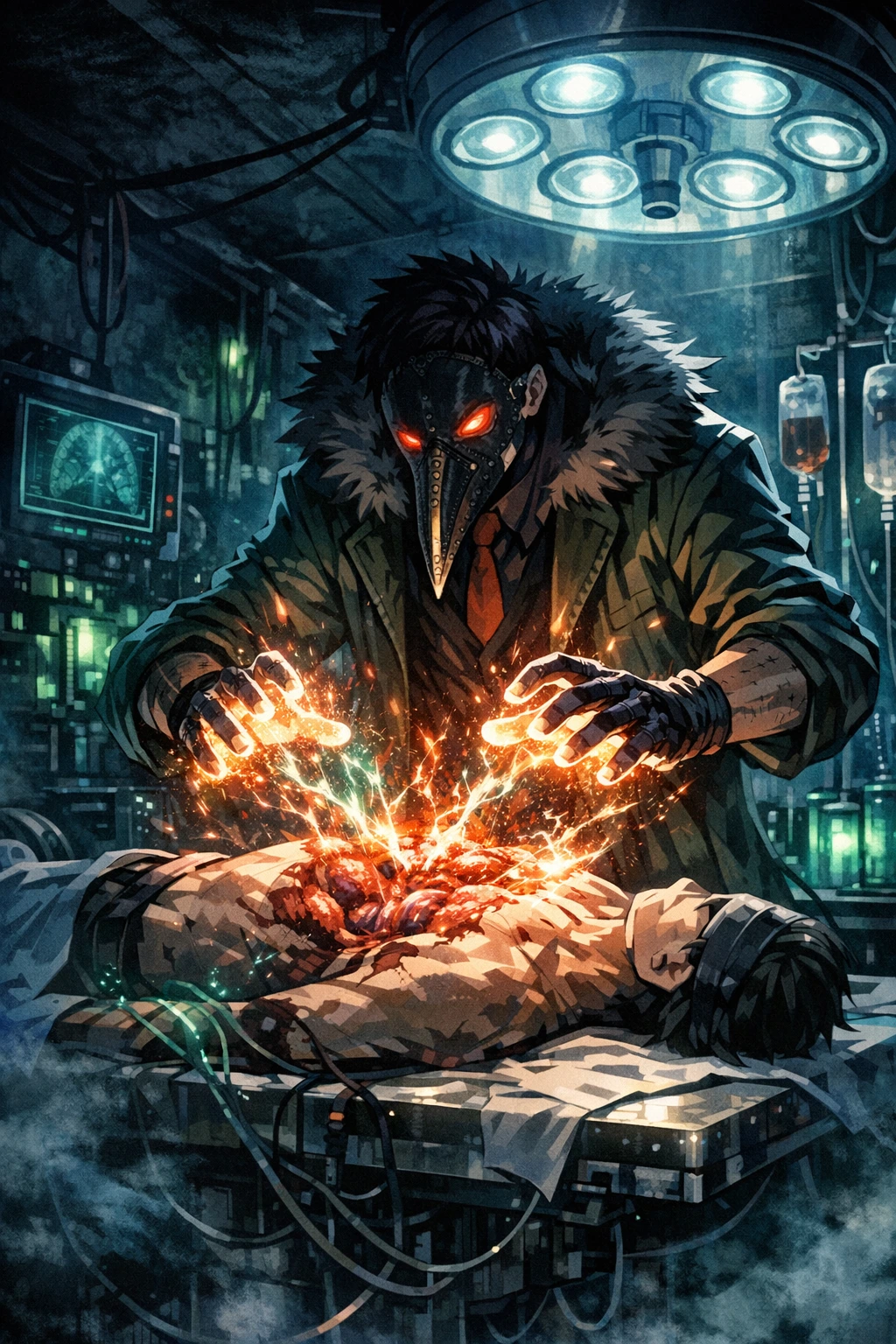
By utilizing his Deconstruction to reduce a damaged or diseased body to its base biological components, Chisaki can then use his Reconstruction to put the body back together in a perfect, unblemished state. If an ally has a severed limb, crushed organs, or a terminal disease, Overhaul can disassemble the flawed biological matter and reassemble it without the “error.”
He effectively acts as a living, breathing biological reset button. He cures by killing, and he heals by destroying. This alchemical approach to medicine bypasses the immune system, ignores blood loss, and circumvents the need for cellular regeneration. He simply rewrites the physical reality of the body. It is a chilling juxtaposition: the ultimate healer is a man who treats human life with the clinical detachment of a mechanic swapping out broken car parts.
The Fatigue Factor
Despite the flawless physical results of this biological reset, the process is far from consequence-free. While the reconstructed body is perfectly healed, the sheer physiological trauma and stamina drain of being disassembled and rebuilt is monumental. Chisaki’s Quirk restores the physical structure, but it does not magically restore the target’s energy reserves or erase the psychological shock of instantaneous death and resurrection.
This fatigue factor is a loophole that Chisaki ruthlessly exploits, most notably with his subordinate, Kendo Rappa. In their underground fighting ring, Chisaki repeatedly killed Rappa to prove his dominance, only to instantly reconstruct him.
While Rappa’s body was whole again, the sheer exhaustion of having his molecules scattered and violently forced back together left him incapacitated and unable to continue fighting. The soul-crushing fatigue acts as a secondary form of control.
Chisaki doesn’t just heal his men; he uses the healing process to remind them of his absolute power over their existence. The pain and stamina drain ensure that even if he cures them, they are left weak, vulnerable, and entirely dependent on his mercy.
The Eri Harvesting Loop
The darkest, most psychologically horrific application of Overhaul’s medical capabilities was inflicted upon Eri, the young granddaughter of the Shie Hassaikai’s boss. Eri possessed the incredibly rare and dangerous “Rewind” Quirk, a genetic mutation capable of rewinding the biological state of living creatures. To weaponize this, Chisaki needed vast, continuous amounts of her blood and genetic material.
Instead of drawing blood through conventional, slow medical procedures, Chisaki utilized the ultimate horror of his Quirk: The Harvesting Loop. He would use Overhaul to completely disassemble Eri’s body, instantly harvesting the exact biological materials, Quirk factors, and blood cells he needed from her fragmented matter.
Then, in the very next breath, he would reconstruct her, bringing her back to life. He murdered and resurrected a child countless times in his underground laboratory. Because he could perfectly restore her body, he never permanently lost his subject, allowing him to bypass the natural limits of blood donation. The psychological torture of this process is unfathomable.
Eri was forced to experience the agonizing destruction of her own body and the jarring snap of resurrection on a daily basis, breaking her mind and instilling a fear so deep that she believed her very existence was a curse. This application cements Overhaul not just as a powerful Quirk, but as an instrument of unspeakable, cold-blooded scientific cruelty.
Chimeric Amalgamation (Biological Fusion)
Bypassing the Hardware Limit
In the overarching narrative of My Hero Academia, the “Quirk Singularity Doomsday Theory” proposes that Quirks will eventually become too powerful and complex for the human body to handle. The human biological framework—the “hardware”—has limits on how many Quirks or how much power it can safely contain.
Dr. Kyudai Garaki, All For One’s brilliant and mad scientist, spent decades and billions of dollars developing the Nomu: bio-engineered corpses specifically modified to bypass this hardware limit and hold multiple Quirks. It took Garaki months in a state-of-the-art laboratory to achieve this. Kai Chisaki achieved the exact same result in a single second using his bare hands.
Overhaul’s ability to disassemble and reassemble matter is not limited to single, isolated targets. When Chisaki touches himself and another living being simultaneously, he can deconstruct both bodies and fuse their biological matter, genetic code, and Quirk Factors together into a singular, horrific entity.
This Chimeric Amalgamation is the ultimate violation of biology. He forcefully overwrites the DNA of two separate people, combining their strengths, mass, and abilities while retaining complete control over the new dominant consciousness. He bypasses the hardware limit by literally building a bigger, stronger biological vessel out of the flesh of his subordinates.
The Shin Nemoto Fusion
The first truly monstrous display of this amalgamation occurred during the raid on the Shie Hassaikai compound, when a severely pressured Chisaki faced off against Mirio Togata and Izuku Midoriya. Backed into a corner and refusing to let his grand plan slip away, Chisaki made the desperate, grotesque decision to merge with his fiercely loyal subordinate, Shin Nemoto.
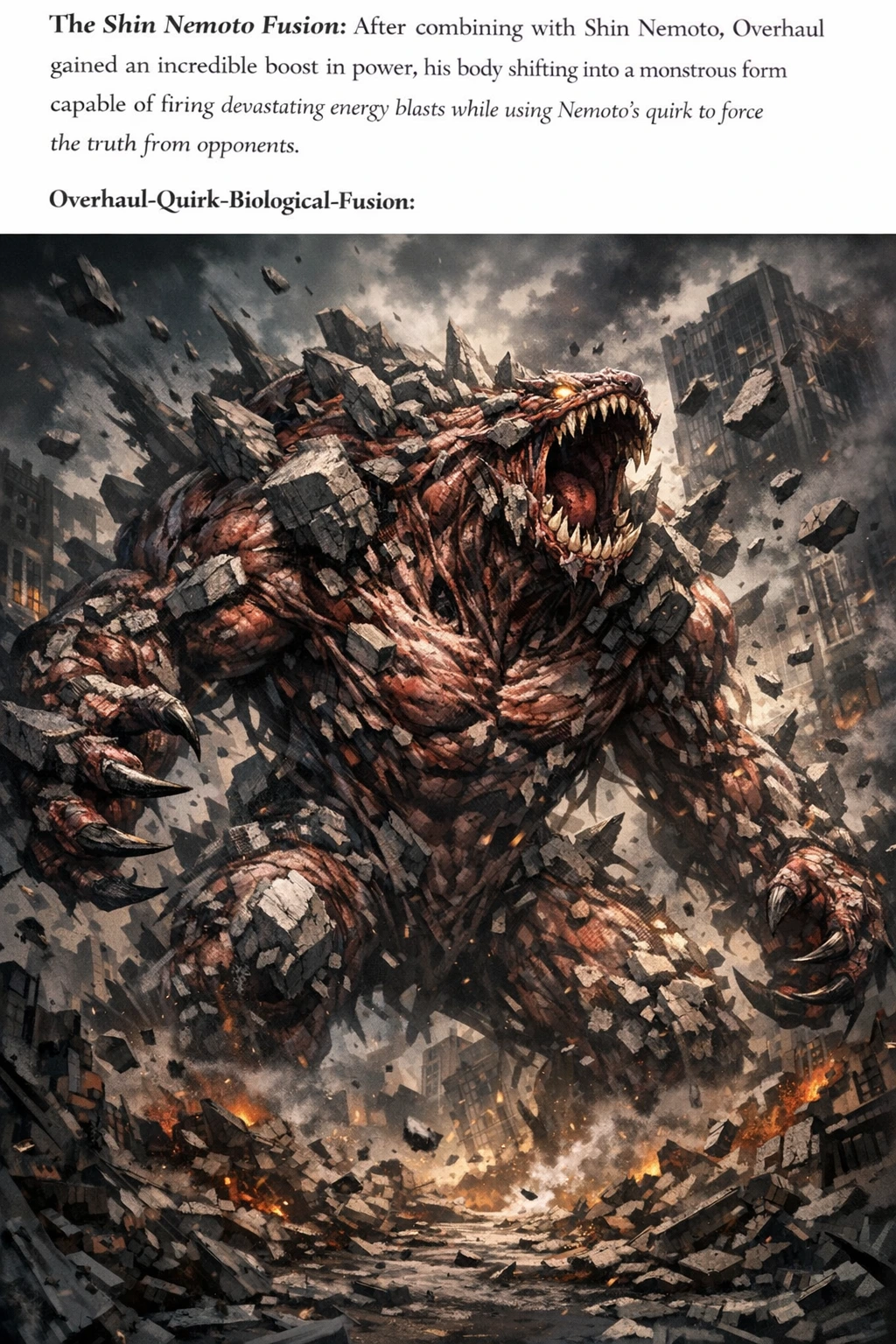
Disassembling both himself and Nemoto in a fountain of blood, he instantly reconstructed them into a singular, multi-limbed monstrosity. In this form, Chisaki gained extra arms—crucial for a Quirk that requires hand contact to activate—and absorbed Nemoto’s “Confession” Quirk, allowing him to force the truth out of his enemies. Visually, the fusion was pure body horror.
Nemoto’s consciousness was subsumed, his body parts jutting out from Chisaki’s augmented form in a twisted display of dominance. This fusion proved that Chisaki did not view his subordinates as humans or even as comrades; he viewed them as spare parts, biological batteries, and extra weapons to be assimilated the moment his own body was no longer sufficient.
The Rikiya Katsukame Fusion
If the Nemoto fusion was a display of tactical assimilation, Chisaki’s final form—merging with the giant Rikiya Katsukame—was a display of sheer, unstoppable biological mass. As the battle escalated to the surface, Chisaki sought to match the overwhelming, raw power of Izuku Midoriya utilizing One For All at 100%. To do this, he needed raw size and immense durability.
He touched Katsukame, a hulking behemoth of a man whose Quirk allowed him to inhale the vitality of others, and fused his own body into the giant’s frame. The resulting entity was a fleshy, towering kaiju, a grotesque monument to Chisaki’s god complex. He became a multi-story beast of muscle, stone, and bone, controlling the battlefield with massive, sweeping strikes that could level city blocks.
This ultimate fusion terrifyingly proved that Overhaul can theoretically assimilate an infinite amount of biological matter. There is no stated limit to how many bodies he can absorb. If left unchecked, Chisaki could have continued to merge with hundreds of people, exponentially increasing his physical stats, his mass, and his arsenal of stolen Quirks until he became an apocalyptic, flesh-shifting abomination incapable of being physically destroyed.
Environmental Dominance and Battlefield Control
The Terrain Advantage
While the biological applications of Overhaul are horrifying, its environmental applications are what make Chisaki nearly invincible in a static location. When fighting within a structure—especially his own Yakuza base—the Quirk turns the very earth, walls, and architecture into a fluid extension of the user’s body. Chisaki does not just fight on a battlefield; he fights with the battlefield.
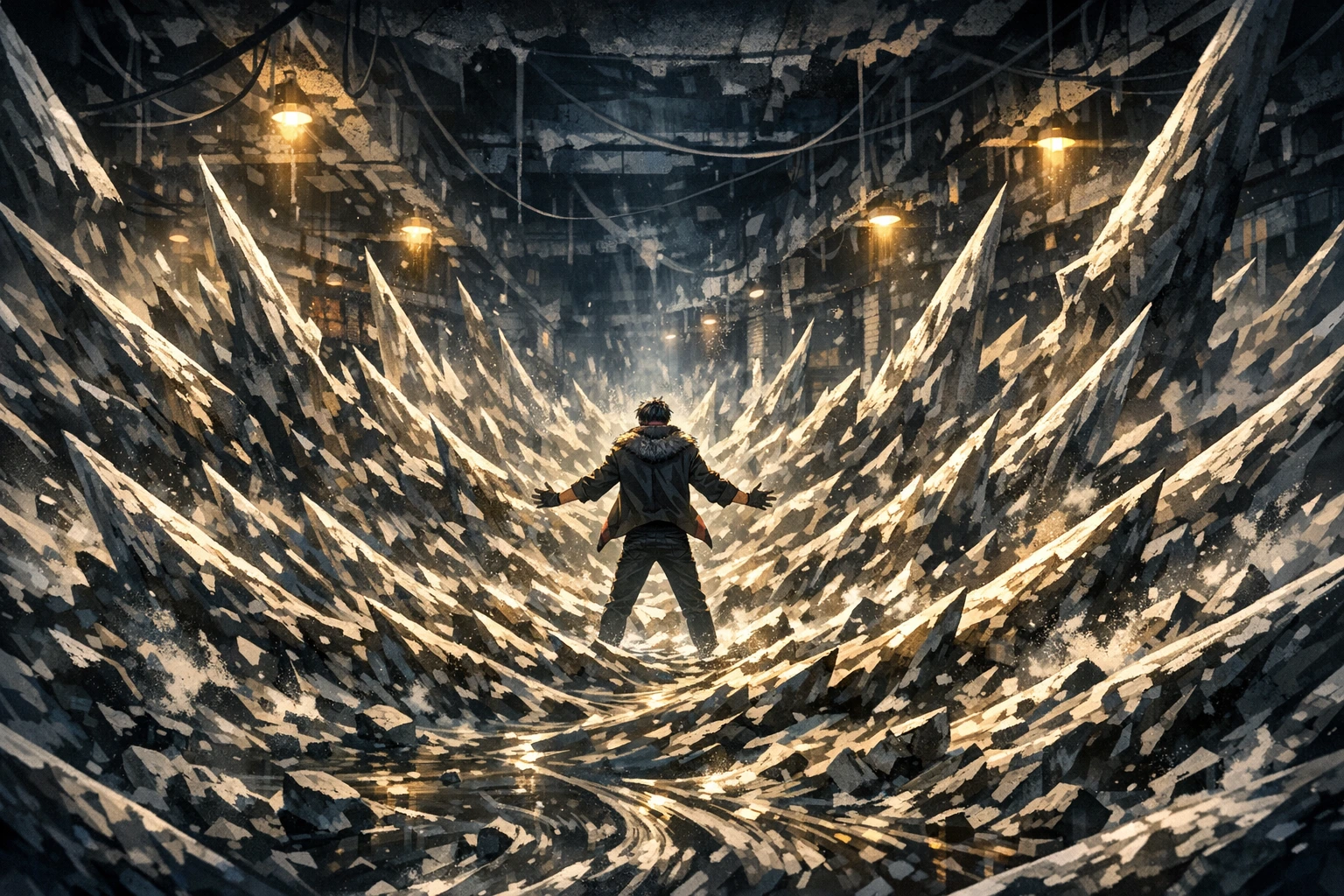
By placing his hands on the ground, he can send a wave of transmutation through the concrete, stone, or earth. In an instant, flat floors erupt into dense forests of deadly, homing spikes aimed directly at his opponents. He can raise massive walls to block incoming attacks, create shifting labyrinths to separate hero squads, or absorb the surrounding debris into his own chimeric forms to create armor. The terrain advantage he gains is absolute.
Opponents are forced into a constant state of aerial evasion, as touching the ground means risking instantaneous impalement. The environment becomes a predatory entity controlled by Chisaki’s mind. He controls the high ground, the low ground, the cover, and the weaponry, shifting the geometry of the room faster than the human eye can track. This spatial dominance forces heroes to fight not just a man, but the very building they are standing in.
Overhaul vs. Decay
To truly understand the god-tier nature of Overhaul, one must compare it directly to its closest thematic and mechanical rival: Tomura Shigaraki’s “Decay.” Both Quirks require physical contact via the hands, and both result in the instantaneous destruction of the target. However, from a standpoint of sheer utility and terrifying versatility, Overhaul is fundamentally superior.
Decay is a one-dimensional Quirk; it represents absolute entropy. Once Shigaraki touches something, it turns to dust. It is a force of pure, unstoppable destruction that, especially after his awakening, scales to city-level devastation. But Decay can only destroy. It cannot build, it cannot heal, and it cannot adapt.
Overhaul, by contrast, is the complete cycle of existence. Chisaki possesses the destructive, instant-kill capability of Decay, but pairs it with the miraculous power of Genesis. He can destroy a wall just like Shigaraki, but Chisaki can rebuild that dust into a spear, a shield, or a cure for a fatal wound. While Shigaraki is a blunt instrument of societal collapse, Chisaki is a surgical scalpel of systemic restructuring.
Overhaul’s ability to reshape reality makes it the superior Quirk in any scenario requiring finesse, tactical adaptation, or self-preservation. Shigaraki can end the world, but Chisaki could end the world and then immediately build a new one in his own twisted image.
The Dark Science: Weaponizing the Singularity
The Biological Engineer
The sheer power of the Overhaul Quirk is magnified tenfold by the intellect of the man wielding it. Kai Chisaki is not a brawler; he is a meticulous, deeply analytical biological engineer. He possesses an intimate, intrinsic understanding of molecular structures, DNA, and the complex genetic frameworks of Quirks.
This profound scientific knowledge allowed him to look at Eri, a child with an uncontrollable, unprecedented mutation—the “Rewind” Quirk, capable of reversing living things to a previous state or even out of existence—and see a puzzle waiting to be solved.
Chisaki understood that Quirks are housed within the “Quirk Factor,” a collective term for the biological mechanisms (genes, organs, physical traits) that allow a superpower to manifest. By using his own Quirk to constantly deconstruct and study Eri’s physiology, he became the foremost expert on Quirk genetics in the underworld. He saw past the chaos of her power and identified its core mechanism: temporal biological reversal.
Isolating the Quirk Factor
The process of turning a child’s uncontrollable power into a manufactured weapon required unparalleled precision. Chisaki used his Overhaul Quirk as the ultimate centrifuge and microscope. By breaking down Eri’s blood, skin, and bone marrow at the sub-atomic level, he systematically isolated the specific, microscopic genetic sequence responsible for the “Rewind” effect.
He didn’t just extract her blood; he dissected her genetic code. He pinpointed the exact biological anomaly that attacked and reversed evolution. In the My Hero Academia universe, Quirks are the next stage of human evolution.
Eri’s Rewind, if targeted specifically at a person’s Quirk Factor, could theoretically “rewind” their genetic code back to the point before humanity evolved Quirks—effectively turning them back into a normal, Quirkless human.
Isolating this specific sequence without destroying it required a mastery over matter that no conventional laboratory equipment could achieve. Chisaki’s hands did the work of a billion-dollar biochemical research facility in a matter of seconds.
The Serum Production
Once the specific “Rewind” genetic sequence was isolated, Chisaki faced the challenge of stabilization and weaponization. He needed to synthesize that isolated biology into a stable, deliverable format. Using the Reconstruction aspect of his Quirk, he reorganized the extracted genetic material, binding it with chemical stabilizers to create a fluid serum.
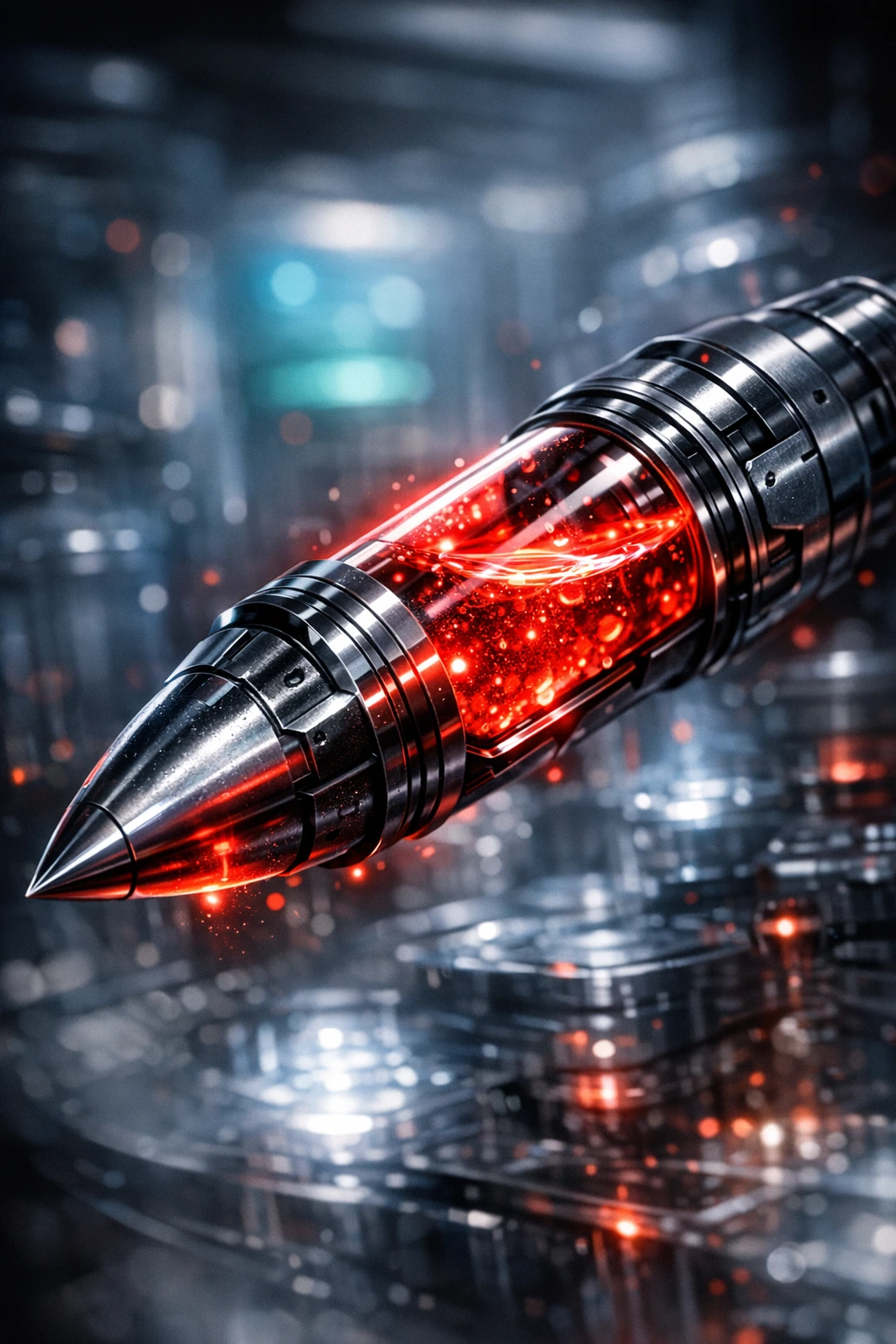
This serum was then loaded into specialized, high-caliber needle-rounds, successfully creating the ultimate anti-hero weapon: the Quirk-Destroying Bullets. When fired into a target, the serum instantly infected the victim’s bloodstream, hunting down their Quirk Factor and violently rewinding its evolutionary state until the superpower ceased to exist.
Chisaki had successfully engineered a biological reset button for society. He planned to mass-produce these bullets, sell them to villains to destroy heroes, and simultaneously sell the “cure” (reconstructed from his own blood/Eri’s DNA) to the highest bidder, establishing a perfect monopoly on superpowers. This dark science proved that Overhaul’s most dangerous application wasn’t creating giant monsters; it was its ability to rewrite the genetic destiny of the human race.
The Fatal Flaws and Psychological Limiters
The Mysophobia Cap
Despite wielding a power that defies the laws of physics and biology, Kai Chisaki’s ultimate downfall was rooted entirely in his own mind. His severe OCD and profound mysophobia (fear of dirt, germs, and contamination) served as a massive psychological limiter, capping his Quirk’s true potential.
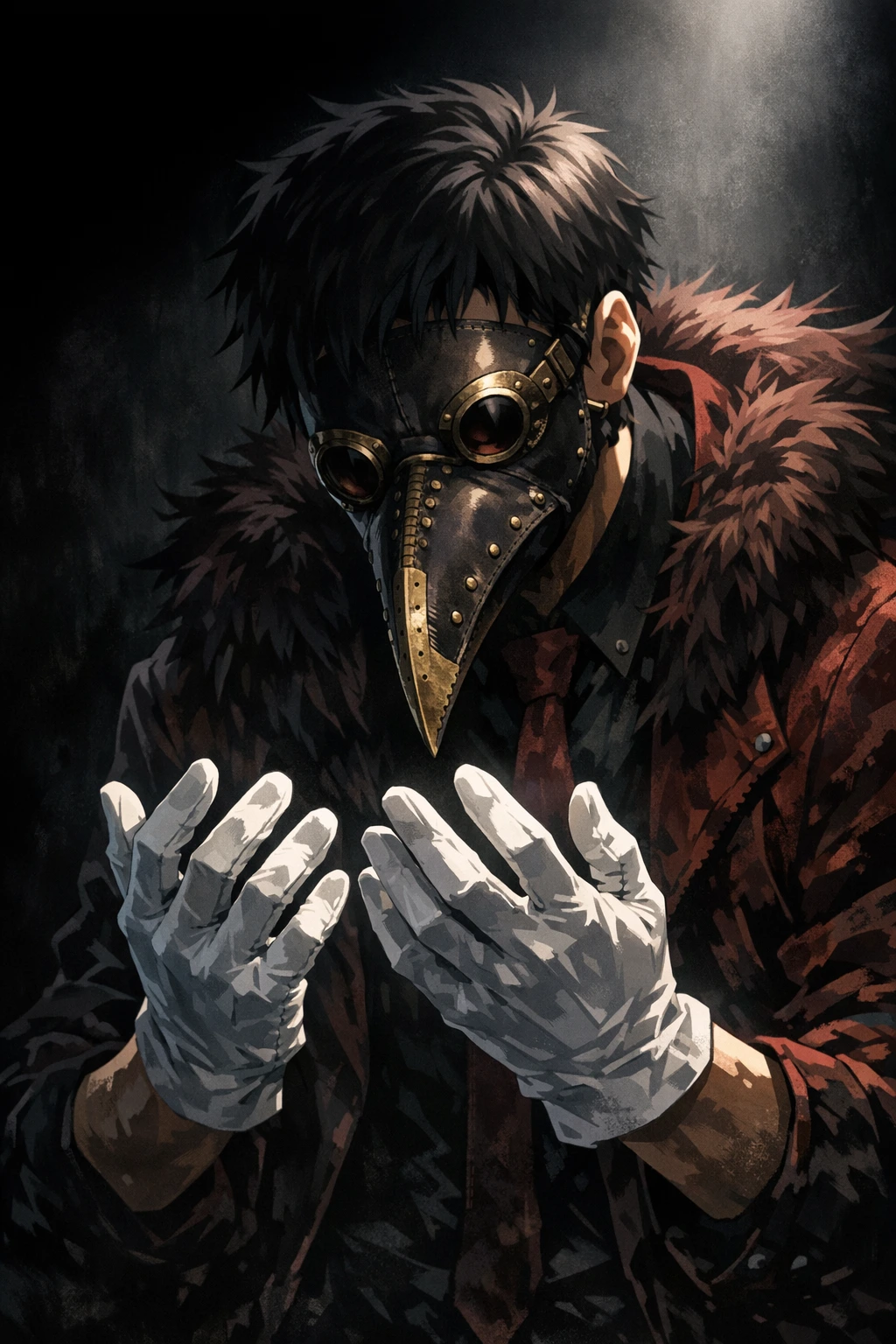
Chisaki viewed the world, and especially other people, as inherently diseased. He wore white gloves not just as a stylistic choice, but as a desperate barrier against the filth of reality.
Because his Quirk requires direct skin contact, his refusal to touch certain things unless absolutely pushed to the brink severely handicapped his reaction time and combat fluidity. In a battle, a split-second hesitation out of disgust is fatal.
If Chisaki possessed the reckless, tactile abandon of a fighter like Tomura Shigaraki, he would have been an unstoppable force of nature, constantly touching, shifting, and absorbing everything around him. Instead, he treated his own power as a necessary evil, using it only when he could no longer avoid dirtying his hands.
This psychological block meant he was always fighting the environment, his enemies, and his own neuroses simultaneously.
The Predictability of Arrogance
Furthermore, the god-like nature of the Overhaul Quirk bred a fatal arrogance in its user. Because Chisaki could instantly kill anyone with a single touch, he never bothered to learn true martial arts or close-quarters combat strategy. He relied entirely on his Quirk to carry him through encounters. His fighting style was linear: reach out, touch, destroy.
This over-reliance on a one-hit-kill mechanic made his movements highly predictable against a hyper-analytical, highly trained fighter. This flaw was brutally exposed by Mirio Togata (Lemillion). Mirio quickly deduced that Chisaki’s entire offensive and defensive strategy revolved around the micro-movements of his hands.
By tracking Chisaki’s sightlines and hand positioning, Mirio easily predicted every strike, phase-shifting through the lethal touches and landing devastating physical blows. Even after Chisaki used a Quirk-Destroying Bullet to permanently erase Mirio’s Quirk, Mirio continued to beat Chisaki in pure hand-to-hand combat for a staggering five minutes.
Chisaki, stripped of the advantage of his instant-kill touch against a superior martial artist, was exposed as fundamentally weak. He was a man who commanded the power of a god, but possessed the fighting spirit and technique of an amateur.
The Fall of a God (The Poetic Irony)
The Loss of the Catalyst
The narrative trajectory of Kai Chisaki ends in a masterpiece of poetic, brutal irony. After his devastating defeat at the hands of a 100% One For All-powered Izuku Midoriya, Chisaki is arrested, bound in a quirk-suppressing straitjacket, and loaded into an armored police transport. He is broken, but he is still alive, and his mind is already calculating his inevitable escape and the continuation of his grand plan.
However, his transport is intercepted by the League of Villains. Tomura Shigaraki and Mr. Compress, seeking revenge for Chisaki’s earlier murder of Magne and mutilation of Mr. Compress’s arm, execute a surgical, chillingly precise raid. They do not come to kill Chisaki; they come to destroy his godhood.
Biological Imprisonment
In one of the most brutal scenes in My Hero Academia, Mr. Compress uses his marble Quirk to sever one of Chisaki’s arms, while Shigaraki uses Decay to disintegrate the other up to the elbow. They then mock him, taking the remaining Quirk-Destroying bullets and leaving him bleeding in the wreckage.
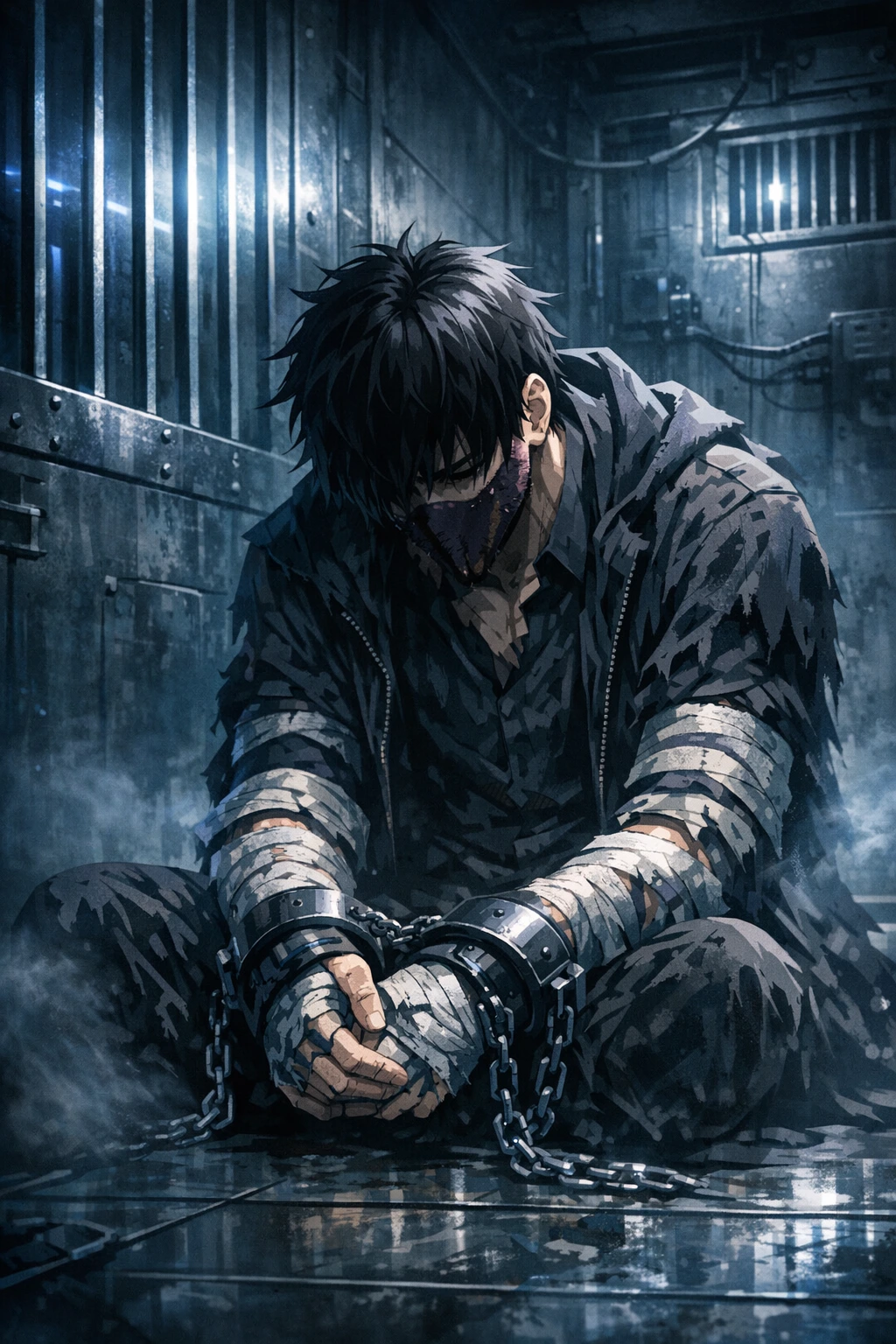
The tragedy of this defeat is absolute. By severing his arms, the villains did not erase his Quirk; they simply removed the catalyst. Overhaul is a somatic Quirk that specifically requires the user’s hands to activate. Chisaki’s Quirk Factor is still perfectly intact within his DNA. His mind still possesses the hyper-intelligence to deconstruct and reconstruct reality.
The god-tier power is still roaring inside his blood, but the biological key required to unlock it has been physically amputated. He is subjected to the ultimate biological imprisonment: trapped in a useless, mutilated vessel, possessing the power to reshape the universe, but lacking the hands to mold the clay.
The Tartarus State
The psychological break that follows this mutilation is total and permanent. Chisaki is sent to Tartarus, the most secure prison in the world, reduced to a weeping, pathetic shell of a man. His grand vision of ruling the underworld, monopolizing superpowers, and cleansing the world of the “hero disease” is shattered.
But the true source of his hellish existence is the fate of the Yakuza Boss. Chisaki genuinely loved the Boss who took him in as an orphan. He had placed the Boss in a coma using his Quirk to prevent him from interfering with the horrific experiments on Eri, fully intending to “cure” him and bring him back once the plan succeeded.
Now, locked in Tartarus without his hands, Chisaki realizes he can never activate his Quirk again. He can never touch the Boss. He can never wake him up. He has effectively murdered the only father figure he ever had. He is left completely powerless, haunted by the knowledge that he holds the ultimate medical cure in his genetics, but will never be able to dispense it.
He is permanently locked in his own mental hell, the god of matter manipulation reduced to a man who cannot even wipe his own tears.
Conclusion
The Wasted Singularity
In the final analysis, the Overhaul Quirk represents one of the greatest tragedies of wasted potential in the anime landscape. It is the closest thing to a true Singularity—a power so immense, so perfectly versatile, that it could have altered the trajectory of human history. If wielded by a hero, Overhaul could have single-handedly cured every terminal disease on Earth, rebuilt disaster-stricken cities in moments, and ushered in a golden age of medical and architectural miracles.
Instead, this divine spark was given to Kai Chisaki, a man whose worldview was fundamentally diseased. He looked at a Quirk capable of endless creation and chose only to see its capacity for structural violence. He used the power to heal only as a mechanism for torture, and the power to create only to build weapons of suppression. It was the ultimate remedy, wasted on a man who viewed humanity itself as the disease.
Closing Thoughts
Kohei Horikoshi’s design and execution of the Overhaul Quirk serves as a masterclass in power scaling and narrative world-building. Chisaki and his Quirk were utilized to expertly bridge the gap between the gritty, street-level violence of Yakuza crime syndicates and the high-concept, apocalyptic biological warfare that would define the final arcs of My Hero Academia.
Overhaul introduced the terrifying reality of Quirk Singularity, biological assimilation, and genetic manipulation to the audience. Even long after his defeat, the ripple effects of Chisaki’s mastery over his Quirk—specifically the existence of the Quirk-Destroying bullets—continued to shape the fate of hero society. Overhaul remains not just a Quirk, but a testament to the terrifying heights of human evolution in a superhuman world, standing forever as the ultimate, god-tier anomaly.