
1. The Shadow Military: Operating Outside the Law
When evaluating the world of Demon Slayer, it is incredibly easy to become mesmerized by the flashing blades, the elemental visual effects of Breathing Styles, and the tragic backstories of the combatants. However, a deeper, far more complex reality lies beneath the surface of this beautifully tragic narrative.
The Demon Slayer Corps is not merely a ragtag band of superpowered heroes wandering the countryside dispensing justice; it is a massive, highly structured, multi-million-dollar shadow military organization. To truly understand the magnitude of what the Ubuyashiki family has accomplished, one must first understand the immense logistical nightmare of running a private, heavily armed military force in Taisho-era Japan—a force operating entirely without the knowledge, approval, or funding of the national government.
The Taisho period (1912–1926) was a time of rapid modernization and industrialization for Japan. The nation was embracing Western technology, expanding its railway networks, illuminating its cities with electric lights, and establishing a formalized, modern police force and military.
In this era of scientific advancement and societal evolution, the concept of immortal, flesh-eating demons lurking in the shadows was considered nothing more than superstitious folklore by the general public and the government. Because the government refuses to acknowledge the existence of demons, they naturally refuse to acknowledge the necessity of the Demon Slayer Corps. Consequently, the Corps operates completely off the grid, functioning as an illegal, vigilante militia.
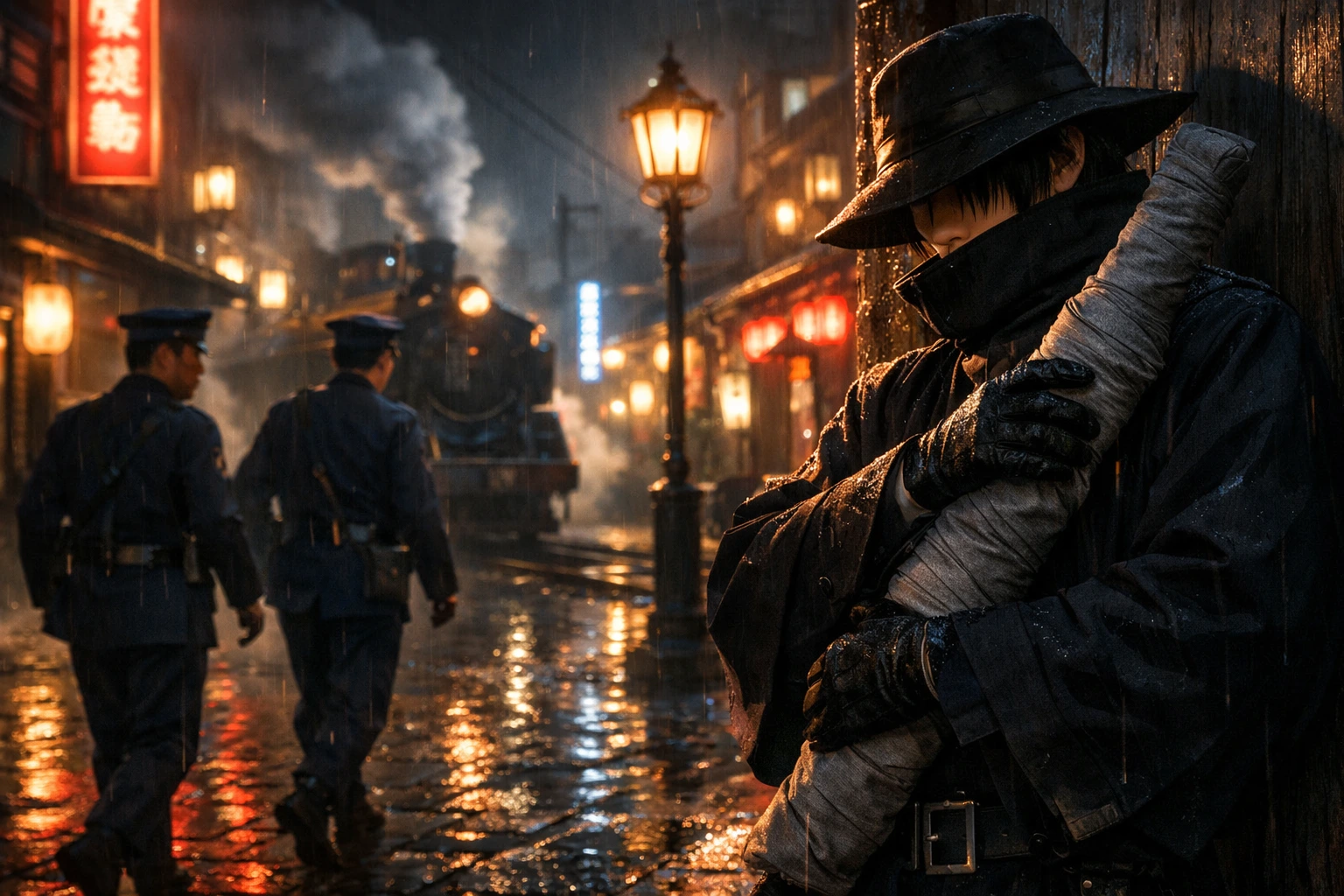
This unofficial status creates extreme friction between the modernizing Japanese government and the ancient, hidden war being waged in the dark. The most glaring logistical hurdle the Corps faces daily is the strict weapon control laws of the era. Following the Haitorei (Sword Abolishment Edict) established decades earlier during the Meiji Restoration, it became highly illegal for citizens to carry swords in public.
Demon Slayers, therefore, are technically armed criminals in the eyes of the law. They cannot simply walk down the street, board a steam train, or enter a city with a Nichirin blade strapped to their waist without drawing the immediate and hostile attention of the local police.
This friction necessitates an entirely hidden subculture of travel and operation. Slayers are forced to wrap their weapons in cloth, disguise them as large musical instruments, or carry them in specialized concealed luggage. When confronted by authorities, they cannot explain that they are hunting demons; doing so would either result in being locked in an asylum or arrested for possessing a deadly weapon. They must run, evade, and hide from the very people they are sacrificing their lives to protect.
This dynamic adds a profound layer of difficulty to their missions. A Slayer responding to a demon attack in a populated area must not only defeat a supernaturally powerful monster but must also avoid collateral damage, keep the demon hidden from public view to prevent mass panic, and escape the scene before the human police arrive to arrest them for carrying an unregistered katana.
Furthermore, operating outside the law means the Corps has absolutely zero access to public infrastructure, government funding, military supply chains, or state-sponsored medical care. They cannot rely on the national telegraph system to transmit sensitive information about Muzan Kibutsuji, lest government operators intercept and misinterpret the data as domestic terrorism.
They cannot send their critically wounded to public hospitals, as doctors would inevitably question the horrific, unnatural nature of demon-inflicted wounds, leading to police investigations. Every single piece of infrastructure required to sustain an army—from communications and medical triage to weapon manufacturing and food supply—must be built, funded, and maintained entirely in secret.
The Demon Slayer Corps is, therefore, an unparalleled feat of shadow logistics. It requires a decentralized network of safehouses, a proprietary biological telecommunications system, an invisible supply chain for rare metals, and an inexhaustible source of private funding. The heroes wielding the swords are only the tip of the spear; the shaft of that spear is a massive, invisible machinery of espionage, civilian support, and generational wealth that allows the combatants to function.
Understanding the Corps requires looking past the Breathing Styles and examining the brutal, beautiful efficiency of an organization that has sustained a secret, thousand-year war against an immortal enemy, all while hiding in plain sight.
2. The Ubuyashiki Fortune: Funding a 1,000-Year War

War is fundamentally an enterprise of economics, and a secret war fought over a millennium is an economic anomaly that defies basic financial logic. The sheer cost of maintaining the Demon Slayer Corps is staggering, easily rivaling the defense budgets of small nations, yet it is entirely privately funded. To comprehend the magnitude of this financial burden, one must conduct a deep dive into the economics of demon slaying.
Every single active member of the Corps represents a massive financial investment. Consider the primary weapon: the Nichirin sword. These are not standard-issue, mass-produced military sabers. They are bespoke, mastercrafted weapons forged from highly specific, extremely rare Scarlet Crimson Iron Sand and Scarlet Ore, mined exclusively from high-altitude mountains that absorb constant sunlight. The extraction, transportation, and refinement of this ore alone require immense capital.
Then, the forging process is carried out by the master smiths of the hidden Swordsmith Village, a localized economy that the Ubuyashiki family entirely subsidizes. Every time a Slayer breaks a sword—which happens with alarming frequency in the lower ranks—a new one must be forged and securely delivered, representing thousands of dollars in material and labor costs per weapon.
Beyond weaponry, the Corps provides custom-tailored, highly specialized uniforms woven from proprietary anti-demon fabrics. They employ a massive, full-time medical staff, most notably housed at the Butterfly Mansion, which serves as a state-of-the-art triage center, rehabilitation clinic, and pharmaceutical research laboratory.
The costs of medical supplies, rare herbs for Wisteria-based poisons, and housing for wounded Slayers during months of physical therapy are astronomical. Add to this the travel logistics, the food stipends, the maintenance of the Kakushi (the clean-up and support brigade), and the breeding programs for the Kasugai Crows, and the daily burn rate of the Corps’ budget becomes almost incomprehensible.
So, how does a single family fund a thousand-year, multi-million-dollar shadow war without going bankrupt? The answer lies in the unique genetic inheritance of the Ubuyashiki bloodline: a supernatural level of foresight and clairvoyance.
While the Ubuyashiki family is cursed with a genetic disease that ravages their bodies and drastically shortens their lifespans as punishment for producing the original demon, Muzan Kibutsuji, they were also granted a hyper-evolved intuition. This “clairvoyance” allows the head of the family, known as the Oyakata-sama (Master), to perceive the future with terrifying accuracy. While this ability is heavily utilized to predict Muzan’s movements and deploy Slayers tactically, its most crucial, albeit less glamorous, application is in finance.
For centuries, the successive heads of the Ubuyashiki family have used this flawless intuition to amass a staggering, inexhaustible fortune. By accurately predicting famines, bountiful harvests, the rise and fall of merchant guilds, the outcomes of wars, and shifts in the national economy, the Ubuyashiki estate has made centuries of flawless investments.
They effectively possess the ultimate form of insider trading, sanctioned by the gods. They buy land before it becomes valuable, invest in industries right before they boom, and liquidate assets perfectly before market crashes. This generational compounding of wealth has resulted in a war chest so massive that it can seamlessly absorb the financial black hole that is the Demon Slayer Corps.
The Ubuyashiki fortune is the silent, beating heart of the war effort; without it, the Corps would have collapsed from bankruptcy centuries ago.
This immense wealth is most evidently displayed in the financial structure surrounding the Hashira, the nine highest-ranking swordsmen in the Corps. Becoming a Hashira is not merely a promotion in rank and respect; it elevates the Slayer to a level of profound financial elite. It is a canon fact within the lore that the Hashira possess an unlimited, infinite budget. They are handed the equivalent of a blank check, funded directly and unconditionally by the Ubuyashiki estate.
This is not simply a reward for their immense power; it is a calculated, strategic investment by Kagaya Ubuyashiki. The Hashira are the absolute pinnacle of human combat potential, the only individuals capable of holding the line against the Upper Rank demons. Their time, mental energy, and physical health are the most valuable assets the Corps possesses. Therefore, the Master ensures that the Hashira have absolutely zero civilian distractions.
If a Hashira needs to buy an entire first-class train carriage to investigate a demon, the funds are instantly available. If Tengen Uzui requires massive amounts of explosives, specialized shinobi gear, and funds to maintain his wives’ espionage missions in the Entertainment District, it is paid for. If a Hashira wishes to purchase a sprawling private estate to use as a training ground, the deed is acquired without question.
The blank check ensures that a Hashira never has to worry about rent, food, medical care, or material needs. They are freed from the mundane burdens of human survival so that 100% of their psychological and physical bandwidth can be dedicated to the eradication of demons. The Ubuyashiki fortune, born from a curse of foresight, acts as the ultimate shield, allowing the greatest warriors of humanity to operate with absolute financial impunity.
3. The Rank Hierarchy: The Bloody Corporate Ladder

Beneath the exalted status of the Hashira lies the grueling, unforgiving reality of the Demon Slayer Corps’ ranking system. It is a structure built on a foundation of extreme mortality, functioning less like a traditional military chain of command and more like a bloody corporate ladder where promotions are paid for in severed demon heads and the lives of colleagues.
The hierarchy is strictly divided into ten distinct ranks, derived from the traditional Japanese celestial stems. From lowest to highest, they are: Mizunoto, Mizunoe, Kanoto, Kanoe, Tsuchinoto, Tsuchinoe, Hinoto, Hinoe, Kinoto, and Kinoe. Above them all sit the Hashira. When a recruit miraculously survives the Final Selection—a brutal, seven-day survival exam on a mountain infested with demons that regularly sees a 90% fatality rate—they are automatically placed at the very bottom: Mizunoto.
The integration into this system is immediate and visceral. Slayers do not carry easily forged ID cards or wear removable rank insignia. Instead, their rank is literally bound to their flesh through a specialized technique known as Wisteria muscle-contraction carving.
Through a secret, slightly painful process, the kanji representing their current rank is invisibly etched into the back of their hand. To display it, the Slayer must tense their muscles in a specific manner, causing the blood vessels to swell and reveal the password-like kanji.
This physical branding carries a heavy psychological weight; it is a constant, bodily reminder of their exact standing in a deeply lethal hierarchy. It ensures absolute verification in the field, preventing demons from impersonating Slayers by stealing uniforms, and serves as an undeniable proof of authority when higher ranks command lower ones.
The brutal truth of the Demon Slayer Corps is the vast disparity in salary, respect, and survival rates between the lower and upper ranks. The baseline salary for a fresh Mizunoto is actually quite generous by Taisho-era standards.
It is enough to provide a comfortable, middle-class living, ensuring that new recruits can feed themselves and find lodging when not utilizing the Wisteria safehouses. However, this generous starting salary is essentially hazard pay. It is the financial equivalent of blood money.
The mortality rate for a Mizunoto is catastrophic. The vast majority of Slayers who enter the Corps do not survive their first year, let alone make it past the bottom three ranks. Because their Breathing Styles are unrefined, their physical conditioning is incomplete, and their combat experience is virtually nonexistent, they are highly susceptible to the supernatural speed and Blood Demon Arts of even average demons. In the grand, cruel strategy of the war, most low-ranking Slayers serve a dark but necessary purpose: they are highly-paid cannon fodder.
When demons begin congregating or a particularly powerful demon emerges in a region, the Corps often loses contact with the lower-ranked Slayers sent to investigate. Their deaths serve as grim data points on the Ubuyashiki maps. When a cluster of Mizunoto disappears, the Kasugai Crows report the casualties, signaling to the command structure that a high-level threat is present, prompting the dispatch of Kinoto, Kinoe, or Hashira-level combatants. The lower ranks bleed to locate the enemy so the upper ranks can execute them. It is a horrifying metric of human sacrifice, accepted silently by every member who dons the uniform.
To escape the meat grinder of the lower ranks, a Slayer must climb the bloody corporate ladder, and the promotion metrics are exceptionally demanding. Rank advancement is strictly merit-based and tied directly to combat performance. A Slayer is promoted by successfully completing missions, demonstrating mastery of their Breathing Style, and surviving encounters with increasingly powerful demons. However, the path to the absolute top—the rank of Hashira—requires crossing a nearly impossible threshold.
The exact mathematical and combat requirements for becoming a Hashira are explicitly defined and ruthlessly enforced. A Slayer must achieve the highest standard rank of Kinoe, and then they must fulfill one of two grueling criteria: they must either document the confirmed kills of 50 demons, or they must independently kill a member of the Twelve Kizuki (Muzan’s elite guard).
Killing 50 demons is a test of supreme endurance, consistency, and psychological resilience. It requires years of surviving the nightly horrors of the shadow war without succumbing to fatigue, injury, or madness. Conversely, killing a member of the Twelve Kizuki is a test of explosive, transcendental power.
The Lower Ranks of the Kizuki possess power that easily dwarfs dozens of average demons, and the Upper Ranks are walking natural disasters that have slaughtered generations of past Hashira. Achieving either of these metrics is a statistical anomaly, which is why there are typically only nine Hashira in existence at any given time across the entire nation of Japan. The rank hierarchy is designed to be a crucible, burning away the weak and the unlucky until only the absolute diamonds of humanity remain.
4. Uniform Engineering and Tactical Gear
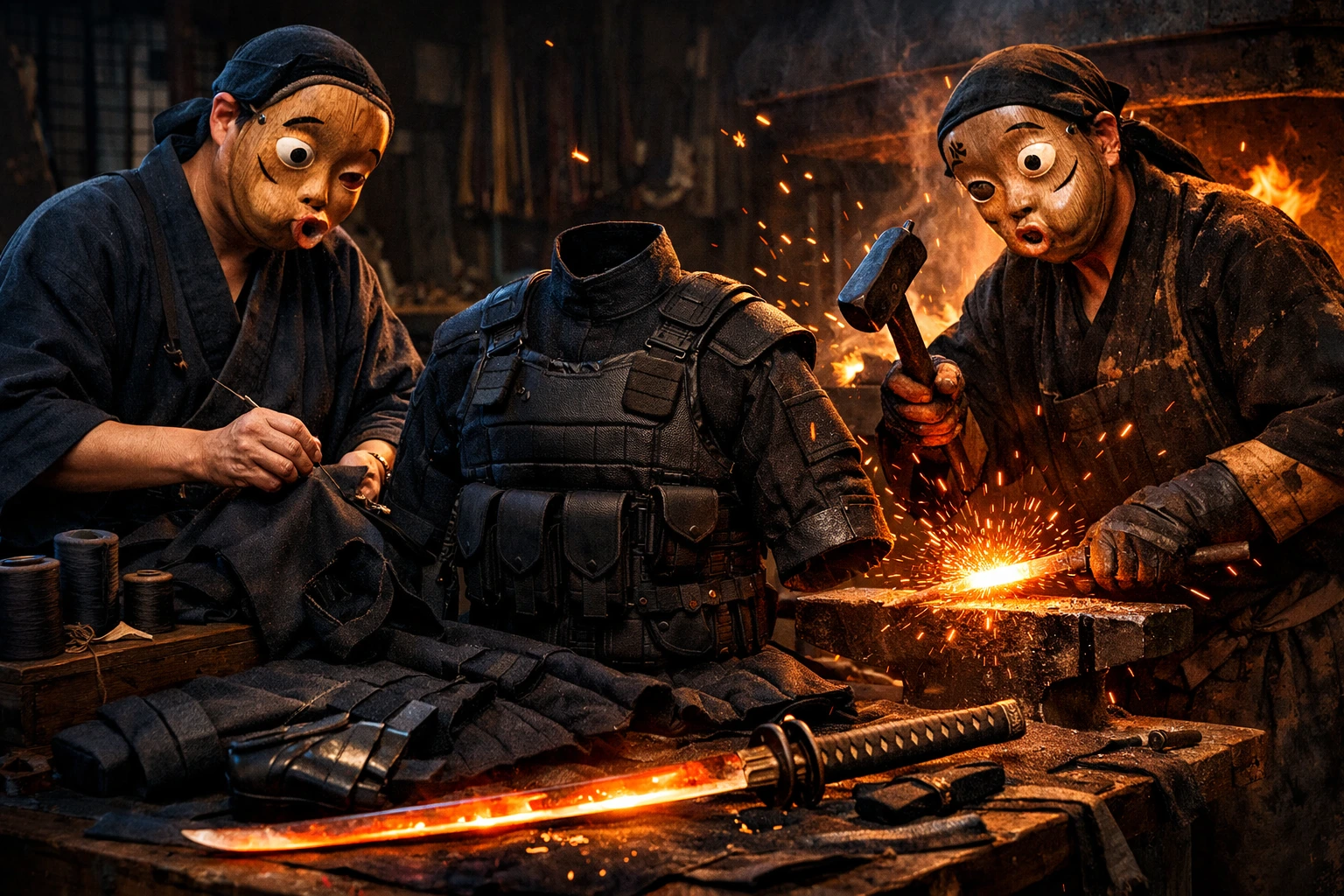
In a war where a single scratch from a demon can result in dismemberment or lethal poisoning, the equipment a soldier carries is just as critical as their swordsmanship. The Demon Slayer uniform is a masterpiece of hidden engineering, designed to offer maximum protection while maintaining absolute mobility. Far from being simple, stylish martial arts tunics, these garments are the result of centuries of material science developed in total secrecy.
The standard-issue black uniform (which often takes on a faint tint corresponding to the user’s Breathing Style, such as deep blue or dark red) is woven from a highly specialized, proprietary anti-demon fabric. This material is a closely guarded secret of the Corps’ tailors. Its engineering is nothing short of miraculous for the Taisho era. First, it is exceptionally breathable and lightweight, regulating the Slayer’s body temperature during the extreme cardiovascular exertion required to maintain Total Concentration Breathing. Second, it is chemically treated to be highly water-resistant and fire-retardant, offering crucial protection against demons who utilize elemental Blood Demon Arts.
Most importantly, however, is the fabric’s sheer tensile strength. The uniform is designed to be highly durable and bite-resistant. While it cannot stop a direct, full-force blow from an Upper Rank demon, it is dense and tough enough to deflect the ambient claws and teeth of lower-level demons.
A glancing slash that would normally eviscerate a normal human wearing cotton will slide off the specialized fibers of the Slayer uniform, leaving only a bruise. This passive defense mechanism saves the lives of countless low-ranking Slayers, offering them a fractional margin of error in life-or-death melee combat.
Despite the strict regulations regarding the material, the Corps’ tailoring division—led by the somewhat eccentric and infamous “Kakushi Tailor,” Maeda Masao—allows for extensive tailored mechanics and custom alterations. These are not merely aesthetic choices; they are functional modifications engineered to synergize with a specific Hashira or high-ranking Slayer’s unique combat style.
For example, Shinobu Kocho, the Insect Hashira, lacks the physical upper-body strength to decapitate a demon. Therefore, her uniform is heavily modified. Her haori is designed with wide, reinforced fabric that mimics butterfly wings, acting as aerodynamic gliders. This allows her to maximize her agility, utilize wind resistance for sudden directional changes in mid-air, and deliver rapid, precision poison thrusts rather than sweeping slashes.
Tengen Uzui, the Sound Hashira, relies on explosive speed, shinobi stealth, and massive range of motion to swing his dual cleavers. His uniform is completely sleeveless, prioritizing unhindered shoulder articulation, and features heavy, jewel-encrusted headgear that likely serves a dual purpose of sensory enhancement and distraction.
Mitsuri Kanroji, the Love Hashira, possesses an unnatural muscle density and utilizes a ribbon-like, flexible sword. Her heavily modified uniform—featuring an open chest and a short skirt—was famously tricked onto her by Maeda Masao under the guise of an “official” female redesign, but practically, it allows for the absolute maximum flexibility required for her acrobatic, contortionist fighting style.
Even Inosuke Hashibira’s blatant refusal to wear the standard uniform shirt is tolerated because his Beast Breathing relies on the tactile feedback of his skin interacting with the air currents to sense his surroundings. The Corps understands that individuality in combat gear is a tactical advantage, not a breach of discipline.
Behind the uniforms and the customized gear lies the most critical and vulnerable vein of the Corps: the Swordsmith supply chain. The logistical pipeline connecting the hidden Swordsmith Village to the front lines is a marvel of paranoid security. Because Muzan Kibutsuji desperately wants to destroy the Corps’ ability to arm itself, the location of the village is the greatest secret in the organization, hidden even from the Hashira.
The logistics of moving ore, finished weapons, and personnel to and from the village require an intricate, multi-layered blind transfer system. When a Slayer’s sword is ready, a swordsmith (wearing a traditional Hyottoko mask to conceal their identity) personally travels across the country to deliver it, acting as an armed courier.
If a Slayer must visit the village themselves, they are subjected to an extreme security protocol. They are blindfolded, given earplugs to remove all directional hearing, and carried on the backs of multiple different Kakushi. These Kakushi act as relay runners; one Kakushi will carry the Slayer a certain distance, then hand them off to a completely different Kakushi, along with the directions to the next checkpoint.
The Kakushi themselves only know the path from their specific checkpoint to the next, never the entire route. Crows are frequently swapped out during the journey to prevent any tracking of flight paths. This decentralized, segmented knowledge ensures that even if Muzan’s spies capture and torture a Slayer or a Kakushi, it is mathematically impossible for them to reveal the village’s location. The engineering of their gear is matched only by the engineering of their security.
5. The Kasugai Crow Network: Biological Telecommunications
How does a shadow military organization successfully coordinate a nationwide war before the invention of cell phones, the widespread availability of civilian telephones, and the utilization of mass radio broadcasts? In the early 20th century, communication was a slow process reliant on telegrams and physical mail delivered by steam trains.
For the Demon Slayer Corps, where a delay of a few hours can mean the slaughter of an entire village, such methods are unacceptably slow and prone to government interception. Enter the most vital logistical asset of the entire organization: the Kasugai Crow network.
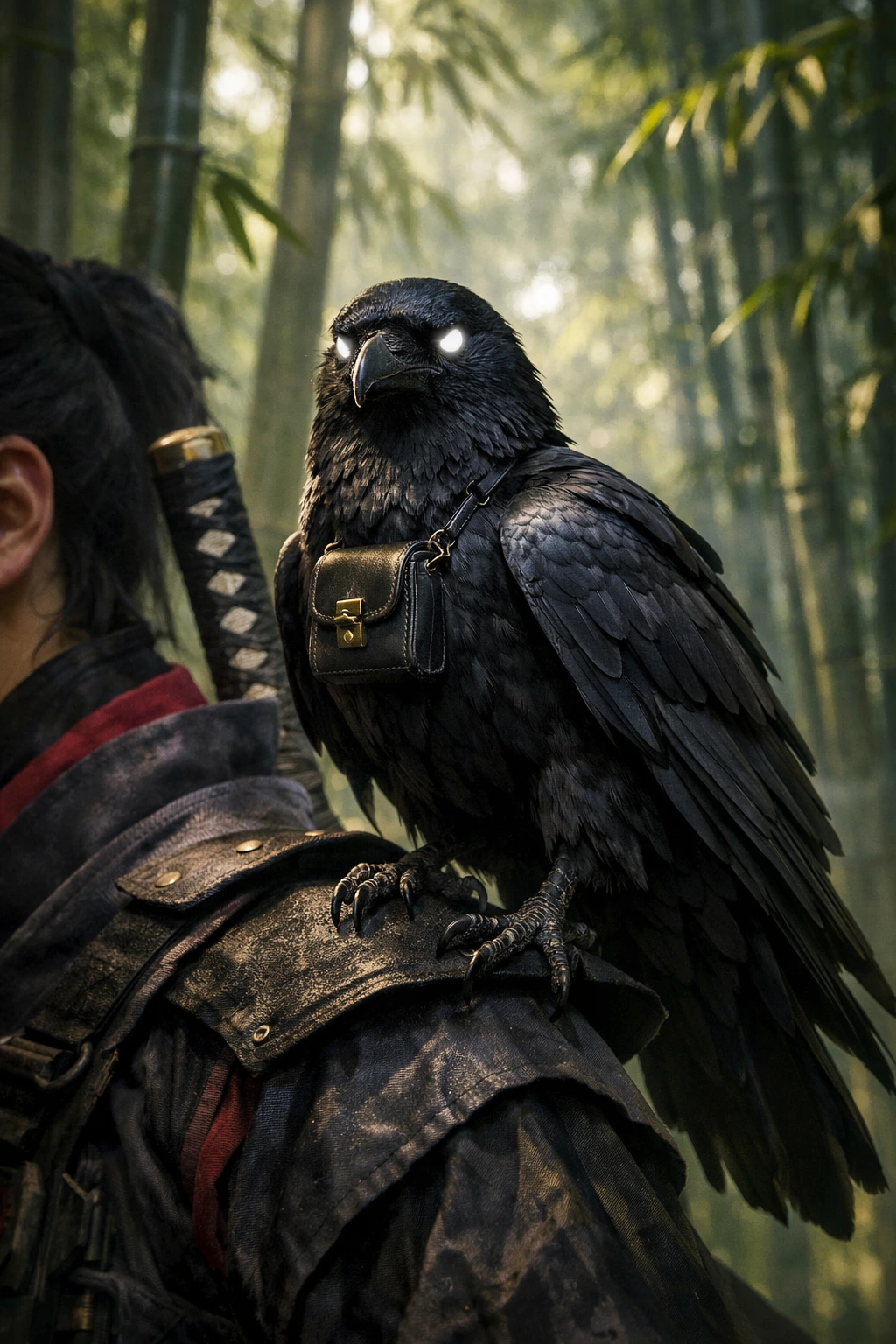
The Kasugai Crows are the Taisho-era equivalent of a decentralized, biological information highway. They are not merely trained pets or glorified carrier pigeons; they are a highly sophisticated, genetically refined avian network that serves as the nervous system of the Demon Slayer Corps. To understand their efficiency, one must dive into the sheer avian intelligence bred into these specific creatures.
The Ubuyashiki family has spent centuries selectively breeding the Kasugai Crows. Through generations of careful curation, they have developed birds with an encephalization quotient (brain-to-body mass ratio) that far exceeds normal corvids.
These crows possess an eidetic memory, allowing them to instantly memorize complex topographical maps of Japan, recognize the faces and spiritual auras of thousands of individual Slayers, and recall intricate verbal messages without error. Most astonishingly, their vocal cords and cognitive centers have been bred to allow them to speak fluent, coherent Japanese. They do not merely mimic sounds like a parrot; they understand syntax, military terminology, and context, allowing them to relay complex tactical briefings.
Furthermore, they possess an innate, almost supernatural ability to track the exact GPS coordinates of their assigned Slayer. Whether a Slayer is buried under rubble, hiding in a dense forest, or moving rapidly across the countryside, their assigned crow can locate them with pinpoint accuracy. This creates an unjammable, untraceable communication link between the individual soldier in the field and the central command at the Ubuyashiki estate.
The tactical role of the crows extends far beyond simply delivering mail. They are, for all intents and purposes, active field commanders and logistics coordinators. When a Slayer finishes a mission, it is the crow who dictates their next deployment. The crows possess the authority to immediately redirect Slayers to hot zones, overriding previous orders based on real-time intelligence gathered by other crows in the network.
If a low-ranking Slayer encounters a demon far beyond their capability, their crow will immediately scatter, flying at top speed to locate the nearest Hashira or Kinoe-ranked fighter to request emergency backup.
Moreover, the Kasugai Crows are responsible for the critical integration of the Kakushi. Once a battle concludes—often leaving the landscape devastated and the Slayers critically wounded—the crow initiates the clean-up protocol. They act as homing beacons, guiding the medical and clean-up crews to the exact coordinates of the aftermath.
They ensure that injured Slayers are rapidly evacuated to the Butterfly Mansion and that demon corpses (which disintegrate in the sun but leave behind collateral damage) and human casualties are managed discretely before local authorities arrive.
Each crow is also carefully matched to the personality of its Slayer, resulting in a fascinating dynamic of biological telecommunications. Tanjiro’s crow, Matsuemon, is diligent and highly protective. Tengen Uzui’s crow is adorned with jewels and speaks with a flamboyant, aristocratic flair, matching the Sound Hashira’s aesthetic.
Muichiro Tokito’s crow is notoriously arrogant and fiercely protective of the Mist Hashira’s genius, often verbally abusing others who it deems unworthy. This individualization ensures a strong psychological bond between the soldier and their communication lifeline.
In a war fought in the dark, where silence means death, the Kasugai Crows are the ever-watchful eyes of the Master, the voices of command, and the only reason the Corps has not collapsed into disorganized chaos.
6. The Civilian Support Web: The Wisteria Family Crests

While the Ubuyashiki fortune provides the macroeconomic foundation of the Corps, the microeconomics of day-to-day survival in the field rely on a completely different, incredibly touching system: the civilian support web. Demon Slayers operate in a constant state of transit.
They are nomadic warriors, moving from town to city, from mountain to valley, hunting their prey. Constantly paying for inns, finding secure places to rest where their weapons won’t raise suspicion, and accessing emergency medical care in rural areas would quickly drain even the generous salaries of the lower ranks. To solve this, the Corps relies on the Wisteria Family Crests.
Scattered across the vast expanse of Japan are hidden safehouses, often appearing as massive, opulent traditional estates bearing the crest of the Wisteria flower. These are the Wisteria Mansions, such as the one Tanjiro, Zenitsu, and Inosuke recuperate in following the brutal battle at the Drum House. These mansions serve as vital oases in the desert of the shadow war.
They provide a secure environment where Slayers can sleep without fear of demon ambush, eat highly nutritious meals designed to rebuild torn muscle tissue, and receive elite, specialized medical care from private physicians who are fully aware of the existence of demons and the nature of Nichirin wounds.
The most fascinating aspect of this safehouse network is how it is funded and operated. These estates are not owned by the Ubuyashiki family, nor are they run by retired Slayers. They are independently owned, funded, and operated by immensely wealthy civilian families. The currency that powers these safehouses is not yen, but gratitude.
Historically, these families were the victims of horrific demon attacks. At their absolute lowest moment, facing complete annihilation, a Demon Slayer intervened, risking their own life to save the family. Because Slayers do not ask for payment or reward from the people they save, these wealthy families are left with a profound sense of giri—a deeply ingrained Japanese cultural concept of duty, obligation, and the unpayable burden of extreme gratitude. To repay this cosmic debt, these families dedicate their ancestral homes and their vast personal wealth to serving the Corps.
When a Slayer presents themselves at a home bearing the Wisteria Crest, they are treated not as guests, but as exalted saviors. The families provide free room, board, custom clothing repair, and top-tier medical attention without ever asking a single question about the mission. The staff of these mansions are sworn to absolute secrecy, acting as an invisible civilian auxiliary force.
This network drastically reduces the logistical strain on the Ubuyashiki estate, decentralizing the cost of housing and medical triage, and ensures that no matter where a Slayer is deployed in Japan, they are never truly alone.
In conclusion, the absolute efficiency of the Demon Slayer Corps is a terrifyingly beautiful thing to behold. It is a masterclass in utilizing the darkest aspects of the human experience—grief, loss, and the desire for vengeance—and weaponizing them through immense wealth and flawless tactical logistics.

From the generational clairvoyance that funds the infinite Hashira budgets, to the bloody corporate ladder of the Wisteria-carved ranks; from the engineered anti-demon fibers crafted by paranoid tailors, to the biological internet of the Kasugai Crows and the civilian network powered by pure gratitude. The heroes swinging the swords are magnificent, but the true triumph of humanity against Muzan Kibutsuji lies in the breathtaking, hidden machinery of sacrifice that allows those swords to swing at all.