
The world of Demon Slayer: Kimetsu no Yaiba is defined by a delicate, bloody balance between human fragility and demonic immortality. At the absolute apex of human potential within this universe lies a phenomenon as magnificent as it is tragic: the Demon Slayer Mark. For generations, casual observers and anime fans have viewed the Mark simply as a magical tattoo, a convenient shonen power-up that appears when a character is backed into a corner. However, an expert analysis of the lore, combined with real-world biological and thermodynamic principles, reveals a far more terrifying and brilliant reality.
The Demon Slayer Mark is not magic. It is an ancient, dormant genetic mutation—an ultimate biological override. It is a state of hyper-arousal that forces the fragile human body to perform at a demonic level, tearing through biological limiters at a catastrophic cost to cellular longevity. This article will deconstruct the Sengoku anomaly, the lethal physiological triggers of hyperthermia and extreme tachycardia, the epigenetic contagion of the resonance phenomenon, the molecular friction behind the Red Nichirin Blade, and the tragic biological reality of the Age 25 Curse.
Prepare to dive into the hyperthermic science of the Demon Slayer Mark.
1. The Sengoku Anomaly: The History and Return of the Mark
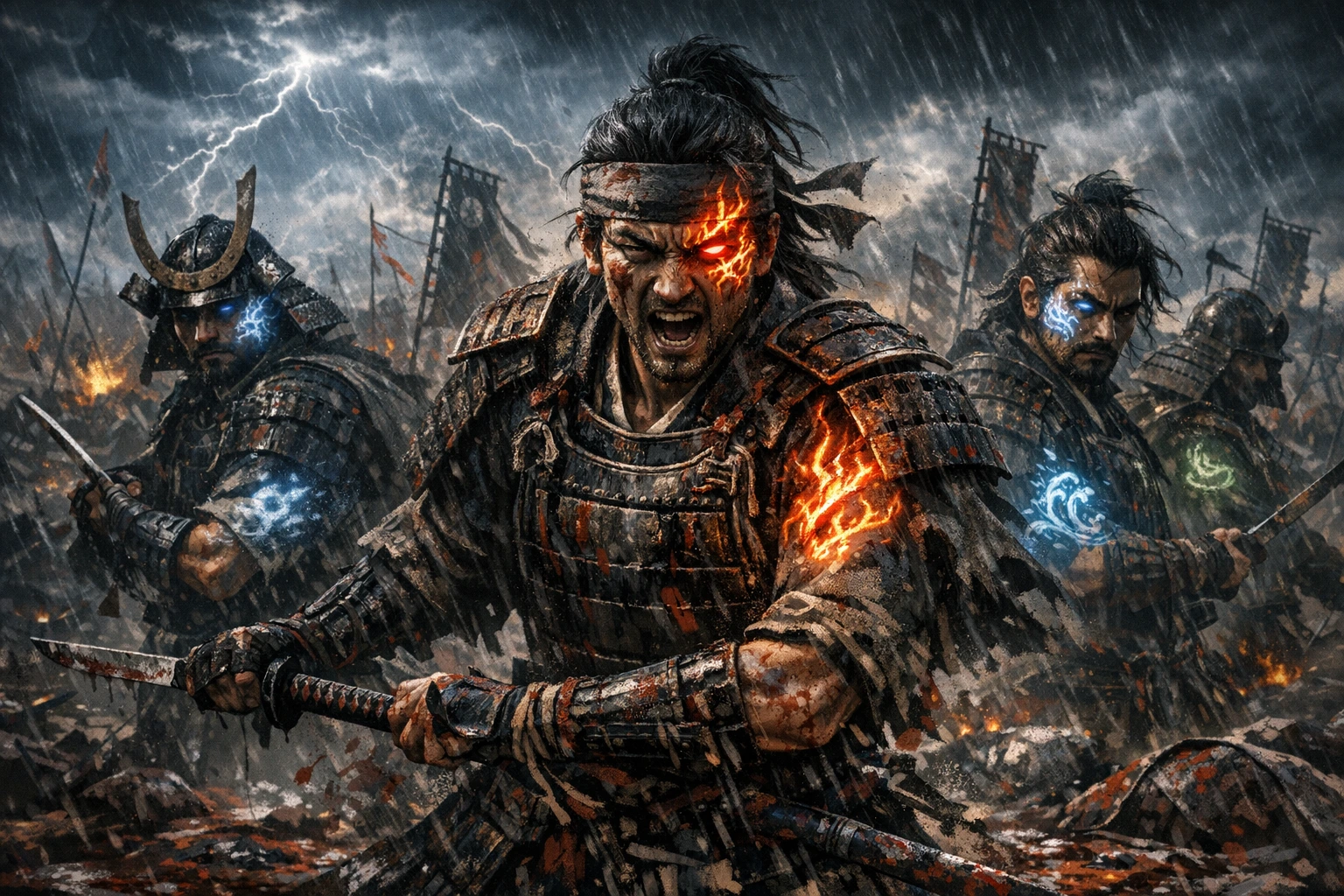
To understand the Demon Slayer Mark, we must first look to its origin point: the Sengoku Era, widely regarded as the Golden Age of Demon Slayers. This was a time of unprecedented martial prowess, a period where swordsmen pushed humanity to its absolute limits in a desperate, blood-soaked war against Muzan Kibutsuji and his Upper Moons. It was during this era that the Mark was first documented, not as a spell, but as a spontaneous biological mutation that unlocked god-like physical capabilities.
The Ultimate Biological Override
During the Sengoku period, the first generation of Breathing Style users—those who learned directly from Yoriichi Tsugikuni—began to manifest strange, birthmark-like patterns on their skin during life-or-death battles. The Mark was an evolutionary response to an apex predator. When faced with the insurmountable regenerative abilities, speed, and strength of demons, the human body recognized that standard adrenaline was insufficient. In response, it unlocked a deep, dormant genetic sequence.
This sequence acted as an ultimate biological override. The human body is naturally equipped with subconscious limiters; we only use a fraction of our muscle fibers at any given time to prevent our muscles from tearing our own bones apart. The brain heavily regulates heart rate and body temperature to protect vital organs. The Mark systematically destroys these limiters. It forces the human body into a state of hyper-arousal, an emergency protocol where long-term survival is entirely sacrificed for short-term combat supremacy. It is the body deciding that it would rather burn itself out in a blaze of glory than be consumed by a demon.
The Extinction and the Dormancy
However, the Golden Age did not last. The generation of marked swordsmen died out, largely due to the devastating biological toll the Mark exacted on their bodies—the infamous Age 25 Curse. With their deaths, and the subsequent centuries of relative decline in the Demon Slayer Corps’ overall strength, the Mark faded from physical reality into myth. It became a dormant trait, buried deep within the genetic code of humanity, waiting for the precise environmental and biological triggers to be awakened once more. For hundreds of years, Hashira fought and died without ever tapping into this primal, hyper-lethal state.
The Taisho Awakening: Tanjiro Kamado as Patient Zero
Fast forward to the Taisho era. The Demon Slayer Corps is fighting a war of attrition, severely outmatched by the Upper Moons who have remained undefeated for over a century. The reawakening of the Mark required a catalyst, a “Patient Zero” whose unique biological makeup and sheer willpower could crack the genetic lock. That catalyst was Tanjiro Kamado.
During the Entertainment District Arc, Tanjiro’s battle against Upper Moon 6, Gyutaro, serves as the modern era’s inciting incident. Tanjiro is pushed beyond conventional human exhaustion. He is poisoned, his fingers are broken, his respiratory system is failing, and his muscles are suffering from severe lactic acidosis. In the final, desperate moment of trying to decapitate Gyutaro, Tanjiro pushes his Total Concentration Breathing to an unprecedented, almost suicidal level.
At this exact moment, the scar on his forehead—originally a burn mark, later altered by a training injury—metamorphoses into the flame-like pattern of the Demon Slayer Mark. Tanjiro forces his body temperature and heart rate to spike exponentially, generating the explosive kinetic energy required to push his blade through Gyutaro’s incredibly dense neck. Tanjiro Kamado did not just unlock a power-up; he successfully reactivated a dormant genetic mutation, serving as the biological patient zero that would soon infect the rest of the Hashira with the power—and the curse—of the Sengoku Era.
2. The Biological Trigger: Hyperthermia and Tachycardia
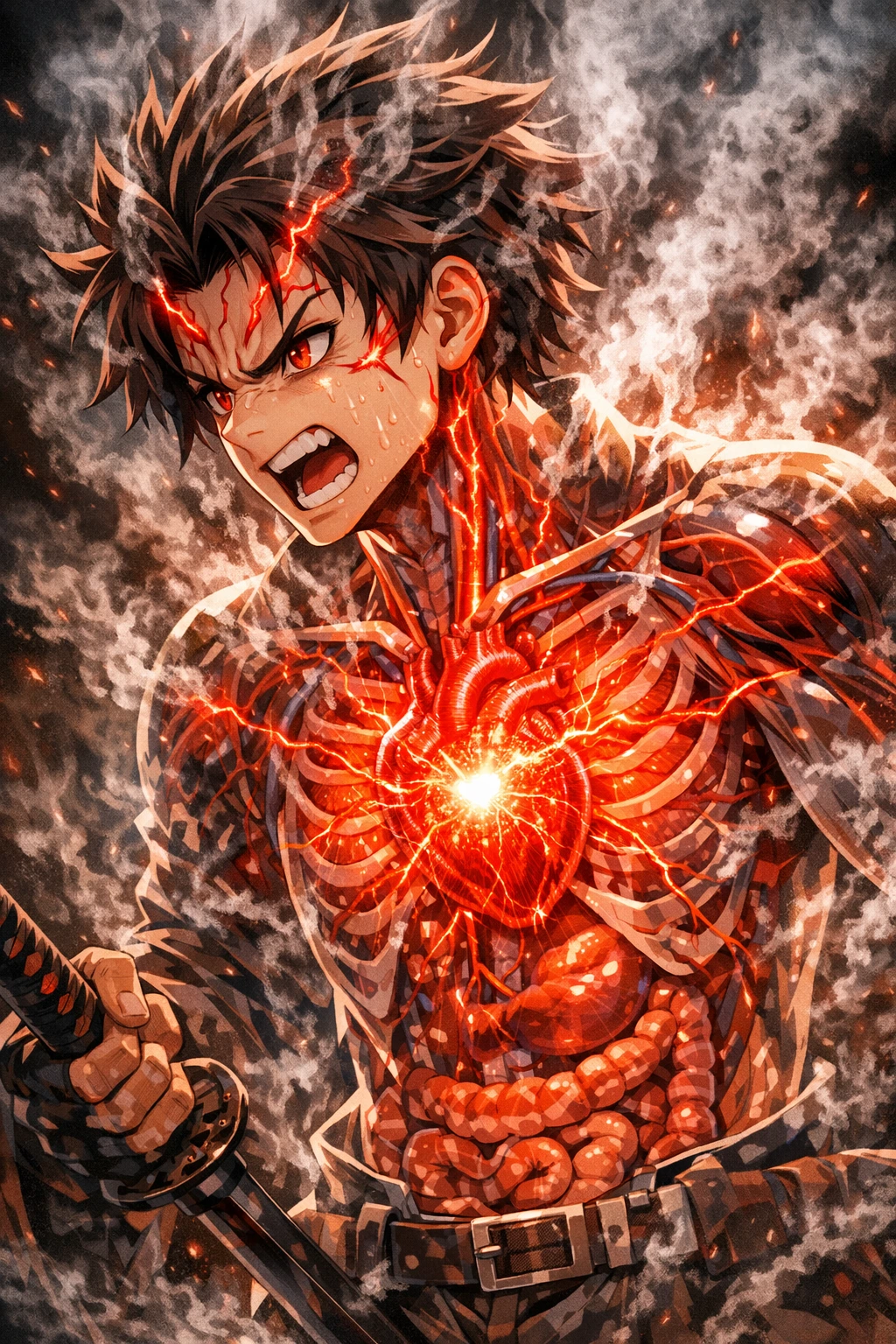
The mechanics of unlocking the Demon Slayer Mark are explicitly detailed later in the series, primarily by Mist Hashira Muichiro Tokito. He reveals that the Mark is not triggered by emotion alone, but by crossing a highly specific, lethal physiological threshold: a core body temperature of over 39°C (102.2°F) and a heart rate exceeding 200 beats per minute (BPM). To understand the sheer insanity of this requirement, we must dive into the medical reality of severe hyperthermia and extreme tachycardia.
The 39°C (102.2°F) Rule: Weaponized Hyperthermia
The normal human core body temperature operates tightly around 37°C (98.6°F). Enzymes, proteins, and cellular processes are precisely calibrated to function at this temperature. When the core temperature rises to 39°C, the body is in a state of high-grade fever. In real-world medicine, this level of hyperthermia begins to denature proteins. The brain, which is highly sensitive to heat, starts to experience swelling, leading to delirium, confusion, and eventually seizures.
Yet, the Demon Slayers weaponize this hyperthermic state. By utilizing Total Concentration Breathing, they hyper-oxygenate their blood. This massive influx of oxygen fuels an explosive rate of cellular respiration, generating immense amounts of ATP (adenosine triphosphate)—the energy currency of the cell. The byproduct of this rapid ATP synthesis is extreme metabolic heat. Instead of succumbing to heatstroke, the Slayer’s marked body utilizes this thermal energy to increase muscle elasticity and nerve conduction velocity. The heat acts as a catalyst, reducing the viscosity of the blood and allowing it to flow with terrifying speed. They are essentially running a biological combustion engine on the absolute brink of a meltdown.
The 200 BPM Heart Rate: The Science of Extreme Tachycardia
A resting heart rate is typically between 60 to 100 BPM. For elite athletes, maximum heart rate during extreme cardiovascular exertion can approach the 190-200 BPM range, but it is entirely unsustainable for more than a few moments without causing acute heart failure. Sustaining a heart rate of 200 BPM or more is known as severe tachycardia.
At 200 BPM, the heart is pumping oxygenated blood at a velocity that creates immense sheer stress on the arterial walls. The stroke volume (the amount of blood pumped per beat) is maximized. In a normal human, blood vessels would rupture, leading to catastrophic internal bleeding, cerebral hemorrhaging, or a massive myocardial infarction (heart attack).
However, a marked Demon Slayer’s cardiovascular system adapts instantaneously. The Total Concentration Breathing reinforces the blood vessels, preventing them from bursting. The heart acts as a hyper-engine, delivering oxygen and nutrients to the muscles at a rate that allows for instantaneous tissue repair and explosive bursts of speed. This extreme blood pressure is also what causes the visual manifestation of the Mark itself, as capillaries dilate wildly under the skin.
Endorphins, Adrenaline, and Pain Suppression
Running a human body at 39°C and 200 BPM while engaging in high-impact combat should paralyze a person with excruciating pain. Muscle fibers are micro-tearing with every swing, and bones are micro-fracturing under the sheer kinetic force of their own movements. How do the Slayers survive the pain?
The answer lies in the central nervous system and the endocrine system. The physiological shock of the Mark triggers an unprecedented release of adrenaline (epinephrine), noradrenaline, and endorphins. This chemical cocktail initiates the ultimate “Fight or Flight” response. The gate control theory of pain dictates that non-painful inputs close the “gates” to painful input.
In the case of the Mark, the sheer flood of adrenaline completely overwhelms the pain receptors (nociceptors). The brain effectively severs the conscious perception of physical trauma. A marked Hashira can have their arm severed, their organs punctured, or their ribs crushed, and they will continue to fight with undiminished speed and ferocity because their brain has temporarily deleted the concept of pain to prioritize the termination of the threat.
3. The Resonance Phenomenon: How the Mark Spreads

One of the most fascinating aspects of the Demon Slayer Mark is how it behaves across a population. It is not an isolated power that must be trained individually from scratch. As explained by Amane Ubuyashiki, the Mark exhibits a “Resonance” effect. Once one individual in a generation unlocks it (Tanjiro), it begins to rapidly spread to other qualified swordsmen in close proximity. This contagion effect shifts the Mark from being a mere genetic trait to behaving like a localized biological virus or a highly advanced sympathetic nervous response.
The Contagion Effect: Epigenetic Chain Reactions
In biology, epigenetics is the study of how behaviors and environment can cause changes that affect the way genes work. Unlike genetic changes, epigenetic changes are reversible and do not change the DNA sequence, but they change how the body reads a DNA sequence. The Resonance phenomenon is the ultimate expression of epigenetic contagion.
When Tanjiro Kamado unlocked the Mark, his unique biological frequency—the specific rhythm of his hyper-elevated heart rate, the thermal output of his body, and the specific breathing frequency required to maintain it—created an environmental trigger. When Hashira like Mitsuri Kanroji, Muichiro Tokito, and later Gyomei Himejima fought alongside or interacted closely with Tanjiro, they were exposed to this trigger.
The human body is highly adaptive; when the Hashiras’ bodies recognized the biological signature of the Mark in Tanjiro, it forcefully awakened the dormant epigenetic markers within their own DNA. The biological threshold required to unlock the Mark was artificially lowered for them because Tanjiro’s presence acted as a key unlocking a collective genetic door.
Mirror Neurons and Sympathetic Synchronization
To understand how they synchronize, we must look at mirror neurons. These are brain cells that react both when a particular action is performed and when it is only observed. When a Hashira observes the terrifying speed, breathing rhythm, and kinetic output of a marked Tanjiro, their highly trained mirror neurons begin firing aggressively.
In a high-stress combat environment, the Hashiras’ sympathetic nervous systems unconsciously attempt to match the rhythm of the alpha fighter. They begin to mirror Tanjiro’s breathing patterns, their heart rates naturally attempt to match his 200 BPM cadence, and their core temperatures rise in a sympathetic biological response. Combined with the release of stress-induced pheromones during battle, the Hashiras’ bodies are literally tricked and guided into the hyperthermic state. They synchronize their internal biological clocks to the chaotic, hyper-fast metronome of Tanjiro’s marked body.
The Visual Manifestation: Capillary Dilation and Breathing Styles
Why does the Mark appear differently on everyone? Tanjiro has a flame, Muichiro has mist clouds, Mitsuri has twin hearts, and Gyomei has cracked earth. This is where biology meets the mystical martial arts of the series.
The Mark is not ink; it is the physical manifestation of highly oxygenated blood pooling near the skin’s surface. When the heart pumps at 200 BPM, severe vasodilation occurs—the widening of blood vessels to accommodate the massive blood flow. The specific shape the Mark takes is determined by the specific neural pathways and muscle memory associated with the user’s Breathing Style.
Total Concentration Breathing fundamentally alters the user’s anatomy. A Water Breathing user develops a different musculature and blood flow priority than a Stone Breathing user. Therefore, when the extreme blood pressure of the hyperthermic state forces capillaries to bulge against the skin, they follow the path of least resistance forged by years of specific elemental breathing. The birthmark is simply the localized, extreme vascular mapping of their specific martial art drawn in hyper-oxygenated blood upon their skin.
4. The Red Blade Physics: Thermal Energy and Molecular Friction

The Demon Slayer Mark grants incredible speed and strength, but its most lethal offensive application is its ability to unlock the Crimson Red Nichirin Blade. Standard Nichirin swords are forged from Scarlet Crimson Iron Sand and Scarlet Ore, materials that absorb sunlight. This makes them highly effective at decapitating demons. However, a Red Blade operates on an entirely different level of physics, utilizing extreme thermal energy and molecular friction to completely bypass demonic regeneration.
The Grip Strength Catalyst: Kilograms of Force
To turn a blade red, a Slayer must exert an astronomical amount of physical pressure on the hilt and the metal itself. This requires a level of grip strength that is physiologically impossible for a normal human, as the force required would shatter the bones in the hands and tear the tendons of the forearms.
This is where the Mark comes into play. The hyperthermic state and the massive influx of ATP grant the Slayer raw muscular density and contractile force that rivals a hydraulic press. When a marked Hashira, such as Muichiro or Obanai, grips their sword, they are exerting tens of thousands of Newtons of force. They are literally crushing the metal of the blade.
Friction and Heat Transfer: Heating the Iron Lattice
In physics, applying immense pressure and kinetic energy to a solid object increases the internal friction of its molecular structure. The Nichirin ore is uniquely conductive. When the Slayer applies this crushing grip, combined with the extreme heat transferring from their 39°C core body temperature, they forcefully excite the molecules within the steel lattice.
The kinetic energy from their grip and the thermal energy from their hyper-aroused biology channel directly into the blade. This causes the metal to rapidly heat up, glowing a brilliant crimson red. It is the equivalent of holding a piece of iron to a grinding wheel, but achieved entirely through static muscular pressure and internal body heat. The blade becomes a superheated branding iron, carrying the thermal signature of the sun.
Cellular Necrosis in Demons: Muzan’s Greatest Fear
Why is the Red Blade the only thing that truly terrifies Muzan Kibutsuji and the Upper Moons? Demons possess hyper-regeneration, capable of rebuilding tissue, bone, and organs in milliseconds. Standard decapitation works by severing the demonic nerve connection, but a Red Blade destroys them on a molecular level.
When a superheated Red Blade slices through demon flesh, it does not just cut; it cauterizes. The extreme localized heat instantly vaporizes the water content within the demon’s cells and denatures their cellular proteins. This causes instant cellular necrosis (cell death). The demonic biology attempts to send regenerative stem cells to the wound, but the extreme heat left behind by the Red Blade continuously burns away the regenerating tissue.
For a creature like Muzan, who can survive decapitation and regenerate from a lump of flesh, a Red Blade introduces a thermodynamic variable his cells cannot adapt to. The heat destroys the very DNA instructions required for regeneration. It inflicts damage that cannot be healed, leaving burning, permanent scars—both physical and cellular. This is why Muzan’s cellular memory still trembles at the thought of Yoriichi’s red blade centuries later; it is the physics of permanent molecular death.
5. The Age 25 Curse: The Science of Accelerated Aging
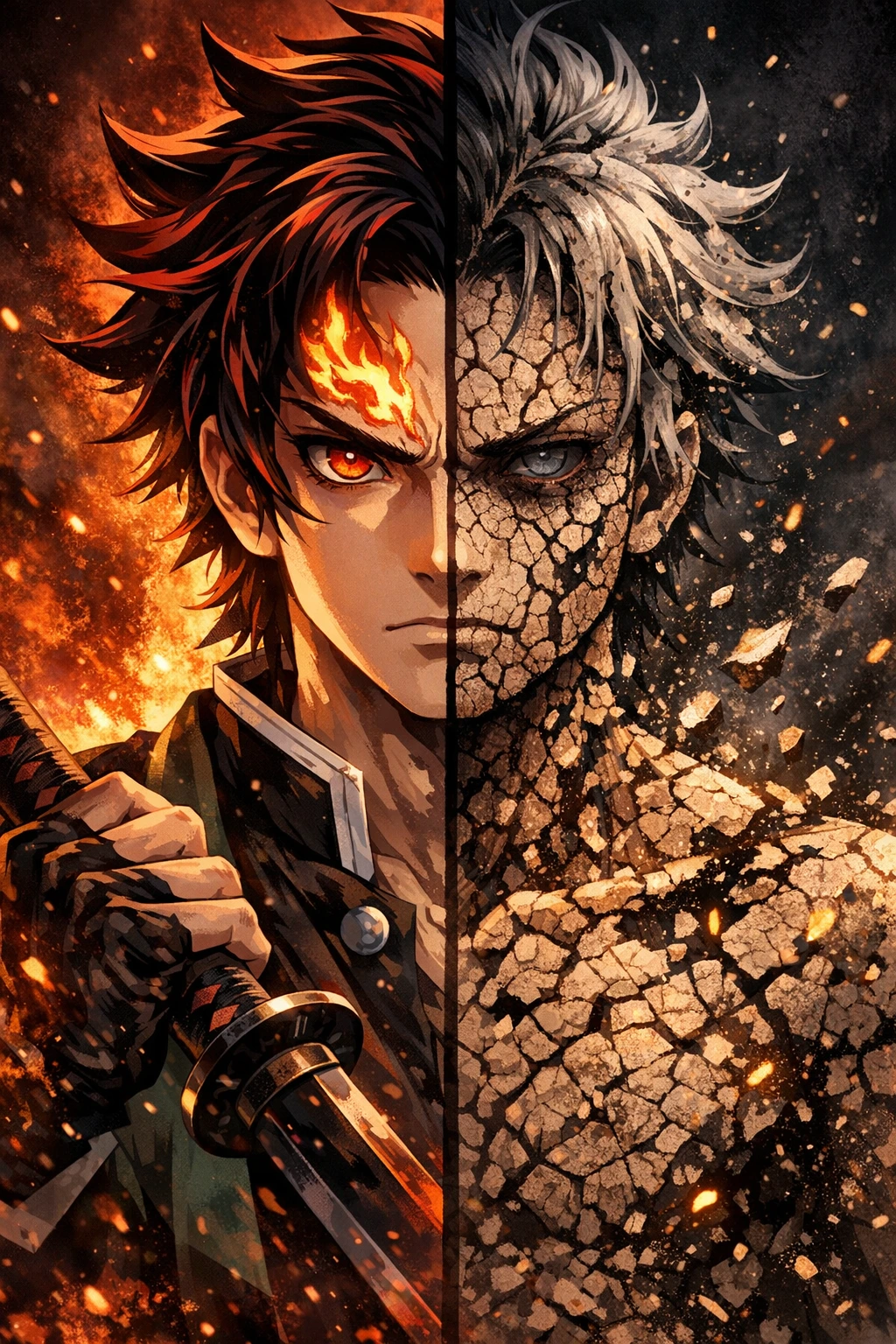
For all its majestic power, the Demon Slayer Mark carries a devastating, uncompromising price: the Age 25 Curse. It is a biological law within the universe that anyone who unlocks the Mark will perish before their 25th birthday. To understand why this curse is absolute, we must strip away the mysticism and look at the brutal science of accelerated aging, cellular exhaustion, and the absolute limits of human biology.
Cellular Exhaustion and the Hayflick Limit (Telomeres)
At the core of the aging process are telomeres. Telomeres are the protective caps at the ends of DNA chromosomes, often compared to the plastic tips on shoelaces. Every time a human cell divides to replace old or damaged tissue, the telomeres get slightly shorter. When the telomeres become too short, the cell can no longer divide; it becomes senescent (inactive) or undergoes apoptosis (programmed cell death). This phenomenon is known as the Hayflick Limit.
When a Demon Slayer activates the Mark, they are tearing their body apart from the inside. The 200 BPM heart rate and the 39°C body temperature cause massive oxidative stress, micro-tearing of muscle fibers, and the bursting of minor blood vessels. To keep the Slayer alive and fighting, the body must rapidly undergo cellular division to repair this catastrophic damage instantaneously.
By fighting in the marked state, the Slayer is forcing their cells to divide at an exponentially accelerated rate. They are essentially fast-forwarding through their biological lifespan. In a single night of intense combat, a marked Hashira might burn through years’ worth of cellular life. Their telomeres drastically shorten with every breath and every strike. The “Curse” is not a magical hex; it is extreme, premature cellular senescence. By the age of 25, their telomeres are entirely depleted. Their organs can no longer regenerate cells, resulting in massive, sudden multi-organ failure.
The Metabolism of Death
Furthermore, the marked state requires a colossal amount of energy. The human body stores energy in the form of glycogen and fat, but this is nowhere near enough to sustain the hyper-aroused state of the Mark. When glycogen is depleted, the body begins a catabolic process—it starts eating itself.
The extreme metabolism of the Mark forces the body to consume its own life force, breaking down muscle tissue and vital cellular structures to convert into immediate ATP for combat. The Slayer is burning their own foundation to keep the fire going. This continuous biological cannibalism leaves the body’s infrastructure irrevocably weakened. Even if they survive the battle, the metabolic damage to the heart, liver, and kidneys is permanent. The Age 25 threshold is simply the absolute maximum duration the human organs can limp along after sustaining such catastrophic, self-inflicted metabolic trauma.
The Tragedy of Gyomei Himejima
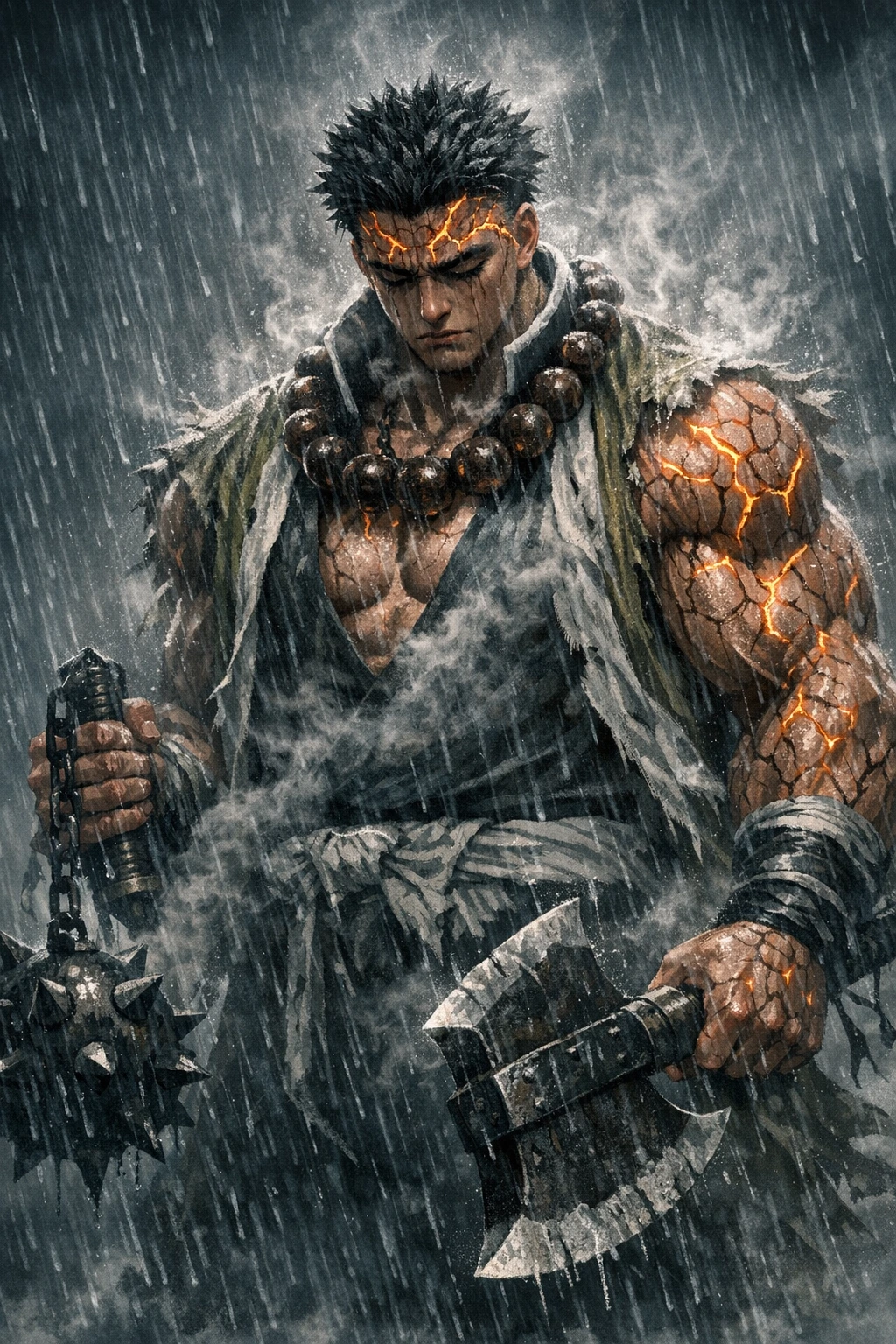
The starkest and most heartbreaking illustration of this biological reality is Gyomei Himejima, the Stone Hashira. Gyomei is 27 years old when the final battle against Muzan and the Upper Moons begins. He is already past the theoretical threshold of the curse.
When Kokushibo (Upper Moon 1) sees Gyomei’s mark manifest, he states with chilling certainty that Gyomei will die by the end of the night. Kokushibo understands the biology. Unlocking the Mark before 25 means your body has enough youthful cellular elasticity and telomere length to survive the immediate shock and live a few more years before the debt comes due.
Unlocking the Mark after the age of 25, when the body’s natural cellular regeneration has already begun its slow decline, is a death sentence measured in hours. Gyomei pushed his already-matured cardiovascular system to 200 BPM and 39°C. Because his telomeres were already shorter than a teenager’s, the sudden, extreme demand for rapid cellular repair instantly drained whatever life force he had left. He did not die purely from his wounds against Muzan; his body simply ran out of time. His cellular clock was accelerated to zero in a matter of hours.
6. The Yoriichi Exception: Perfect Biology

In the face of the tragic, uncompromising science of the Age 25 Curse, there exists one glaring, seemingly impossible anomaly: Yoriichi Tsugikuni. Yoriichi, the progenitor of Sun Breathing and the strongest swordsman to ever live, was born with the Demon Slayer Mark. Yet, defying all established biological laws of the universe, he lived to be over 80 years old, dying of natural old age while standing on his feet in the middle of a battle against his demonic brother, Kokushibo. How did Yoriichi break the curse?
The Anomaly of Sun Breathing and Baseline Biology
The answer is that Yoriichi did not break the curse; the curse never applied to him because his biology was fundamentally different. Every other Demon Slayer, from the Sengoku era to Tanjiro’s generation, had to force their bodies into the marked state. They had to unnaturally overclock their normal human engines to reach the 39°C and 200 BPM threshold, suffering massive physiological blowback in the process.
Yoriichi was not overclocking a normal human body. He was a genetic anomaly—arguably the next step in human evolution. The extreme physiological state of the Mark was not a hyper-aroused emergency protocol for Yoriichi; it was his natural, resting baseline.
Biological Harmony and the Transparent World
Because Yoriichi was born with the Mark, his cardiovascular system, musculature, and cellular structure evolved to operate perfectly in tandem with it. He did not have to spike his heart rate to 200 BPM to achieve demonic speed; his heart was likely an anatomical marvel, capable of pumping massive amounts of oxygenated blood with the efficiency of a massive, slow-beating engine. He did not suffer from hyperthermia because his body’s thermoregulation was perfectly adapted to handle the immense thermal output of his cells.
Furthermore, Yoriichi lived his entire life with access to the “Transparent World”—a state of heightened perception where he could see the blood flow, muscle contractions, and skeletal structure of living beings. This implies his central nervous system and visual cortex were processing information at a speed that would cause a normal human brain to suffer a stroke.
Yoriichi did not suffer the Age 25 Curse because his telomeres were not being rapidly depleted to repair cellular damage. He wasn’t taking damage from his own power. He existed in a state of perfect biological harmony. Sun Breathing was the natural expression of his unique anatomy. When other Slayers attempted to mimic Sun Breathing, they had to create derivative breathing styles (Water, Wind, Flame) because their normal human lungs and muscles literally could not handle the physiological strain of Yoriichi’s baseline output. Yoriichi was an F1 car; the other Hashira were civilian sedans tearing their engines apart with nitrous oxide to match his speed.
Conclusion: The Ultimate Sacrifice of the Hashira
The deep scientific dive into the Demon Slayer Mark reveals a narrative far more poignant than a simple anime power-up. It transforms the final arcs of Demon Slayer from a spectacular light show into a harrowing medical drama of sacrifice.
The Mark is the physical embodiment of the Demon Slayer Corps’ ultimate ideology: the willing trade of one’s future for the survival of humanity. Every time Tanjiro, Giyu, Sanemi, Muichiro, Mitsuri, Iguro, or Gyomei manifested that crest upon their skin, they were not just drawing upon hidden strength. They were consciously choosing to burn through their own telomeres. They were choosing to endure the agonizing sheer stress of 200 BPM tachycardia and the brain-melting reality of 39°C hyperthermia. They were weaponizing their own biological destruction.
Muzan Kibutsuji spent a millennium seeking perfect immortality, terrified of death and cellular decay. In profound contrast, the Hashira embraced rapid cellular decay. They weaponized their own mortality, turning their fleeting, fragile human lifespans into a concentrated, hyperthermic fire hot enough to burn the immortal demon king to ash. The Demon Slayer Mark is a testament to the fact that the human spirit, when pushed to the absolute brink, can force biology itself to bend the knee.