
1. Introduction: The Rich Kid Who Crawled
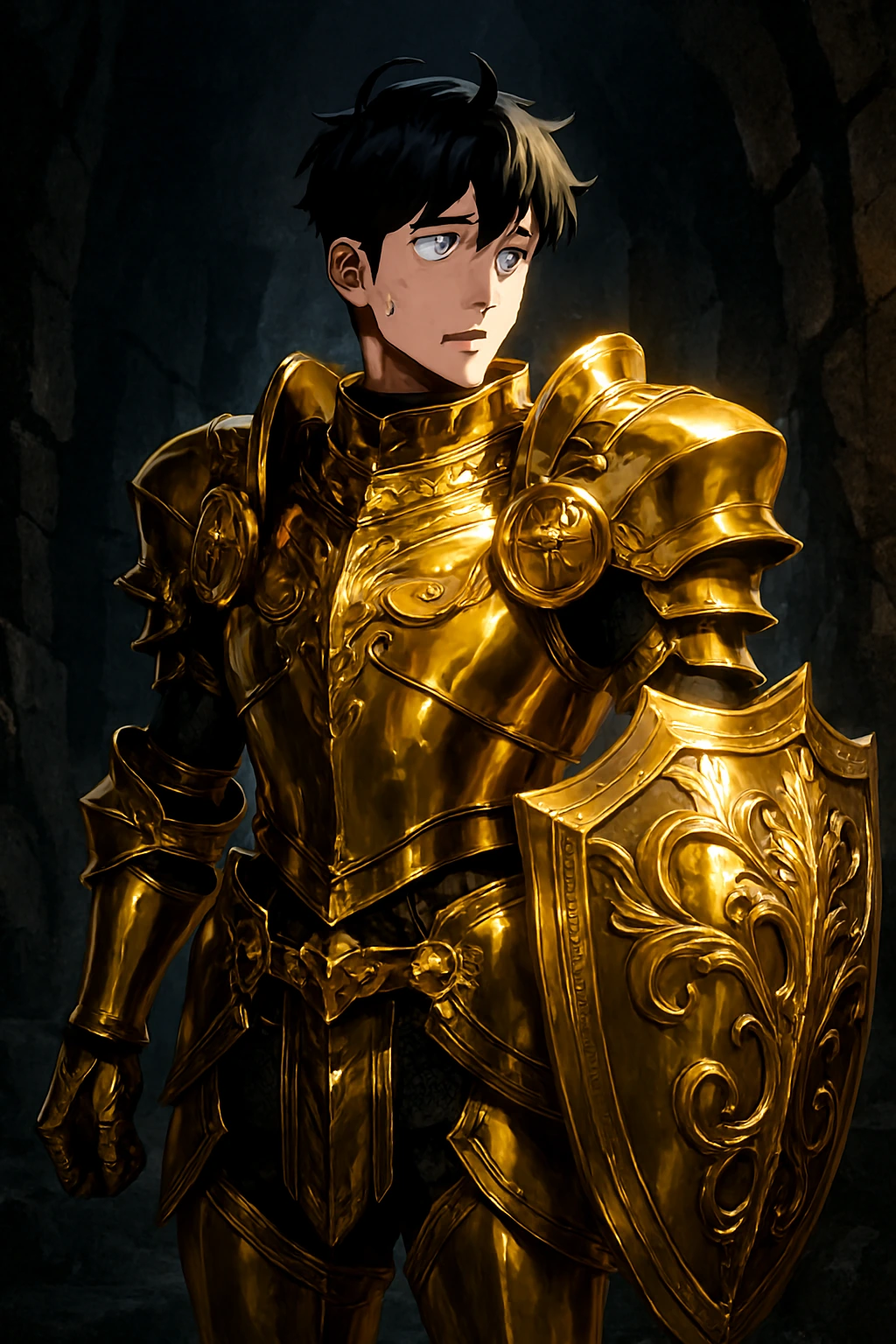
In the grim, blood-soaked world of Solo Leveling, where strength is absolute and the weak are often treated as little more than baggage or bait, the introduction of Yoo Jinho felt like a comedic interlude in a tragedy. When we first meet him, he is the antithesis of everything the series seems to value.
He is Sung Jin-woo’s polar opposite in almost every conceivable metric. Jin-woo is poor, desperate, and experienced in the grit of survival, wearing clothes stained with the sweat of labor and the blood of near-death experiences; Jinho is fabulously wealthy, naive, and seemingly out of his depth, smelling of expensive cologne and old money.
The initial visual of Yoo Jinho is intentionally absurd, bordering on satire. Here is a young man, dripping in wealth, wearing arguably the most ostentatious, expensive, and ridiculous gold armor money can buy. It wasn’t just protective gear; it was a fashion statement gone wrong, a gleaming eyesore that reflected light in the dark corners of a dungeon where stealth is usually a virtue.
He looks like a “pay-to-win” player in a hardcore survival game, a walking loot box that screams incompetence to every veteran hunter who sees him. The narrative sets him up perfectly to be the classic “arrogant young master” trope found in countless Manhwa and Wuxia stories—the type of privileged character who sneers at the protagonist, makes a fatal error due to unearned hubris, and serves as fodder to demonstrate the harsh, unforgiving reality of the dungeon ecosystem.
Readers and viewers alike expected him to be annoying. We expected him to be a burden that Jin-woo would have to reluctantly save or callously discard. Perhaps we even expected him to be a minor antagonist who would try to undermine Jin-woo to save face. But Solo Leveling pulls one of its most subtle and brilliant twists right here. Instead of becoming an antagonist or a corpse, this billionaire heir becomes the most loyal “dog” in the history of the genre. And he does so not because he is forced to by a magical collar, a slave crest, or a system quest, but because he chooses to submit to a strength he genuinely admires.
The central question that makes Yoo Jinho so fascinating is: Why? Why did the son of one of Korea’s most powerful construction tycoons, a man who could buy buildings on a whim and had servants to tie his shoelaces, degrade himself to carry bags for an E-Rank hunter? On the surface, the narrative tells us it is for a Guild License—a business transaction. He needs to complete a certain number of raids to become a Guild Master to inherit his father’s company. But as we peel back the layers of his character, we realize that the Guild License was merely the excuse, a tangible goal to mask an intangible need.
Jinho wasn’t just looking for a license; he was looking for something his billions couldn’t buy: respect, identity, and a place where he wasn’t just “the spare heir” or “Chairman Yoo’s second son.” In a world of monsters and magic, Jinho was starving for a human connection that wasn’t transactional, even if he tried to initiate it with a transaction. Everyone in his life likely wanted something from him—money, influence, access to his father. Jin-woo wanted nothing from him but competence. His evolution from a terrified rich kid hiding behind a shield to the Vice-Master of the world’s strongest guild is not just a side story; it is the heartbeat of Jin-woo’s journey. Without Jinho, Sung Jin-woo might have saved the world, but he would have lost his soul in the process, becoming a cold monarch rather than a hero.
2. The Spider Dungeon: The Birth of Loyalty
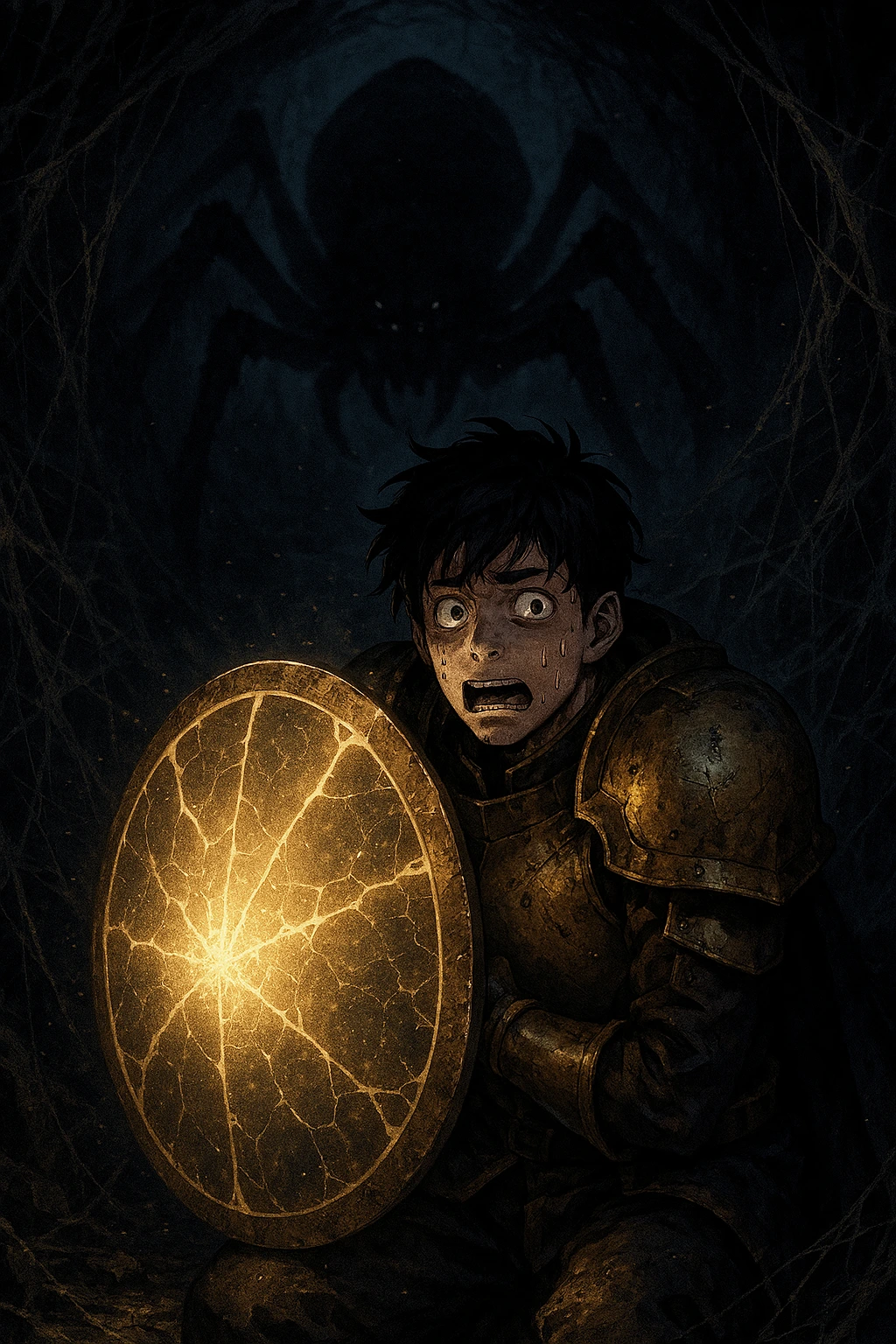
The true forging of Yoo Jinho’s character—and his bond with Jin-woo—happens in the claustrophobic darkness of the C-Rank Spider Dungeon. This arc is pivotal because it serves as a microcosm of the Hunter society’s brutal nature. Until this point, Jinho likely believed that money and status were absolute shields that functioned even within the Gates. He believed that the rules of the surface world—contracts, laws, and social hierarchy—applied inside. The Lizardmen raid party shattered that illusion violently, proving that in the dark, only power matters.
When the raid party, led by the corrupt Hwang Dong-Suk, trapped Jin-woo and Jinho in the boss room with the giant arachnid, it was a moment of absolute betrayal. This wasn’t just a monster attack; it was premeditated murder by fellow humans. The plan was simple: let the weaklings die to tire out the boss, then claim the loot without splitting the shares. For a sheltered boy like Jinho, this reality check was more terrifying than the spider itself. The people he had paid, the people he thought he was leading with his money, had turned on him instantly for greed. The realization that his life was worth less than a mana stone to them broke his worldview.
In that sealed room, a dichotomy formed. Sung Jin-woo was fighting the boss, utilizing his newfound System powers to survive. But Yoo Jinho was fighting a completely different battle: he was fighting his own survival instincts and his ingrained fear.
Consider the situation from Jinho’s perspective. He is a D-Rank Hunter. He is wearing high-defense gear. He has money. When Jin-woo reveals his power and begins to dismantle the spider, Jinho is presented with a calculated choice, a classic prisoner’s dilemma. The “smart” survival move—the move his father, the ruthless businessman, might have respected—would have been to stab Jin-woo in the back while he was distracted or flee to the entrance. Jinho logically assumed that Jin-woo was a “False Ranker,” a psychopath who hid his power to hunt other hunters. Logic dictated that a man who hides his power has a sinister motive. Fear told him that once the spider was dead, he would be the next loose end to be tied up.
Yet, Jinho stayed. He didn’t raise his sword against Jin-woo. He didn’t try to sabotage him to curry favor with the Lizardmen outside in hopes of being spared. He huddled in the corner, terrified out of his mind, shaking in his expensive armor, but he remained neutral. Why? Because despite his fear, Jinho possesses a fundamental moral compass that the Lizardmen lacked. He recognized that Jin-woo had saved him, even if inadvertently. He chose to bet on the “monster” inside the room rather than the monsters outside.
When the dust settled and the Lizardmen returned, expecting two corpses, the dynamic shifted irrevocably. Jin-woo was forced to kill the human betrayers—a crossing of the line that changed him forever. But amidst the carnage, Jin-woo looked at Jinho. The System told Jin-woo to kill everyone with “murderous intent.” This was the ultimate test. Jinho was spared not just because he was cowering, but because he held no malice. In a room full of killers, he was the only innocent.
This is the moment Jin-woo decided this kid was “different.” In a world where hunters are often depicted as vultures circling for loot, Jinho was just a frightened kid who refused to become a monster to survive. This shared trauma in the Spider Dungeon created a debt of life. Jinho realized that Jin-woo, despite his terrifying power and the brutality he just displayed, was the only person in that dungeon who didn’t try to exploit or kill him.
That realization birthed a loyalty so fierce it bordered on obsession. It wasn’t just gratitude; it was awe. Jinho saw the darkness of the world (the Lizardmen) and the darkness of the System (Jin-woo’s power), and he chose to follow the one who kept him alive. This wasn’t a partnership formed in a boardroom with lawyers present; it was a blood pact formed in the shadow of death, sealed by the silence of kept secrets.
3. The “Yo-Yoo” Dynamic: Master and Servant
Following the incident in the Spider Dungeon, the relationship between Sung Jin-woo and Yoo Jinho transitions into what can best be described as the “Yo-Yoo” dynamic. This period of the story, characterized by their montage of clearing C-Rank dungeons together, serves two critical purposes: it provides necessary levity in an increasingly dark story, and it solidifies the absolute trust between the two men.
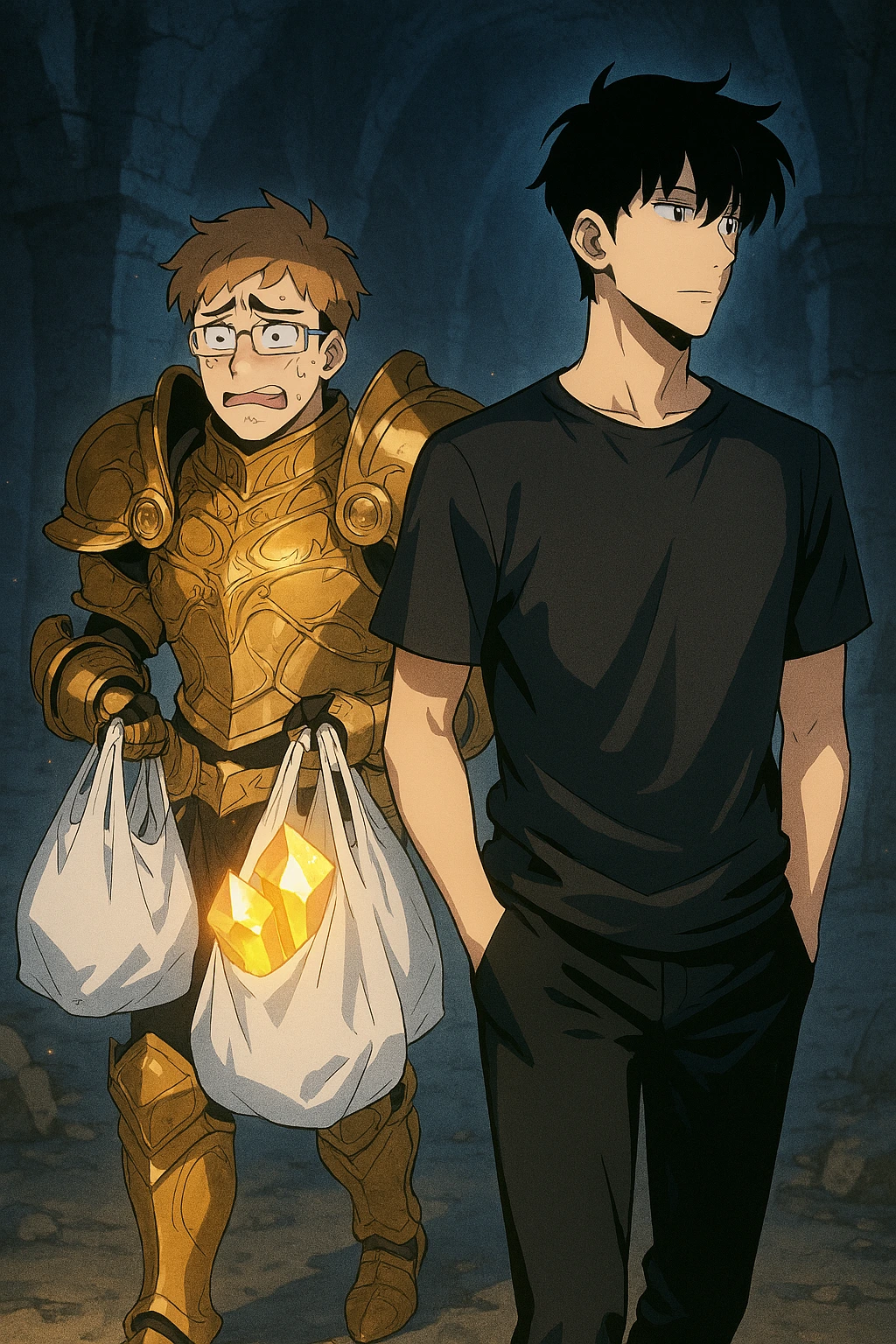
The comedy of this era is gold. We have Jinho, fully decked out in his shiny, multi-million dollar armor, acting as a porter. The visual contrast is hilarious and endearing. Usually, the porter is the poorest member of the raid, wearing rags and carrying heavy backpacks filled with mining equipment. Here, the porter looks like a knight in shining armor, clanking noisily with every step, yet he is scurrying around picking up magic crystals and carrying plastic convenience store bags while Jin-woo, dressed in casual hoodies and cheap sneakers, annihilates monsters with a flick of his wrist. It’s a visual gag that never gets old—the billionaire playing servant to the pauper king.
This reversal of roles subverts the class expectations of Korean society. Jinho is the chaotic variable—the rich elite bowing 90 degrees to the working-class youth. But beneath the comedy lies a massive secret that binds them together more tightly than any spell.
During these raids, Jinho witnesses the impossible. He watches an E-Rank hunter grow stronger by the day, defying the laws of awakening. He sees Shadow Soldiers emerge from nothingness, forming an army of darkness. He sees Jin-woo solo bosses that should require a full squad of trained hunters. Jinho is the first human being to witness the rise of the Shadow Monarch. At this stage, the Hunter Association, the White Tiger Guild, the government, and the media are all in the dark. Only Jinho knows the truth of who Sung Jin-woo really is.
This is a burden of knowledge that could have destroyed Jin-woo. If Jinho had leaked this information—either for fame, money, or to impress his father—Jin-woo would have been dissected by the government, recruited by force, or hunted by jealous S-Ranks. Jinho held the keys to Jin-woo’s destruction in his hands. But Jinho kept his mouth shut. He became the keeper of the secret, the vault that no one could crack.
Why? The contract. Initially, they sign a contract for the raids so Jinho can get his Guild Master license. But as the montage progresses, we see the contract dissolve in spirit, replaced by brotherhood. Jinho stops caring about the efficiency of the raids or the speed of the clear. He starts caring about “Hyung-nim.” The transactional nature evaporates, replaced by genuine care.
He begins to anticipate Jin-woo’s needs before they are spoken. He manages the loot distribution. He handles the driving, ferrying Jin-woo around in his luxury car. He buys the food. He essentially becomes the perfect support unit, not in combat, but in life. Jin-woo, a man who has spent his entire life carrying the burden of his mother’s illness and his sister’s education alone, finally has someone carrying his bags—literally and metaphorically.
This period is where the “Master and Servant” dynamic flips. Jinho calls Jin-woo “Hyung-nim” (Big Brother), a term of endearment and respect that transcends professional boundaries. It signifies that he no longer sees Jin-woo as an employee or a business partner, but as family. And Jin-woo, who keeps everyone at arm’s length to protect them, allows Jinho into his inner circle. He allows Jinho to see his shadows, his cruelty, and his growth without filtering himself. This acceptance is the first step in Jin-woo healing from the trauma of being the “World’s Weakest Hunter.” He learns that strength doesn’t have to mean isolation; he can be strong and still have a goofy, loyal sidekick who worries about him.
4. Daddy Issues: The Shadow of Yoo Myung-Han
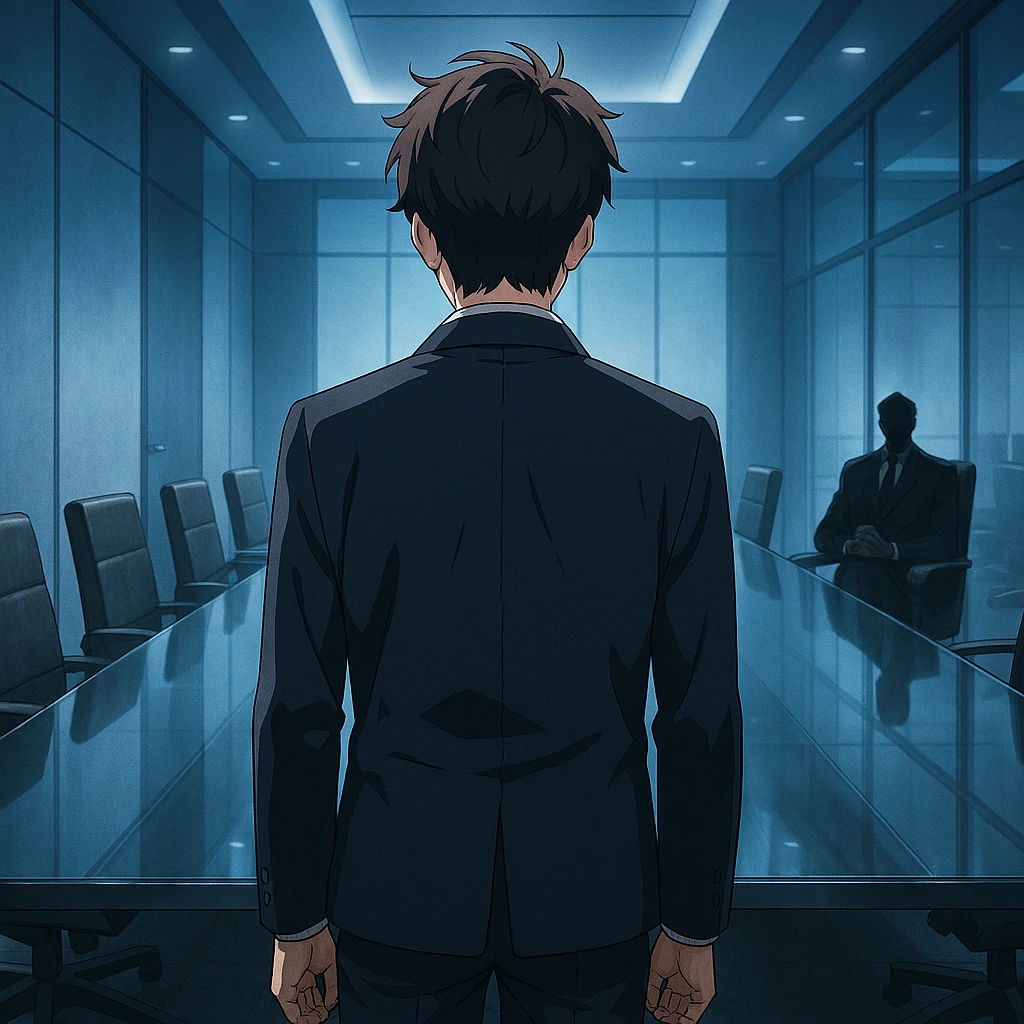
To truly understand Yoo Jinho’s psyche, we must understand the colossal shadow he lives under: Chairman Yoo Myung-Han. As the head of Yoojin Construction, Myung-Han is a titan of industry—cold, calculating, and results-oriented. He represents the pinnacle of human success in the non-hunter world, a man who built an empire on concrete and ruthlessness.
Jinho’s tragedy is the tragedy of the “spare.” In many dynastic families, the first son is the heir, and the second is the backup plan. This dynamic is exacerbated by the existence of magic. Jinho’s older brother is an S-Rank hunter, a celebrity, and a powerhouse. In a world that idolizes hunters above all else, his brother is a god. Jinho, awakening as a mere D-Rank, is viewed as a genetic failure by the standards of the new world. He is the disappointment, the one who didn’t inherit the “good genes.”
Jinho suffers from a crippling inferiority complex because of this. He knows he lacks the talent to compete with his brother physically. He knows he lacks the cold ruthlessness to compete with his father in business. His plan to create a guild using Jin-woo was a desperate, flailing attempt to prove his worth using the only tool he had: money. He thought if he could buy his way to a Guild Master title, if he could show a spreadsheet of successful raids, his father would finally look at him with pride.
The scene where Jinho confronts his father is heartbreaking in its understated cruelty. He presents his plan, his results, his potential guild. He expects, perhaps for the first time, a “well done” or a nod of approval. Instead, he faces the cold indifference of a man who sees through the charade instantly. His father dismisses his efforts because they lack power. He sees that Jinho is riding on someone else’s coattails. Without personal strength, in Yoo Myung-Han’s eyes, Jinho is just playing pretend, a child dressing up in adult clothes.
This rejection is crucial because it strips Jinho of his last safety net. His money didn’t work. His lineage didn’t work. His strategy didn’t work. He is left with nothing but his own inadequacy and the realization that he cannot buy his father’s love.
Enter Sung Jin-woo.
Where Yoo Myung-Han saw a failure, Jin-woo saw potential. Not combat potential—Jin-woo knew Jinho was weak in a fight and would likely die in a high-rank dungeon—but administrative and loyalty potential. Jin-woo offered Jinho a role that his father never would: a partnership based on trust rather than genetic lottery or profit margins.
Jin-woo helped Jinho redeem himself not by making him stronger (which was impossible), but by validating his existence. By making Jinho the Vice-Master of the Ah-Jin Guild, Jin-woo effectively told the world, “This D-Rank is the only person I trust to handle my affairs.” Given that Jin-woo becomes the most powerful entity on Earth, a National Level Hunter and beyond, this endorsement is worth more than all of Yoo Myung-Han’s billions.
Jinho stops trying to be his brother. He stops trying to be his father. He accepts his role as Yoo Jinho, the right-hand man of the Shadow Monarch. He realizes that being the “weak” supporter of the strongest hero is a vital role, one that requires a strength of character that his S-Rank brother never possessed. He finds his worth in his loyalty, filling the void his father left with the brotherhood of Jin-woo.
5. The Vice-Master of Ah-Jin Guild
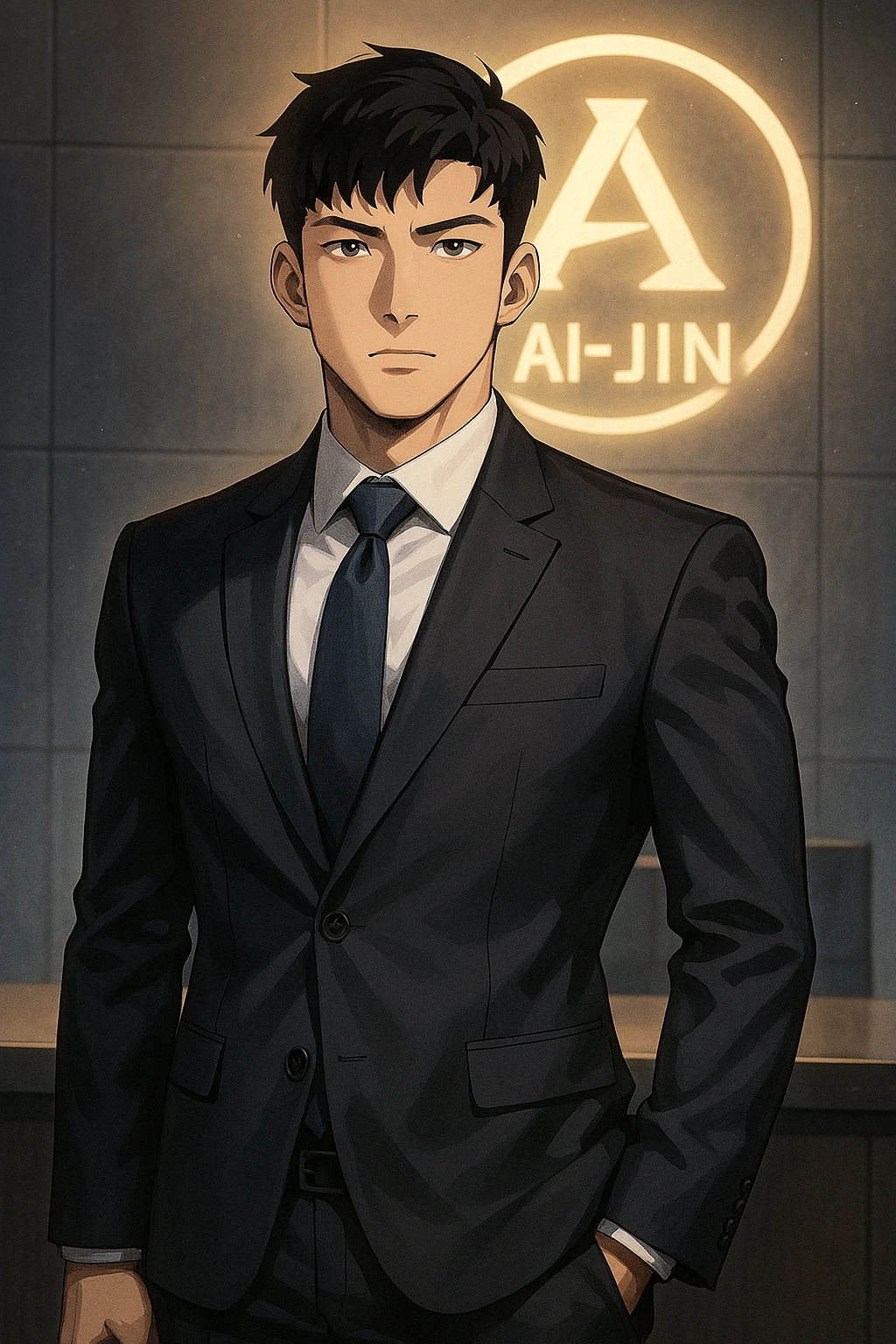
The formation of the Ah-Jin Guild marks the transition of Yoo Jinho from a sidekick to a legitimate powerhouse in the Hunter industry. While Jin-woo provides the raw nuclear power that fuels the guild’s reputation, Jinho provides the brain, the structure, and the face. He transforms from a scared kid into a capable executive.
We must acknowledge that Jin-woo is a terrible administrator. He is a warrior, a solo player. He has no interest in press conferences, tax forms, recruitment interviews, or negotiating with the Hunter Association. Without Jinho, Jin-woo would be bogged down in bureaucracy, swamped by paparazzi, or worse, exploited by savvy politicians and guild masters who know how to manipulate the system.
Jinho steps up to become the shield that protects Jin-woo from the mundane world. He handles the aggressive recruitment attempts from major guilds like the Hunters Guild and White Tiger, politely but firmly turning down offers that would constrain Jin-woo. He manages the press, spinning narratives that protect Jin-woo’s privacy while maintaining public interest. He navigates the complex politics of the Hunter Association. He essentially builds the throne that the Shadow Monarch sits upon, handling the logistics so the King can focus on the war.
The naming of the guild, “Ah-Jin,” is a beautiful narrative touch. It combines their names (using the Hanja for ‘Me’ and ‘Forward/Advance’, or simply a combination of their names depending on translation nuance), signaling that this is their guild. It is not the “Sung Jin-woo Guild.” It is a shared enterprise. This is the ultimate validation Jinho was seeking—his name, right there next to the legend.
A defining moment for Vice-Master Jinho is the Red Gate incident (or the B-Rank Gate incident involving the Orcs/High Orcs). Here, we see Jinho without Jin-woo for a significant portion of time. Leading a raid of lower-ranked hunters and new recruits, Jinho is terrified. The atmosphere is oppressive; the murderous intent of the High Orcs is suffocating. His knees are shaking. He knows he is physically outmatched by the monsters and that his armor won’t save him from a direct hit.
Yet, he stands at the front. He issues commands. He tries to protect the recruits. This is the “Billionaire Slave” growing up. He channels the courage he learned from watching Jin-woo. He realizes that being a leader isn’t about being the strongest; it’s about taking responsibility for those weaker than you. He puts his life on the line not because he thinks he can win, but because he is the Vice-Master, and that title means something. He refuses to let the reputation of Ah-Jin be tarnished by cowardice. He stands tall so that the others won’t fall into despair.
Jinho becomes the bridge between the god-like Jin-woo and the rest of humanity. He grounds the guild. He ensures that while Jin-woo is off fighting monarchs and dragons, the lights stay on, the bills get paid, and the world remembers that there is a human organization behind the shadow army.
6. The Torture: The Price of Loyalty
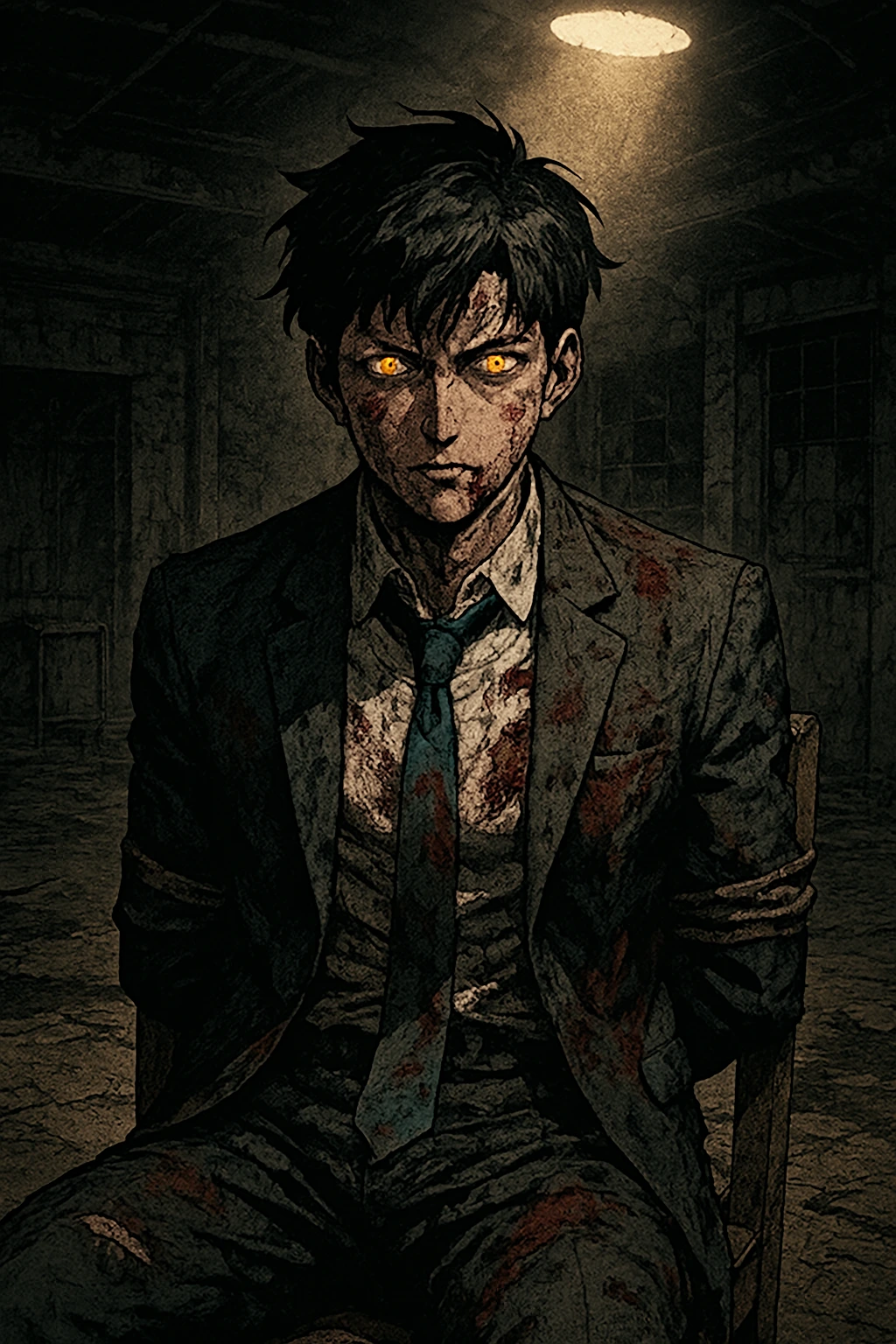
If the Spider Dungeon was the birth of loyalty, the kidnapping by Hwang Dong-Soo was the ultimate test of it. This arc is the darkest, most visceral moment in Jinho’s story, and perhaps the most important for establishing his heroism. It transforms him from a comic relief character into a tragic hero.
Hwang Dong-Soo, a sadistic S-Rank hunter and brother of the man Jin-woo killed in the spider dungeon, returns to Korea with a vendetta. Unable to find Jin-woo immediately, he targets the next best thing: Yoo Jinho. He knows that Jinho is Jin-woo’s weakness, his connection to the human world.
The kidnapping is brutal. Hwang Dong-Soo doesn’t just interrogate Jinho; he tortures him. We have to remember the power disparity here: Jinho is a D-Rank. In terms of durability, he is barely tougher than a normal athletic human compared to an S-Rank monster like Dong-Soo. Every punch, every blow, carries the weight of a truck. The pain Jinho endures is unimaginable. Bones break, skin tears, and his expensive suit—the symbol of his status—is ruined by his own blood.
The interrogation is simple: “Where is Sung Jin-woo? What is his secret? Is he a False Ranker?”
Jinho is a billionaire. He is soft. He likes fancy cars and expensive food. He has never known true physical hardship. By all logic, he should break immediately. He should scream Jin-woo’s location to make the pain stop. He could easily say, “I’m just an employee! I don’t know anything! Please, my father will pay you!” to save his life. No one would blame him.
But he doesn’t.
Jinho endures a beating that would kill most men. He gets his head smashed into tables; he is bloody, broken, and barely conscious. Yet, he maintains silence. He chooses to die rather than betray his “Hyung-nim.” This is the moment Yoo Jinho transcends his archetype. He proves that loyalty is a stat that cannot be measured by the System. His physical defense might be D-Rank, but his mental fortitude is National Level. In that room, the weakling was stronger than the S-Rank.
When Jin-woo finally realizes what is happening—when the System alerts him or he senses the shadows—the reaction is apocalyptic. We have seen Jin-woo fight monsters with cold efficiency. We have seen him level up with calculation. But when he arrives at the warehouse and sees Jinho’s broken body, we see pure, unadulterated rage.
It is the most violent Jin-woo ever gets against a human opponent. There is no mercy, no hesitation, no conversation. He obliterates Hwang Dong-Soo. He doesn’t just defeat him; he dismantles him. This reaction confirms how much Jinho means to him. Jin-woo doesn’t react this way just because an employee was hurt; he reacts this way because his brother was hurt.
Jinho’s sacrifice in that room cemented his place at Jin-woo’s side forever. He paid the price of loyalty in blood, proving that he wasn’t just riding Jin-woo’s coattails. He was willing to bleed for the throne just as much as the King was.
7. Conclusion: The Only Friend
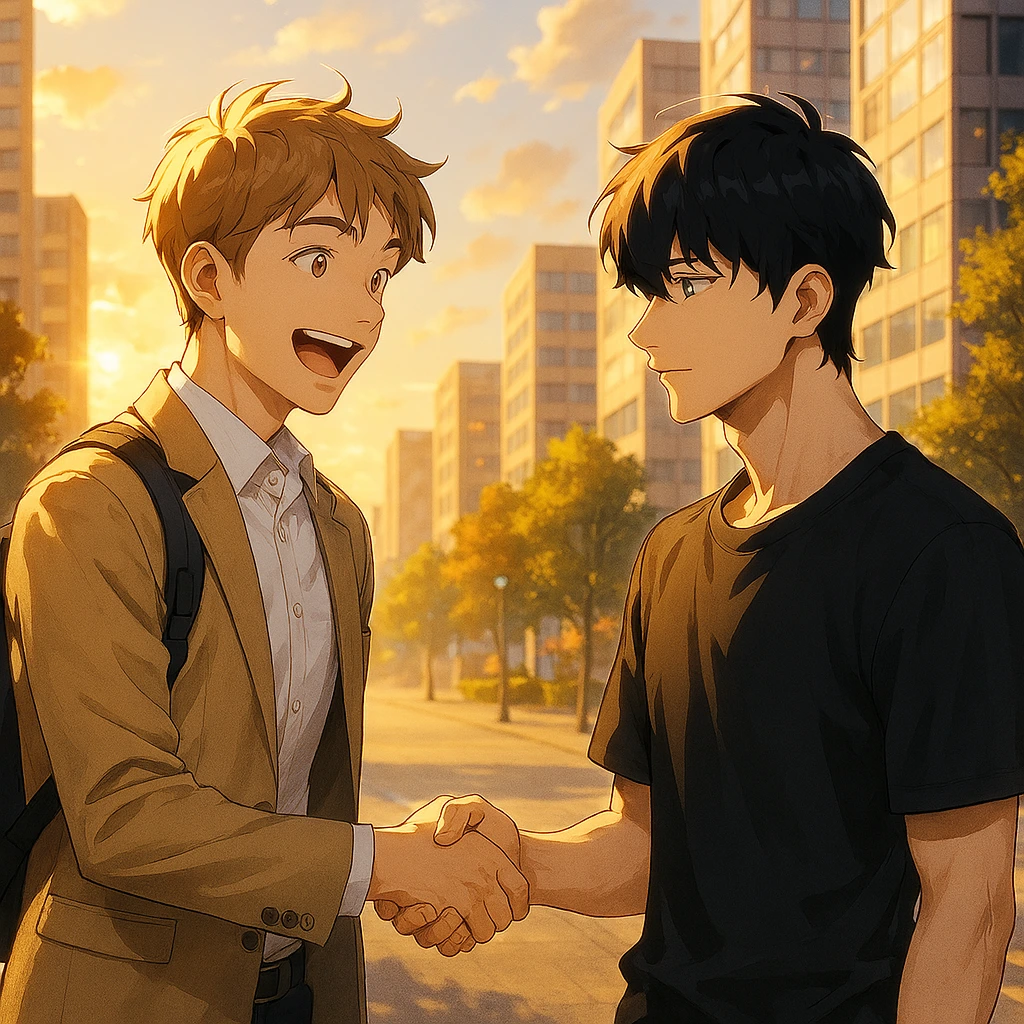
As Solo Leveling reaches its cosmic conclusion, with timelines resetting and memories being wiped, the tragedy of the hero is usually isolation. Jin-woo becomes a being so powerful he no longer fits in the human world. He is a god walking among insects. He saves everyone, but no one remembers the sacrifice.
Except, fate seems to have a soft spot for Yoo Jinho. In the reset timeline, where dungeons never existed and Jinho is just a normal student and heir, he still finds Jin-woo. He doesn’t remember the Spider Dungeon. He doesn’t remember the torture or the Ah-Jin Guild. But his soul remembers the bond.
When they meet again, Jinho is drawn to Jin-woo like a moth to a flame. He instinctively wants to be around him, sensing a connection that defies time and logic. This confirms that their friendship wasn’t a product of circumstance; it was destiny. It suggests that in any timeline, in any world, Yoo Jinho will always be Sung Jin-woo’s best friend.
Contrast Jinho with the other major characters. Cha Hae-In fell in love with Jin-woo’s unique mana scent and his heroic capability—she was drawn to the “Player.” Go Gun-Hee admired Jin-woo’s power and potential to save Korea—he saw the “Hunter.” The Association Chairman saw a strategic asset. Even his family saw him as a protector.
But Yoo Jinho? Jinho loved him when he was a “nobody.” Jinho respected him when he was carrying a dagger that looked like a kitchen knife. Jinho was the only one who saw Sung Jin-woo, the human, before he became the Shadow Monarch. He didn’t care about the power; he cared about the person who spared his life in a dark cave.
In the end, Yoo Jinho is the MVP of Solo Leveling not because he killed the most monsters, but because he saved the hero. He provided the humanity, the laughter, and the unconditional loyalty that kept the Shadow Monarch grounded. Without the Billionaire Slave, the Shadow Monarch would have been a lonely god ruling over a kingdom of the dead. Jinho ensured that the King always had a friend to come home to, proving that sometimes, the strongest shield isn’t made of mana, but of friendship.