
The story of the Shadow Monarch did not end with the resetting of the timeline; it merely evolved into a myth known only to one man. For millions of fans who watched Sung Jin-woo erase himself from the memories of humanity to bear the burden of the world alone, the conclusion of the original Solo Leveling was a bittersweet masterpiece. It was a tale of absolute sacrifice—a hero choosing to be forgotten so that his loved ones could live in a world without fear. However, in the grand tapestry of the universe, peace is merely a breathless pause between wars, and a vacuum of power never remains empty for long.
Solo Leveling: Ragnarok is not just a sequel; it is the necessary second half of a cosmic odyssey. It answers the lingering question: What happens when the savior is too strong to remain on the world he saved? While the father fights a lonely war in the dark recesses of the galaxy, the son must rise on Earth. This is the story of Sung Su-ho, the Prince of Shadows, and how the legacy of the Shadow Monarch evolves from a tale of desperate survival into a saga of aggressive conquest.
1. Introduction: The War Continues

The Context: A Peace Built on Silence
To understand Ragnarok, one must first fully grasp the weight of Sung Jin-woo’s final decision in the original series. By using the Cup of Reincarnation, Jin-woo didn’t just rewind time; he fundamentally rewrote the causal loops of history. He eliminated the Gates, the monsters, and the tragedy that befell Earth. In this new timeline, his father never died in a dungeon, his mother never fell into Eternal Slumber, and humanity lived in blissful ignorance of mana and magic. They were given the gift of normalcy.
But the “Happy Ending” on Earth came at a terrifying cost. Sung Jin-woo, the Shadow Monarch, spent 27 years in the rift between dimensions—a place where time flows differently—slaughtering the Monarchs and their armies before they could ever reach the planet. He returned not as a hero greeted by parades, but as a shadow in the crowd—a detective in a world that didn’t know it had been saved. He lived with the dual burden of a mundane life and a cosmic responsibility, hiding a universe of death within his shadow.
However, the universe abhors a vacuum. With the death of the Absolute Being and the destruction of the Monarchs, a massive power imbalance rippled through the cosmos. The light and darkness that once balanced the scales were gone, alerting predators from the void that a territory was ripe for the taking.
The Premise: The Outer Gods (Itarim)
While Earth enjoyed its manufactured peace, a new threat emerged from the “Outer Universe.” These are the Itarim, the Outer Gods. Unlike the Monarchs, who were born of the darkness of this universe, the Itarim belong to other universes entirely. They are entities that exist outside the jurisdiction of the Rulers and the logic of our reality. Sensing the mana void left by the Absolute Being’s death, the Itarim began a slow, creeping invasion to claim this universe for themselves, viewing it not as a battlefield, but as a resource to be harvested.
Sung Jin-woo is currently fighting a solitary, desperate war at the edge of the universe to hold back this tide. He is the dam holding back a cosmic flood, engaging in a stalemate against countless deities. But the Itarim are cunning; unable to bypass Jin-woo’s blockade directly, they have begun sending seeds of their power—”Stardust”—to Earth, bypassing the frontline to rot the world from the inside out. They are creating cracks in the dimension, hoping to fracture the world Jin-woo loves most to distract him.
The Shift: From Father to Son
The narrative brilliance of Ragnarok lies in its distinct shift of perspective. Solo Leveling was a quintessential “Zero to Hero” power fantasy about a weak man clawing his way up from the bottom to become a god. Ragnarok, conversely, is a story about a god-child learning to be a man, and then ascending back to godhood.
Sung Su-ho is not starting from “Rank E” poverty like his father. He is starting with the blood of a Monarch in his veins, but with a seal placed upon his potential. The story moves from the “Father” (Jin-woo), who represents absolute, lonely power and the burden of Atlas, to the “Son” (Su-ho), who represents the chaos of youth, the thrill of discovery, and the joy of battle. Where Jin-woo fought to protect, Su-ho fights to prove himself.
Source Material Status
As of this analysis, Solo Leveling: Ragnarok exists in two primary forms, offering a vast reservoir of content for fans. The Webnovel is the completed source material, spanning hundreds of chapters that detail the full scope of the war, the intricate politics of the dimensions, and the final evolution of the Shadow Army. The Manhwa (webtoon) is currently ongoing, visualizing these events with the high-octane art style that the franchise is famous for—featuring dynamic paneling and “aura” effects that leap off the screen. This article synthesizes lore from the dense novel with the visual storytelling of the current manhwa run to provide a complete picture.
2. Sung Su-ho: The Prince of Shadows
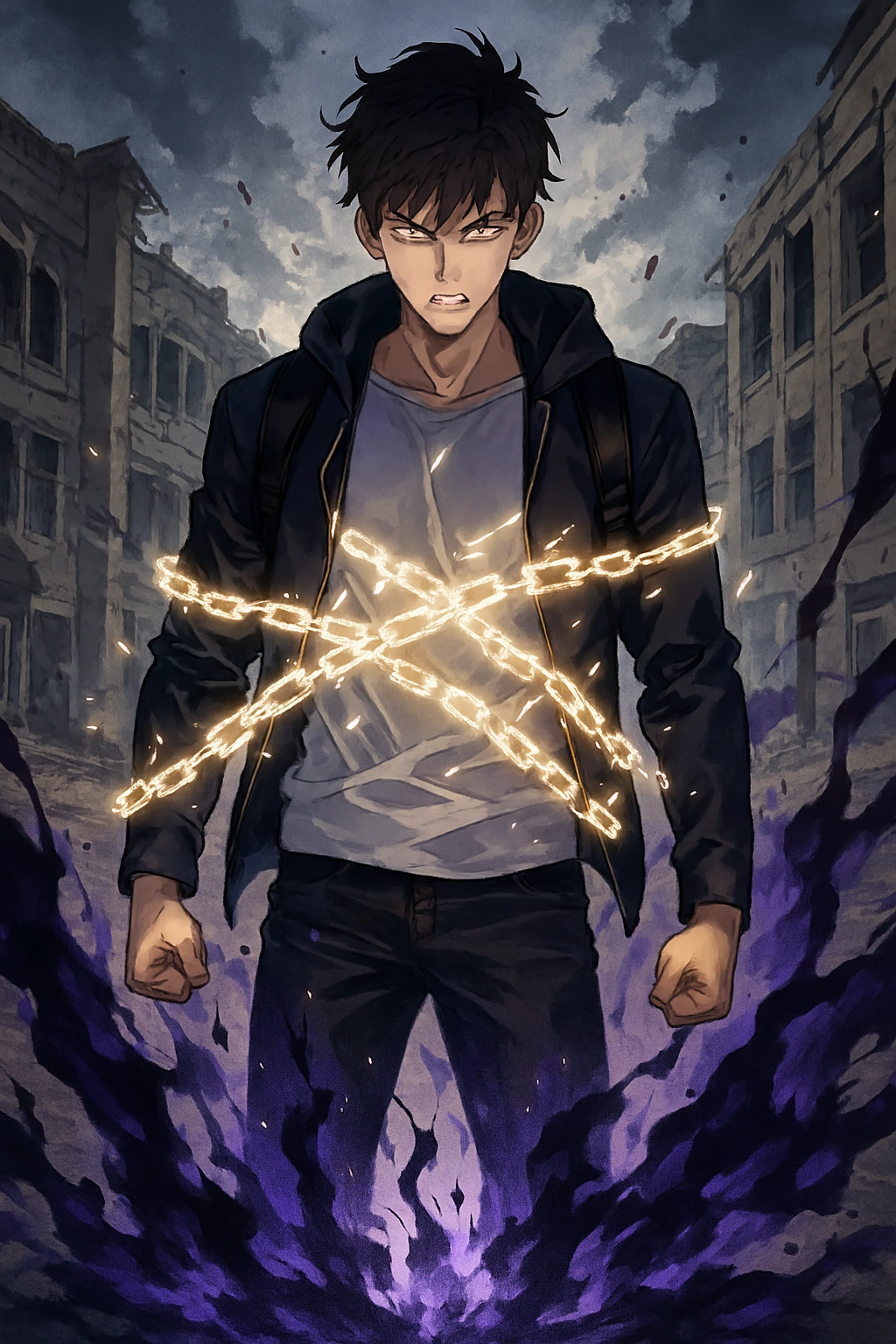
Origin: The Blood of the Monarch
Sung Su-ho is a singularity in the Solo Leveling universe. He is the biological son of Sung Jin-woo (The Shadow Monarch) and Cha Hae-In (an S-Rank Hunter in the previous timeline, and a world-class athlete in this one). Genetically, he is a hybrid of humanity’s peak physical potential and the limitless magical energy of death. He is the only being in existence born with a physical body capable of housing Monarch-level mana naturally, unlike his father who needed the System to reconstruct him.
As a toddler, Su-ho was already displaying terrifying abilities. He could fly before he could walk, accidentally exert crushing telekinetic pressure when upset, and see the Shadow Soldiers hiding in his father’s shadow. To Su-ho, nightmare fuel entities like Igris and Beru weren’t monsters; they were quirky uncles and babysitters who played peek-a-boo in the shadows. However, a child with the power to shatter buildings by throwing a tantrum cannot live a normal life, and the world was not ready for a demigod in diapers.
The Seal: A Father’s Love
Jin-woo made a heartbreaking choice, driven by his desire for Su-ho to have the agency he never had. He wanted Su-ho to have the childhood of a human—free from dungeons, free from death, and free from the cruel mandates of the System. Jin-woo placed a powerful, complex seal on Su-ho, locking away his mana and erasing his memories of the Shadow World and his “imaginary friends.”
For years, Su-ho lived as a “normal” university student. Yet, the seal was imperfect. You cannot cage a storm forever. Su-ho grew up with a subconscious feeling of emptiness, a dormant aggression, and recurring dreams of a dark castle and soldiers kneeling before him. This suppression of power ironically made him functionally weaker than he should have been—often feeling sluggish or disconnected—but physically, his body was still honing itself, an instinctual preparation for the day the dam would break.
The Awakening: The University Incident
The inciting incident of Ragnarok mirrors the dual dungeon of the original, but with a modern twist. The Itarim’s influence caused a dimensional rift to open directly at Su-ho’s university, turning a campus of students into prey. The seal, designed to protect him in a peaceful world, became a deadly liability in a war zone.
Facing death, and with the Itarim’s minions closing in, the seal was not just broken; it was shattered by necessity. The key to unlocking his power wasn’t a “Player Log In” screen from a malicious Architect, but a desperate intervention from the Shadow Realm itself. When the seal broke, Su-ho didn’t just “awaken” like a normal hunter; his body remembered its divinity. The mana that flooded back wasn’t foreign to him—it was his birthright, rushing back like air to a drowning man.
Personality Contrast: The Wolf vs. The Shadow
This is where Ragnarok distinguishes itself most effectively from its predecessor.
- Sung Jin-woo was stoic, calculating, and often cold. His journey was one of immense burden and trauma. He fought because he had to survive, and his demeanor reflected the solemnity of death.
- Sung Su-ho is chaotic, brash, and fundamentally enjoys the violence. He possesses his mother’s intense competitiveness and his father’s absolute dominance.
Su-ho is often described as having a “wild” nature, akin to a predator let off a leash. While Jin-woo was an assassin who struck from the dark with surgical precision, Su-ho is a brawler who tears through the front lines with a grin. He doesn’t just want to win; he wants to dominate and test his limits. There is a youthful arrogance in Su-ho that Jin-woo lost very early on, giving the sequel a more shonen-esque, high-energy vibe compared to the grimdark, survivalist tone of the original.
3. The “Nanny” Beru Arc
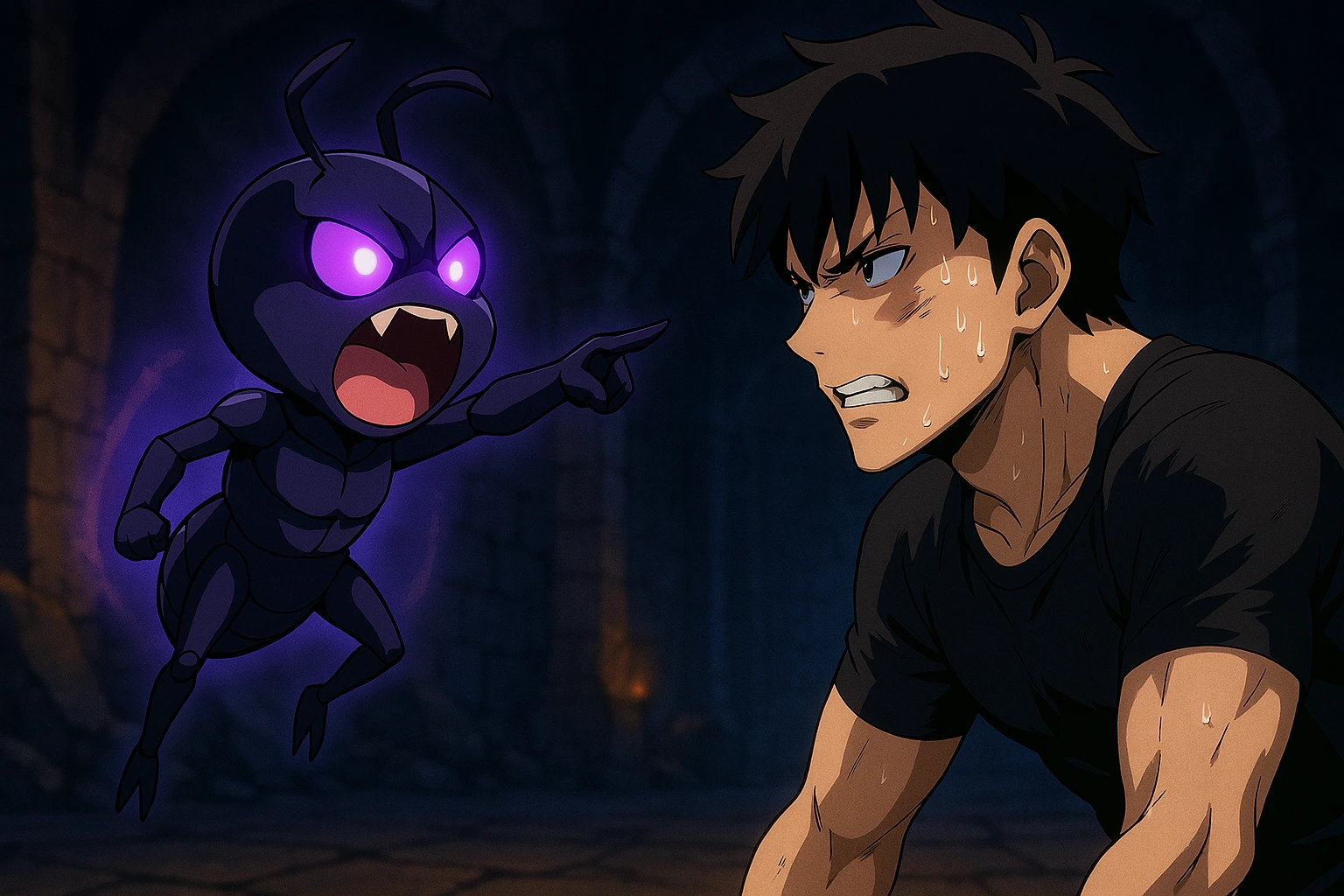
Beru’s Role: The Royal Babysitter
If there is a mascot for the Solo Leveling franchise, it is Beru, the Ant King. In Ragnarok, Beru undergoes a fascinating character evolution, transitioning from the terrifying commander of the Ant Army to the most overprotective, lethal nanny in fiction.
Because Jin-woo is occupied in deep space fighting the Itarim, he cannot return to Earth to train his son personally. Instead, he entrusts his legacy to his most loyal soldier. However, the journey across the dimensional gap is taxing. To cross the void without alerting the Itarim to his presence, Beru had to expend almost all his mana, drastically shrinking his form and sealing his majestic power.
Mini-Beru: Power Restriction and Comedy
The result is “Mini-Beru”—a chibi, knee-high version of the Ant King that looks like a plush toy but talks like a warlord. Despite his cute appearance, he retains his sadistic personality and absolute, fanatic loyalty to the Sung bloodline. This creates a brilliant comedic dynamic that permeates the series. You have a tiny ant flying around Su-ho’s head, screaming about “The Majesty of the Liege” and threatening to eat the heads of rude baristas, while Su-ho tries to act like a normal college student.
Mini-Beru acts as the guide, the exposition dumps, and the moral support. But beneath the comedy lies a tragic loyalty. Beru is desperate. He knows that his true master (Jin-woo) is fighting a losing battle of attrition in space. He needs Su-ho to get strong fast—not just to survive Earth, but to save his father.
The Training: Spartan Ant Method
Beru does not believe in gentle parenting or participation trophies. His training methods are brutal and reminiscent of the survival of the fittest logic of the ant colony. He forces Su-ho into life-or-death situations because he knows that the Shadow Monarch’s blood only boils truly when death is imminent.
Beru acts as the “System Admin” in a way, bypassing the need for a separate interface character. He directs Su-ho to hidden dungeons, advises him on stat distribution (often screaming at him to put points into Strength to build a “Royal Body”), and relentlessly critiques his combat form. This relationship is the emotional core of the early arcs. It bridges the gap between the terrifying nostalgia of the first series and the new challenges of the second.
The Dynamic
The contrast is gold: A terrifying former S-Rank dungeon boss acting like a worried grandmother.
- Su-ho gets hit? Beru screeches in horror and threatens to exterminate the attacker’s entire lineage.
- Su-ho spares an enemy? Beru scolds him for a lack of ruthlessness, reminding him that mercy is a luxury of the weak.
- Su-ho levels up? Beru weeps tears of joy, proclaiming the rise of the Young Monarch. This relationship humanizes the Shadow Army and reminds the reader that these “monsters” have developed distinct, complex personalities over the decades of serving Jin-woo.
4. New Powers and The “Level Up” System

The System Returns (Version 2.0)
The original System was designed by the Architect as a rigorous testing ground to find a suitable vessel for Ashborn. It was malicious and designed to kill the unworthy. The System in Ragnarok is fundamentally different. It was created (or rather, repurposed) by Sung Jin-woo specifically for his son.
It is a “Leveling System” designed to safely guide Su-ho’s growth until his body can handle the full inheritance of the Shadow Monarch. It gamifies reality again, giving Su-ho quests, daily missions (the triumphant return of the 10km run, pushups, and squats!), and inventory slots. However, the tone of the System is different—it feels less like a death trap and more like a harsh tutorial, though the difficulty ramps up fiercely. It is a father’s way of teaching his son how to survive from light-years away.
The Shadow Dungeon
A unique feature available to Su-ho is the Shadow Dungeon. This is an instance dungeon located inside the Shadow Realm itself—a pocket dimension existing within Su-ho’s own shadow. Here, Su-ho isn’t fighting random monsters; he is fighting the echoes of his father’s army.
He has to spar against the shadows of Iron, Greed, and eventually the Grand Marshal Igris. This serves two vital purposes:
- Infinite XP: He can grind levels without needing to find government-approved gates, allowing for rapid leveling that baffles the outside world.
- Legacy Training: He learns the fighting styles of the Shadow Army firsthand. It’s a passing of the torch through combat, where he learns tanking from Iron and swordsmanship from Igris.
Differences in Combat Style: The Gauntlet Brawler
Sung Jin-woo was a rogue/assassin archetype. He wielded daggers (Rasaka’s Fang, Demon King’s Daggers) and relied on extreme speed, stealth, and critical hits to dissect enemies.
Sung Su-ho is a Warrior/Monk hybrid. He prefers gauntlets and brute force. He punches his way through problems, utilizing raw kinetic energy. This reflects his personality—he meets challenges head-on rather than sidestepping them. His mana is often channeled into explosive impacts rather than cutting edges, turning him into a wrecking ball on the battlefield.
- Why Gauntlets? They allow for tactile combat. Su-ho enjoys the sensation of the fight, the impact of flesh and bone, more than the clean, detached kill of a blade. This creates visceral fight scenes where the reader can feel the weight of every blow.
Skill Tree: “Gray” and Spirit Necromancy
Su-ho’s approach to Necromancy is unique and distinct from his father’s “Arise.”
- Gray (The Fang Monarch’s Lineage): Early in the series, Su-ho rescues a wolf pup intertwined with the dormant power of the Beast Monarch (Fang Monarch). Named “Gray,” this wolf becomes his first major summon, but it evolves differently than a standard Shadow Soldier. Gray can physically merge with Su-ho to grant him feral attributes or act as a shadow mount, reintroducing the Beast Monarch’s powers to the side of good.
- Spirit Arts: Because Su-ho is alive and not fully a being of death yet, his mana resonates with “Spirits” and the elemental forces of nature. He gains the ability to interact with the spirits of the deceased before turning them into soldiers, giving him more versatility. He acts as a broker between the living and the spirit world, allowing him to utilize elemental attacks (like wind or fire spirits) alongside his necromancy.
5. The New Villains: The Itarim (Outer Gods)
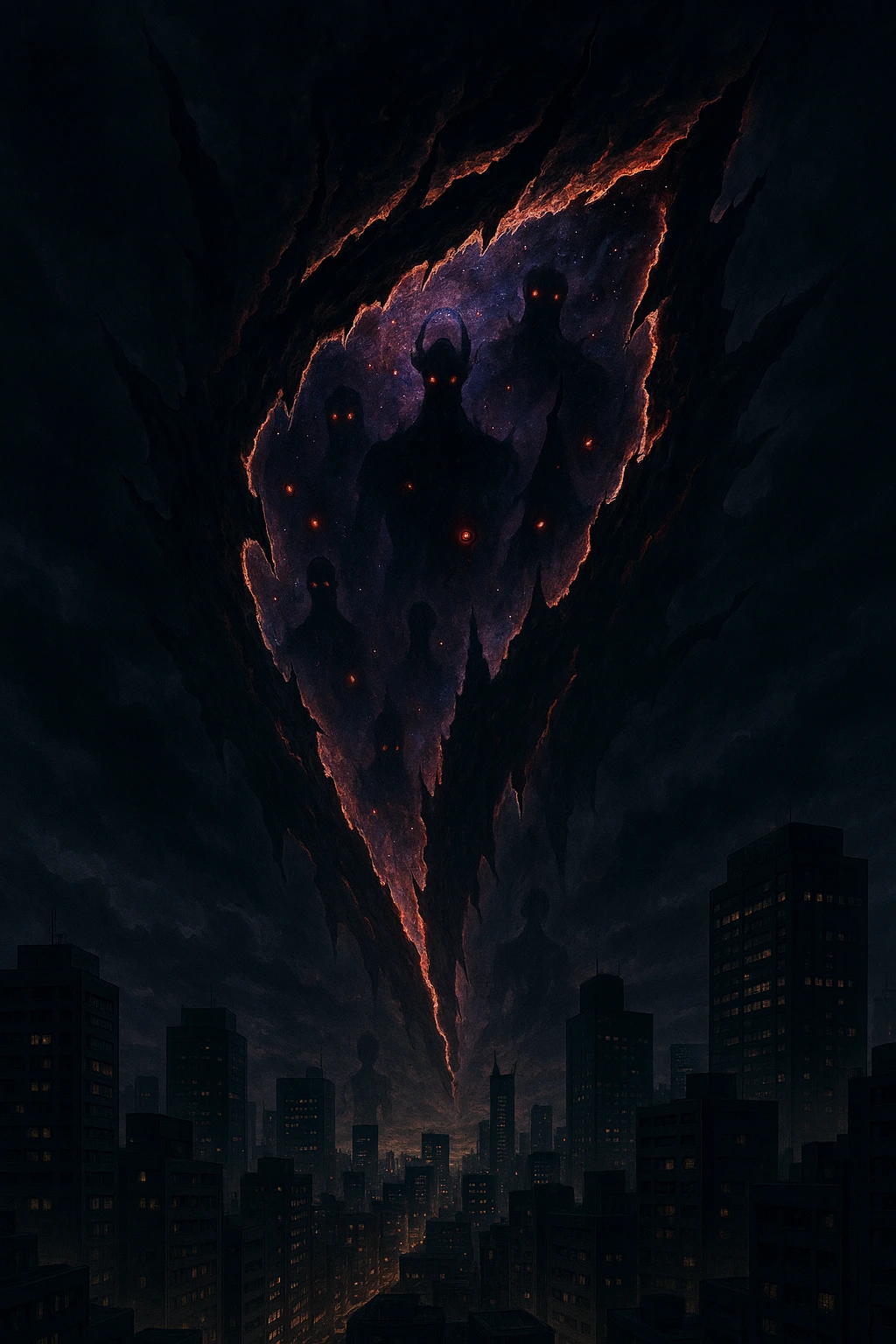
Cosmic Horror
The original series dealt with Monarchs—beings of immense power, but beings with personalities, human-like desires (conquest, destruction), and comprehensible forms. The Itarim are Lovecraftian in nature. They are the “Gods of Other Universes,” creators who failed or were cast out, hungry to reclaim power.
Their goal is simple: Consumption. They view our universe as a vacant lot waiting to be built upon or a resource to be stripped. They do not care about humanity; we are less than ants to them. This shifts the genre from “Fantasy Action” to “Cosmic Horror Action,” where the enemies are often incomprehensible, shapeless, or maddening to behold.
The Apostles of Itarim
Since the Itarim cannot enter our universe directly (thanks to Jin-woo blocking the door with his army), they send Apostles. These are entities that corrupt the laws of physics and mana on Earth, acting as viral agents.
- Stardust: This is the corrupting energy of the Itarim, functioning like a magical radiation. It infects Hunters, turning them into “Stardust beings”—mindless, power-hungry monstrosities that the System cannot easily categorize. It twists their mana circuits, making them stronger but stripping them of humanity.
- Possession: The Itarim can possess the bodies of weakened or greedy humans, creating villains that look human but possess god-slaying magic. These sleeper agents add a layer of paranoia to the story, as anyone could be a puppet of the Outer Gods.
The Threat Level
Why are they a threat if Jin-woo beat the Dragon Monarch? Because there are many Itarim. The Dragon Monarch Antares was the strongest in our universe, but the Itarim are a collective of creators from the void. Their magic operates on different rules, often defying the logic of the Solo Leveling universe. They can warp reality, negate standard mana, and create “glitches” in the world logic that Su-ho must figure out how to patch.
Dimensional Rifts
The war isn’t just in space. The Itarim are drilling holes in reality—Dimensional Rifts. These aren’t normal Gates that lead to dungeons. They are wounds in the universe—tears in the fabric of space-time. Inside these rifts, the laws of the Shadow Monarch have weak influence, and the physics of the Outer Universe bleed in. This forces Su-ho to fight without the full support of his father’s authority, raising the stakes: Su-ho isn’t just cleaning up dungeons; he is acting as a cosmic immune system, patching the fabric of reality before it tears open completely.
6. Returning Characters (Where are they now?)
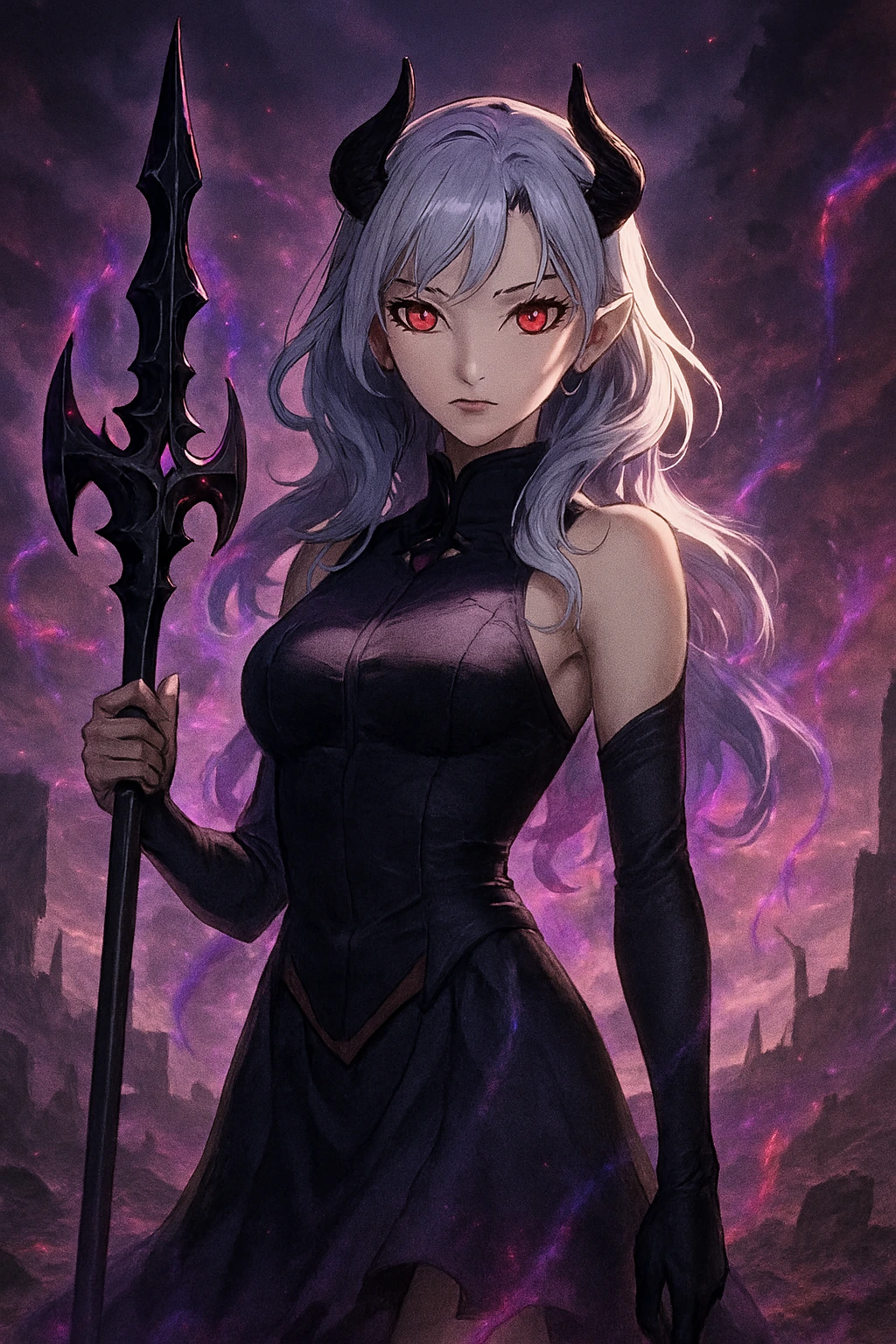
Nostalgia is a powerful weapon in Ragnarok, but it is wielded carefully. The old cast has aged, evolved, and moved on, grounding the fantastic elements in human progression.
Cha Hae-In: The Retired Queen
Cha Hae-In is no longer the “Hunter Cha” of old. She is a mother first. But Ragnarok does not disrespect her strength. When Su-ho’s powers go out of control, or when threats get too close to home, we see flashes of the S-Rank Swordswoman who once charmed the Shadow Monarch. Her plotline is deeply emotional. She knows her husband is “working abroad” (the cover story for fighting space gods), and she suspects Su-ho is following in his footsteps. Her struggle between protecting her son and letting him fulfill his destiny is a major character arc. She represents the humanity that Jin-woo fights to protect—the anchor that keeps the Sung family grounded in love rather than just power.
Woo Jin-Cheol: The Burdened President
Woo Jin-Cheol, the man with the iron face, is now the President of the Korean Hunter Association. In the new timeline, he retained his memories (restored by Jin-woo). He is the exhausted, overworked uncle figure. He suspects Su-ho immediately. Watching Woo Jin-Cheol sweat nervously as he realizes the “Little Monarch” is running around causing havoc brings a fantastic sense of continuity and humor. He acts as the bridge between the government and the shadows, tirelessly covering up Su-ho’s messes just like he did for Jin-woo, lamenting that the apple didn’t fall far from the chaotic tree.
Thomas Andre & Liu Zhigang
While their roles are smaller, the presence of the National Level Hunters establishes the power ceiling of Earth. They are the “Old Guard.” In the new timeline, they are still powerful, but without the memories of the previous war (mostly), they are bewildered by the sudden rise of a super-rookie like Su-ho. Watching Su-ho surpass the heroes of the previous generation is a key metric of his growth, proving that he is not just an S-Rank, but something beyond categorization.
Esil Radiru: The Demon Noble Returns
One of the biggest surprises is the return of Esil, the demon noble girl from the Demon Castle arc in the original series. In Ragnarok, she plays a much larger role. Since the Demon Realm was destroyed/reset, she becomes a key ally to Su-ho, acting as a guide to the more esoteric aspects of the dimensions. She provides lore on the chaotic state of the dimensions and fights alongside him. For fans who wanted more Esil content in the original, Ragnarok delivers, giving her agency and a crucial role in the new war.
7. The Lore Expansion
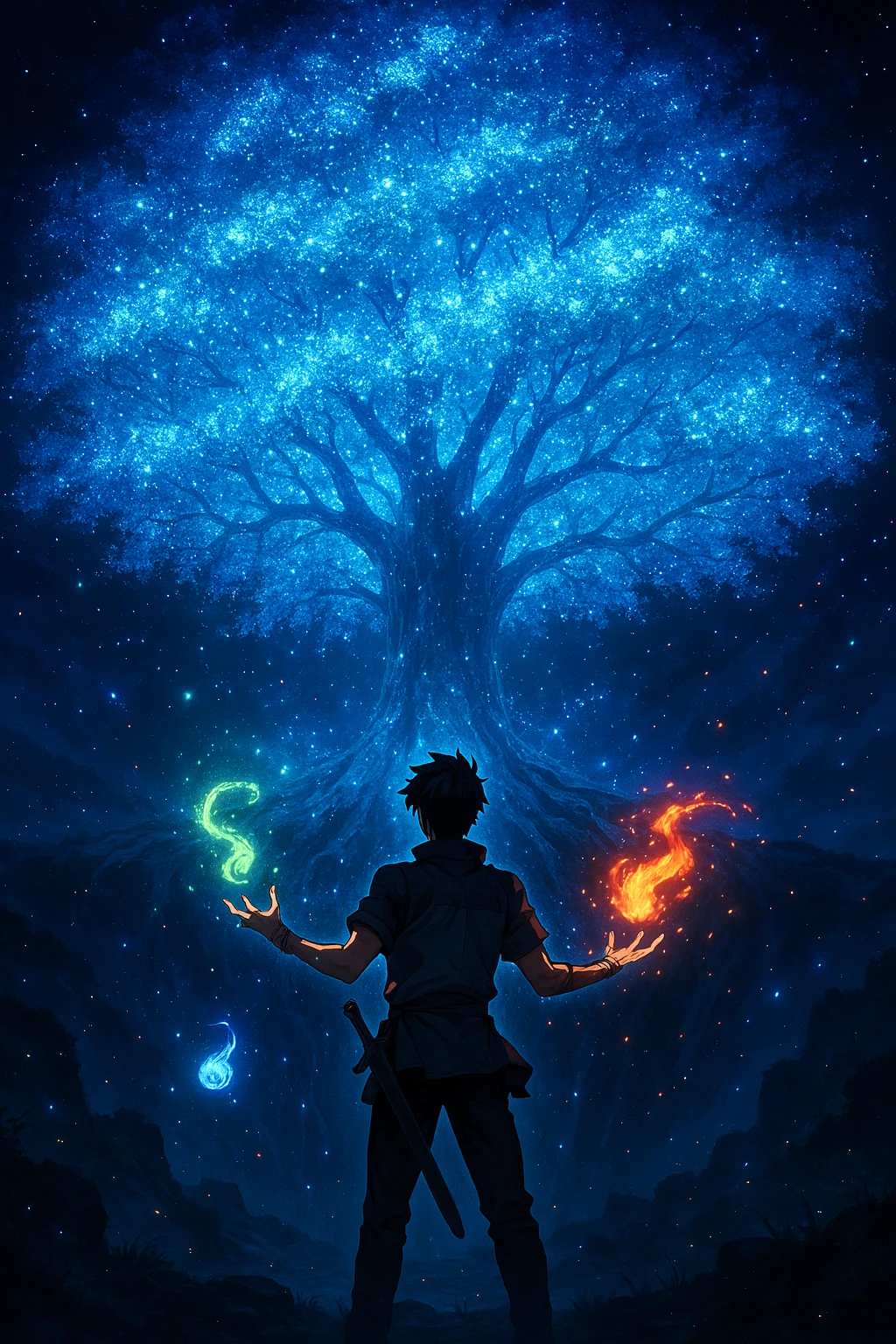
Solo Leveling was focused on the war between Light (Rulers) and Dark (Monarchs). Ragnarok expands the metaphysics of the world, introducing elements that widen the scope of the fantasy.
The World Tree
A central plot point in Ragnarok involves the World Tree. Drawing heavily from Norse mythology, Yggdrasil connects the worlds and dimensions. In Ragnarok, the World Tree is revealed to be a source of pure, ancient mana that predates the Monarchs. Su-ho must secure seeds and branches of the World Tree to craft weapons capable of harming the Itarim. This introduces a “Crafting/Gathering” element to the story that goes beyond just looting drops. The World Tree also connects to the High Elves and the ancient races that hid away when the Monarchs originally warred, expanding the bestiary and political landscape of the series.
Spirit Magic
The introduction of Spirit Magic changes the power scaling. It acts as a counter-balance to the raw destruction of Dark Mana. Su-ho learns that to defeat beings from outside the universe, he cannot rely solely on the power of this universe’s death. He must harmonize with the spirits of nature and the void. This makes his power set more colorful and varied than Jin-woo’s monochromatic black-and-purple palette, allowing him to wield the very elements of the planet he is protecting.
The Ultimate Goal: Ascension
The driving force of the plot is not just “save the city.” It is Ascension. Beru makes it clear: Su-ho cannot stay on Earth. Earth is too fragile to house a second Shadow Monarch. The endgame of Ragnarok is for Su-ho to reach a level where he can fly into the cosmos and join his father. The series teases a “Tag Team” battle of biblical proportions: Father and Son, back-to-back, facing the infinite armies of the Itarim in the void of space. It is a journey from the terrestrial to the celestial.
8. Conclusion: The Legacy Secured
Passing the Torch
Sequels are dangerous. They often ruin the ending of the original by undoing the hero’s victory or making their sacrifice meaningless. Solo Leveling: Ragnarok avoids this pitfall masterfully. It doesn’t undo Jin-woo’s victory; it respects it. Jin-woo did save Earth. The threat now is external, and the new protagonist is necessary because the old one is effectively a god who cannot touch the world without breaking it. The torch is passed not because the old hero failed, but because he ascended.
The Father-Son Bond
Beneath the exploding dungeons and screaming ants, this is a story about a son chasing a distant father. Su-ho grows up hearing stories (and lies) about his dad. As he unlocks his powers, he is literally walking in his father’s footsteps, seeing the memories of the Shadow Soldiers, and understanding the incredible burden Jin-woo carried. It is a story of reconciliation across light years. Every level Su-ho gains is a step closer to understanding the man who abandoned him to save him. It transforms the narrative from a simple power fantasy into a touching exploration of legacy and family duty.
Summary
Solo Leveling: Ragnarok is high-octane, lore-rich, and emotionally satisfying. It takes the “Level Up” dopamine loop of the original and injects it with fresh mechanics, cosmic stakes, and a protagonist who offers a wilder, fiercer flavor of heroism.
For the anime and manhwa community, this isn’t just a spinoff. It is the evolution of the brand. The Shadow Monarch reigns eternal, but the Prince has arrived to claim his throne. The darkness has never looked so bright.
Key Takeaways for the Fan
- Don’t skip the Prologue: Understanding the Itarim is crucial to grasping the new stakes.
- Watch Beru: He is the MVP of this series, providing both the biggest laughs and the most emotional moments.
- Expect Scale: The fights go from “City Block” level to “Reality Warping” level very quickly.
- The Manhwa vs. Novel: If you can’t wait for the weekly comic updates, the novel is finished and offers even more depth on the psychological state of Su-ho and the lore of the Outer Gods.
The shadows are rising again. Are you ready to level up?