
1. Introduction: The Day the Sky Opened
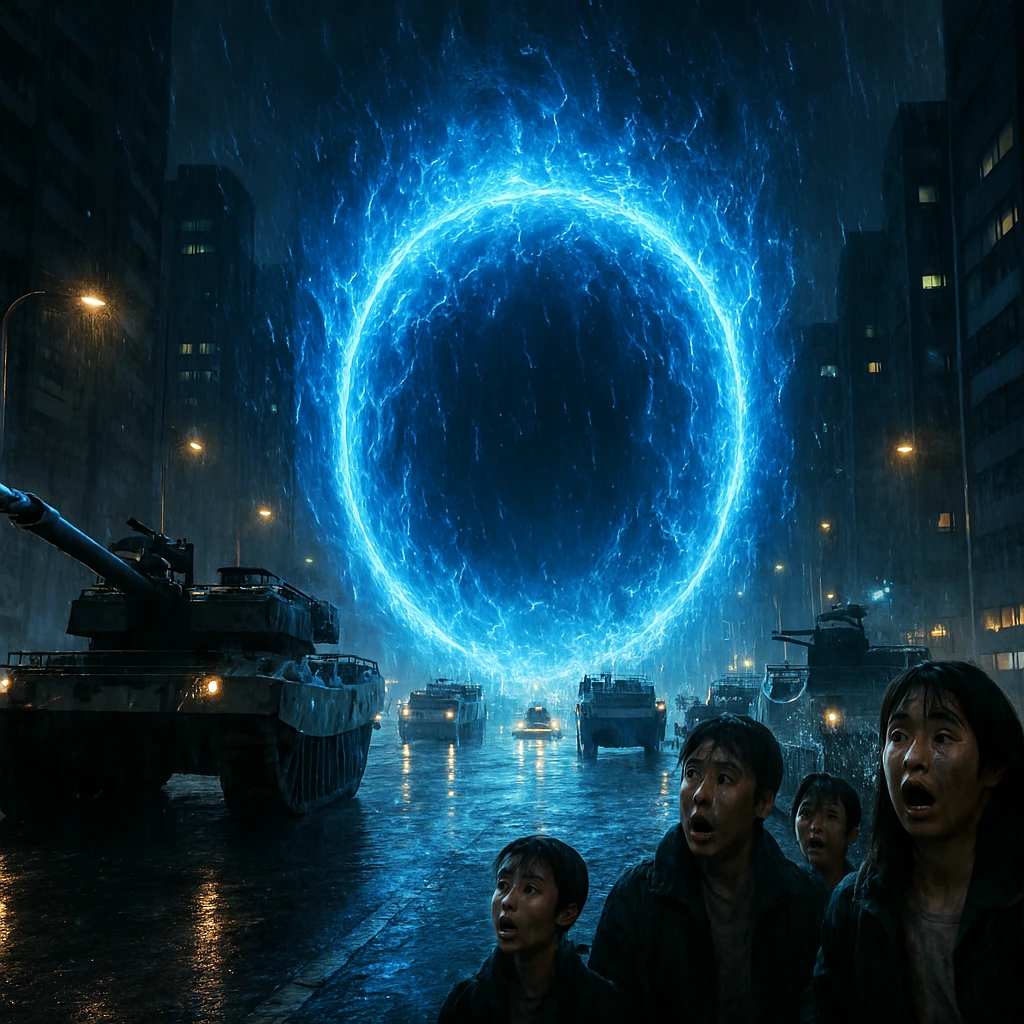
History, as humanity understood it, ended effectively ten years prior to the events of the current timeline. It did not end with a nuclear winter, a plague, or an economic collapse, but with a spatial anomaly that defied the laws of physics. The appearance of the first “Gate” in Seoul—and subsequently across the globe—was the singular event that rewrote the biological and geopolitical destiny of Earth. It was a “Day of Black Sun,” where the logic of science was violently superseded by the logic of magic.
To the average civilian, a Gate is a terrifying, gaping maw of blue light—a tear in the fabric of reality that connects our stabilized dimension to a chaotic, mana-rich void known colloquially as the “Chaos World.” However, to categorize a Gate merely as a monster’s lair is a fundamental misunderstanding of its mechanics. A Gate is not a simple cave or a tunnel; it is a stable wormhole, an Einstein-Rosen bridge sustained by high-density magical energy that forces two incompatible dimensions to overlap. The shimmering surface of a Gate is actually a horizon event, a barrier that holds back a dimensional pressure that, if released instantly, would crush the surrounding atmosphere.
When these portals first manifested, modern weaponry was rendered obsolete overnight. Tanks, missiles, and ballistics—tools built on the principles of combustion and kinetic energy—failed to penetrate the skin of even the lowest-ranking beasts. Bullets flattened against goblin hide; tank shells bounced off orc armor. This technological impotence forced a biological evolution in humanity itself. The “Awakening” was not a random mutation; it was a symbiotic reaction to the sudden influx of mana into Earth’s atmosphere. The “Hunters” were not just soldiers; they were the antibodies of a planet trying to fight off an infection from another dimension. This shift redistributed global power; nations with the most S-Rank Hunters became the new nuclear superpowers, while those without them lived in perpetual fear of annihilation.
But for a decade, humanity misunderstood the diagnosis. They believed the Gates were random acts of aggression, pockets of chaos appearing without rhyme or reason. It was only later discovered that there was a terrifying precision to the phenomenon. The Gates operate on a strict timer. The “7-Day Rule” serves as the foundational law of this new ecology. Once a Gate manifests, the spatial barrier remains sealed for exactly one week. During this gestation period, the connection solidifies. If the “Boss” anchoring the dimension is not eliminated within that timeframe, the barrier inverts, and the dungeon does not just open—it “breaks,” spilling its contents into reality. This mechanism suggests that Gates are not natural phenomena, but engineered events—biological time bombs set with a specific purpose.
2. Gate Classification and Measurement
The survival of the human race depended on quantification. If you cannot measure the threat, you cannot survive it. This necessity gave birth to the Association’s ranking system, a bureaucratic attempt to organize chaos. The classification of Gates is determined not by the size of the portal, but by the density and wavelength of the “Mana Waves” emitting from it.
The Wave Pattern Analysis
Using specialized equipment derived from magic crystals (Magical Energy Measurement Devices), the Association measures the ambient mana leaking from a dormant Gate. The intensity of this radiation determines the Rank. The device works by resonating with the magical frequency of the dimension on the other side; a higher pitch or darker color indicates a denser concentration of mana.
- E-Rank: The baseline. Equivalent to the danger of wild animals. Often cleared by hobbyists or low-level healing parties. The mana wavelength is barely perceptible, feeling like a light static electricity in the air.
- D-Rank: The standard operational baseline for low-level guilds. Requires organized tactical gear. The mana pressure is noticeable but manageable for anyone with an Awakening.
- C-Rank: The dividing line between “civilian-level” danger and “military-level” threats. Creatures here often possess tough hides that require enchanted weaponry to pierce.
- B-Rank: High danger. Requires at least a 10-man raid team including A-Rank oversight. The ambient mana inside these Gates is thick enough to suppress the breathing of a non-Awakened human.
- A-Rank: A calamity-class portal. The mana waves from an A-Rank Gate are dense enough to cause nausea, dizziness, and fainting in non-Awakened civilians standing even outside the barrier. Inside, the environment is often hostile to human life.
- S-Rank: The anomaly. An S-Rank is not merely “stronger” than an A-Rank; it represents a failure of measurement. The devices used by the Association have a finite capacity. When a Gate is classified as S-Rank, it simply means “Unmeasurable.” The power output exceeds the machine’s ability to display a number. The difference between the weakest S-Rank Gate and the strongest S-Rank Gate can be astronomical. For example, the disparity between a standard S-Rank raid and the Jeju Island Gate is the difference between a hurricane and an extinction event.
The Safety Margin Protocols
The Association developed strict ratios to prevent casualties, acknowledging that the rating of a Gate applies to the average strength of the beasts inside, but the Boss is always a tier higher. A dungeon is an ecosystem where the strong devour the weak, meaning the apex predator (the Boss) has consumed the mana of its subordinates to grow stronger.
- A B-Rank Gate technically requires B-Rank Hunters, but protocol dictates the presence of at least three A-Ranks or a highly coordinated team of ten B-Ranks to account for variable factors.
- The Healer Dependency: The classification system also dictates team composition. A party without a Healer cannot legally enter a Gate higher than C-Rank. This rule exists because magical injuries do not respond to conventional medicine inside the localized dimension of a dungeon. A laceration from a magic beast carries residual mana that prevents clotting and accelerates necrosis; only a Healer’s mana can neutralize this foreign energy and knit the flesh back together.
The failure of this system lies in its inability to detect “Red Gates” or sudden “Awakening” within the dungeon (as seen in the Double Dungeon). The measurement is a snapshot of the door, not a scan of the room inside.
3. The Red Gate: A Prison of No Return
If a standard Gate is a tunnel, a Red Gate is a sealed vault. It represents one of the most terrifying anomalies in dungeon ecology because it defies the standard exit protocols.
The Disconnection Phenomenon
In a normal raid, the portal remains open behind the Hunters. It acts as an escape route and a supply line. If the battle turns sour, the team can retreat to the real world. A Red Gate, however, shifts the spatial coordinates the moment a living being steps across the threshold. The portal vanishes. The link to Earth is temporarily severed, and the Hunters are drifted into a completely isolated pocket dimension.
This isolation is why Red Gates are often death sentences. The Association cannot send reinforcements because the entrance physically ceases to exist in the material world. To the outside observer, the Gate appears to be a solid red orb, impenetrable and unmovable, vibrating with a rejection of all external matter. Inside, the Hunters are cut off from radio signals, GPS, and hope.
Environmental Simulation and Survival
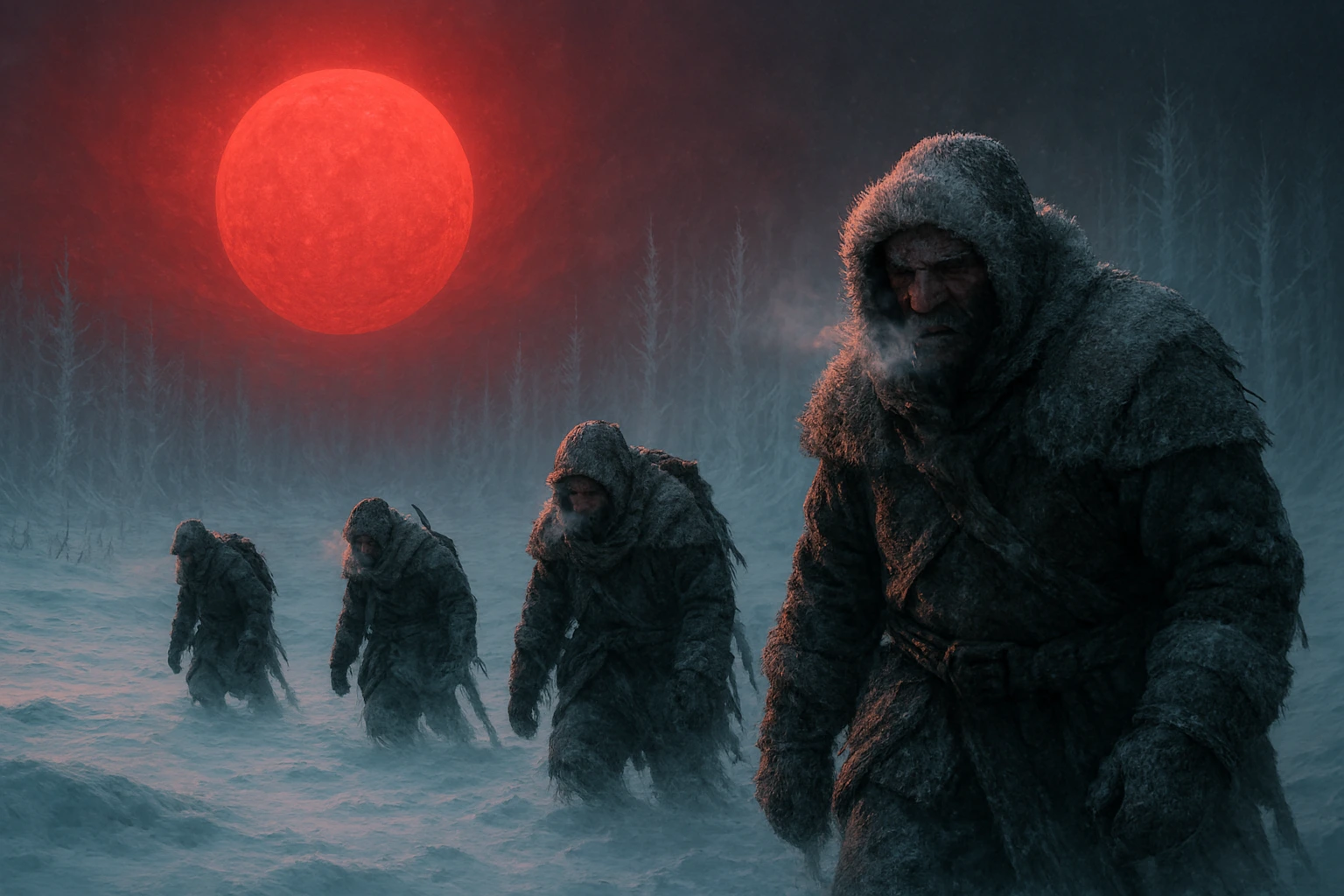
Unlike standard dungeons, which are often caverns or catacombs, Red Gates simulate full biomes. These are hostile ecosystems designed to whittle down intruders before combat even begins. The mana in the air is often tailored to the specific element of the inhabitants, giving them a distinct home-field advantage.
- The White Tiger Guild Incident: In the incident involving the Ice Elves, the Red Gate simulated a frozen tundra with sub-zero temperatures. This environmental hazard serves a tactical purpose: it drains the stamina of Hunters, slows their metabolic rates, and induces hypothermia. The cold itself was a weapon, forcing the Hunters to expend mana just to keep their bodies warm, leaving less energy for combat.
- The Desert Sun: Conversely, other Red Gates generate scorching deserts where heat exhaustion kills faster than the monsters. In these environments, water becomes more valuable than gold, and heavy armor becomes a liability.
The Mechanic of Escape
There is no negotiation in a Red Gate. The spatial lock is tied to the life force of the Dungeon Boss. The physics of the dimension are binary and absolute:
- Kill the Boss: The dimension collapses, and the spatial anchor reconnects to Earth.
- Total Party Kill: The Hunters die, and the Gate eventually breaks open after the standard time limit.
Time Dilation
A subtle but horrifying aspect of Red Gates is the distortion of time. While not always consistent, days inside a Red Gate can pass differently than on the outside. This psychological pressure causes lower-ranked Hunters to break mentally before they break physically. In the Ice Elf arc, we saw how the B-Rank Tanker, theoretically strong enough to survive physically, crumbled under the psychological weight of isolation. The “predator vs. prey” dynamic established by Baruka, the Boss, turned the raid into a hunt, proving that in a Red Gate, humans are not the hunters—they are the game.
4. Instance Dungeons: The System’s Private Training Grounds
To the rest of the world, there are only Gates. To Sung Jin-Woo, there is a second, hidden layer of reality: the Instance Dungeon. These are artificial realities constructed by the Architect specifically for the “Player.”
Artificial Reality vs. Biological Reality
Standard Gates are biological/magical transport systems containing living organisms from the Chaos World. Instance Dungeons are different. They are simulations—constructs of the System designed to farm experience points. While the pain is real and death is permanent, the “feel” of the dimension is synthetic.
- Loot Logic: In a real Gate, a dead monster leaves a corpse and a mana crystal (a hardened heart). In an Instance Dungeon, the bodies often dissolve or shatter into data particles, leaving behind “Items,” “Gold,” and floating “Runes.” This gamification is crucial—it proves that the Instance Dungeon is not part of the natural invasion plan of the Rulers/Monarchs, but a separate training module overlaid on reality. It provides resources that do not exist in the natural world, such as healing potions and instant-return stones.
The Penalty Zone
The most primitive form of the Instance Dungeon is the “Penalty Zone.” When Jin-Woo fails his daily quest, he is transported to a survival map (The Desert of Punishment). This proves the System’s ability to displace matter instantly without a pre-existing Gate. The Penalty Zone is designed not to kill the Player, but to force exhaustion-based leveling. The giant centipedes that inhabit this zone are relentless, stripping away the safety of civilization and forcing the Player to run until their lungs burn, reinforcing the primary lesson of the System: survive or die.
The Demon Castle: The Apex Instance
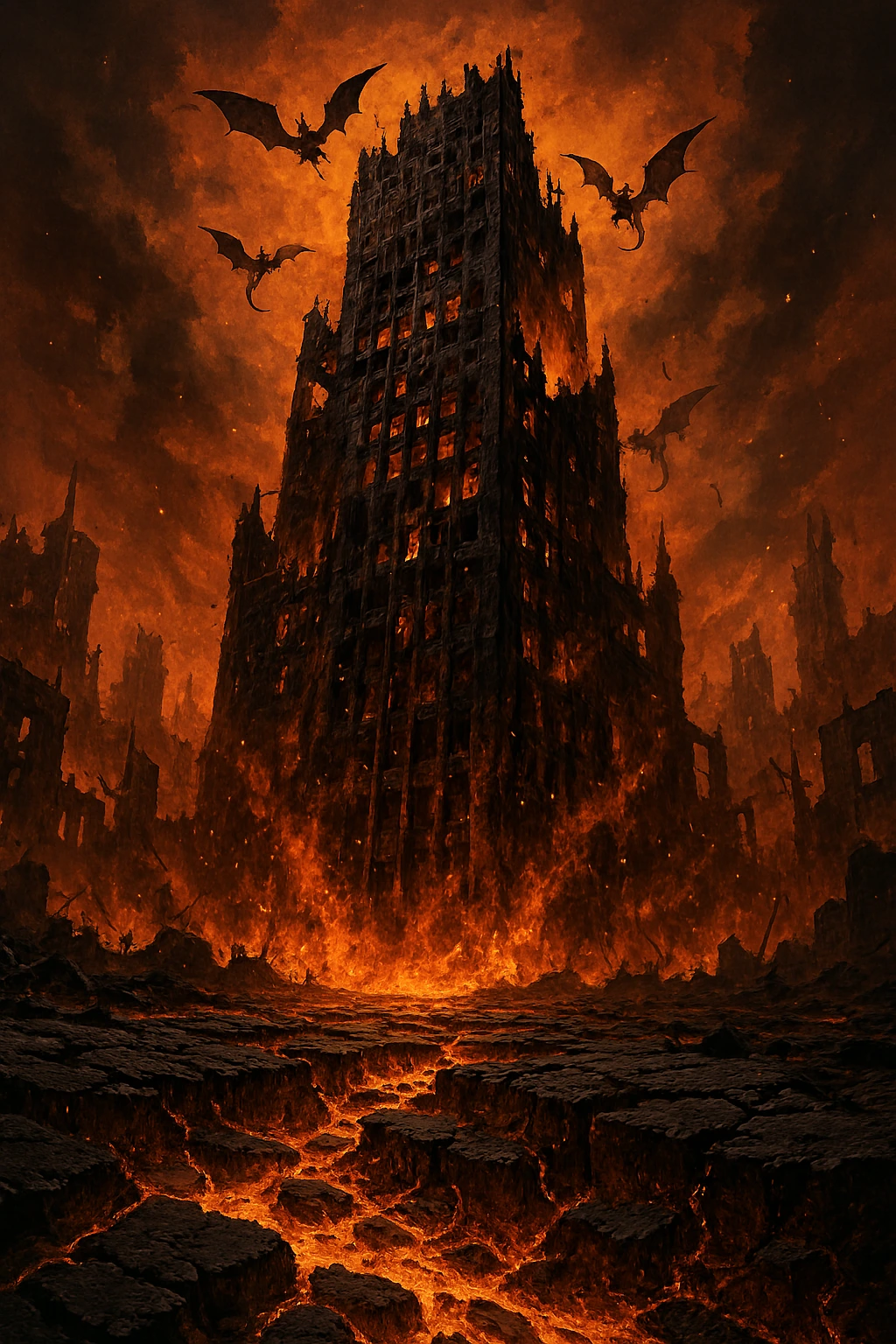
The Demon Castle represents the pinnacle of Instance Dungeon engineering. It is a 100-floor recreation of a destroyed city from the Chaos World, complete with a burning sky and ruined skyscrapers. However, the lore implications here are massive. The demons inside are “copies” or data-reconstructions of the original inhabitants of the Monarch of White Flames’ territory.
- The Esil Radiru Interaction: The interaction with Esil, the demon noble, reveals that the inhabitants of Instance Dungeons possess self-awareness but operate within restricted memory parameters tailored to the Player’s progression. When Jin-Woo asks questions that exceed the System’s allowance, Esil experiences a “static” in her mind. They are tragic figures—ghosts trapped in a server, waiting to be killed and respawned for the sake of the Shadow Monarch’s successor.
5. Dungeon Breaks: The Catastrophe
A Dungeon Break is the failure state of the hunter system. It is the ecological equivalent of a dam bursting.
The 7-Day Limit Mechanism
Why seven days? In magical theory, this appears to be the time required for the portal to achieve “total synchronization” with Earth’s dimension. For the first week, the flow of mana is one-way: Hunters go in. The barrier acts as a filter, keeping the pressure contained. Once the timer expires, the pressure equalizes and reverses: Monsters come out. This isn’t just an opening of a door; it is a rupture.
Mana Saturation and Terraforming
When a Break occurs, the immediate area undergoes “Mana Saturation.” The sky turns a bruised purple or grey, and the air becomes toxic to non-Awakened humans due to the density of foreign mana. This is the first stage of terraforming. The monsters do not just kill; they trample infrastructure and emit high-density mana, fundamentally altering the local geography to resemble the Chaos World. Plants may mutate, concrete creates fissures, and the area becomes a “Dead Zone” for normal technology, where electronics short-circuit and engines stall.
Historical Trauma: Jeju Island and Kamish
The severity of a Break is dictated by the Gate’s rank.
- The Kamish Tragedy: The first major S-Rank break in the US introduced humanity to the concept that civilization is fragile. Kamish, a dragon, decimated the West Coast. This event shifted the global balance of power, as the US monopolized the “Runestone” found in the aftermath, proving that even disasters were commodities. The immense loss of elite hunters during this raid created a vacuum of power that took years to fill.
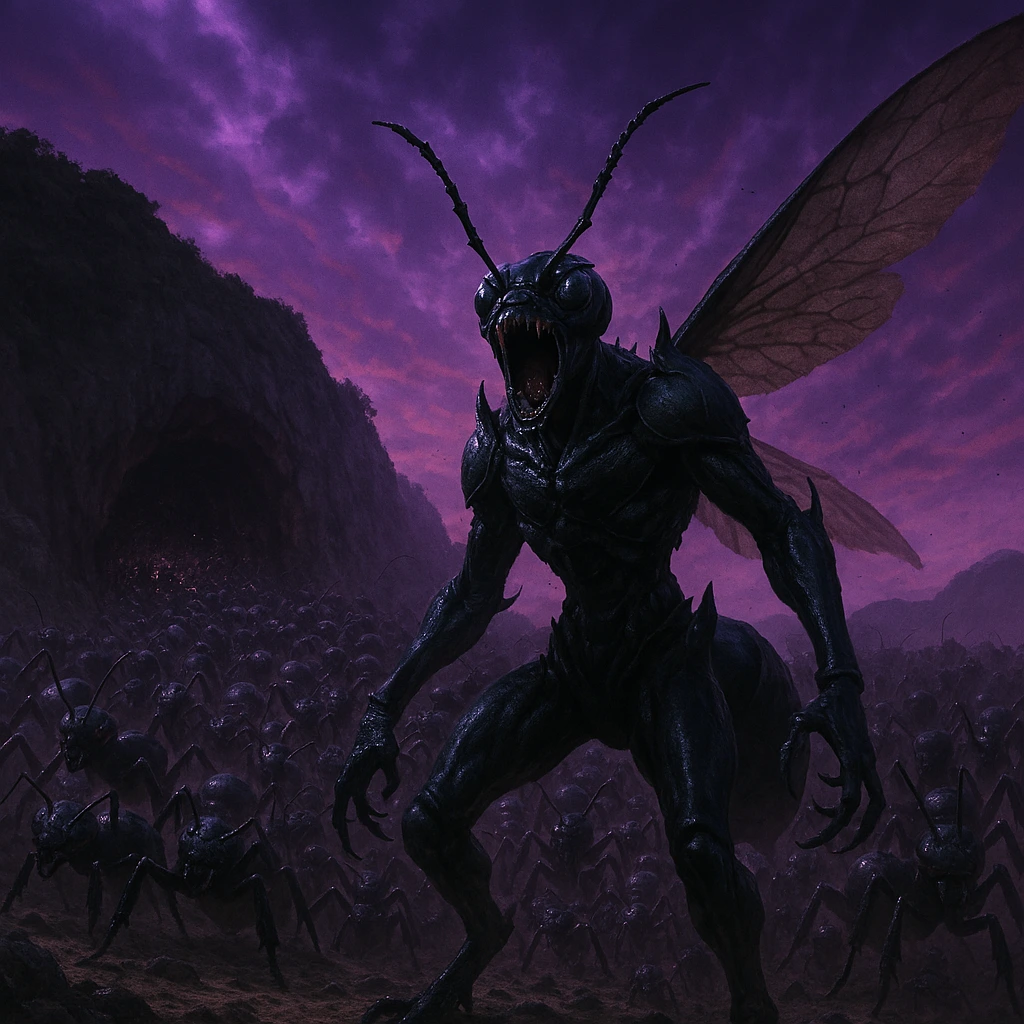
- The Jeju Island Nightmare: This was an ongoing Break. Unlike typical breaks where monsters scatter, the Ants of Jeju established a colony. They evolved. This demonstrated that a Dungeon Break isn’t just an invasion; it’s a colonization event. The Ants wiped out the Korean S-Rank team (except for Choi Jong-In and Baek Yoon-Ho’s retreat) and turned an entire island into a breeding ground, creating an “exclusion zone” that lasted for years. The Queen Ant’s ability to produce soldiers that adapted to human hunters marked a terrifying leap in dungeon ecology—monsters that learn.
6. The Double Dungeon: The Temple of Cartenon
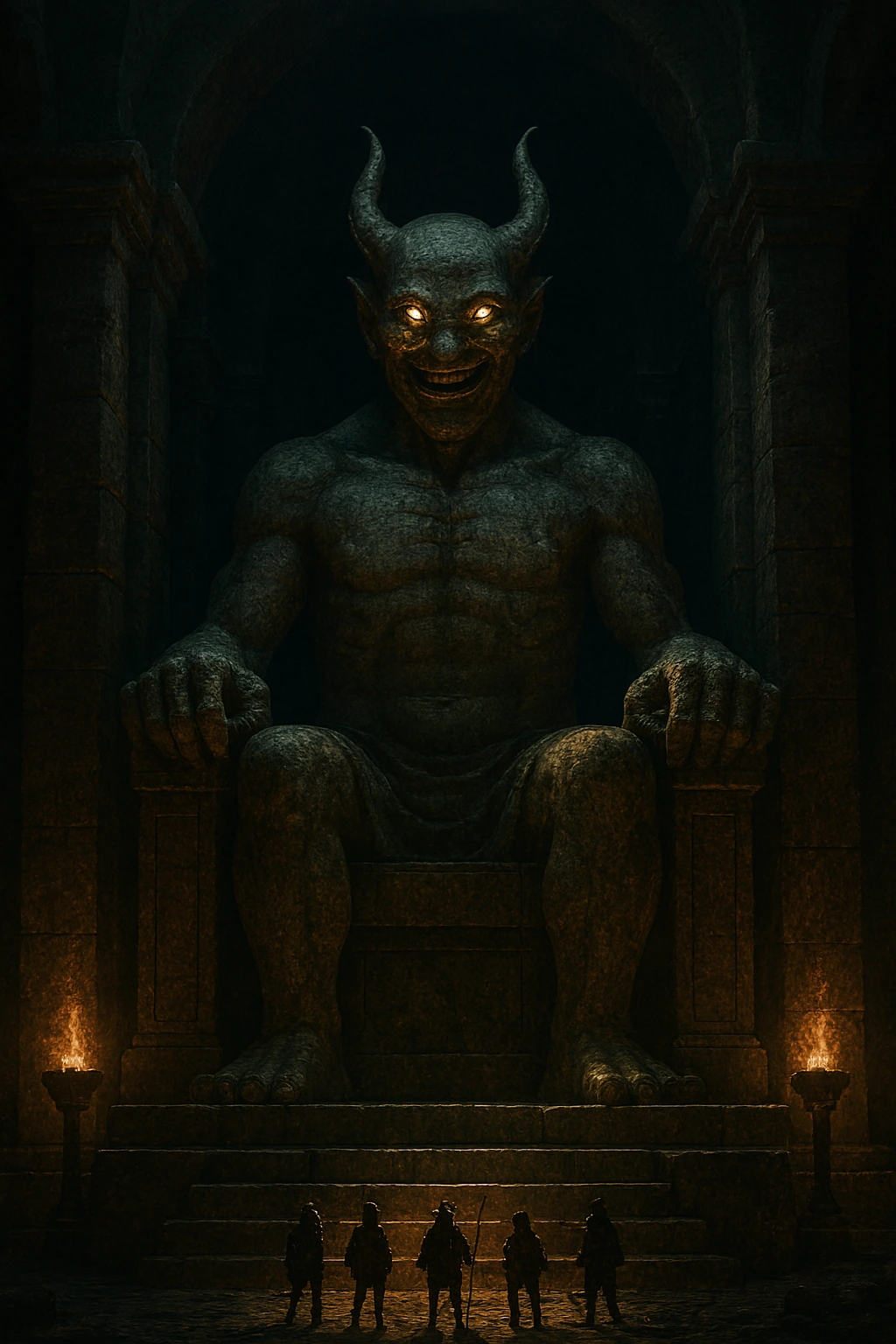
The Cartenon Temple is the most anomalous structure in the entire series. It masqueraded as a D-Rank dungeon, but it hid a divine test site.
Structure: A Dungeon Within a Dungeon
The concept of a “Double Dungeon” is incredibly rare. It implies a pocket dimension hidden inside another pocket dimension. This layering suggests that the Architect needed a place hidden not just from humans, but potentially from the detection of the Monarchs and Rulers until the time was right. It utilized the low-rank outer shell as a camouflage, ensuring no high-level hunters would stumble upon it and trigger the script prematurely.
The Three Commandments
The Cartenon Temple did not test combat prowess; it tested subservience and instinct.
- Worship the Lord: A test of recognizing power. The “God” Statue radiated a mana pressure so intense it triggered primal fear, forcing hunters to bow or be crushed.
- Praise the Lord: A test of vocalizing submission and understanding patterns. The hunters had to stand near the instruments, becoming part of the choir to appease the statue’s vanity.
- Prove your Faith: A test of courage and the willingness to sacrifice. The altar did not require a death; it required the willingness to die. Walking toward the blue flames while the statues approached was a test of overcoming the survival instinct.
These rules were a calibration test for the vessel of the Shadow Monarch. The “God” statue was a puppet, a construct of the Architect designed to filter out the unworthy. The blue statues holding instruments and weapons were not biological entities; they were golems powered by ancient mana codes, relentless and devoid of pain.
The Revisit: Conquering Fear
When Jin-Woo returns to the Double Dungeon as an S-Rank, the ecology of the room shifts. It is no longer a place of horror, but a place of answers. The battle against the Architect (the Angel Statue) reveals that the “System” was physically anchored here. Destroying the Architect didn’t destroy the System’s power, but it broke the shackles of the “Player” limitations, allowing Jin-Woo to access the full scope of the Shadow Monarch’s power without the gamified interface holding his hand.
7. Magic Beasts and Ecology
The entities labeled “Monsters” or “Magic Beasts” are not a monolithic group. They are a complex ecosystem of warrior-slaves, separated by caste and biology.
The Hierarchy of Beasts
- Low Tier (Goblins, Kobolds): Cannon fodder. They possess minimal intelligence and act on swarm instincts. They are barely more than animals, driven by hunger and aggression.
- Mid Tier (Orcs, Lycanthropes): Pack hunters with rudimentary language and social structures. They use basic tools and armor, indicating a level of craftsmanship and societal role distribution.
- High Tier (High Orcs, Ice Elves, Giants): These creatures possess culture, language, and military hierarchy. The High Orcs in the Hunter’s Guild gate had a spell-casting leader and organized formations. They are not wild animals; they are soldiers. The Ice Elves, for instance, showed disdain for humans, viewing them as a lower species, revealing a complex racial pride.
The Biology of Mana Stones
Why do monsters have Mana Stones (Crystals) in their bodies? In the Solo Leveling universe, biological creatures from the Chaos World require mana to survive. On Earth, where mana was originally scarce, their bodies naturally calcified mana into a solid core—the heart—to sustain their existence. This stone is the battery keeping them alive in a foreign dimension. Hunters harvesting these stones are effectively ripping out the batteries of biological weapons. The economic value of these stones is immense, powering the new world’s technology, but the biological reality is that they are the crystallized lifeblood of an alien species.
The Intelligence Gap and the “Voice”
The most chilling realization in the series is when monsters begin to speak. “Where are you?” “Are you the King?” The beasts are not mindless. They are compelled by a magical command implanted in their minds: Kill Humans. They describe a “voice” in their heads that drives them into a frenzy when they see humans. This reveals that the Dungeon Ecology is artificial; the beasts are mentally enslaved armies, programmed to attack Earth to facilitate the spread of mana. Even intelligent creatures like the Orc Shaman express confusion over this drive, suggesting a magical lobotomy performed by the Rulers.
8. Conclusion: The True Purpose of Gates
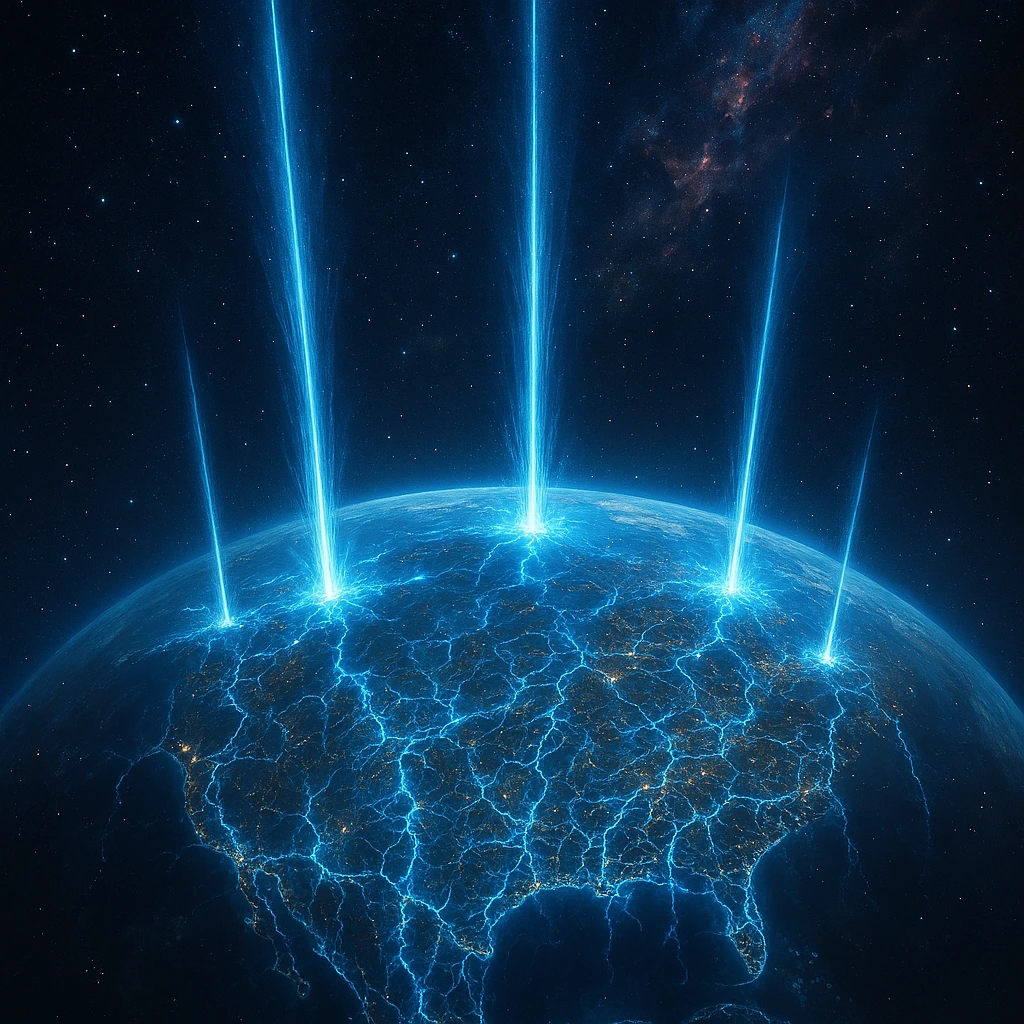
For ten years, humanity fought a war of survival, believing they were repelling an invasion. They were wrong. The Gates were not designed to destroy Earth—they were designed to save it, in the most brutal way possible.
The Rulers’ Plan: Terraforming for Survival
The ultimate revelation of the “Ecology of Chaos” is that the Gates are essentially syringes. Earth, in its original state, was too fragile. It lacked the magical density to withstand the coming war between the Monarchs and the Rulers. If the armies of the Monarchs had arrived on Earth before the Gates appeared, the planet would have shattered simply from the pressure of their presence.
The Gates were the Rulers’ solution. They injected mana-rich environments (Dungeons) into Earth. By sending monsters through these Gates, the Rulers created a cycle:
- Gate opens.
- Monsters release mana.
- Hunters kill monsters, releasing the dense mana trapped in their Mana Stones into the Earth’s atmosphere.
- The Earth absorbs this mana, slowly reinforcing its planetary crust and dimension.
The Cruel Fertilizer
The monsters were not an invasion force; they were fertilizer. The Hunters were the gardeners, unknowingly spreading the mana by slaughtering the beasts. Every raid, every kill, every mined crystal contributed to strengthening the planet so it could survive the arrival of the Monarchs. Society celebrated the Hunters as heroes defending their homes, unaware that they were merely laborers in a cosmic construction project.
The “Break” was a side effect, a spillover when the injection was left too long. The death of civilians was considered acceptable collateral damage by the Rulers in the face of total planetary annihilation.
In conclusion, the ecology of the Solo Leveling universe is a masterclass in cosmic horror disguised as an action fantasy. The Gates, the Dungeons, and the Beasts were all cogs in a machine of celestial engineering. Humanity preened over their S-Rank Hunters and their Guild profits, never realizing they were merely laboring to reinforce the battlefield for a war that had nothing to do with them. The Gates did not open to kill us; they opened to harden us, so that when the real gods arrived, the ground wouldn’t crumble beneath their feet.