
I. Introduction: The Pivot Point of History
In the annals of Jujutsu Kaisen, history is not measured in years or decades, but by a single, terrifying boundary line: The Shibuya Incident. Before October 31st, 2018, the series operated within the framework of a dark, supernatural school drama—a dangerous but manageable status quo where Satoru Gojo reigned as the ultimate deterrent. This was the “Pre-Shibuya” era. After the curtain fell on that Halloween night, the world shattered into a post-apocalyptic survival horror. The “Post-Shibuya” era is defined not by the protection of the weak, but by the desperate struggle of the strong to merely exist.
The date was chosen with malicious precision. October 31st, Halloween. Shibuya, one of Tokyo’s most densely populated districts, was transformed from a hub of celebration into a slaughterhouse. The antagonist forces, led by the ancient sorcerer Kenjaku (occupying the body of Suguru Geto), understood a fundamental truth about jujutsu warfare that the protagonists did not: density is a weapon. By trapping tens of thousands of non-sorcerer civilians inside a multi-layered barrier, Kenjaku created a battlefield where the heroes’ greatest strength—their morality and desire to protect—became their fatal weakness.
This article serves as a definitive chronicle of that catastrophic night. It is a comprehensive timeline analysis dissecting Kenjaku’s masterful checkmate against the “Strongest Sorcerer,” the cataclysmic awakening of Ryomen Sukuna, and the total institutional collapse of Jujutsu society. We will move beyond a simple recap, exploring the tactical nuances, the binding vows, and the psychological breaks that turned Shibuya into a graveyard for the old world order.
The scale of the operation cannot be overstated. This was not a random terrorist attack; it was a coup d’état against the metaphysical laws governing Japan. By removing the “ceiling” of power that Satoru Gojo represented, Kenjaku intended to return the world to the chaos of the Heian Era—the Golden Age of Sorcery. To understand the gravity of Shibuya is to understand the end of the modern age of Jujutsu.
II. The Prelude: The Curtain Rises
The Strategic Trap: Weaponizing Empathy
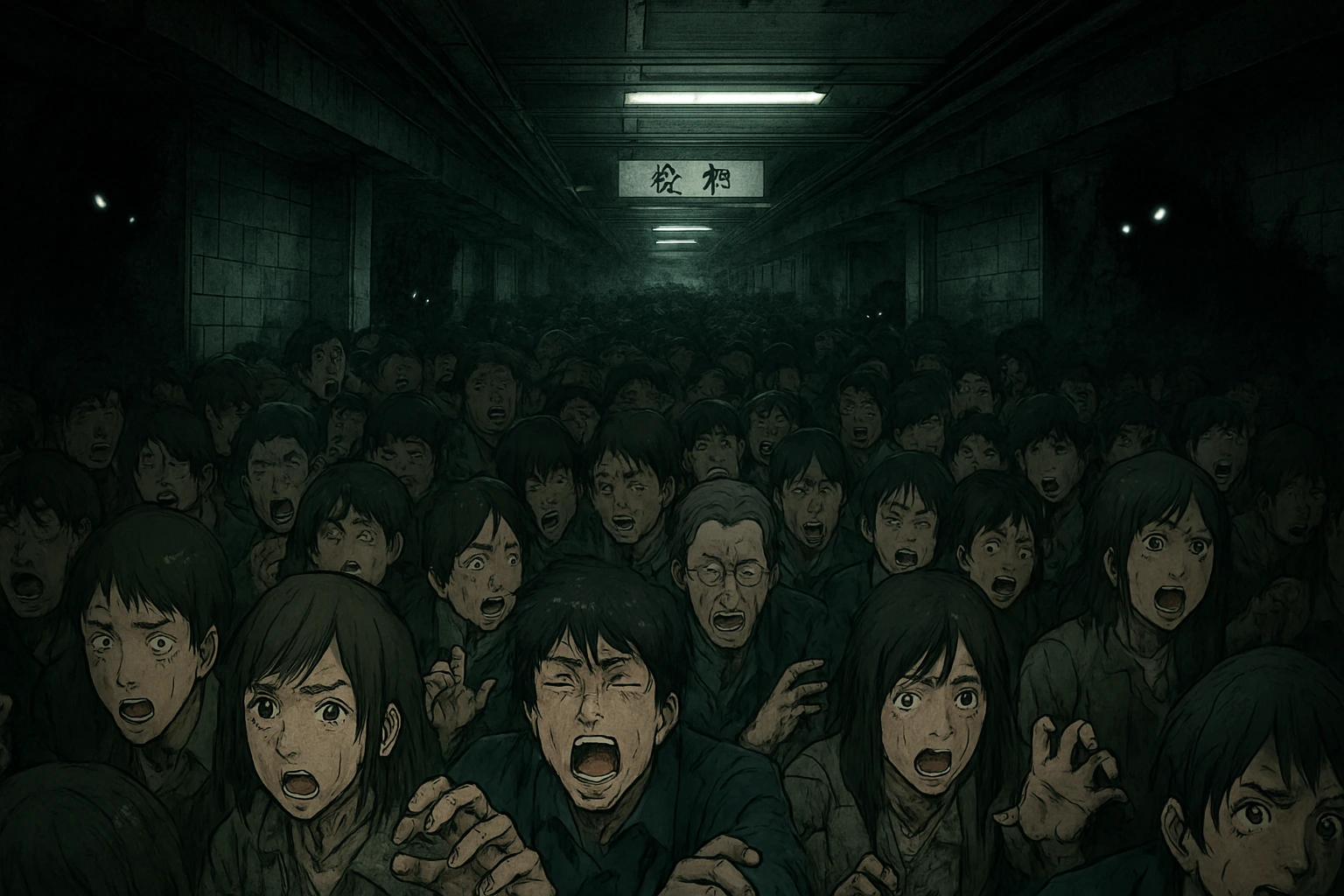
The Shibuya Incident began not with an explosion, but with a cage. At approximately 7:00 PM, a “Curtain” (Ebar) was lowered over the Shibuya district, trapping civilians inside while blocking communication signals. Crucially, this barrier had a unique condition: civilians could enter, but they could not leave. Sorcerers could enter and leave freely. This was the first layer of Kenjaku’s trap. The goal was never to overpower Satoru Gojo in a direct contest of strength—a feat Kenjaku knew was impossible. Instead, the objective was to corner Gojo into a situation where his infinite power was rendered unusable by the sheer volume of innocent lives surrounding him.
The enemy strategy relied on “Civilians as Shields.” By compressing the crowd into the underground stations, particularly the Fukutoshin Line platform, the disaster curses forced the Jujutsu sorcerers to fight with a massive handicap. Every wide-range attack, every Domain Expansion, and every unrestrained release of cursed energy carried the risk of mass collateral damage. Gojo, despite his aloof demeanor, values human life. Kenjaku banked everything on this shred of humanity.
The Tactical Deployment: Scattered Defenses
In response to the emergency, the Jujutsu High command deployed teams in a perimeter formation, intending to breach the curtains and rescue civilians while Gojo handled the core threat solo. This deployment, however, played directly into the Curse users’ hands. The separation of the sorcerers allowed the antagonists to isolate and pick them off one by one.
- Team Nanami (Kento Nanami, Megumi Fushiguro, Takuma Ino): Positioned to handle the perimeter and eventually forced to split up, leaving Ino vulnerable to the bizarre techniques of the curse users atop Shibuya Tower.
- Team Kusakabe (Atsuya Kusakabe, Panda): While Kusakabe intended to stall and survive, they were drawn into the chaos of the Shibuya meteor shower.
- Team Zenin (Naobito Zenin, Maki Zenin, Nobara Kugisaki): A mix of elite speed and raw potential that would tragically run into the disaster curses’ heavy hitters.
- Satoru Gojo: Sent in alone to the B5F subway platform. This was the standard operating procedure—Gojo works best alone because anyone near him hinders his ability to unleash “Unlimited Void.”
The Slaughter of the Managers: Disrupting Command and Control
A frequently overlooked aspect of Kenjaku’s strategy was the systematic elimination of the “Assistant Managers” (Ijichi, Nitta, and others). These individuals serve as the logistical backbone of Jujutsu High, managing “Curtains,” communications, and coordination. Before the main battles even peaked, Haruta Shigemo and other curse users hunted these managers down.
By blinding the sorcerers to the broader tactical picture, the enemy created isolated pockets of confusion. Sorcerers inside the curtain had no way of knowing Gojo had been sealed, delaying their response time critical to the mission. The attack on Kiyotaka Ijichi was particularly symbolic—striking at Gojo’s most trusted logistical link, further isolating the Strongest.
The Enemy Roster: A Perfect Counter
The disaster curses were positioned with specific roles. Jogo, Hanami, and Choso were tasked with the impossible: stalling Satoru Gojo for twenty minutes. Mahito was kept in reserve to handle the cleanup and to mentally break Yuji Itadori. The synergy of the disaster curses, combined with the specifically crafted “Domain Amplification” technique, allowed them to neutralize Gojo’s “Infinity” barrier just enough to land hits, though at a terrible cost.
III. Phase 1: The Sealing of the Strongest
The Battle of B5F: Dancing on a Needle
The confrontation on the B5F platform of the Fukutoshin Line is perhaps the greatest display of hand-to-hand combat in the series. Satoru Gojo, surrounded by thousands of panicked humans, faced off against Jogo, Hanami, and Choso. The curses amplified the chaos by throwing humans at Gojo, forcing him to disable his auto-defense mechanisms to catch them, or simply slaughtering civilians to distress him.
Despite these handicaps, Gojo proved why he is the pinnacle of sorcery. He dismantled the Special Grade curses with pure martial arts and precise cursed energy manipulation. Utilizing Domain Amplification, the curses could touch Gojo by neutralizing his Infinity, but this came at the cost of not being able to use their own innate techniques. Gojo, realizing this, simply overpowered them with reinforced physical blows.
The turning point came when he decided to remove the “weeds.” Targeting Hanami, the most durable of the group but also the one whose technique was most annoying in close quarters, Gojo ripped out the curse’s “branches.” He then pinned Hanami against the barrier wall. With the “Limitless” technique, he exerted crushing pressure, obliterating the Special Grade curse into a purple stain without using a single named technique. It was a demonstration of the sheer gap between “Special Grade” and “Gojo Satoru.”
The 0.2 Second Domain: A Miracle of Micromanagement

Pushed to the brink by the curses’ relentless slaughter of civilians and the arrival of a trainload of transfigured humans, Gojo made a gamble that defied the laws of jujutsu. He activated his Domain Expansion, Unlimited Void (Muryokusho), for exactly 0.2 seconds.
In a normal Domain Expansion, the sure-hit effect is lethal to non-sorcerers instantly. However, Gojo calculated that 0.2 seconds of “infinite information” would flood the civilians’ brains with roughly six months’ worth of data—enough to render them unconscious and standing upright, but not enough to cause permanent brain damage or death. In that frozen 0.2 seconds, with the curses also stunned by the information overload, Gojo moved at blinding speed. In 299 seconds, he annihilated approximately 1,000 transfigured humans. It was a miracle of precision, stamina, and benevolence—a feat no other sorcerer could replicate.
The Prison Realm: Checkmate
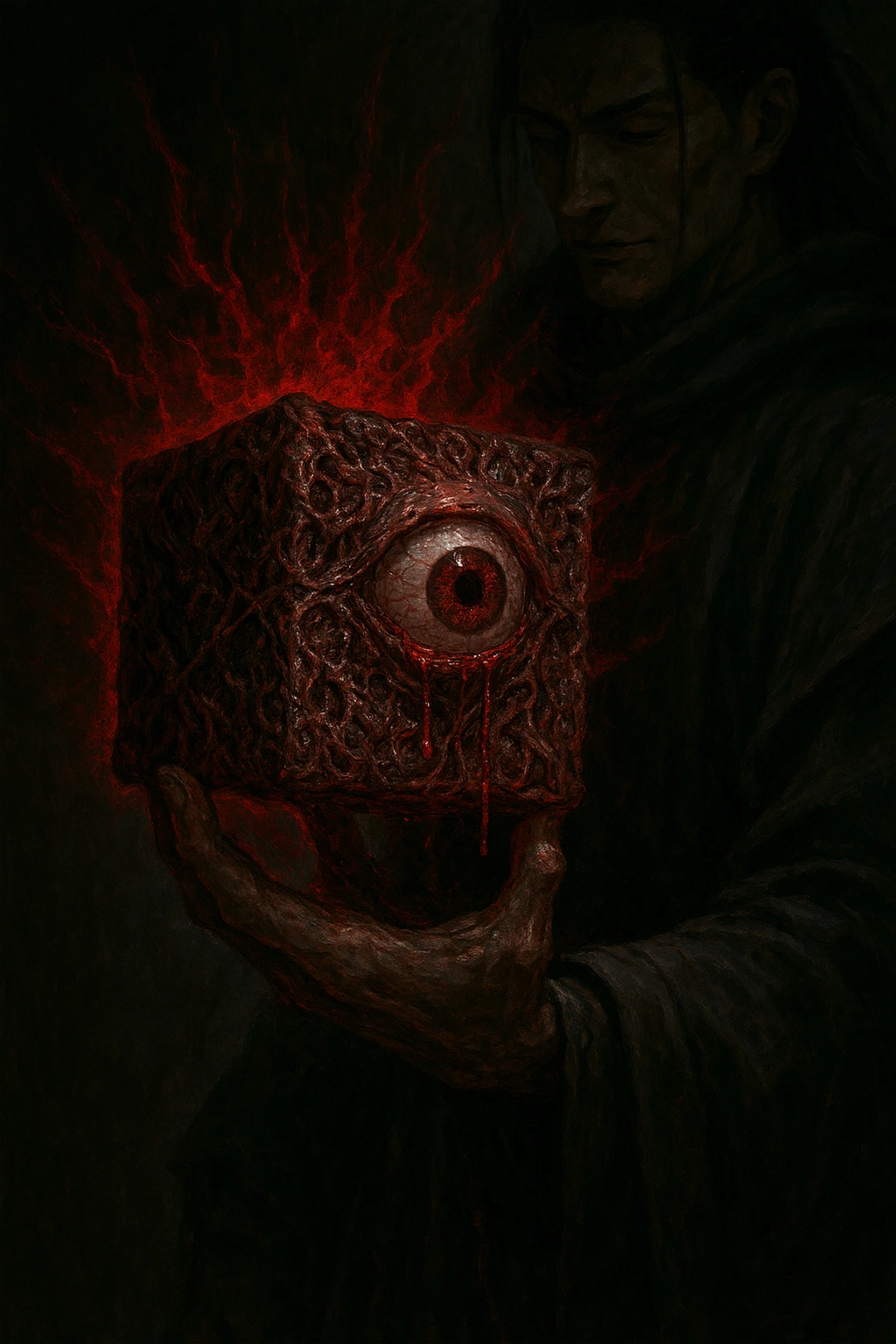
The moment Gojo released the Domain and stood amidst the unconscious crowd, exhausted and catching his breath, the trap sprung. The “Prison Realm” (Gokumonkyo), a living barrier formed from the remains of the monk Genshin, appeared.
For the seal to activate, two conditions had to be met:
- Radius: The target must be within a four-meter radius of the object.
- Time: The target must remain within that radius for one minute of mental
Physical restraint of Gojo for one minute is impossible. However, Kenjaku exploited the “mental time” loophole. He stepped out from the shadows and greeted Gojo: “Yo, Satoru.”
The sight of his best friend, Suguru Geto—a man Gojo had killed with his own hands the previous year—triggered an avalanche of memories in Gojo’s mind. Three years of their “blue spring” flashed before his eyes. In the subjective reality of Gojo’s mind, far more than a minute passed in an instant. The condition was fulfilled. The Prison Realm clamped onto the strongest sorcerer, removing the god of the Jujutsu world from the board. Gojo’s final act before being fully sealed was to ask Geto, “Who are you?” refusing to accept the imposter, confirming his “Six Eyes” saw the truth despite the visual deception.
IV. Phase 2: The Chaos & The Resurrection
Mechamaru’s Contingency
With Gojo sealed, the balance of power shifted instantly. However, Kokichi Muta (Mechamaru) had prepared a fail-safe. Upon Gojo’s sealing, a tiny “Mini-Mechamaru” device activated on Yuji Itadori’s ear. This device provided critical intel to the scattered students: Gojo has been sealed. The mission objective shifted from “Rescue Civilians” to “Rescue Satoru Gojo.” This shift marked the transition from a controlled operation to a desperate scramble.
Yuji vs. The Locust Plague: The Prelude to Despair
Before the heavy hitters collided, Yuji Itadori faced the “Locust Curse” (Ko-Guy) protecting one of the barriers. While often overshadowed by later fights, this encounter was crucial in demonstrating Yuji’s growth. He wasn’t just a brawler anymore; he was a tactician. He dismantled the curse—which was smart enough to talk and strategize—with cold efficiency.
This fight served as a stark contrast to what was coming. Yuji was confident, capable, and winning. It was the last moment of “heroic shonen action” before the horror genre took over completely. It established that Yuji was ready for Grade 1 threats, making his eventual psychological dismantling by Mahito and Sukuna all the more tragic.
Toji Fushiguro Returns: The Glitch in the System
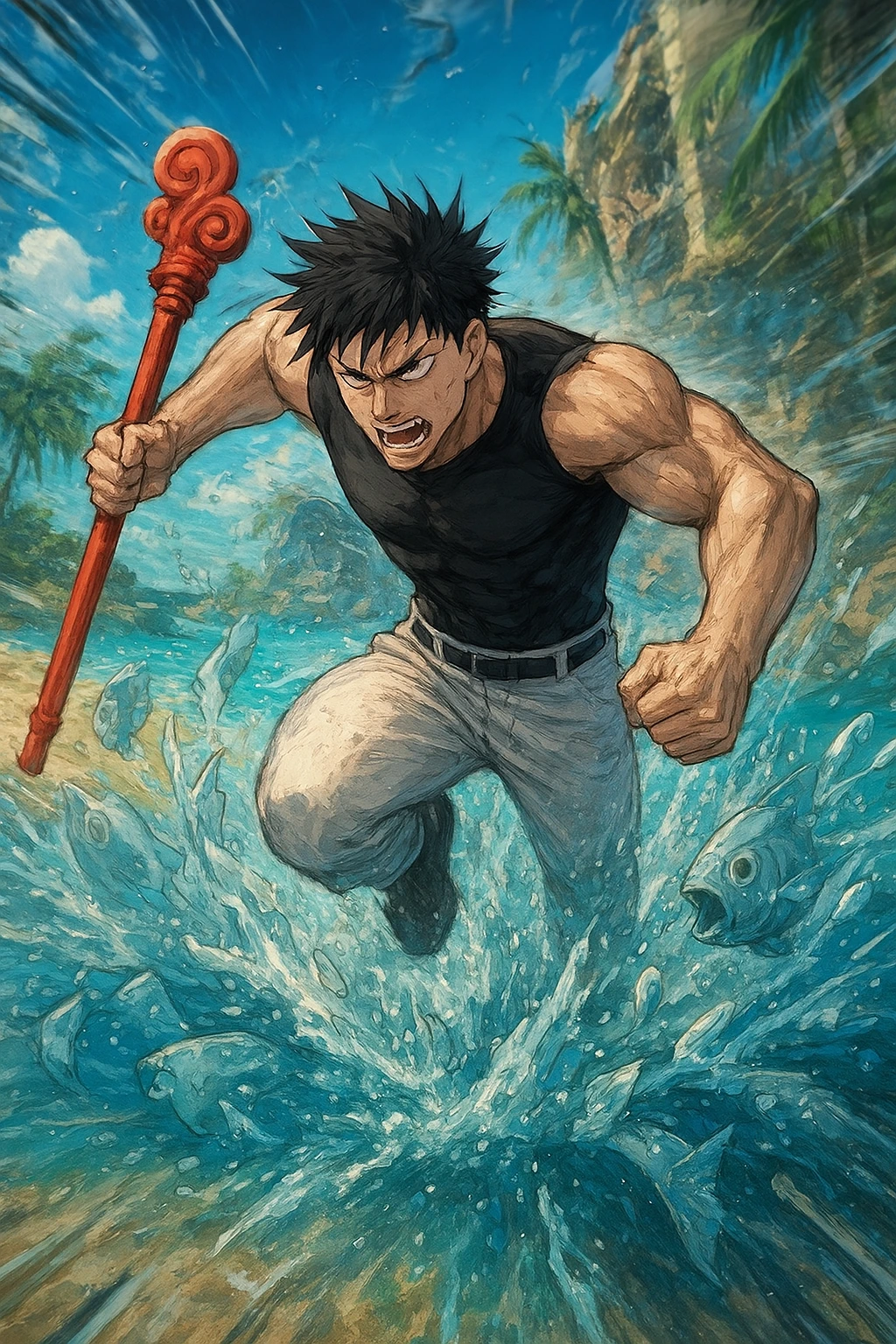
In the chaos above ground, a bizarre ritual was taking place. A curse user named Ogami used a seance technique to summon the body information of Toji Zenin (Fushiguro) into her grandson. The plan was to use Toji’s physical prowess while keeping the grandson’s soul in control.
They failed to account for Toji’s Heavenly Restriction. Because Toji possesses zero cursed energy, his body is so physically dominant that it overwrote the soul of the summoner. Toji resurrected fully, a puppet of carnage with no master. He instinctively sought out the strongest opponent nearby, drawn like a shark to blood.
The Domain of Dagon & Projection Sorcery
The battle inside Dagon’s Domain, Horizon of the Captivating Skandha, showcased the terrifying potential of the Disaster Curses when they stop holding back. Nanami, Maki, and Naobito Zenin were trapped. Here, Naobito Zenin displayed the pinnacle of “Projection Sorcery,” becoming the fastest sorcerer alive (excluding Gojo). He moved in pre-determined 24-frames-per-second movements, freezing Dagon in frames of animation.
However, once Dagon activated his Domain, the sure-hit effect of Death Swarm—an infinite tide of man-eating fish—overwhelmed Naobito’s speed. Nanami lost an eye. Maki was nearly overwhelmed. Just as Megumi Fushiguro opened a hole in the domain’s barrier to allow their escape, Toji Fushiguro forced his way in.
Toji seized Playful Cloud from Maki. What followed was not a fight; it was an execution. Toji sharpened the blunt staff by grinding it together at high speeds and obliterated Dagon, a Special Grade curse, using nothing but raw strength. He didn’t use cursed energy; he used pure physics to dismantle magic.
Sukuna’s Awakening: The King Returns
While the battles raged, Yuji Itadori was defeated by Choso and left unconscious. Taking advantage of the situation, Mimiko and Nanako (Geto’s adopted daughters) fed Yuji a finger, hoping to bargain with Sukuna. Jogo arrived shortly after, incinerated the girls, and force-fed Yuji ten more fingers at once.
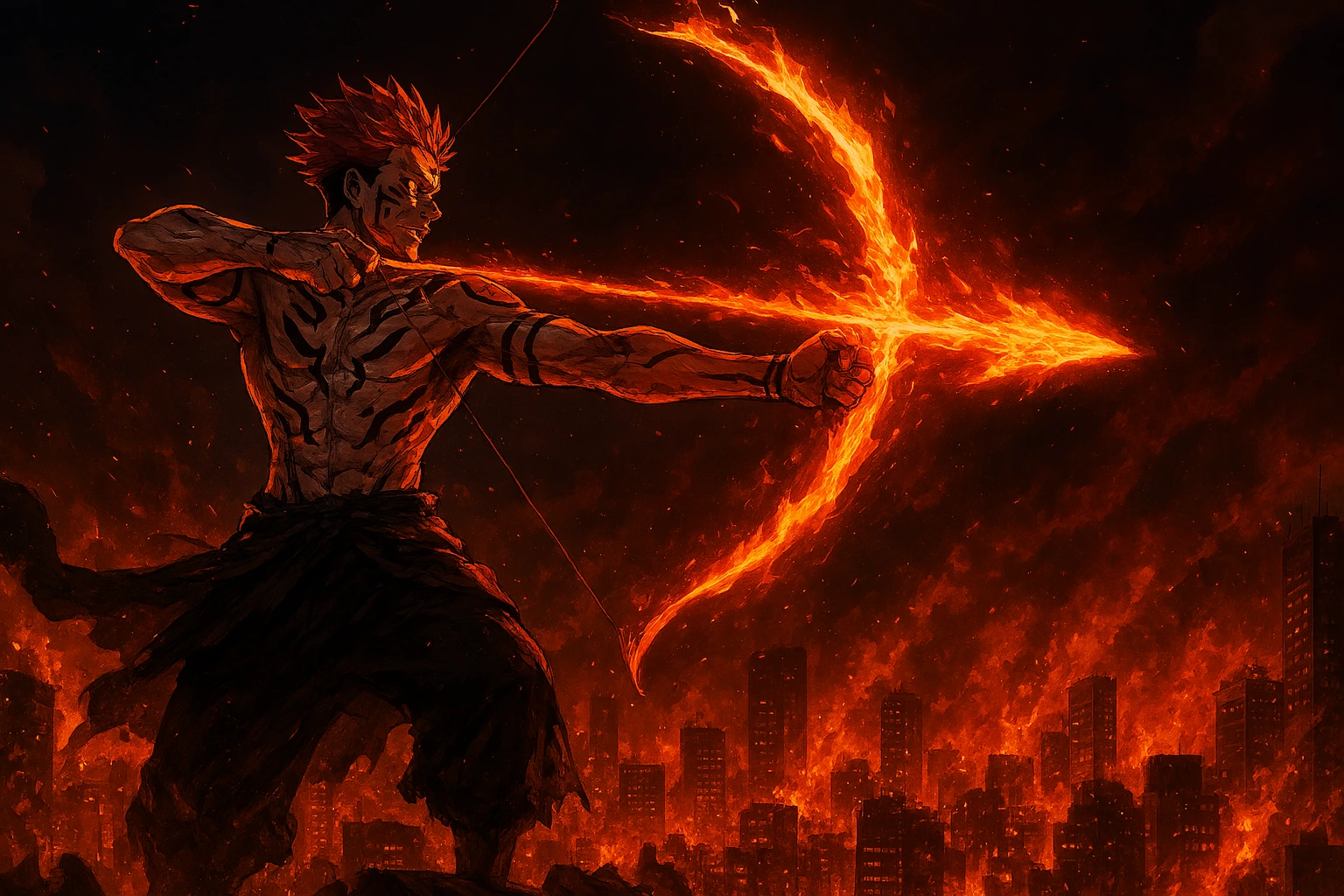
With 15 fingers total (75% of his power), Ryomen Sukuna took control. The King of Curses did not care for Jogo’s plans. His first act was to kill the twins for their insolence. He then offered Jogo a game: if the volcano curse could land a single hit on him, Sukuna would join their cause.
The ensuring battle destroyed large swathes of Shibuya. Jogo, who could incinerate high-grade sorcerers instantly, was treated like a child. Sukuna’s mastery of cursed energy was absolute. In the end, Sukuna decided to beat Jogo at his own game—fire. Utilizing an unknown technique, “Open” (Fuga), Sukuna summoned a fire arrow that overpowered Jogo’s maximum meteor technique, incinerating the curse completely. As Jogo died, Sukuna offered him a rare acknowledgement of strength: “Stand proud. You are strong.”
V. Phase 3: The Massacre
The Divine General Mahoraga
Megumi Fushiguro, battered and exhausted after a confrontation with Toji (who committed suicide to avoid killing his son), was ambushed by the cowardly curse user Haruta Shigemo. Bleeding out and with no cursed energy left, Megumi initiated a suicide ritual. He summoned the uncontrolled, strongest shikigami of the Ten Shadows Technique: Eight-Handled Sword Divergent Sila Divine General Mahoraga.
This was the “nuclear option” of the Zenin clan. The ritual forces anyone caught in it to fight the Shikigami until death. Megumi dragged Haruta into the ritual, ensuring the villain would die with him. Sensing his vessel’s potential interest (Megumi) in danger, Sukuna arrived to intervene.
Sukuna vs. Mahoraga: The Unstoppable vs. The Adapter
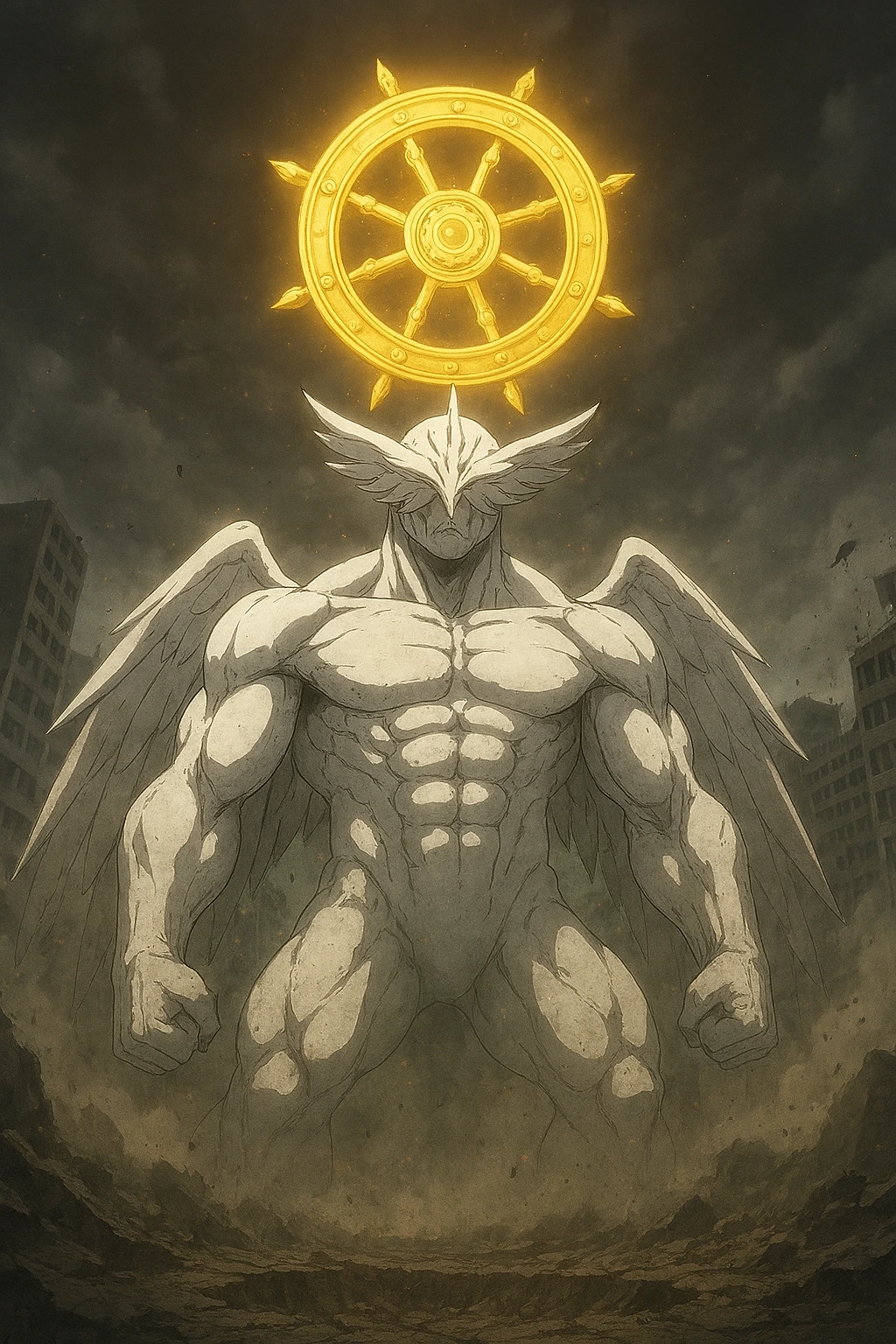
The fight between the King of Curses and the Divine General is a pinnacle of magical theory. Mahoraga’s ability is “Adaptation.” If it is hit by an attack, the wheel on its head turns, and it adapts to that phenomenon, becoming immune or highly resistant to it.
Sukuna quickly realized that his standard slashing attacks (Dismantle) were losing effectiveness. Mahoraga was adapting to slashing attacks in general. To kill it, Sukuna needed to destroy it in a single blow with a different type of energy before it could adapt. This required a technique with massive output and a completely different nature than cutting.
Malevolent Shrine: The 140-Meter Radius of Death
To end the fight, Sukuna expanded his Domain: Malevolent Shrine (Fukuma Mizushi). Unlike other domains, Sukuna’s barrier is “open”—he paints his domain onto reality without a closed barrier, a feat described as “an artist painting on air.” By allowing an escape route (a binding vow), the range of the domain is expanded to a massive 200 meters. Sukuna narrowed it to 140 meters to ensure he didn’t hit Megumi, but everything else was fair game.
The Domain possesses two slashing types:
- Dismantle: A default slash for inanimate objects.
- Cleave: A slash that adjusts its strength to the target’s cursed energy level to cut them down in one fell swoop, used for living things.
For the duration of the domain, Shibuya was put through a blender. Buildings, streets, subways, and thousands of civilians were reduced to dust. The “slashing hell” relentlessly attacked Mahoraga until its regeneration failed. Finally, Sukuna finished the beast with the Fire Arrow, obliterating it before it could adapt to the flames.
The aftermath was silence. When Yuji Itadori regained control, he woke up in a crater. The city was gone. Thousands were dead by his hands (via Sukuna). The psychological break was instantaneous. Yuji clawed at the ground, vomiting and screaming, realizing that his existence was not a blessing, but a curse of mass destruction.
VI. Phase 4: The Tragedies (Nanami & Nobara)
Nanami’s Last Stand
If Gojo was the god of Jujutsu society, Kento Nanami was its working-class conscience. Half-burned by Jogo, bleeding, and exhausted, Nanami wandered the subway station, deliriously fighting off transfigured humans. He dreamt of Malaysia, of a house on a beach, of retirement. The tragedy of Nanami is that he returned to sorcery to help people, only to die in a hellscape unable to save himself.
He encountered Mahito. There was no fight—Nanami was too damaged. As Yuji arrived at the scene, Nanami looked at his student. He knew that if he cursed Yuji with words of revenge or despair, it would weigh the boy down forever. Instead, he offered a final guidance: “You’ve got it from here.” Mahito then transfigured Nanami’s upper body, exploding him into gore before Yuji’s eyes. This death signaled the end of the “mentor” figure. Yuji was now alone.
Nobara vs. Mahito: The Shattering of the Trio
Just as Yuji began to lose his mind, Nobara Kugisaki entered the fray against a clone of Mahito. Nobara proved to be a natural counter to Mahito; her Resonance technique struck the clone’s soul, damaging the main body fighting Yuji. This was a critical tactical moment—Nobara was the only one capable of hurting Mahito from a distance.
However, Mahito is a creature of cunning. He swapped places with his clone, catching Nobara off guard. He touched her face. Idle Transfiguration is usually a one-touch kill.
Nobara’s flashback was not tragic, but bittersweet. She reflected on her life, her desire to meet her friend Saori again, and her time at Jujutsu High. As she looked at Yuji, half her face began to swell and burst. Her final words, “Life wasn’t so bad,” were followed by a request to tell the others she handled it well. Her eye exploded, and she collapsed. Whether dead or in a state of suspended death, the impact was achieved: Yuji Itadori’s soul was shattered completely. He stopped fighting, allowing Mahito to beat him mercilessly.
VII. The Climax: The Wolf and The Rabbit
Yuji & Todo vs. Mahito
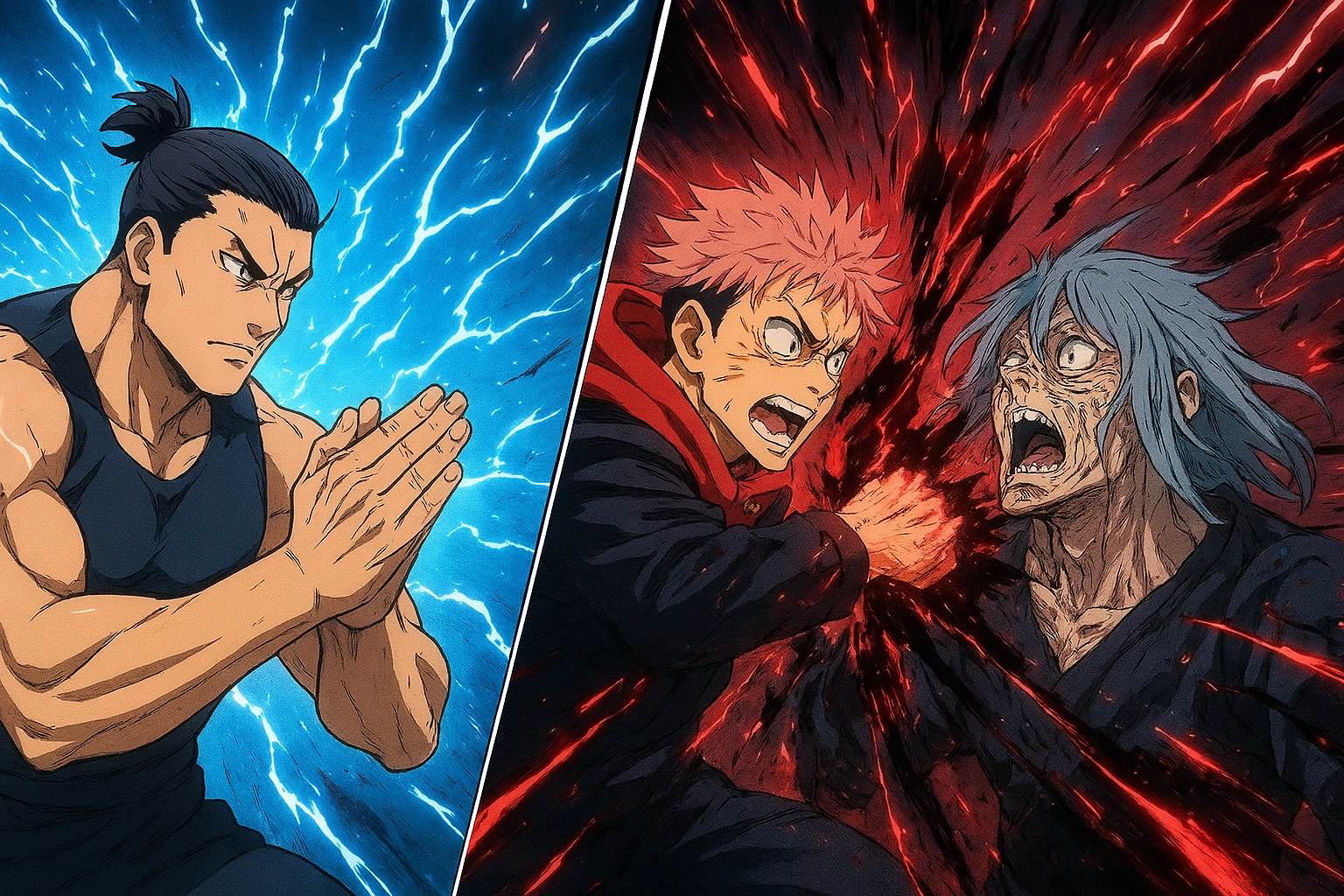
Just as Mahito prepared to kill Yuji, Aoi Todo arrived with the line: “We are the exception!” Todo’s arrival gave Yuji the mental space to breathe. Todo used his “Boogie Woogie” technique to disorient Mahito, reinvigorating Yuji.
The final battle was a clash of ideals. Mahito achieved his true form, “Instant Spirit Body of Distorted Killing,” becoming a hardened killing machine. The fight culminated in a tactical masterpiece involving Todo bluffing a teleport after losing his hand, allowing Yuji to land a Black Flash.
The synchronization between Yuji and Todo during this fight highlights the peak of Jujutsu combat. It wasn’t just about power; it was about trust. Todo sacrificed his technique—clapping his hand against Mahito’s to trigger a swap despite the transfiguration risk—to create the opening Yuji needed.
“I am You”
The conclusion of the fight wasn’t just physical; it was philosophical. Mahito had always taunted Yuji, claiming they were the same. Yuji initially rejected this, clinging to his grandfather’s wish to save people. But standing over a crawling, terrified Mahito, Yuji finally accepted the grim reality.
“I am you. I wanted to reject you… but that doesn’t matter now. I’ll kill you. If you’re reborn as a new curse, I’ll kill you. Change your name. Change your form. I’ll kill you again.”
Yuji accepted his role not as a hero, but as a cog in the machine of exorcism. He accepted the horror of his duty. This monologue marks the death of “Yuji the boy” and the birth of “Yuji the Sorcerer.”
Kenjaku’s Extraction
Before Yuji could deliver the killing blow, Kenjaku arrived. He absorbed the weakened Mahito using Geto’s Cursed Spirit Manipulation. He then used Uzumaki (Maximum Technique) to extract Mahito’s technique, “Idle Transfiguration.” This was Kenjaku’s goal all along. He used the technique remotely to awaken thousands of potential sorcerers across Japan, initiating the Culling Game.
VIII. Conclusion: The Fallout
The Shibuya Incident didn’t just end a story arc; it ended a world. The immediate aftermath was the total collapse of Japan’s political and supernatural stability.
- The Power Vacuum: With Satoru Gojo sealed in the Prison Realm, the deterrence against curse users and curses vanished. The curses that had been hiding in the shadows began to overrun Tokyo. The balance of the world, previously held up by one man, collapsed instantly.
- Political Collapse: The government crumbled. Tokyo became an exclusion zone. The economy tanked, and foreign nations began to eye Japan’s cursed energy crisis with suspicion and greed. The sheer number of missing persons (civilians in Shibuya) created a national panic that could not be covered up.
- The Zenin Clan Decay: With Naobito dead and Megumi appointed head (with Toji’s interference), the internal politics of the Big Three families spiraled into chaos, setting the stage for the Zenin massacre.
- The Execution Orders: The Jujutsu higher-ups, seizing the opportunity to regain control from Gojo’s faction, issued draconian decrees:
- Suguru Geto is confirmed alive (mistakenly identifying Kenjaku) and sentenced to death.
- Satoru Gojo is deemed an accomplice in the Shibuya Incident and exiled; unsealing him is a criminal act.
- Masamichi Yaga is sentenced to death for inciting Gojo and Geto.
- Yuji Itadori’s suspended execution is revoked, and Yuta Okkotsu is appointed as his executioner.
The Golden Age of Sorcery had turned into a Dark Age. The students were no longer students; they were fugitives, killers, and survivors in a war for the future of humanity. Shibuya was the crucible that burned away their innocence, leaving behind only the scars of survival.
IX. Frequently Asked Questions (FAQs)
Q: Why couldn’t Gojo break out of the Prison Realm immediately? A: The Prison Realm is a “Living Barrier.” Once inside, time does not pass physically, and the internal dimension is inescapable from the inside. The seal effectively cuts the connection between the space inside and the reality outside. Furthermore, the sheer weight of the “mass” inside the realm (the skeleton of the monk Genshin) pins the target down. Gojo was physically strong enough to shake the box from the inside, but he could not breach the dimensional barrier.
Q: How did Toji Fushiguro come back to life in Shibuya? A: It was a glitch caused by his Heavenly Restriction. The Grandma’s technique, “Seance,” usually summons only the body’s information to avoid the soul overpowering the host. However, Toji’s body is special; his lack of cursed energy made his body so powerful that the “body” information essentially contained his “soul” information. His physical prowess overwrote the summoner’s grandson’s soul, reincarnating him fully until the vessel broke (or he killed himself).
Q: Did Nobara Kugisaki actually die in Shibuya? A: Her status remained ambiguous for a long time. While she had no pulse and wasn’t breathing immediately after the hit, Arata Nitta used his technique to freeze her injuries and prevent them from worsening immediately. He told Yuji there was a “non-zero chance” of survival. This ambiguity was intentional to fuel Yuji’s despair while leaving a narrative door open.
Q: What was the radius of Sukuna’s Domain in Shibuya? A: The maximum radius of Malevolent Shrine is 200 meters. However, in Shibuya, Sukuna voluntarily restricted the radius to 140 meters. He did this specifically to ensure that Megumi Fushiguro, who was lying unconscious just outside that range, would not be caught in the domain’s effect.
Q: Why did Sukuna save Megumi from Mahoraga? A: Sukuna does not care about Megumi as a person, but he is deeply interested in Megumi’s “Ten Shadows Technique.” Sukuna realized that the technique has the potential to create a vessel or a body that suits his needs better than Yuji’s cage-like body. Saving Megumi was purely a self-serving act to preserve a future asset for his resurrection plans.