
I. Introduction: The Reluctant Genius
“I’m not a hero. I’m a Jujutsu Sorcerer. I save people unequally.”
This declaration, uttered early in Jujutsu Kaisen, is not merely a catchphrase; it is the fundamental axiom of Megumi Fushiguro’s existence. In a genre saturated with protagonists who scream about saving everyone or becoming the king of their world, Megumi stands apart as a character defined by pragmatism, skepticism, and a hauntingly specific moral code. He does not seek to save the world. He seeks to tidy up the mess within his immediate reach, choosing who lives and who dies based on a subjective, admittedly selfish, evaluation of their worth.
Megumi is the tragic prodigy of the modern Jujutsu world. Born with the hereditary technique of the Zenin Clan—the Ten Shadows—he possesses the raw potential to rival, and perhaps one day surpass, the strongest sorcerer alive, Satoru Gojo. Yet, for the majority of the series, this potential acts less like a gift and more like a shackle. While Yuji Itadori runs headfirst into danger with the naivety of a true hero, Megumi approaches combat with the mindset of a martyr. He is a genius who, for a long time, could not envision a victory that didn’t involve his own corpse as a stepping stone.
This analysis dissects the enigma of Megumi Fushiguro. We will move beyond a simple retelling of his battles and delve into the mechanics of his soul. We will decode the intricate lore of the Ten Shadows Technique, analyze the psychological barrier that kept his Domain Expansion incomplete, explore the ghost of his father, Toji, that haunts his narrative, and finally, examine his catastrophic fate as the vessel for Ryomen Sukuna. This is the story of a boy who was given the world’s greatest power but was too burdened by his own humanity to wield it without breaking.
II. The Psychology of the “Suicide Play”
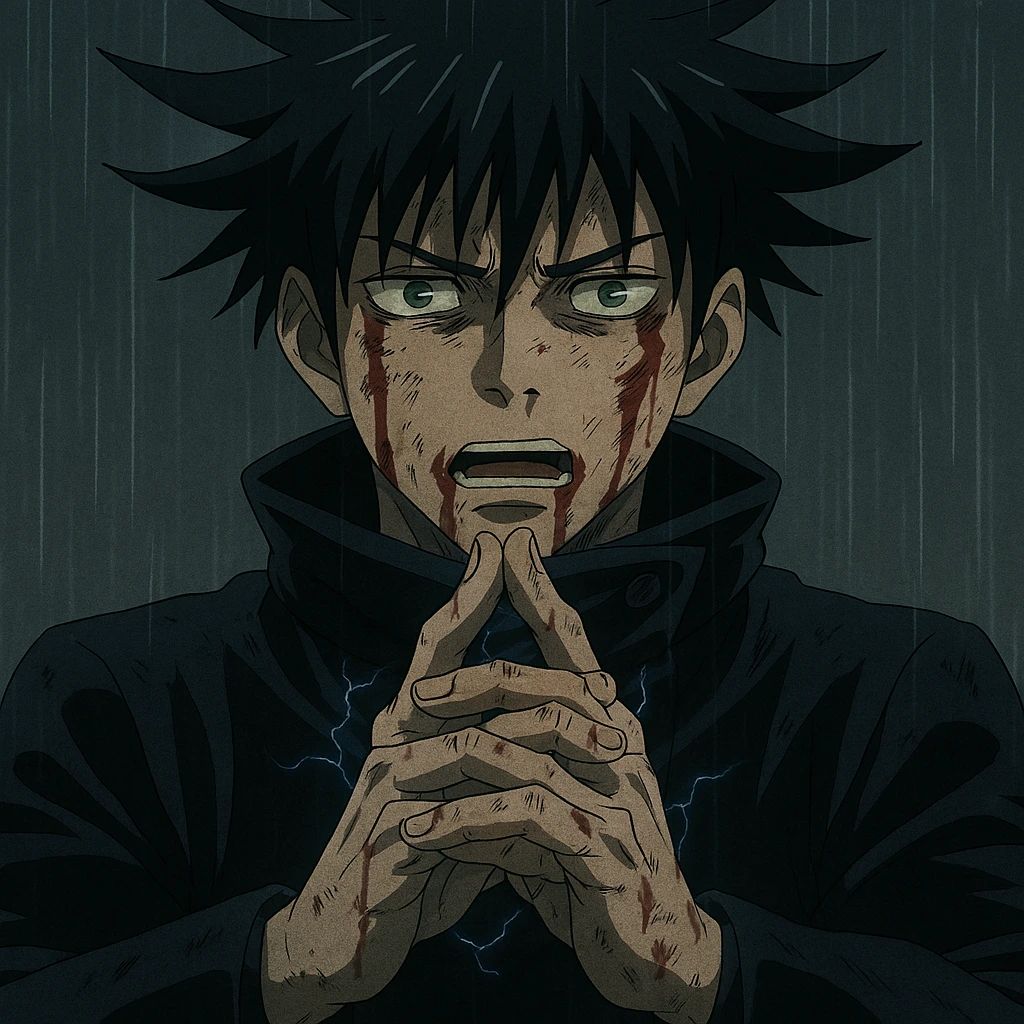
For a sorcerer of his caliber, Megumi Fushiguro spent a significant portion of his early career losing. Not because he lacked power, but because his mindset was fundamentally flawed. He suffered from a “sacrificial pawn” complex, a psychological crutch that stunted his growth and infuriated his mentor, Satoru Gojo.
The Crutch of the Treasure
The most glaring symptom of this complex was his reliance on the incantation: “With this treasure, I summon…”
Whenever a battle turned seemingly unwinnable—against the Finger Bearer, against Sukuna at the Detention Center, against Todo during the Exchange Event—Megumi’s hand would instinctively drift into the specific mudra required to summon the Eight-Handled Sword Divergent Sila Divine General Mahoraga. This was not a tactical decision; it was a panic button. Megumi viewed his life not as a resource to be preserved for the sake of victory, but as a final currency to be spent to ensure a mutual kill.
This mentality is rooted in low self-worth. Despite his arrogance in “saving people unequally,” Megumi did not believe he was strong enough to win difficult fights on his own merits. He believed his only value against superior opponents lay in his ability to unleash a suicide bomb that would obliterate both him and his enemy. It was a mental retreat, a refusal to engage with the difficulty of the fight because he had already accepted death as the ultimate solution.
The “Cog” Mentality vs. Self-Actualization
This suicidal tendency is intrinsically linked to what can be described as the “Cog” mentality—a philosophy he ironically shares with Yuji Itadori later in the series. Megumi sees himself as a mechanism for the greater good of his immediate circle (Tsumiki), rather than a protagonist of his own life. He is willing to discard his future to ensure the mechanism keeps turning.
However, Jujutsu sorcery is inherently an individualistic pursuit. As Gojo notes, “Sorcery is a solo sport.” The strength of a sorcerer is directly correlated to their ego and their ability to impose their will upon the world. By treating himself as a disposable cog, Megumi inadvertently capped his own cursed energy output. He was suppressing the very “greed” required to ascend to Special Grade status.
Gojo’s Lesson: The Baseball Metaphor
Satoru Gojo, with his Six Eyes, saw this flaw immediately. During a flashback training sequence, Gojo confronts Megumi with a brutal truth: “Dying to win and risking death to win are completely different.”
Gojo uses a baseball metaphor to illustrate the gap between Megumi and Yuji. While Yuji would swing for a home run even at the risk of striking out, Megumi would instinctively bunt to advance the runner, sacrificing his own turn at bat for a safe, incremental play. Gojo realized that Megumi didn’t possess the hunger to be the “best.” He was content being a cog in the machine. But in the world of Jujutsu, where imagination dictates reality, a sorcerer who cannot imagine a version of themselves that surpasses their limits will never grow.
Gojo’s instruction was simple yet revolutionary: Be greedier. To manifest a Domain Expansion, the pinnacle of sorcery, one requires an overwhelming sense of self. Megumi had to learn to stop caring about the team play and start playing for his own survival.
The Shift: Origin of Obedience
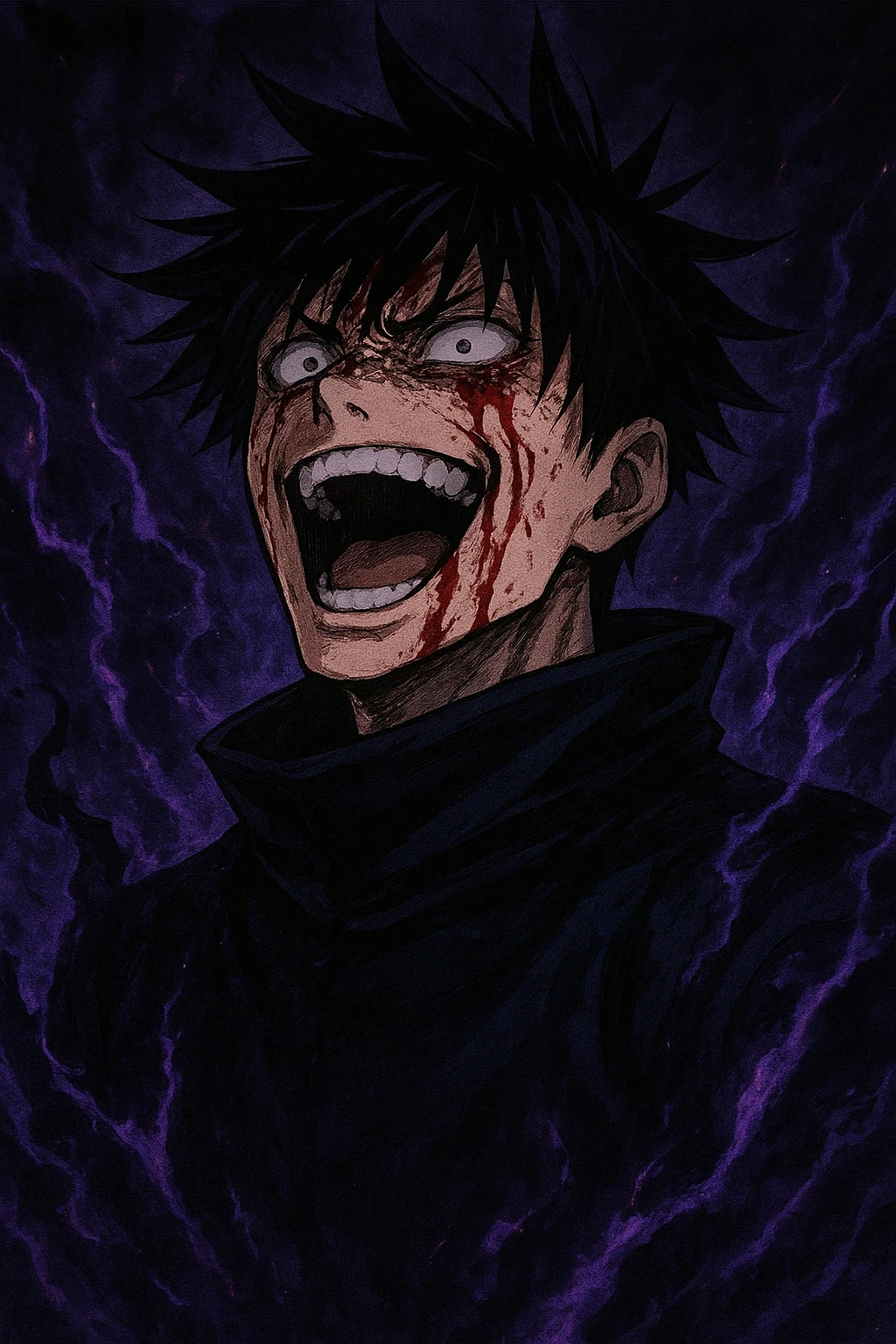
The turning point arrives during the Death Painting Arc, specifically the second fight against a Finger Bearer under Yasohachi Bridge. Pushed to the brink, concussed, and bleeding, Megumi begins his usual ritual to summon Mahoraga. He is ready to die.
But then, he remembers Gojo’s words. For the first time, he rejects the easy exit. He unclasps his hands, abandons the suicide tactic, and decides to “swing for the fences.” The result is the imperfect, chaotic, and utterly magnificent manifestation of Chimera Shadow Garden. In that moment, he stops trying to be a “proper” sorcerer and embraces the raw, messy insanity required to win. He laughs maniacally, not out of joy, but out of the sheer liberation of finally letting go of his inhibitions.
Stoicism and the Sister’s Curse
Underneath the combat pragmatism lies the core of Megumi’s trauma: Tsumiki Fushiguro. His step-sister represents the “good people” he claims he wants to save. Tsumiki is kind, altruistic, and painfully normal—everything the Jujutsu world is not. Her falling into a coma due to a mysterious curse forced Megumi to grow up too fast.
His stoicism is a dam holding back a reservoir of grief. He cannot afford to break down because he is the only one standing between Tsumiki and oblivion. This burden makes him rigid. He suppresses his emotions to function, but that suppression also stifles his cursed energy, which responds to negative emotion. It is only when he fights for himself, disregarding the moral weight of his sister’s expectations, that he truly shines.
III. The Ten Shadows: A Technical Deep Dive
The Ten Shadows Technique (Tokusa no Kage Bōjutsu) is one of the most prized inherited techniques in the Jujutsu world, historically capable of killing a Six Eyes + Limitless user. It is far more than just “summoning animals.” It is a complex system of spatial manipulation, mass storage, and tactical adaptability that rivals Suguru Geto’s Cursed Spirit Manipulation in versatility, if not raw numbers.
The Medium: Liquid Shadows vs. Summoning
While the Shikigami get the glory, the true genius of the Ten Shadows lies in the manipulation of the shadow medium itself. For a Ten Shadows user, shadows are not 2D projections of light blockage; they are 3D portals to a pocket dimension.
Megumi utilizes this Spatial Guerrilla Warfare in ways most sorcerers cannot predict:
- Storage: Megumi can store weapons, tools, and even himself within his shadow. This effectively gives him an infinite inventory system, allowing him to carry Cursed Tools like Playful Cloud or the Black Sword without encumbrance.
- Submersion: He can sink into the floor to avoid attacks, effectively “phasing” out of reality for a split second.
- Trajectory Manipulation: He can attack from the enemy’s own shadow, striking from blind spots that shouldn’t physically exist.
- Fluidity: The shadow is viscous and liquid. He can manipulate its shape to trip enemies or create decoys. However, the user must bear the weight of whatever is stored in the shadow, preventing Megumi from carrying infinite heavy weaponry without fatigue.
The Logic of Shikigami
The technique provides ten pre-set Shikigami. They are obtained through a ritual where the user must defeat the Shikigami to “tame” it. Once tamed, they can be summoned at will using hand signs (shadow puppets).
The most critical rule of the Ten Shadows is the Law of Totality. If a Shikigami is destroyed, it cannot be summoned again. However, its power and cursed energy are not lost; they are inherited by the remaining Shikigami. This makes the Ten Shadows a technique that gets stronger as the user suffers losses, theoretically culminating in a single, all-powerful entity if all but one were destroyed. This implies that the Ten Shadows is not just a collection of monsters, but a single, evolving ecosystem of cursed energy.
The Shikigami Arsenal
- Divine Dogs (Gyokuken): The starting pair.
- White: Good for scouting and sensing curses.
- Black: Offensive capability.
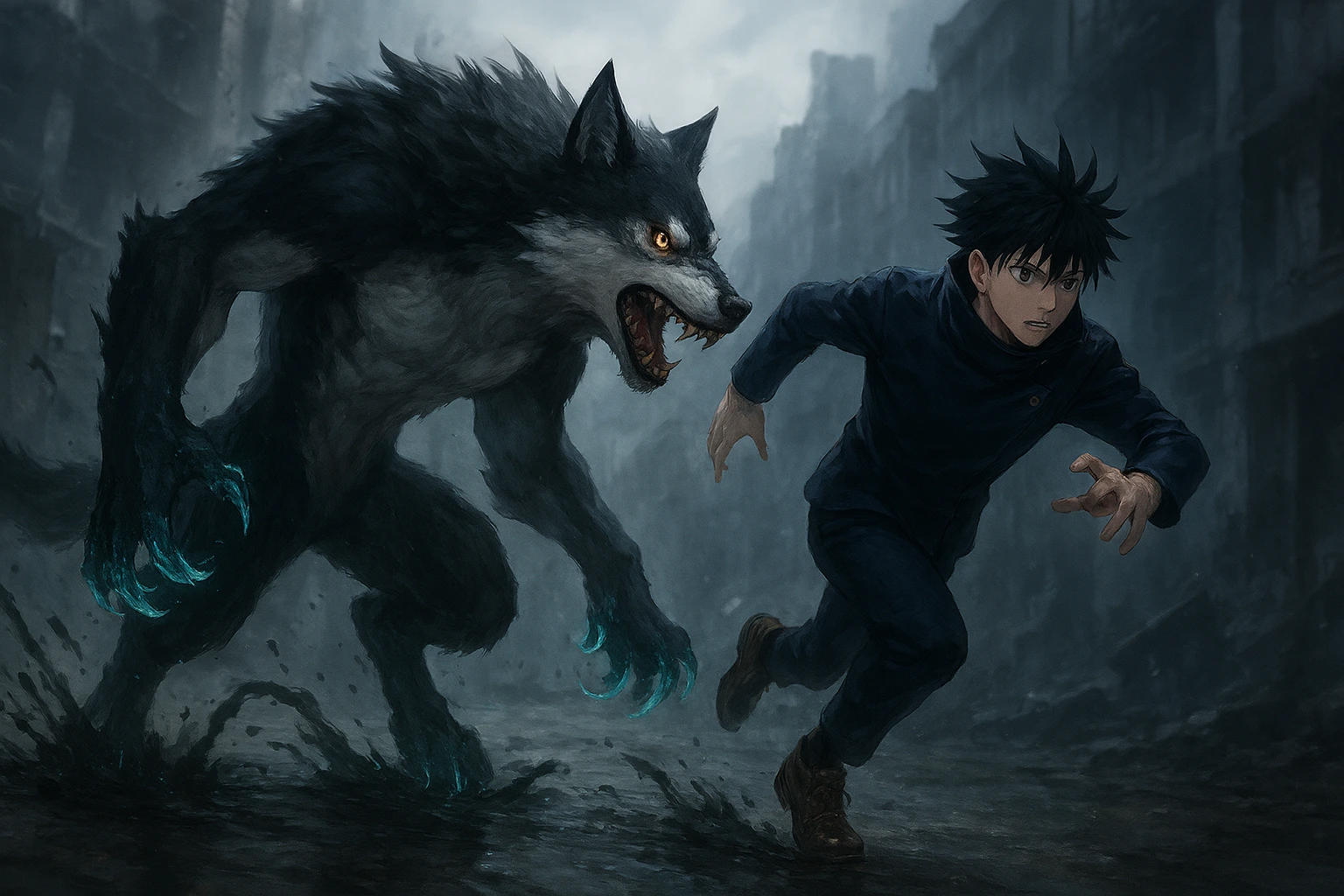
- Totality (Kon): After the White Dog was destroyed by the Finger Bearer, its power fused with the Black Dog to create a bipedal, werewolf-like beast capable of damaging special grade curses. It is Megumi’s primary finisher.
- Nue: An owl-like creature capable of flight and electricity attacks. Nue is Megumi’s most versatile support unit, used for mobility, stunning opponents (locking their muscles with electricity), and defensive shielding with its wings.
- Toad (Gama): Used for crowd control. Its tongue is prehensile and strong, ideal for rescuing allies or immobilizing enemies.
- Great Serpent (Orochi): A giant snake used for surprise attacks. It was destroyed by Sukuna early in the series, but its “inheritance” has yet to be clearly defined in a specific fusion, implying its power might be distributed or waiting for a compatible vessel.
- Max Elephant (Bansho): A massive elephant capable of spewing high-pressure water. Its primary utility, however, is Weight. Megumi can drop it directly on opponents from the shadow above, crushing them with tons of force. It consumes a massive amount of cursed energy to maintain, forcing Megumi to use it sparingly.
- Rabbit Escape (Datto): A swarm of hundreds of rabbits. Individually weak, their purpose is distraction and confusion. They overwhelm the enemy’s field of vision, allowing Megumi to escape or set up a stealth attack. The rabbits are unique in that destroying them doesn’t permanently kill the Shikigami, as the “swarm” is the entity, not the individual rabbit.
- Round Deer (Madoka): (Utilized by Sukuna) capable of using Reverse Cursed Technique (RCT) to heal the user and neutralize enemy cursed energy.
- Piercing Ox (Kangyu): (Utilized by Sukuna) A bull that moves in a straight line; the further it charges, the more powerful its impact becomes.
The Well’s Unknown Abyss
This is a “hybrid” summon, combining Toad and Nue. Because it is a temporary fusion rather than a base Shikigami, it can be destroyed without the permanent loss of either base Shikigami. This showcases Megumi’s tactical ingenuity, finding loopholes in the rigid rules of his technique to create disposable assets.
The Ultimate Trump Card: Mahoraga
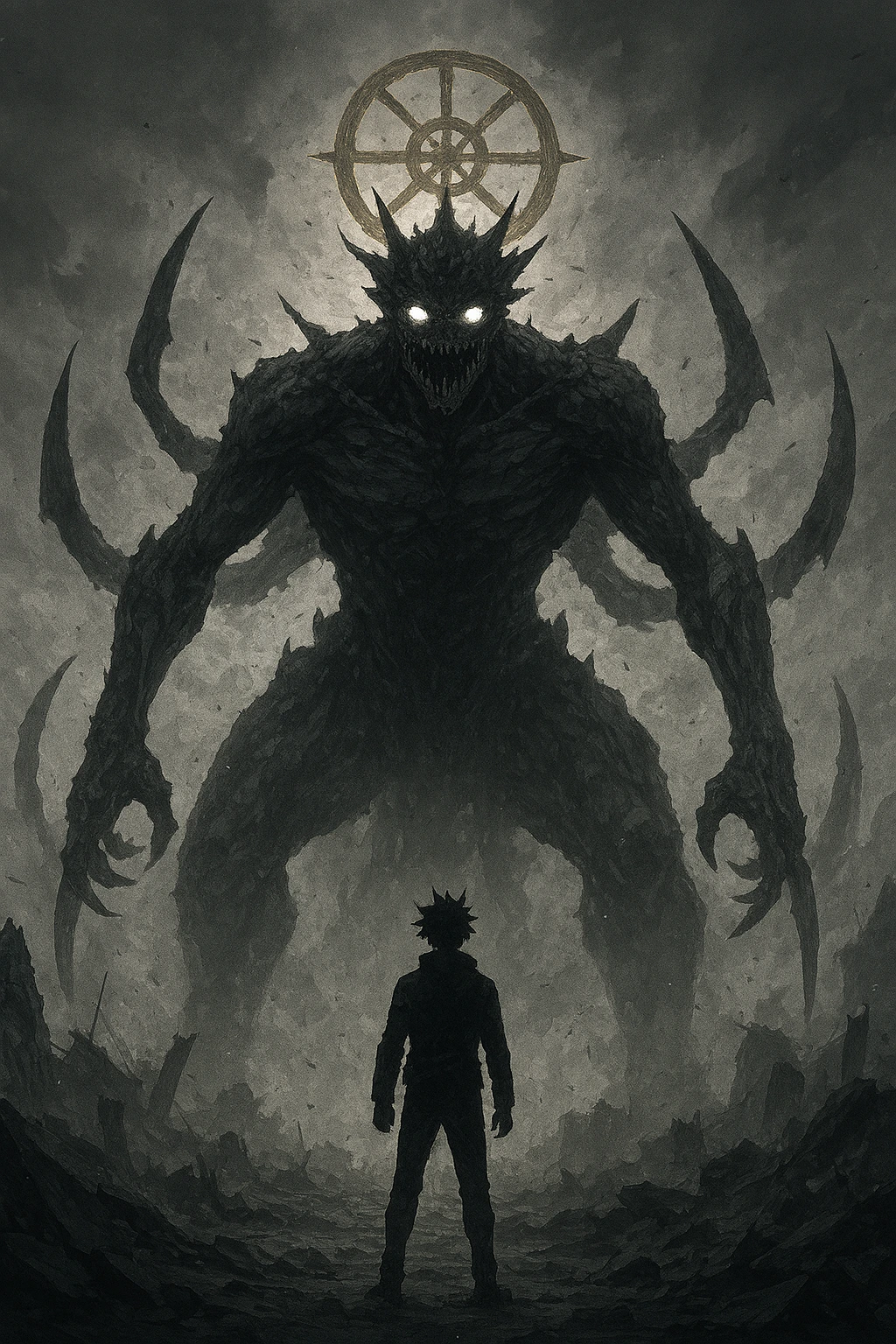
Eight-Handled Sword Divergent Sila Divine General Mahoraga is the uncontrollable monster of the Ten Shadows. Historically, no Zenin clan head had ever tamed it.
Mahoraga’s ability is Adaptation. Attached to its head is a wheel of eight spokes. When Mahoraga is hit by an attack, the wheel turns. Once it turns, Mahoraga adapts to that specific phenomenon. If hit by fire, it becomes immune to fire. If hit by a blunt strike, it hardens its defense. Furthermore, its Sword of Extermination is coated in positive energy (similar to RCT), making it an instant kill for Cursed Spirits.
Megumi viewed Mahoraga as a suicide bomb because summoning it initiates a taming ritual involving both the user and the opponent. If they don’t defeat it (which is impossible for Megumi), both die.
IV. Domain Expansion: Chimera Shadow Garden
Megumi’s Domain, Chimera Shadow Garden (Kangō An’eitei), is a perfect reflection of his incomplete growth. Unlike Gojo’s Unlimited Void or Sukuna’s Malevolent Shrine, Megumi’s domain often lacks a barrier to close it off from the outside world.
The Incomplete Barrier
Usually, a Domain Expansion creates a separate space enclosed by a barrier. Megumi, unable to visualize the inner parameters of a barrier, uses the physical environment (a cave, a gymnasium) as the shell for his domain. While technically “incomplete,” this flaw paradoxically makes it dangerous in unique ways. It allows him to extend the domain’s influence across a real-world floor plan.
The Effect: Sure-Kill Potential
Because the barrier isn’t closed, Chimera Shadow Garden does not possess a “Sure-Hit” effect (where attacks connect automatically). Instead, it grants a “Sure-Kill Potential” via environment mastery.
The Domain floods the entire area with thick, viscous liquid shadow. In this space, Megumi is omnipresent. He can sink into the shadows and reappear anywhere. More importantly, the limitations on his Shikigami are lifted. He can create multiple clones of himself (Shadow Clones), summon multiple Nues or Toads simultaneously, and manipulate the shadow terrain to bind enemies. It increases his potential output to 120%, turning him from a summoner into a shape-shifting assassin.
The Metaphor of the Spine
In the manga’s visualization of the Domain, we often see a giant vertebrae or spinal column made of shadow. This imagery is visceral and disturbing. It represents Megumi finding his “backbone.” It is the crystallization of his ego, his structure, and his refusal to bend. The darkness of the domain is not evil; it is the depth of his determination. It is a space where he forces the enemy to play by his physics, drowning them in the weight of his potential.
V. The Art of Deception: Tactical Evolution in the Culling Games
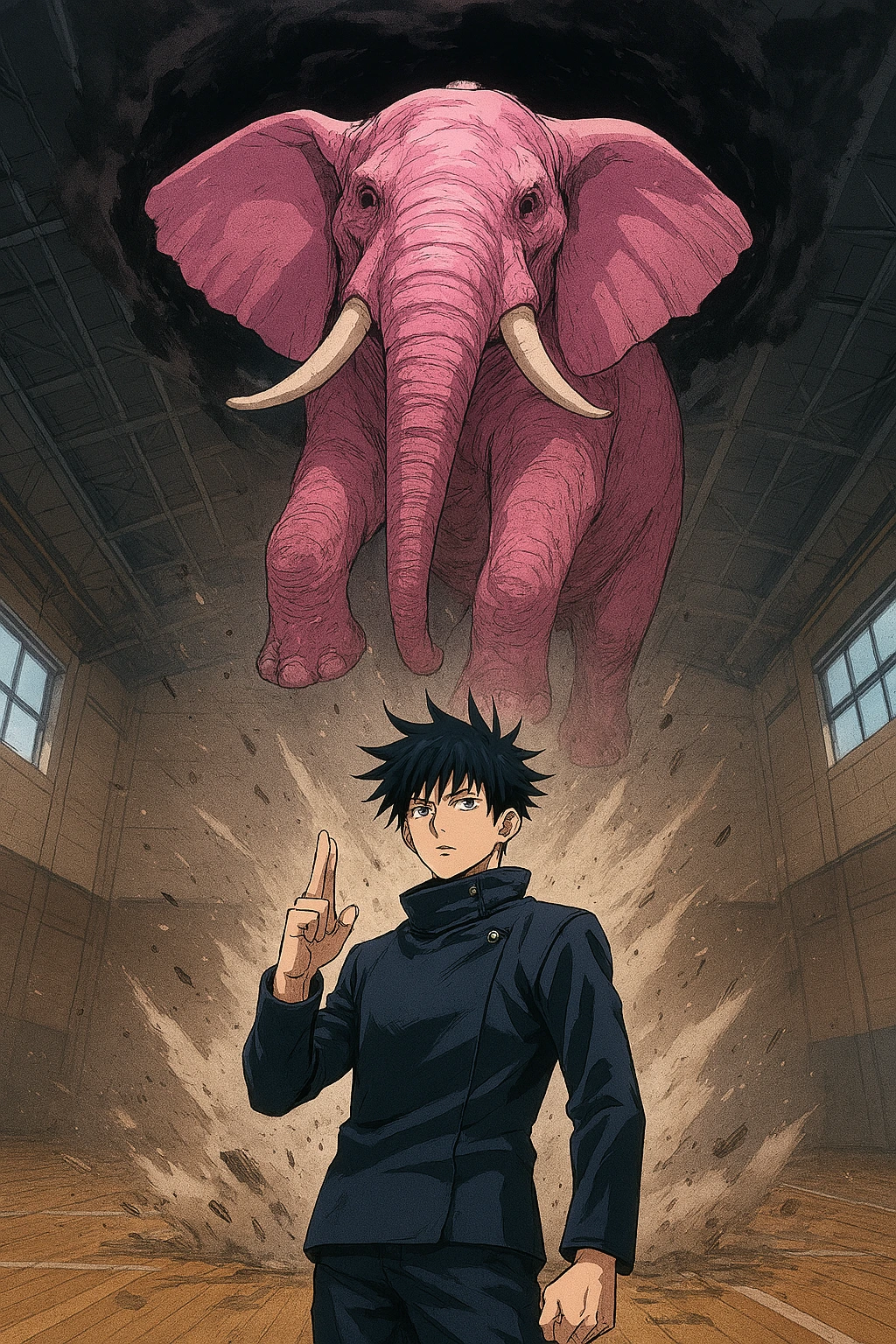
While the Finger Bearer fight was his awakening, the Reggie Star fight in the Culling Games is Megumi’s tactical graduation. This battle showcases his evolution from a sorcerer who relies on raw power to a schemer who uses deception, environment, and physics to win.
The Gym as a Trap
Fighting Reggie Star, a sorcerer who can recreate objects from receipts, Megumi is forced into a battle of attrition. Realizing he cannot win in an open field, he lures Reggie into a gymnasium. Here, he activates Chimera Shadow Garden. Crucially, he uses the gym’s physical walls as the barrier for his incomplete domain. This adaptability proves that Megumi has moved past the need for a “textbook” domain; he can weaponize existing architecture.
The Misdirection of Shadow
During this fight, Megumi displays a level of cunning previously seen only in characters like Todo or Sukuna. He misleads Reggie into thinking his shadows are merely for summoning, hiding the fact that the shadow floor itself is a bottomless pit. He forces Reggie to constantly reinforce his footing with cursed energy, draining his stamina.
The Weight of Consequences
The climax of the fight is pure pragmatism. Megumi doesn’t finish Reggie with a flashy energy beam. He summons Max Elephant—not to attack, but to simply exist. He drops the elephant’s immense tonnage directly onto Reggie, crushing him through the floor. It is a brutal, unglamorous, and highly effective kill. It signifies that Megumi has mastered the art of killing without dying. He used every asset—the gym, the pool, the shadows, and his Shikigami—in perfect harmony. This version of Megumi is terrifying not because he is the strongest, but because he is the smartest.
VI. The Father’s Shadow: Toji Fushiguro
To understand Megumi, one must understand the man who left him: Toji Fushiguro (Zenin). Toji is the antithesis of the Jujutsu world—a man with zero cursed energy who physically dominated special grade sorcerers through sheer physical prowess and malice.
The Paradox of Abandonment
Toji sold Megumi to the Zenin clan for money, yet this act was arguably the only way Toji knew how to ensure Megumi’s survival. He knew that in the Zenin clan, a child with the Ten Shadows would be royalty. If Megumi had stayed with Toji, he might have starved or been hunted. However, in his final moments against Gojo, Toji changed his mind. He told Gojo about Megumi, essentially entrusting his son to the man who killed him.
This decision saved Megumi from the toxic environment of the Zenin clan. Instead of being raised as an arrogance-filled aristocrat, he was raised by Gojo (in a loose sense) and Tsumiki, allowing him to develop a moral compass.
The Shibuya Reunion
The tragedy of their relationship culminates in the Shibuya Incident. Toji, resurrected via seance, acts on pure instinct, hunting the strongest prey. He targets Megumi. The fight is a brutal display of the difference in their experience. Toji dominates Megumi effortlessly.
However, when Toji regains a flicker of consciousness, he asks Megumi his name. “Fushiguro,” Megumi replies. Toji smiles. “Not Zenin? Good for you.”
Then, Toji stabs himself in the head. He commits suicide to prevent his body (which was on a rampage) from killing his son. Megumi never realizes this man was his father. He simply sees a monster who suddenly chose mercy. This scene highlights the parallel: Megumi has the cursed technique Toji was denied, but he initially lacked the ferocious killer instinct Toji possessed. Toji’s death breaks the cycle of the Zenin curse for a moment, acknowledging that Megumi chose a better path.
VII. The Vessel of Destiny: Sukuna’s Interest
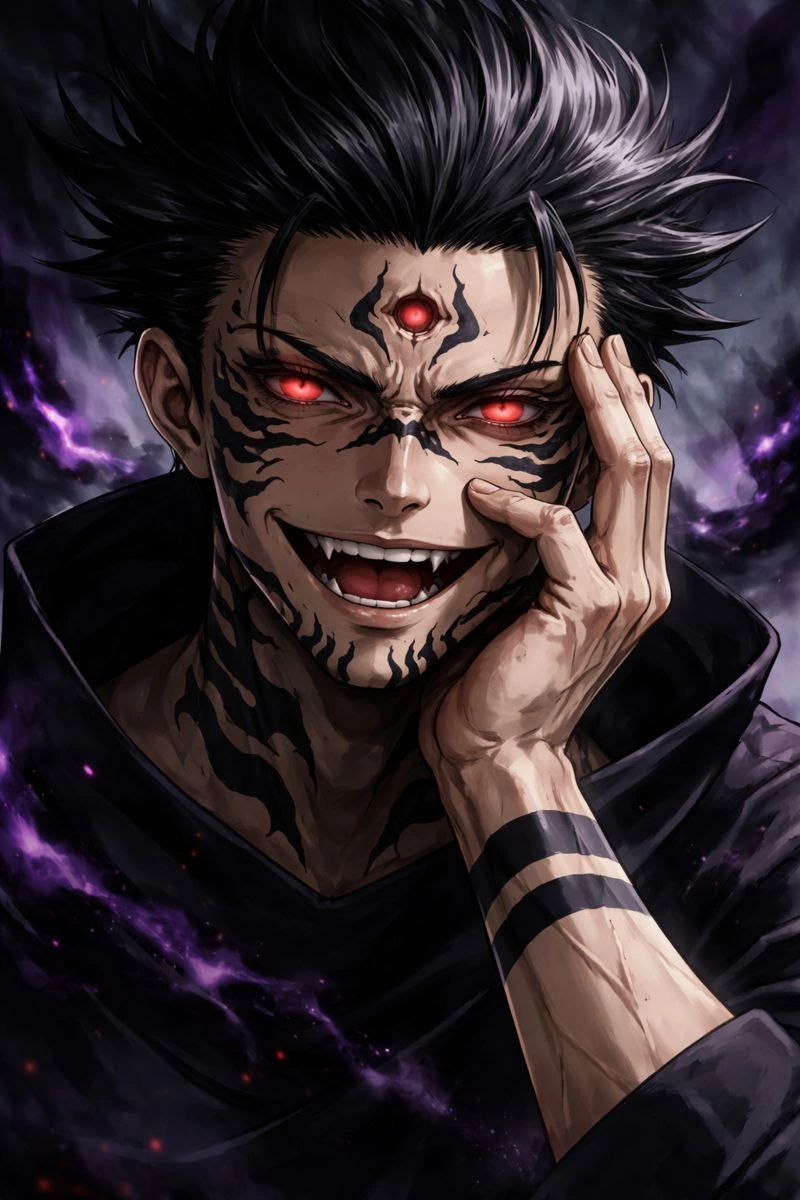
From the very first arc, Ryomen Sukuna, the King of Curses, ignored Yuji Itadori and fixated on Megumi. Why? Because Sukuna saw what Megumi couldn’t: the true versatility of the Ten Shadows.
The Long Game
Sukuna desired a vessel that he could control completely, unlike Yuji, who was a “cage.” He also needed a technique capable of bypassing the Infinity of Satoru Gojo. The Ten Shadows, specifically Mahoraga’s adaptation ability, provided the blueprint.
Sukuna waited patiently, protecting Megumi in Shibuya not out of kindness, but to preserve his future vessel. He gambled everything on the “Enchain” vow, waiting for the moment Megumi’s soul would be shattered enough to be submerged.
The Bath and The Breaking of the Soul
Upon taking over Megumi’s body in the Culling Games, Sukuna initiates “The Bath”—a ritual involving submerging the body in a solution of crushed cursed spirits to suppress Megumi’s soul deeper into the darkness. But even this wasn’t enough. To truly break Megumi, Sukuna had to destroy his reason for living.
Sukuna identifies Tsumiki Fushiguro (now possessed by the ancient sorcerer Yorozu) as the target. In a twist of cruel irony, Sukuna does not use his own technique (Cleave/Dismantle) to kill her. He deliberately uses the Ten Shadows Technique. By using Megumi’s own hands and Megumi’s own magic to kill his beloved sister, Sukuna ensures that Megumi bears the visceral sensation of the murder. This act plunges Megumi into a catatonic state of despair, effectively “killing” his ego and allowing Sukuna full dominance.
The Soul Shield: A Violation of Spirit
Perhaps the most horrific aspect of Sukuna’s possession was his strategy during the battle against Gojo Satoru. Sukuna used the shadows to hide Mahoraga’s adaptation wheel, but he placed the burden of adaptation not on himself, and not on Mahoraga, but on Megumi’s soul.
When Gojo deployed Unlimited Void, Sukuna protected himself but allowed the Sure-Hit effect of the Infinite Void to strike Megumi’s soul, which was submerged in the shadows. Sukuna effectively used Megumi as a meat shield for psychological damage. Megumi, already broken by his sister’s death, was forced to bear the weight of infinite information, shattering his psyche further. This was the ultimate violation—using Megumi’s suffering as a tactical resource to defeat his own mentor.
Weaponized Potential
The horror of the Shinjuku Showdown arc is watching Sukuna use the Ten Shadows better than Megumi ever did. Sukuna doesn’t just summon Shikigami; he fuses them seamlessly. He uses Mahoraga not as a suicide bomb, but as a teacher. He wears the “wheel” of adaptation in the shadows, taking hits from Gojo to force Mahoraga to adapt, eventually learning how to cut the fabric of space itself (The World Slash).
Sukuna validated Megumi’s potential in the darkest way possible. He proved that the Ten Shadows could defeat Satoru Gojo, but only when wielded by a monster devoid of hesitation.
VIII. Megumi vs. Yuji: Logic vs. Emotion
The dynamic between Megumi and Yuji is the heart of Jujutsu Kaisen. They are diametric opposites who complete each other.
Yuji is the physical powerhouse, driven by emotion and a simplistic, grandfather-instilled desire to help people. He is the “Tiger.” Megumi is the tactical genius, driven by logic and a complex, self-imposed rulebook on morality. He is the “Wolf.”
Their bond is sealed by a tragic pact. Before the execution of Yuji is suspended, Megumi asks Yuji to come to Jujutsu High. Later, when it becomes clear that Sukuna is a threat that cannot be contained forever, Megumi makes a silent vow: if Yuji ever truly becomes a curse, Megumi will be the one to kill him. Conversely, Yuji consumes the fingers partially to spare Megumi the burden of having to kill people.
In the final arcs, the roles reverse. It is Yuji who must save Megumi, who has lost the will to live. The “I save people unequally” philosophy is tested to its limit—is Megumi Fushiguro, the boy who gave up on himself, worth saving? Yuji answers with a resounding yes, not because of logic, but because of friendship.
IX. Conclusion: The Unfinished Masterpiece
Megumi Fushiguro is a character defined by the space between what he is and what he could be. He is the unfinished masterpiece of the Jujutsu world. He carries the legacy of the Zenin clan, the hopes of Gojo Satoru, and the curse of Ryomen Sukuna.
His journey is a deconstruction of the “chosen one” trope. Having the best power doesn’t make you the main character; having the strongest will does. Megumi’s struggle was never about lacking strength; it was about lacking the selfishness required to impose that strength on the world. He spent his life trying to be a “good” sorcerer, a responsible guardian, and a pragmatic leader, often at the expense of his own evolution.
Ultimately, Megumi Fushiguro serves as a cautionary tale about the weight of expectations. He was crushed not by his enemies, but by the “potential” everyone claimed he had. Whether he emerges from the shadows of Sukuna’s suppression or remains a tragic footnote in the history of curses, Megumi’s legacy is undeniable. He represents the terrifying, heavy burden of potential. He teaches us that talent is nothing without the mindset to wield it, and that sometimes, saving yourself is the hardest mission of all. In a world of sorcerers who burn bright and die young, Megumi Fushiguro remains the shadow—quiet, deep, and infinitely dangerous.