
Introduction
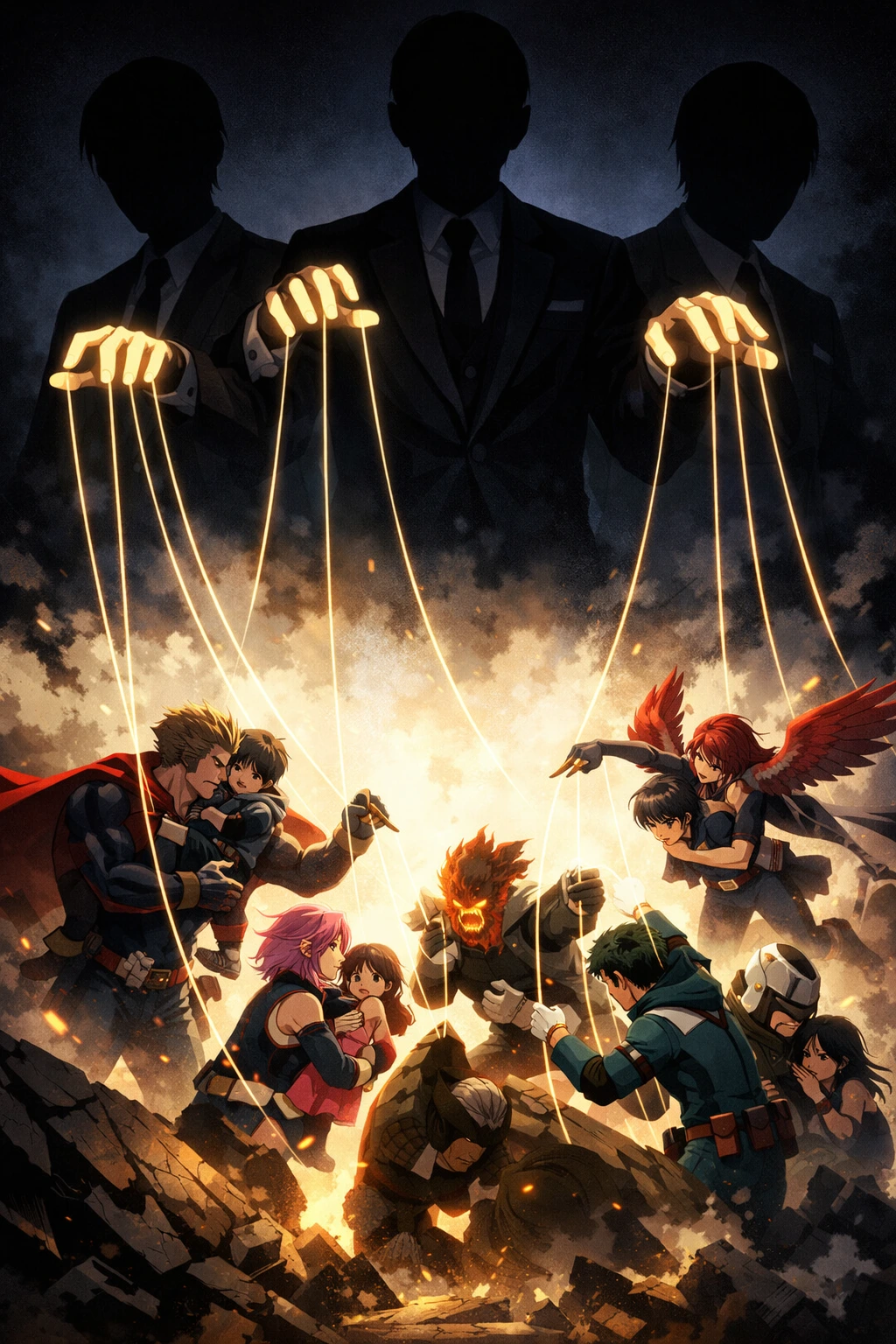
The Puppeteers of Peace When audiences and citizens within the world of My Hero Academia first look at the sprawling, colorful landscape of Pro Heroes, they see a world bathed in the radiant, unyielding light of justice. They see towering figures in spandex, smiling brightly as they pull innocent civilians from the wreckage of villain attacks.
They see a harmonious society where the extraordinary is weaponized for the greater good. However, beneath this dazzling, hyper-commercialized veneer lies a mechanism of control far more insidious and calculated than any single villain. This is the Hero Public Safety Commission (HPSC). To understand the sociopolitical landscape of Kohei Horikoshi’s masterpiece, one must completely discard the notion that the HPSC is merely a benign, supportive administrative body.
They are not simply paper-pushers regulating hero licenses or organizing press conferences. Rather, the HPSC operates as a ruthless, highly utilitarian shadow government. They are the unseen puppeteers of peace, the architects of an artificially manufactured “Golden Age of Heroes.” Their power does not stem from flashy Quirks or public adoration, but from absolute, unquestioned bureaucratic authority and a terrifying willingness to do whatever it takes to maintain the status quo. They are the men and women in immaculate suits who dictate who gets to be a savior, who gets to be a villain, and who simply ceases to exist.
The Necessary Evil The core philosophy of the Hero Public Safety Commission can be distilled into a chillingly pragmatic worldview: the ends will always, without exception, justify the means. In a society where biological mutations grant individuals the power to level city blocks with a mere thought, the HPSC determined early on that true, organic peace was an absolute impossibility.
Instead, peace had to be engineered. It had to be forged in the dark so that it could shine in the light. The organization operates on the fundamental belief that the pristine, public illusion of “Justice” must be maintained at all costs. The public must believe that their heroes are infallible paragons of virtue, completely divorced from the moral ambiguity and lethal violence required to actually keep a superhuman society safe.
To protect this fragile illusion, the HPSC took it upon themselves to become the designated sinners. They are the ultimate “necessary evil,” willingly committing every atrocity, assassination, and ethical violation in the shadows so that the public heroes can keep their hands clean. They operate under the terrifying assumption that the safety of the millions can only be guaranteed by the systematic, covert destruction of the few.
Article Scope This article serves as the definitive, expert-level breakdown of the Hero Public Safety Commission’s reign over hero society. We will move beyond surface-level observations to deconstruct the sheer magnitude of their bureaucratic control over the lives of superpowered individuals.
This comprehensive analysis will explore the deep-seated corruption of their capitalist hero industry, their horrifying child-soldier grooming programs that treat human lives as disposable government assets, and the bloody reality of their black-ops assassination division.
Furthermore, we will examine the ideological arrogance that blinded the Commission to its own vulnerabilities, leading to the ultimate, bloody collapse of their regime. By dissecting the rise, the reign, and the ruin of the HPSC, we uncover Horikoshi’s profound narrative critique of institutional power, government overreach, and the devastating human cost of artificially manufactured peace.
The Commodification of Heroism (The Billboard Chart)
Regulating “Goodness” Before the establishment of the current hero system, the world of My Hero Academia was plunged into an era of unprecedented chaos. The advent of Quirks led to rampant vigilantism, societal collapse, and the breakdown of traditional law enforcement.
The HPSC’s greatest and most insidious triumph was not eliminating this chaos through sheer force, but rather corporatizing it. They took the raw, human impulse to do “good” and transformed it into a highly regulated, capitalist industry. The provisional and permanent licensing system is widely viewed by the public as a necessary safety measure to ensure only qualified individuals use Quirks.
However, from a sociological standpoint, it is an act of supreme psychological brilliance designed to keep powerful individuals strictly under government control. By making heroism a licensed profession, the HPSC effectively monopolized the use of force.
If an individual wishes to use their Quirk to save lives, they must submit to the Commission’s rigorous curriculum, adopt their standardized ethics, and operate within their heavily restricted legal frameworks. Those who refuse are branded “Vigilantes” or “Villains” and are hunted down, regardless of their actual moral compass. This system ensures that the most powerful beings on the planet are transformed from independent, potentially rebellious actors into compliant, salaried employees of the state.
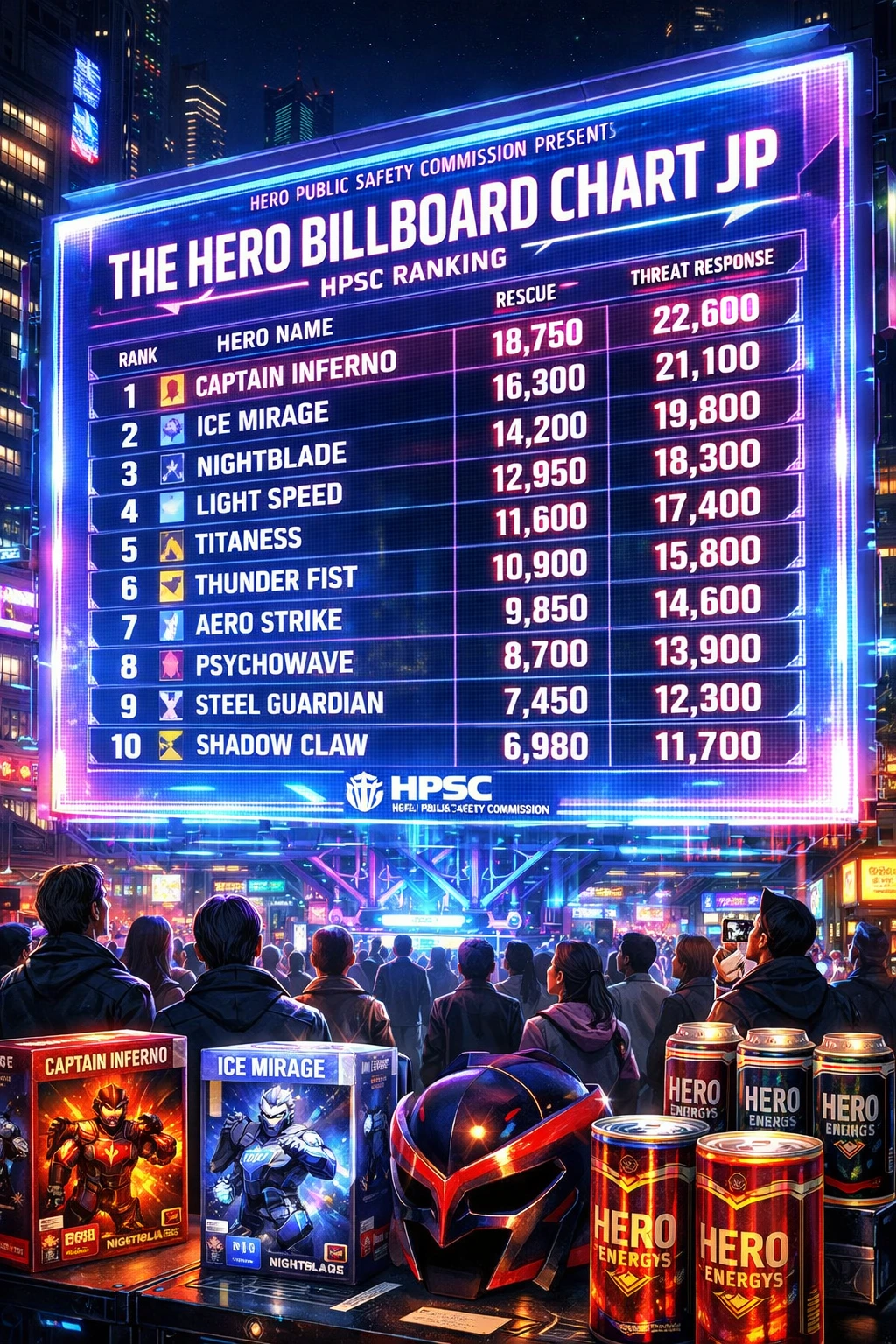
The Hero Billboard Chart JP The most potent weapon in the HPSC’s arsenal of societal control is not a bomb or a black-ops squad, but the Hero Billboard Chart JP. On the surface, the bi-annual rankings appear to be a harmless, sports-like metric of a hero’s success, calculating cases resolved, popularity, and societal contribution. In reality, the Billboard Chart is a carefully curated, highly manipulative PR machine.
It was designed to placate the masses, offering them easily digestible idols to worship, thereby distracting the populace from glaring societal inequalities, Quirk discrimination, and the rising tide of impoverished citizens falling through the cracks. More importantly, the chart serves as a psychological leash for the heroes themselves. By gamifying heroism, the HPSC forces heroes to compete intensely with one another for government favor, corporate sponsorships, and public adoration.
When heroes are hyper-focused on maintaining their rank, analyzing their approval ratings, and securing merchandising deals, they lack the time, energy, or inclination to look upward and question the authority of the Commission itself. The chart turns potential revolutionaries into desperate climbers scrambling up a heavily monitored corporate ladder.
It transforms the noble act of saving a life into a quantifiable data point used to justify an individual’s commercial viability. Endeavor’s decades-long, toxic obsession with surpassing All Might is the most tragic consequence of this system—a man whose entire life and family were destroyed by the psychological pressure cooker the HPSC designed.
The “All Might” Crutch For decades, the HPSC’s entire infrastructural integrity rested entirely on the impossibly broad shoulders of a single man: Toshinori Yagi, known to the world as All Might. The Commission recognized early on that All Might’s god-like strength and unshakeable charisma were unparalleled tools for societal pacification.
However, rather than using the era of peace All Might created to fix systemic societal issues, the Commission became lazily, perilously over-reliant on him. They used him as a massive, smiling crutch. His presence alone caused a drastic drop in crime rates, allowing the HPSC to mask their own administrative failures, their inadequate support systems for mutant-type Quirks, and their failure to rehabilitate villains. All Might became the ultimate deterrent, but also the ultimate blind spot.
The Commission believed that as long as the “Symbol of Peace” stood tall, the structural integrity of society was secure. They failed to realize that by putting all their societal weight on one pillar, they were allowing a terrifying rot to spread unchecked in the criminal underworld.
Villains like All For One and later Tomura Shigaraki were able to fester in the shadows, recruiting the disenfranchised and the broken—the very people the HPSC’s glossy, All Might-centric society had left behind. When the Symbol of Peace finally fell at Kamino Ward, the HPSC was left completely exposed, holding the reins of a society that had forgotten how to stand on its own.
The Utility of Blood: The Black-Ops Division
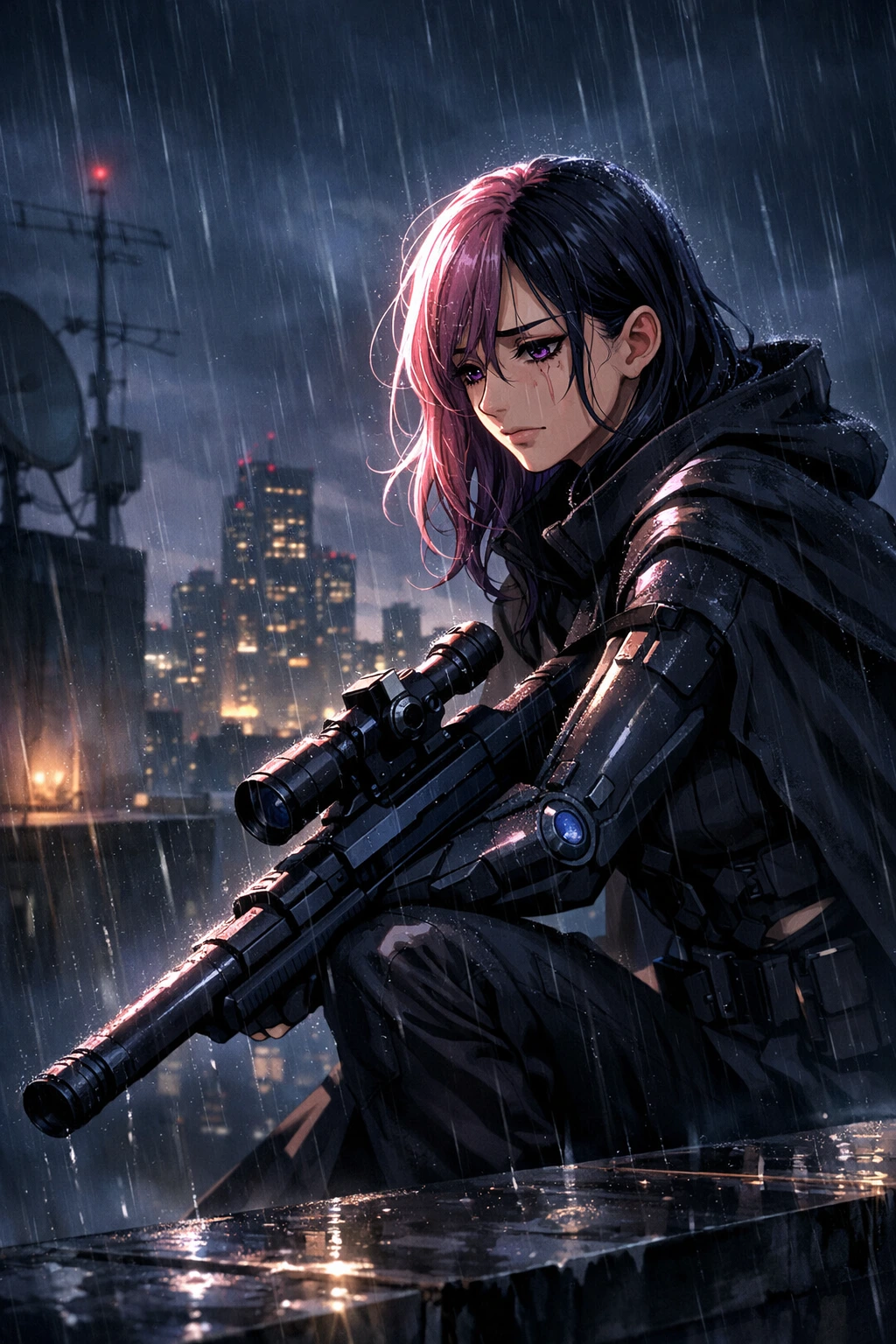
The “Cleaners” of Society While the public cheered for the brightly colored heroes dominating the Billboard Charts, the HPSC maintained a deeply hidden, horrifyingly active black-ops sector. This division was the ultimate manifestation of the Commission’s utilitarian philosophy. The HPSC recognized that the slow, methodical wheels of justice—courts, judges, juries, and due process—were fundamentally incompatible with the terrifying speed and destructive capability of certain Quirk users.
If a villain possessed the ability to level a city in an instant, or if a corrupt hero threatened to expose the rotting foundation of hero society, the Commission could not afford the luxury of a trial. Therefore, they established a network of personal executioners. These “cleaners” were highly trained, state-sponsored assassins deployed to circumvent the law entirely.
Their mandates were simple: locate threats to the societal order and permanently erase them before they could act. They assassinated corrupt heroes whose scandals might damage the public’s faith in the system. They eliminated vigilantes who refused to fall in line. They slaughtered domestic terrorists in preemptive strikes, acting as judge, jury, and executioner in the dead of night. This division proves that the HPSC did not view the law as an absolute moral code, but merely as a convenient set of guidelines that applied to the citizenry, but never to the state itself.
Protecting the Symbol The existence of the black-ops division was intrinsically tied to the preservation of All Might. The Symbol of Peace was, by design, supposed to be entirely unblemished. All Might had to remain a figure of pure, untainted justice—a savior who captured villains and handed them over to the police, never resorting to lethal force.
If the public ever learned that maintaining their peaceful society required summary executions and back-alley murders, the psychological safety net All Might provided would instantly disintegrate. The public would realize that their peace was built on a foundation of corpses. Therefore, the HPSC took on the burden of sin.
They realized that All Might’s hands had to remain immaculately clean, which meant the Commission’s hands had to be perpetually soaked in blood. They slaughtered threats preemptively so that All Might would never have to compromise his morals, and so the public would never have to confront the horrifying reality of what it truly costs to keep a superhuman society safe. The Commission rationalized these murders as noble sacrifices, convincing themselves that they were bravely carrying the darkness so the rest of the world could live in the light.
The Lady Nagant Precedent The most tragic and damning indictment of the HPSC’s black-ops division is the psychological destruction of Kaina Tsutsumi, known as Lady Nagant. Nagant was once one of the most promising and publicly adored heroes in Japan. However, her unmatched lethal accuracy made her the perfect tool for the Commission’s shadow war. She was secretly drafted into the black-ops division, forced to live a horrifying double life.
By day, she smiled for the cameras and shook hands with children; by night, she was a ruthless executioner, putting bullets through the heads of rogue heroes and dangerous villains on the Commission’s direct orders. Nagant’s story is a masterclass in psychological horror. She just wanted to be a hero, but the HPSC weaponized her desires, turning her into a serial killer in the name of “Justice.” The cognitive dissonance of her existence—washing the blood and brain matter off her hands before going out to sign autographs—slowly and inevitably broke her mind.
When she finally confronted the HPSC President about the inherent hypocrisy and endless bloodshed of the system, she was met with cold, bureaucratic indifference. In a moment of shattered sanity, Nagant murdered the President, turning against the very system that created her. The HPSC’s response was to immediately cover up the incident, label her a villain who killed a colleague over a petty dispute, and throw her into Tartarus. Nagant is the ultimate proof that the Commission views its heroes not as human beings, but as disposable ammunition to be fired and forgotten.
The Grooming of Golden Boys (The Hawks Project)
Targeting the Vulnerable Following the disastrous fallout of the Lady Nagant incident, the HPSC realized a critical flaw in their methodology: recruiting fully formed adults with established moral compasses into their assassination division was far too risky. Adults, like Nagant, possessed a conscience that could eventually shatter under the weight of the murders they were forced to commit.
To prevent another defection, the Commission adapted their strategy, resulting in one of the most horrifying initiatives in the series: the active targeting and grooming of children. The HPSC began scouring the nation for young children possessing incredibly powerful, potentially lethal Quirks, specifically targeting those who were highly vulnerable.
They looked for children from broken homes, impoverished backgrounds, or, in the case of Keigo Takami, households plagued by severe criminal activity and domestic abuse. By targeting a child who had absolutely no safety net, no loving family, and no hope for the future, the Commission could easily step in, playing the role of a benevolent savior. They offered the child a way out of their hellish existence, but the cost was the total surrender of their humanity and autonomy to the state.
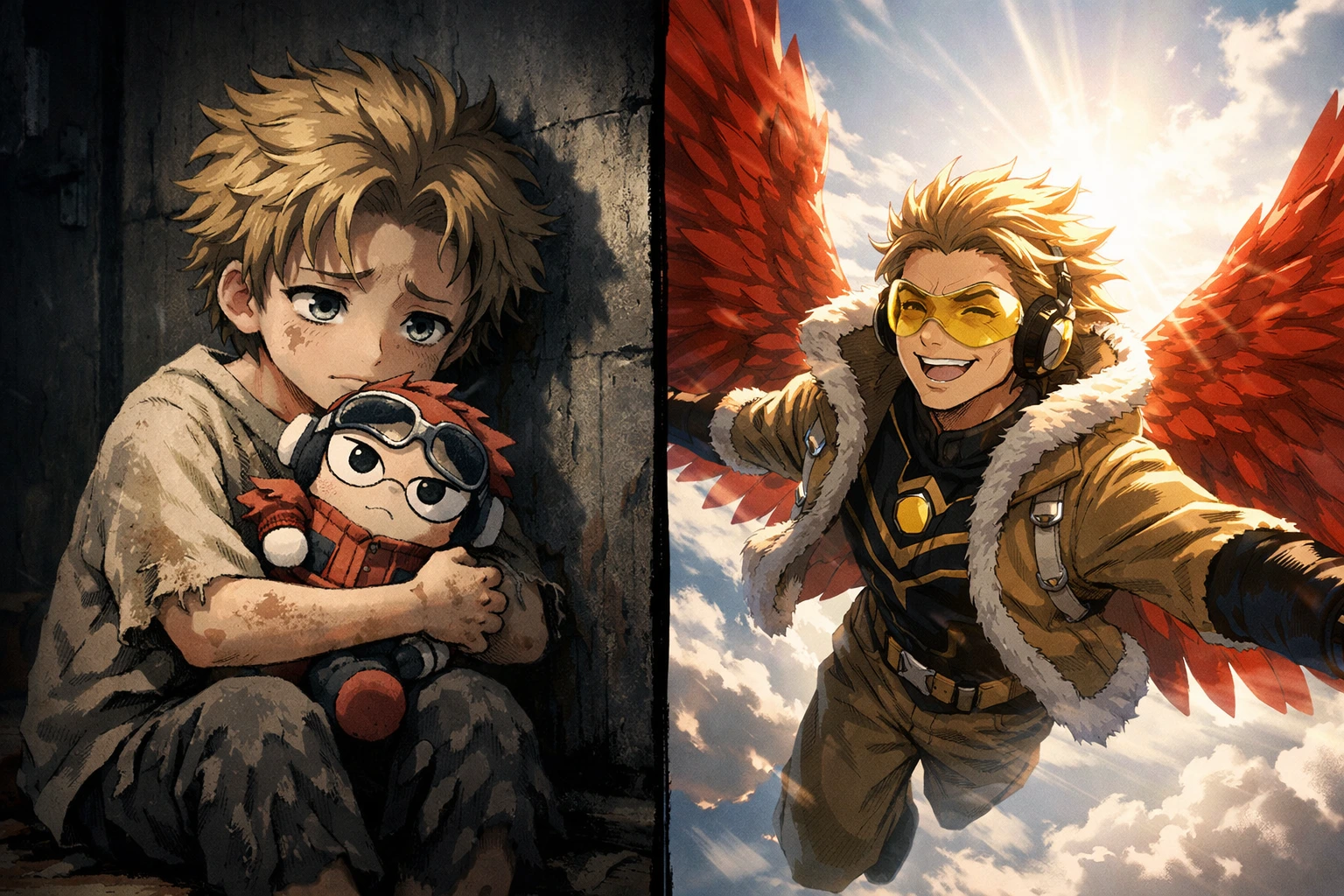
The Erasure of Identity The psychological conditioning inflicted upon Keigo Takami by the HPSC is tantamount to state-sanctioned child abuse and brainwashing. The Commission literally bought Keigo from his desperate, fugitive mother. From the moment he was handed over, his past was completely eradicated. His legal name, Keigo Takami, was erased from all public records, replaced only by the operational moniker he would eventually adopt: Hawks.
He was placed in an intensely rigorous, heavily isolated training program from early childhood. He was not raised as a human boy, but cultivated as a government asset. The HPSC carefully manipulated his genuine childhood adoration of heroes—specifically his idolization of an Endeavor plushie—twisting that innocent admiration into a fanatical, unquestioning loyalty to the Commission’s utilitarian ideals.
He was trained to completely detach his emotions from his actions. The HPSC systematically dismantled his capacity for moral hesitation, conditioning him to believe that his own feelings, desires, and personal traumas were entirely irrelevant compared to the mission. He was taught to view himself not as a person, but as a sword wielded by the government—a tool that must never question the hand that swings it.
The Perfect Soldier The culmination of this horrifying grooming process was the creation of Hawks, the HPSC’s ultimate masterpiece and their most successful weapon. Hawks represents the absolute terrifying pinnacle of the Commission’s methodology because he is the perfect amalgamation of their public and private needs. To the public, Hawks is an angelic figure—young, handsome, charming, and effortlessly cool.
He possesses a spectacular, visually stunning Quirk that allows him to save dozens of people simultaneously, earning him the #2 spot on the Billboard Chart at a record-breaking age. He is the ultimate PR darling, a golden boy who keeps the masses deeply enamored and endlessly distracted.
However, beneath his carefully constructed, laid-back persona lies the ruthless, detached mindset of a state-sponsored sociopath. When the cameras are off, Hawks is capable of executing the Commission’s darkest orders without a second thought. He can infiltrate, manipulate, betray, and, ultimately, kill without his heart rate ever spiking.
He is the perfect soldier because he genuinely believes in the necessity of his own suffering; he accepts his role as a monster in the dark so that the citizens can sleep peacefully in the light. He is the embodiment of the Commission’s philosophy, forged through the destruction of a child’s soul.
The President (The Cold Calculus of Peace)
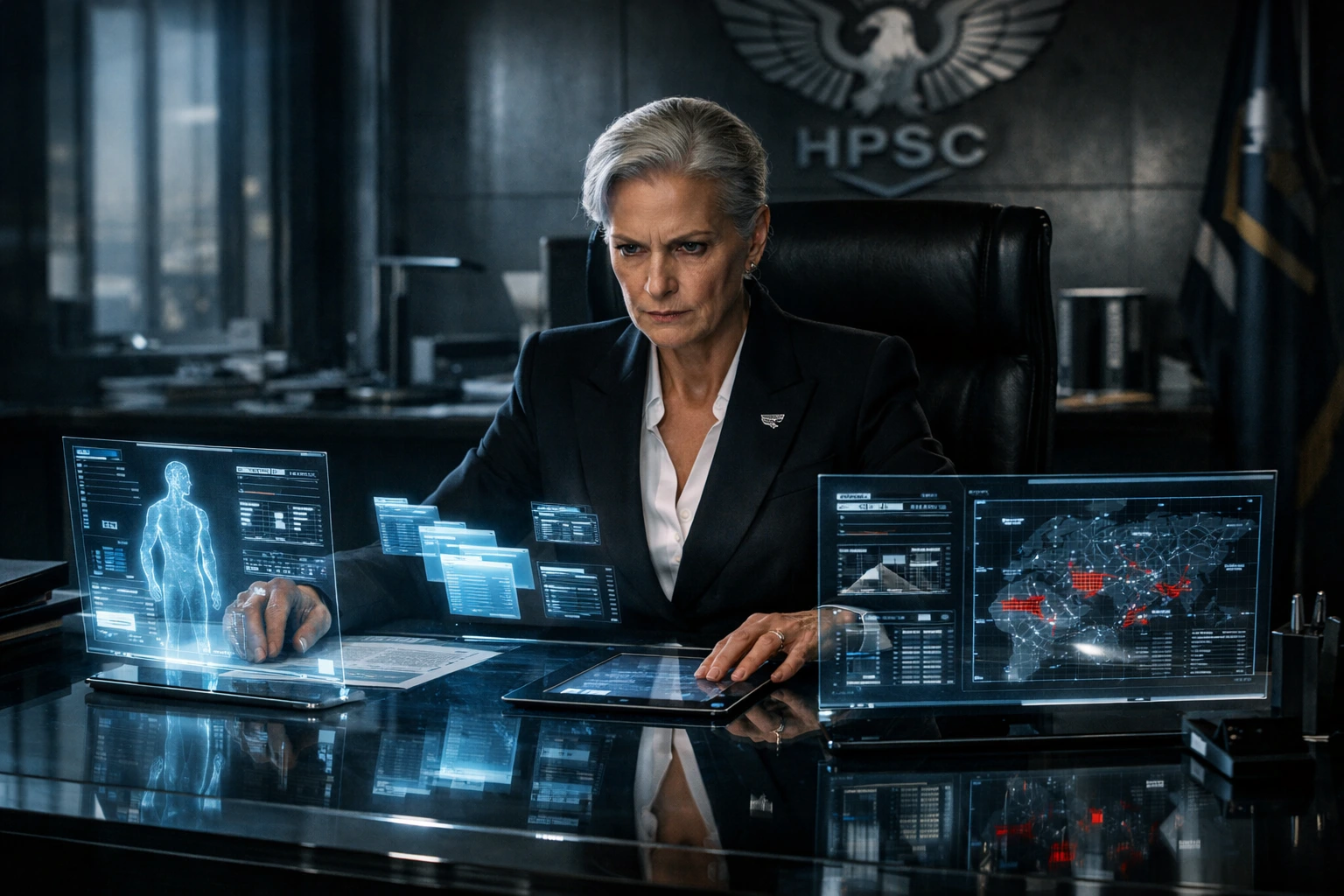
The Unnamed Bureaucrat At the absolute apex of this massive, blood-soaked administrative pyramid sits the HPSC President. Unlike the heroes she commands or the villains she seeks to destroy, the President is a profoundly unremarkable figure in terms of raw, superhuman power. She does not fight on the front lines. She does not possess a flashy, earth-shattering Quirk. She is an older, stern-faced woman who rarely leaves the sterile confines of her boardrooms and heavily guarded offices.
Yet, despite her lack of physical strength, she is arguably one of the most powerful individuals in the entire nation. She commands the lives of literal gods through sheer political will, bureaucratic authority, and an absolutely terrifying level of emotional detachment. Horikoshi’s decision to leave her largely unnamed and defined only by her title is a brilliant narrative choice.
She is not supposed to be viewed as a unique, passionate individual; she is the personification of the faceless, institutional state. She is the system made flesh. Her mundane appearance starkly contrasts with the catastrophic, lethal impact of the decisions she makes every single day over a cup of tea.
The Trolley Problem Made Manifest To understand the HPSC President is to understand the darkest depths of utilitarian philosophy. She operates entirely devoid of sentimentality, viewing the entire country—its citizens, its heroes, and its villains—as a complex, high-stakes math equation. Her worldview is the ultimate, endless manifestation of the classic “Trolley Problem” in ethics.
If five people are tied to a track, and one person is tied to another, she will relentlessly, unhesitatingly pull the lever to kill the one, and she will sleep soundly that night believing she achieved a net positive outcome. She completely discards the inherent value of individual human life in favor of statistical safety.
She feels absolutely no remorse for sacrificing the humanity of a few to guarantee the safety of the millions. When she looks at Lady Nagant, she does not see a traumatized woman; she sees a broken tool that needs to be discarded.
When she looks at Hawks, she does not see a young man who was robbed of his childhood; she sees a highly efficient asset operating at peak capacity. To the President, morality is a luxury that those in power simply cannot afford. She believes that true leadership requires the stomach to make the monstrous choices that heroes like All Might are too pure to make themselves.
The PLF Directive The true depths of the President’s ruthless calculus are fully exposed during the build-up to the Paranormal Liberation War. Recognizing the catastrophic threat posed by the merging of the League of Villains and the Meta Liberation Army, the President issues her most extreme, morally bankrupt command to date.
She orders Hawks to infiltrate the Paranormal Liberation Front (PLF). However, this is not merely a reconnaissance mission. The President explicitly commands Hawks to gain the villains’ trust by any means necessary, to spy on their operations, and, when the time comes, to betray and execute them.
She actively orders her top hero to aid terrorists—even allowing him to covertly assist in their operations to prove his loyalty—fully aware of the innocent blood that might be spilled in the process. More chillingly, she orders him to assassinate Twice (Jin Bubaigawara), recognizing the cloning villain as the greatest tactical threat to the heroes’ success.
The President issues this execution order knowing full well the devastating psychological toll it will take on Hawks, who had genuinely bonded with Twice. She demands that Hawks look a friend in the eye and murder him in cold blood, simply because the math dictates it must be done. It is the ultimate expression of her reign: peace purchased through profound, calculated betrayal.
The Decapitation Strike (The Fall of the Commission)
The Arrogance of Control The tragic irony of the Hero Public Safety Commission is that the very traits that allowed them to control society for decades—their absolute belief in their own supremacy, their total reliance on covert operations, and their detached, analytical arrogance—were the exact instruments of their catastrophic undoing. For years, the HPSC believed they were the undisputed masters of the board.
They believed they were pulling all the strings, operating ten steps ahead of both the heroes and the villains. As the Paranormal Liberation War loomed, the Commission was incredibly smug. Because they had successfully embedded Hawks within the PLF, they believed they had complete, unilateral control over the flow of information.
They thought they were dictating the terms of the coming battle. However, this bureaucratic arrogance completely blinded them to the sheer, terrifying scale of the villains’ resources. They treated the PLF like a traditional criminal syndicate that could be dismantled through precise, surgical strikes.
They fundamentally misunderstood that they were no longer dealing with simple criminals; they were dealing with a massive, ideologically driven, heavily armed domestic uprising led by individuals whose raw power rivaled natural disasters. The HPSC thought they were managing a crisis; in reality, they were trying to put a leash on a hurricane.
The Re-Destro Clone Attack The collapse of the HPSC was not a slow, grinding decline; it was a sudden, brutal, and shockingly intimate decapitation. In a masterstroke of tactical brilliance, the villains turned the Commission’s own arrogance against them.
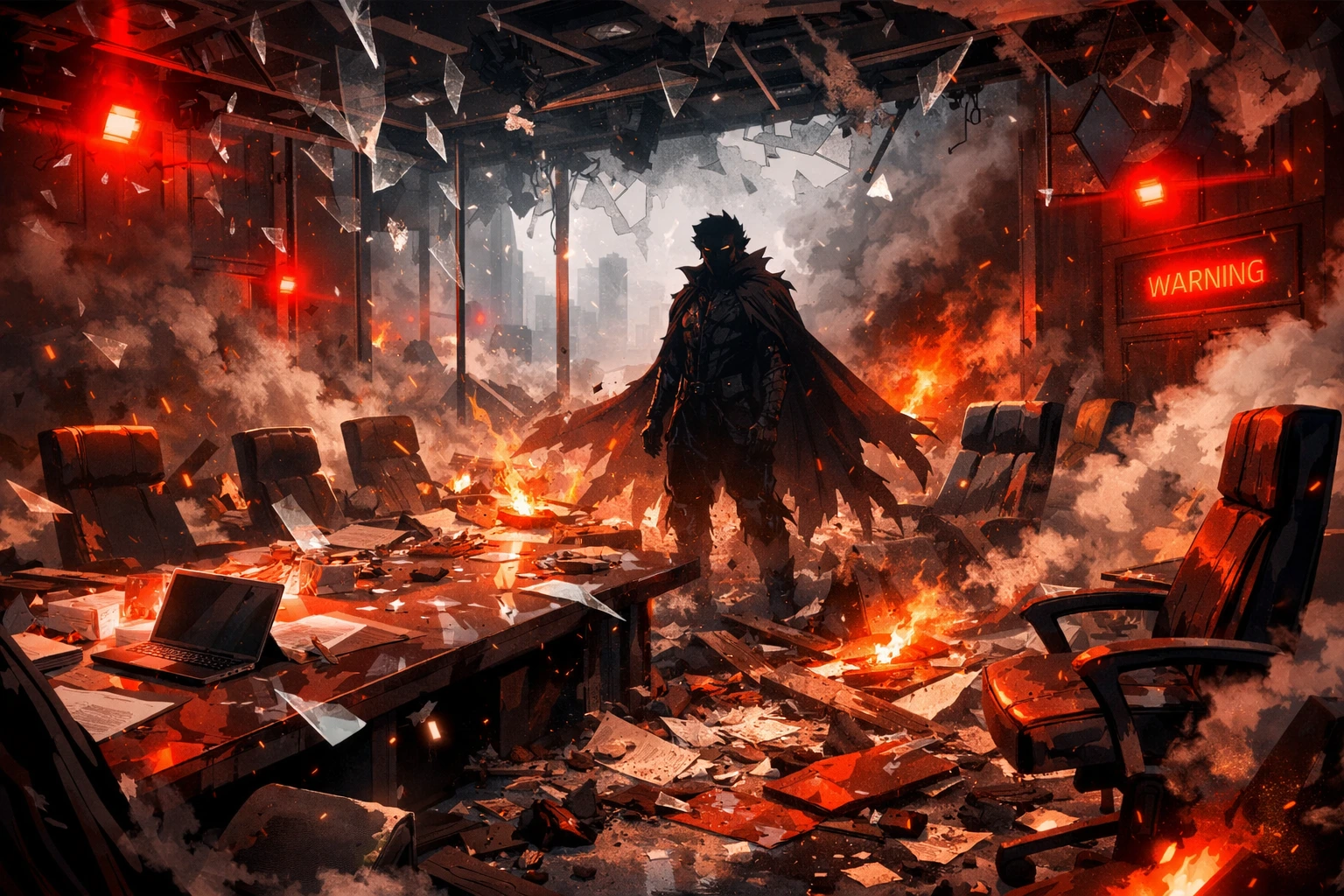
While the HPSC President and her top executives sat comfortably in their highly secure boardroom, finalizing their grand strategies and believing themselves completely untouchable, the illusion of their safety was violently shattered. A Twice-created clone of Re-Destro, possessing a fraction of the villain’s immense, stress-fueled power, bypassed all of the HPSC’s vaunted hero security measures with terrifying ease. The ensuing attack was not a battle; it was a slaughter.
In a matter of minutes, the Re-Destro clone annihilated the boardroom, brutally murdering the President and the top-ranking executives. The symbolism of this attack is profound. The individuals who had spent their entire lives treating people as numbers on a spreadsheet, operating from the safety of the shadows, were forced to look pure, overwhelming violence in the face.
Their paperwork, their protocols, and their carefully managed PR were absolutely useless against raw, unfiltered hatred. The architects of the shadow war were violently executed in their own sanctuary.
The Loss of the Leash The assassination of the HPSC President and the central executive board triggered an immediate, catastrophic fallout that completely altered the trajectory of the Paranormal Liberation War and hero society at large.
The Commission had intentionally designed the hero system to be dangerously centralized. Every hero agency, every deployment order, and every public relations strategy flowed through the HPSC headquarters. When the top brass was abruptly eliminated, the entire Pro Hero network was instantly decapitated. Just as the war reached its most critical, violent climax, the heroes were plunged into absolute bureaucratic chaos.
Communications broke down, chains of command evaporated, and there was no central authority to manage the massive civilian evacuations or coordinate widespread counter-attacks. The heroes, who had been trained for generations to wait for orders and rely on the Commission’s logistical support, found themselves entirely alone on the battlefield.
The decapitation strike proved the fatal flaw in the HPSC’s design: by refusing to allow heroes to think and act independently, they had created a system that completely paralyzed itself the moment the puppeteers dropped the strings.
The Aftermath: The Collapse of the Hero Industry
The Resignation Wave In the devastating wake of the Paranormal Liberation War, the true, fragile nature of the HPSC’s corporatized hero industry was laid bare for the entire world to see. As cities lay in ruins and the public’s faith in heroes completely evaporated due to Dabi’s explosive revelations about Endeavor and Hawks, the Commission was entirely incapable of managing the fallout.
Without the HPSC there to spin the narrative, secure their paychecks, or protect them from the vicious, terrifying reality of a society completely overrun by villains, the facade of the “Pro Hero” shattered. What followed was an unprecedented, mass resignation wave.
Thousands of registered heroes, who had entered the profession for fame, money, merchandise deals, or a stable government salary, threw their badges in the dirt and abandoned the public. When heroism stopped being a lucrative, highly managed career and returned to being a brutal, thankless, and highly lethal calling, the cowards fled.
The HPSC’s system had successfully inflated the numbers of heroes for decades, but it had entirely failed to cultivate actual heroism. Only those who possessed a genuine, unshakable desire to save others—the “True Heroes” who were willing to bleed without compensation or public adoration—remained to fight in the apocalyptic ruins of Japan.
Yokumiru Mera’s Burden The physical and administrative collapse of the HPSC left behind a grim, smoldering vacuum, and the responsibility of inheriting this broken empire fell onto the slumped shoulders of Yokumiru Mera. Previously introduced as a chronically exhausted, deeply overworked mid-level bureaucrat managing the Provisional License Exams, Mera suddenly found himself as one of the highest-ranking surviving members of the Commission.
He is the tragic, civilian face of the aftermath. Mera represents the everyday workers who are forced to clean up the catastrophic messes left behind by arrogant leaders. With the President dead, the infrastructure destroyed, and the hero ranks completely decimated, Mera was forced to try and hold the collapsing society together with metaphorical duct tape.
His perpetual exhaustion is entirely symbolic of the crushing, impossible burden of maintaining order in a world that has fundamentally rejected the old system. He was left to manage the logistics of a war zone without any of the resources, funding, or authority his predecessors enjoyed, serving as a desperate, flailing bridge between the fallen Golden Age and whatever uncertain future awaited them.
The Post-War Era (Rebuilding True Justice)
A System of Support, Not Control As the dust finally settled on the Final War and the immediate, existential threat of All For One and Tomura Shigaraki was neutralized, society faced the monumental task of rebuilding. However, it was universally acknowledged that they could not simply rebuild the old system; the previous iteration of the HPSC had proven fundamentally toxic and ultimately self-destructive.
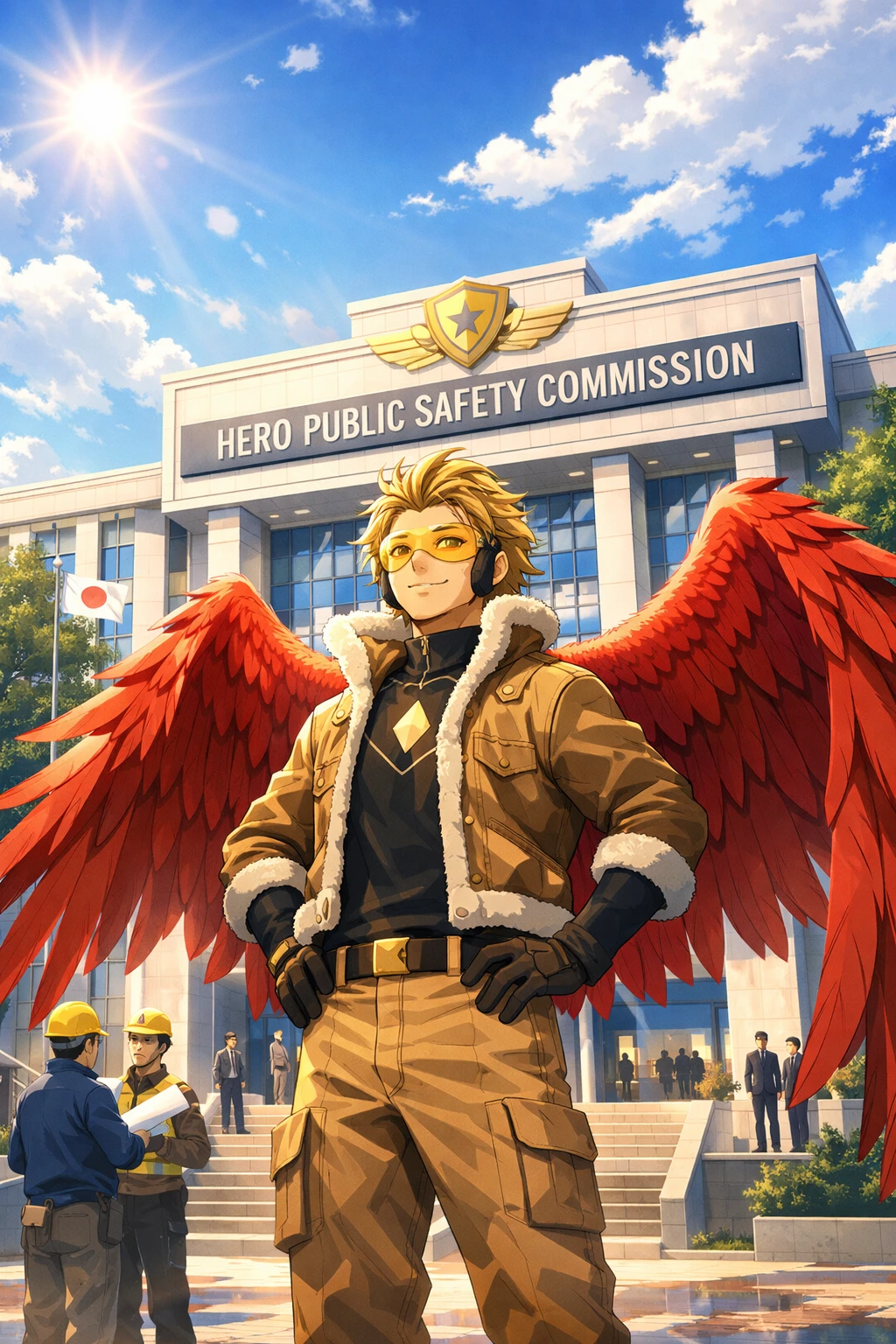
In a move of profound narrative poetry, Keigo Takami—Hawks, the man who had been stripped of his humanity, groomed as a child soldier, and forced to be the ultimate weapon of the corrupt system—took the reins as the new President of the Hero Public Safety Commission. Hawks surviving the war to take this position signifies a massive ideological shift.
He understands better than anyone alive the horrific cost of the old Commission’s utilitarian methods. He steps into the role not as a shadowy dictator looking to control gods, but as a deeply flawed, empathetic survivor looking to serve. Under his leadership, the entire paradigm of the HPSC is violently inverted.
It transitions from an organization of absolute, overarching control to a system of robust, transparent support. The goal is no longer to artificially manufacture a singular Symbol of Peace, but to empower every individual to take part in the preservation of their own society.
Breaking the Cycle Hawks’ tenure as the leader of the new HPSC is defined by a solemn, unbreakable vow: to ensure that the horrific cycles of the past are permanently broken. Having lived through the agonizing isolation of being the Commission’s premier weapon, Hawks recognizes that the greatest failing of the old system was forcing individuals to carry the darkness alone.
He initiates sweeping reforms designed to fundamentally change how heroes are trained, monitored, and supported. He dismantles the black-ops divisions and ends the practice of extrajudicial killings, demanding that the new society be built on the rule of law and transparency, even when it is difficult or politically inconvenient.
Most importantly, he establishes rigorous safeguards to ensure that no vulnerable child is ever again targeted, purchased, or groomed into a state-sponsored assassin. The new HPSC focuses on mental health support for heroes, acknowledging the trauma they endure rather than forcing them to suppress it for the cameras.
Under Hawks, the organization finally becomes what it always claimed to be: a genuine safety net. It becomes an institution dedicated to protecting not just the citizens from villains, but the heroes from the crushing, isolating weight of their own responsibilities.
Conclusion
The Architects of Their Own Demise The history of the Hero Public Safety Commission in My Hero Academia is the definitive chronicle of a tragic, deeply flawed entity that attempted the impossible: trying to cage human nature, volatility, and societal unrest with endless paperwork and preemptive blood-letting.
They were an organization built on the arrogant premise that peace could be manufactured in a laboratory of shadow operations, so long as the public was sufficiently distracted by brightly colored mascots. Yet, by continually sweeping society’s refuse under the rug, by marginalizing those who didn’t fit into their pristine system, and by weaponizing traumatized individuals to do their dirty work, the HPSC actively watered the seeds of their own destruction.
They were ultimately torn apart by the very villains their oppressive, exclusionary system helped create. The League of Villains and the Meta Liberation Army were not anomalies; they were the inevitable, explosive reactions to a society that demanded perfection at the cost of empathy. The Commission built a magnificent, towering skyscraper of peace, but they built it on a foundation of rotting corpses and broken children, and they were shocked when the ground finally gave way.
Closing Thoughts Through the rise and spectacular fall of the Hero Public Safety Commission, Kohei Horikoshi delivers a profound, blistering critique of institutionalized justice, the commodification of altruism, and the terrifying danger of government overreach. He challenges the reader to look beyond the superhero tropes of good versus evil, asking us to scrutinize the systemic structures that define those terms.
The HPSC forces us to confront the uncomfortable reality that sometimes, the institutions sworn to protect us are the ones committing the greatest atrocities, justified under the chilling banner of “the greater good.” Ultimately, the narrative of the Commission serves as a cautionary tale: true, lasting peace cannot be dictated from a shadowy boardroom, it cannot be bought with the blood of child soldiers, and it cannot be sustained by a single, smiling Symbol.
True peace, as the post-war era of My Hero Academia suggests, can only be achieved through transparency, collective responsibility, and an unwavering commitment to the humanity of every individual.