
Introduction
The Architect of the Golden Age
When history looks back upon the Golden Age of Heroes, the singular, blinding beacon of All Might inevitably dominates the narrative. He was the “Symbol of Peace,” an immovable pillar of strength and charisma whose mere existence drove crime rates to historic lows.
Yet, behind this god-like figure stood a shadow—a man defined not by earth-shattering physical strength, but by the supreme analytical engine of his mind. Mirai Sasaki, known professionally as Sir Nighteye, was the architect of that golden age. To understand Nighteye is to understand that All Might’s era of peace was not merely punched into existence; it was meticulously calculated, legally protected, and logistically maintained.
Nighteye was an entire intelligence agency compressed into a single, impeccably dressed man. He was the bureaucratic mastermind and strategic visionary who allowed the Symbol of Peace to function without collapsing under the weight of societal, legal, and operational complexities.
The Burden of Omniscience
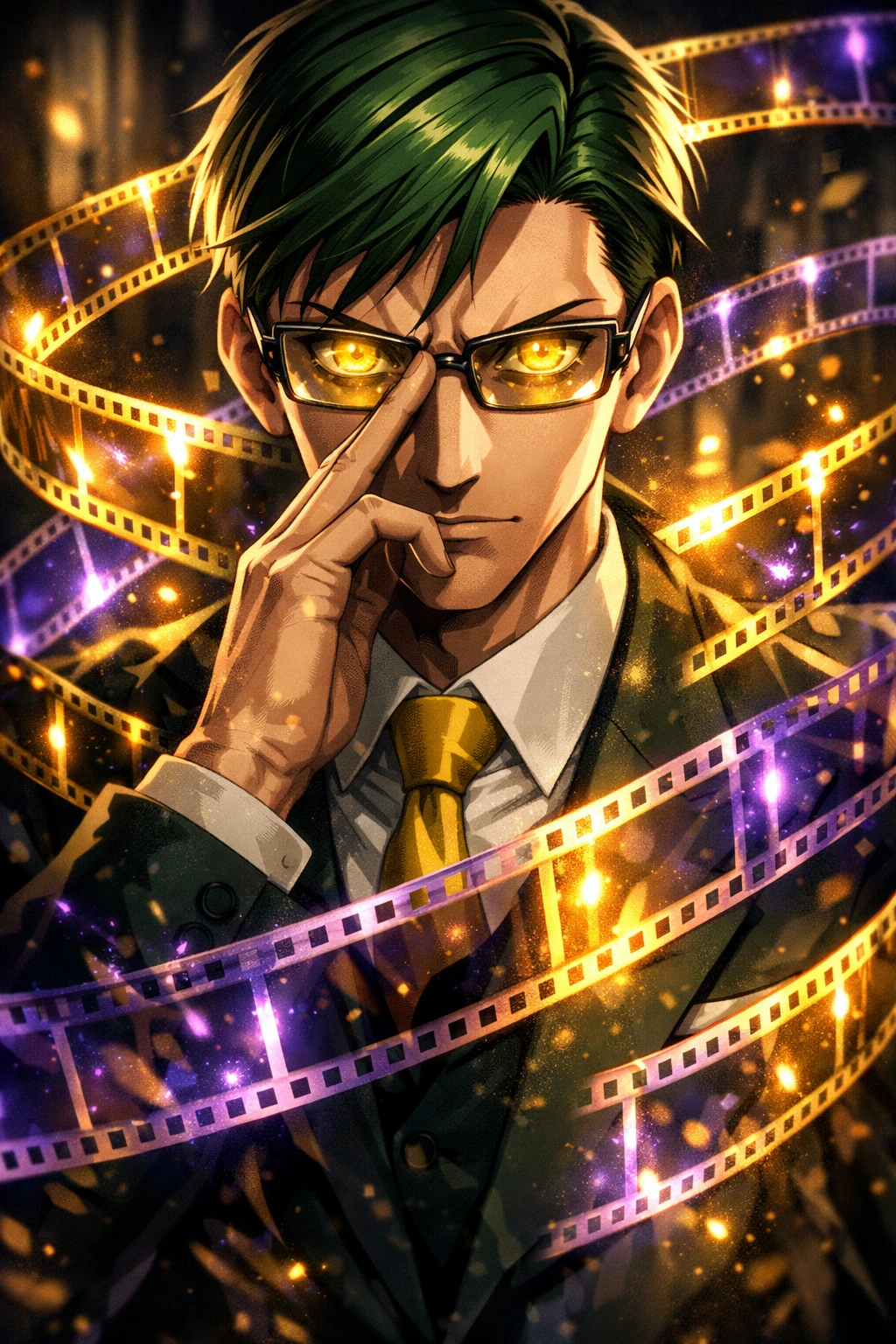
To possess the power to see the future is universally romanticised in human mythology as a divine gift, but for Mirai Sasaki, it was an agonising psychological horror. The Quirk known as “Foresight” bestowed upon him the ultimate burden of omniscience. There is a profound, suffocating agony in knowing exactly when, where, and how the people you love most will die, coupled with the paralysing fear of trying to change that outcome.
For Nighteye, looking into the future was not a party trick; it was opening a Pandora’s Box of fatalistic terror. If he looked, he knew. If he knew, he became responsible. And if he failed to change the tragic outcomes he witnessed, the guilt was entirely his own.
This psychological torment defined his entire adult life, transforming a once-optimistic sidekick into a rigidly logical, deeply traumatised man who walked through the present while being constantly haunted by the unavoidable ghosts of tomorrow.
Article Scope
This article serves as the definitive, expert-level breakdown of Mirai Sasaki. We will deconstruct the strict, unyielding mechanics of his “Foresight” Quirk, examining it not just as a superpower, but as a biological film reel with absolute rules.
We will explore the profound ideological schism that shattered his partnership with All Might, detailing how logic and spirit violently clashed in a hospital room.
Furthermore, we will analyse his bureaucratic dominance during the Shie Hassaikai raid, his cold, mathematical approach to finding a successor, and, ultimately, the awe-inspiring climax in which the immutable laws of his visions—and destiny itself—were permanently shattered.
The Mechanics of “Foresight” (The Biological Film Reel)
The Activation Triggers
In a superhuman society where Quirks frequently operate with loose, explosive, and chaotic energy, Nighteye’s “Foresight” was defined by its strict, absolute rules. It was a power of precision, requiring specific, deliberate conditions to activate.
To initiate the precognitive sequence, two simultaneous criteria had to be met: absolute physical touch and direct, unbroken eye contact with the target. This was not a passive radar that could inadvertently glimpse the future of a passing stranger.
The physical touch acted as a biological tether, a grounding wire connecting Nighteye’s consciousness to the target’s timeline. The eye contact served as the focal lens, locking onto the specific individual’s fate. This dual-activation requirement meant Nighteye had to intentionally and deliberately choose to look into someone’s future, a mechanic that heavily influenced his cautious, almost clinical approach to using his power.
The Third-Person Perspective
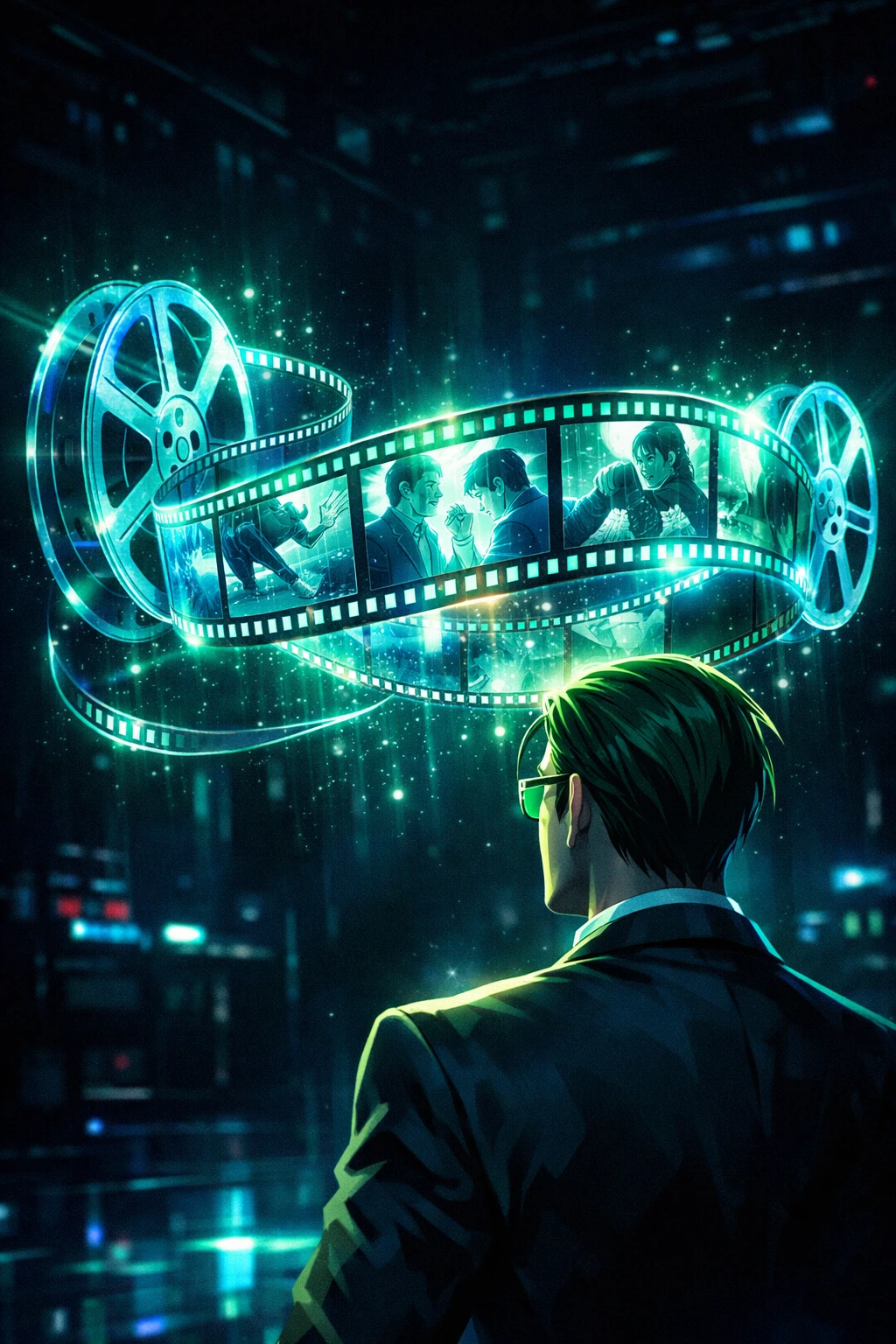
The methodology of how Nighteye actually “saw” the future is a fascinating study in superhuman cognitive processing. When Foresight was activated, he did not look through the target’s eyes, nor did he experience their future sensory input.
Instead, he viewed their life from a distinct, third-person perspective. It was akin to a floating camera angle, meticulously tracking the individual from above and behind. He watched their timeline unfold frame-by-frame, exactly like a spectator watching a biological film reel.
This specific perspective is crucial; it granted Nighteye an objective view of the target’s surroundings, their adversaries, and the environment they would inhabit. However, because it was a silent, visual reel, it required his immense intellect to interpret the context of the actions he was witnessing. He was not just a seer; he was an interpreter of a silent film documenting destiny.
The 24-Hour Cooldown
The physiological and mental toll of processing future timelines necessitated a severe limitation: the 24-hour cooldown. Nighteye could only activate Foresight once a day, and the vision could only track the target for an hour in their future timeline. This was not merely an arbitrary rule, but a necessary biological safeguard preventing cognitive overload.
The human brain, even one mutated by a Quirk, is built to process the present in a linear fashion. Forcing it to simultaneously process the present and perfectly render a future timeline requires an astronomical amount of neurological energy.
Because of this strict cooldown, Nighteye could not use his Quirk as a continuous, omnidirectional radar. He had to treat his power like a high-calibre sniper rifle with a single bullet. It was a tool of final tactical confirmation, reserved exclusively for the most critical juncture of an investigation or the apex of a battle, demanding absolute certainty before he pulled the trigger.
The Brains Behind the Muscle (The Perfect Sidekick)
The Division of Labor
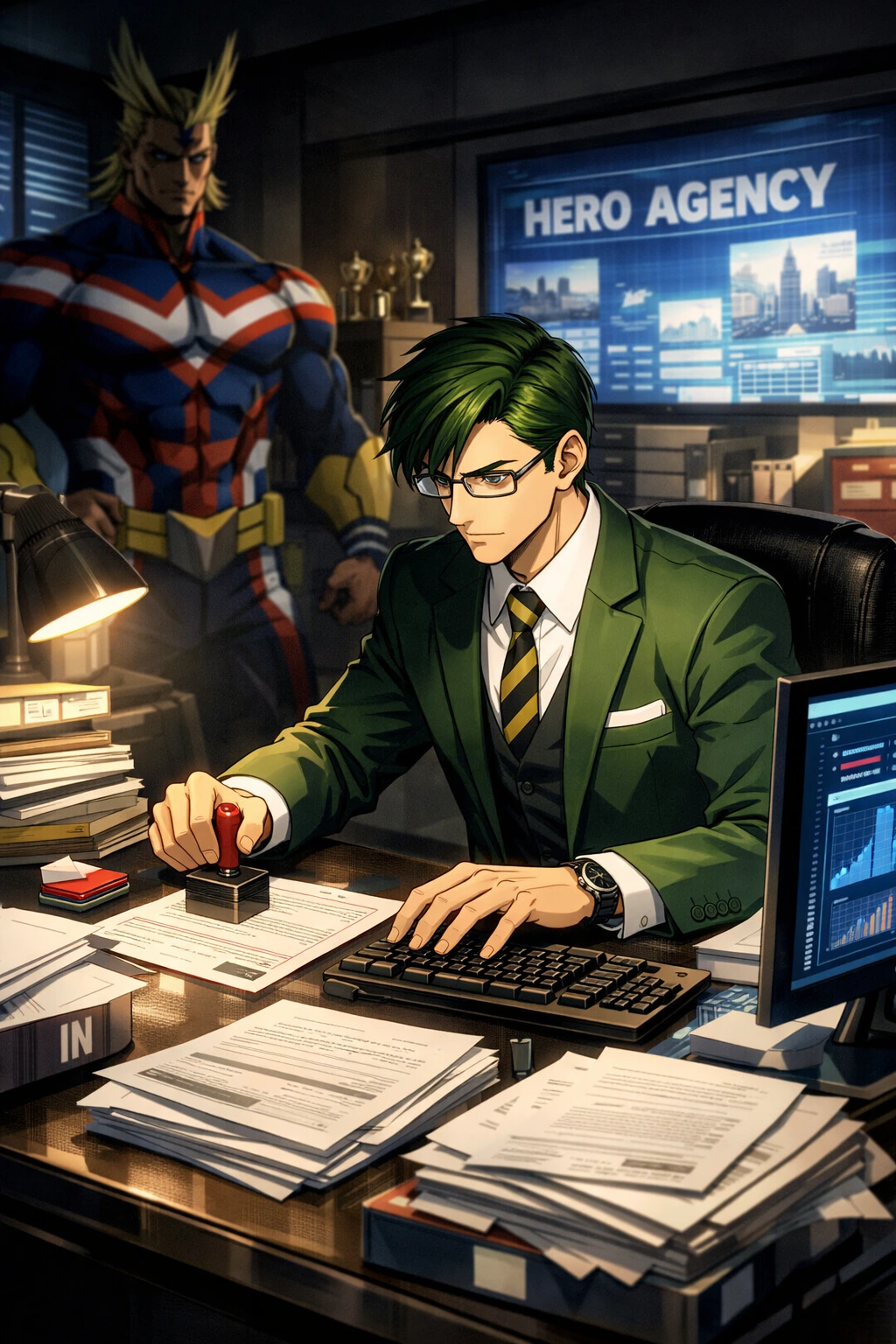
During the zenith of All Might’s career, the hero duo operated with a division of labour so perfectly balanced it bordered on symbiotic. All Might was the ultimate vanguard. He provided the raw, inspirational brawn, the explosive power that shattered villainy, and the towering, charismatic presence that terrified the wicked and comforted the innocent.
But heroism on a national scale is not just about punching villains; it is a logistical nightmare. Nighteye was the grand architect who managed the sprawling, invisible infrastructure that kept the “Symbol of Peace” legally and functionally operational.
He handled the gruelling bureaucratic paperwork, managed the immense public relations campaigns, formulated complex civilian evacuation routes during large-scale disasters, and navigated the intricate web of hero legislation. All Might was the god on the stage; Nighteye was the director, the producer, and the stagehand operating entirely in the shadows, ensuring the stage never collapsed.
The Humour Requirement
To the casual observer, Sir Nighteye appeared to be a severely austere, joyless man, a corporate executive trapped in a hero’s world. Yet, this exterior masked a profound, almost obsessive dedication to comedy. Within his agency, humour was not a suggestion; it was a strict requirement. This eccentric management style stemmed from a deeply philosophical realisation: a hero who saves someone with a grim, terrified, or angry face only saves their physical body.
The true essence of heroism, a lesson he internalised completely from All Might, requires saving the victim’s soul. Fear leaves a permanent psychological scar. A smile, a laugh, or a moment of levity acts as a psychological shield, signalling to the victim that the nightmare is truly over.
Nighteye forced everyone in his agency, from Bubble Girl to Mirio Togata, to understand the complex psychology of a smile. He knew that in a world steeped in violence and chaos, humour was the most sophisticated, deliberate tool a hero could use to restore humanity to those who had lost it.
The Ideological Schism (The Hospital Room Tragedy)
The Unbearable Vision
The greatest hero duo in the history of the world did not end in a blaze of glory against a villain; it ended in the sterile, suffocating silence of a hospital room. Following All Might’s horrific, secret battle with the villainous mastermind All For One—a battle that left All Might missing half of his respiratory organs—Nighteye reached his breaking point.
Driven by desperation and terror for his mentor’s life, Nighteye activated Foresight on All Might. What he witnessed shattered his world. He did not just see a defeat; he saw a gruesome, unspeakable future where the invincible All Might would die an exceptionally tragic and violent death.
For Nighteye, a man whose visions had never once been proven wrong, this was not a possibility—it was an absolute, approaching reality. The sheer terror of this vision fundamentally broke the foundation of their partnership.
Logic vs. Spirit
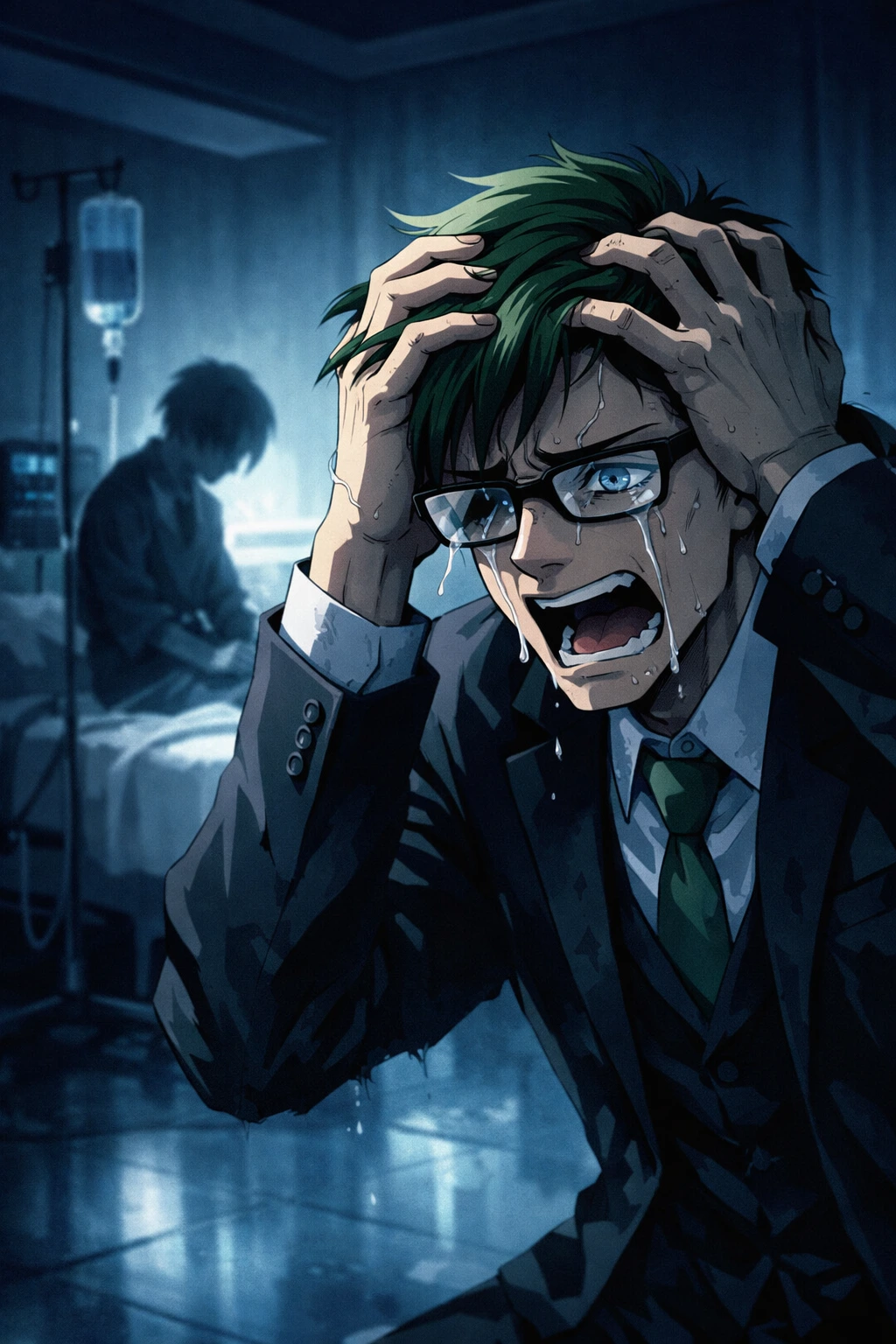
The confrontation that followed was a devastating clash of core philosophies. Nighteye, operating entirely on mathematical logic and the irrefutable evidence of his Quirk, begged All Might to retire. He argued that the “math” was settled. The Symbol of Peace had done enough; to continue fighting was a suicidal defiance of fate.
He pleaded with his partner to pass on One For All and live out his remaining days in peace. All Might, however, categorically refused. This refusal highlighted the profound split between the two. Nighteye represented the preservation of life through logic; All Might represented the essence of a true hero—a spirit that inherently defies logic, common sense, and self-preservation in the name of saving others.
All Might believed that a Symbol cannot simply clock out and retire while people are suffering. This irreconcilable difference in ideology tore them apart, ending their partnership on terms of bitter, tragic sorrow.
The Self-Fulfilling Prophecy
The trauma of that hospital room fundamentally altered how Nighteye utilised his Quirk for the rest of his life. He abruptly stopped using Foresight to look far into the future of the people he cared about. This restraint was born from a terrifying, psychological realisation: the concept of the self-fulfilling prophecy.
In quantum mechanics, observing a particle forces it to choose a state. Nighteye became paralysed by the horrific thought that his Quirk might not just be a passive window into the future, but an active participant in it. What if, by viewing a tragic event, his observation was the exact mechanism locking that timeline into place?
What if his knowledge of All Might’s death subtly altered his own actions, thereby guaranteeing the very future he sought to avoid? This fear of being the author of his friends’ doom forced him to severely restrict his Quirk, chaining his omniscience out of a desperate desire to keep hope alive.
The Mathematics of a Successor (Mirio vs. Midoriya)
The Manufactured Symbol
Sir Nighteye’s core belief regarding the future of society rested on a foundation of rigorous, calculated engineering. He fundamentally believed that the next “Symbol of Peace” could not be left to the whims of destiny, chance, or gut feelings.
The void left by All Might’s inevitable decline was too massive, the societal ramifications too catastrophic, to rely on a romanticised search for a “chosen one.” Nighteye believed the next pillar of society needed to be manufactured.
It required a cold, mathematical approach, identifying a candidate who met every single metric required to uphold the peace. He sought a successor built through logic, systematic training, and flawless execution—a hero who could be empirically proven to be the correct choice before they ever inherited the ultimate power.
The Perfect Vessel
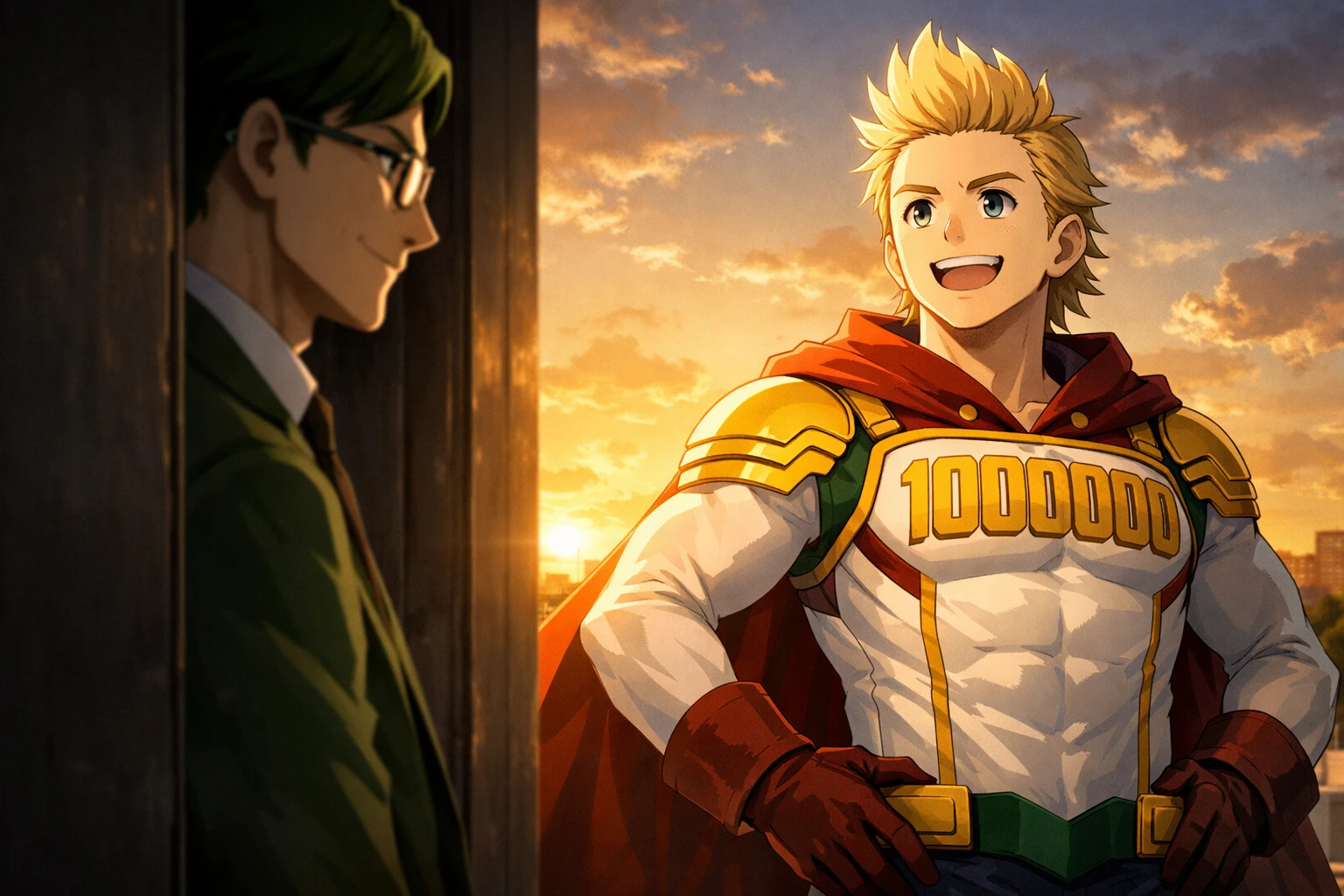
Through his meticulous calculations, Nighteye found his mathematically flawless choice for One For All: Mirio Togata, the hero known as Lemillion. Mirio was not born with a perfect Quirk; in fact, “Permeation” was incredibly dangerous and difficult to master.
But Mirio possessed the exact variables Nighteye was looking for. He had achieved unparalleled physical dominance through sheer, gruelling hard work. He possessed a brilliant tactical intellect capable of processing complex combat geometry in fractions of a second.
Most importantly, Mirio radiated an unbreakable, charismatic warmth. He possessed the psychological armour of a brilliant smile, capable of inspiring hope just as All Might did. To Nighteye, handing One For All to Mirio was not a gamble; it was an airtight, peer-reviewed equation that guaranteed a 100% success rate for the future of humanity.
The Resentment of the Unknown
When All Might bypassed Nighteye’s meticulously crafted plan and bestowed One For All upon Izuku Midoriya—a Quirkless, crying, physically fragile teenager—Nighteye’s reaction was one of profound, cold resentment. He did not view Midoriya with the sympathetic eyes of a mentor.
To Nighteye, Midoriya was a chaotic, illogical variable that had been injected into a perfectly engineered system. Midoriya’s tendency to shatter his own bones, his reckless martyrdom, and his deep-seated insecurities were everything Nighteye believed the Symbol of Peace could not afford to be.
Nighteye treated Midoriya with harsh, uncompromising severity because he viewed the boy as an emotional mistake made by a dying god. Midoriya represented the triumph of unpredictable sentimentality over proven, calculated logic, a reality Nighteye outright refused to accept as valid until the very end.
The Yakuza Raid (A Masterclass in Bureaucratic Warfare)
The Intelligence Gatherer
When the threat of the Shie Hassaikai and the villain Overhaul emerged, Nighteye demonstrated why he was arguably the most dangerous hero in Japan without a purely offensive Quirk. Frontline heroes like Endeavour or Mirko operate as hammers, smashing through problems with overwhelming force.
Nighteye operated as a scalpel. He spent months operating entirely in the shadows, piecing together the invisible threads of black-market logistics. He tracked the intricate, layered shell companies of the yakuza’s funding, monitored the distribution of the Quirk-destroying drugs, and meticulously gathered actionable intelligence.
He built an irrefutable, ironclad legal case, securing warrants and organising a massive, multi-agency strike force. Before a single punch was thrown, Nighteye had already strategically cornered the Shie Hassaikai. He proved that true modern heroism is as much about bureaucratic warfare and intelligence gathering as it is about physical combat.
The Combat Application of Foresight
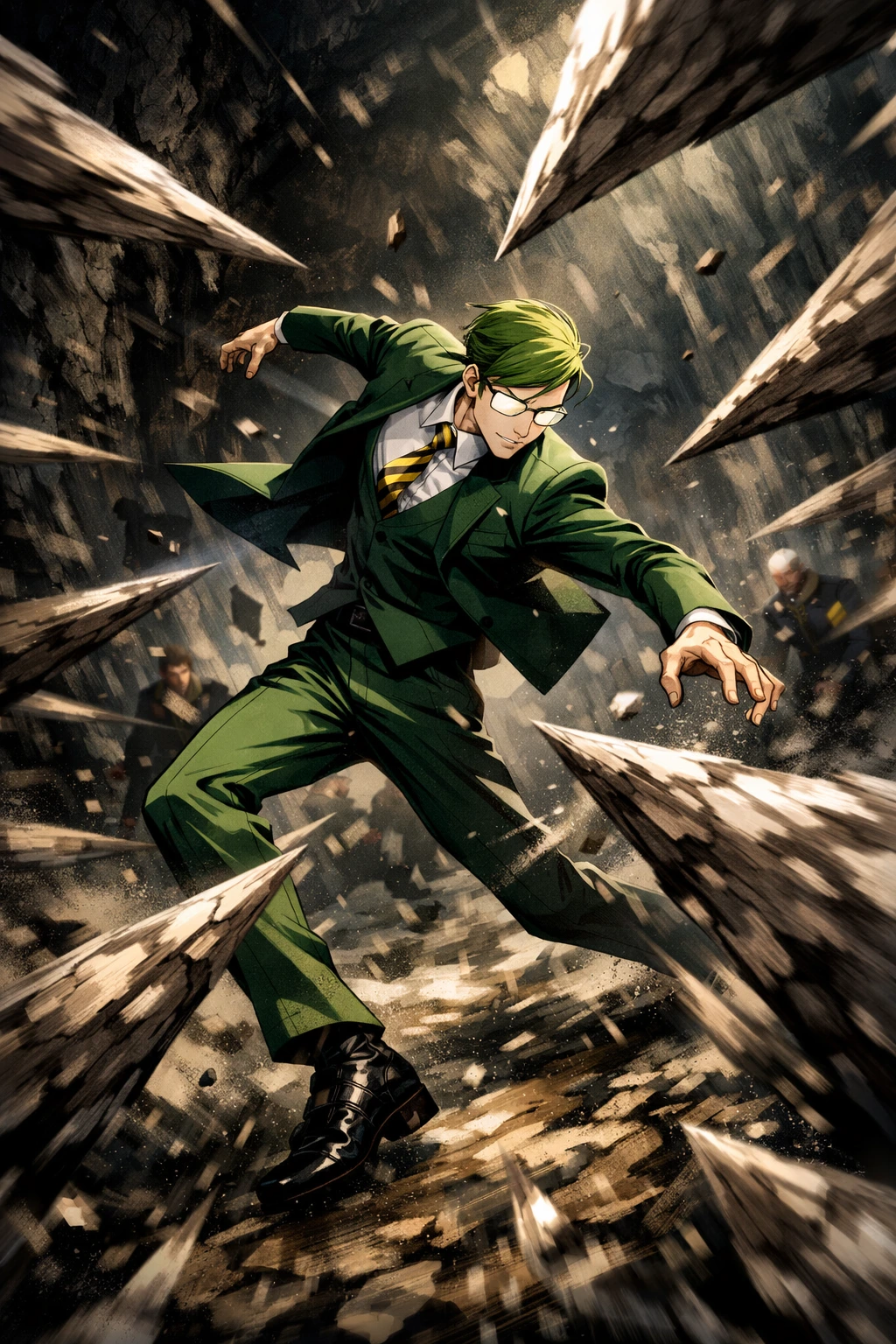
While his primary domain was the office, Nighteye’s application of Foresight in physical combat was a terrifying display of tactical supremacy. When confronted by the overwhelming physical power of a Rappa clone and later the god-like restructuring abilities of Overhaul, Nighteye fought flawlessly.
He possessed only the standard physical strength of a highly trained human, yet he moved like a phantom. By activating Foresight on his opponent, he could see their exact movements seconds before they occurred. He dodged lethal, supersonic spikes not by being faster than them, but by simply not being there when they arrived. He stepped precisely into the millimetre-perfect blind spots of his enemies.
It was a combat style devoid of wasted motion or panic. He fought like a grandmaster who had already read his opponent’s entire script, turning a life-or-death struggle into a cold, calculated choreography of evasion and precise counter-strikes.
The Death of Destiny (The Overhaul Climax)
The Inevitable Frame
The climax of the Shie Hassaikai raid brought Sir Nighteye face-to-face with his greatest nightmare. During his battle with the monstrously mutated Overhaul, Nighteye was forced to use his Quirk. As the biological film reel of the future played in his mind, the psychological devastation was absolute.
He looked into the immediate future and saw the inevitable frame: his own fatal impalement at the hands of the villain. But the horror did not stop there. Because his Quirk showed him the subsequent events, he watched the timeline roll forward, bearing witness to the exact frame where Overhaul brutally murdered Izuku Midoriya, secured the child Eri, and escaped.
It was a vision of total, unmitigated failure. Armed with this absolute knowledge, Nighteye fought not to win, but to simply delay the inevitable, stepping forward into a death he knew with 100% certainty he could not avoid.
The Impalement
The reality of the fatal blow was visceral, brutal, and tragically precise, matching his vision to the exact second. Overhaul, manipulating the earth itself, launched a massive, jagged rock spike with blinding speed. The projectile struck Nighteye with devastating force, impaling him directly through the left arm and deep into his chest cavity.
This was not a superficial, anime-style flesh wound; it was a catastrophic, unsurvivable injury. The massive stone column effectively destroyed his internal organs, violently halting his combat effectiveness and resigning him to the fate he had foreseen.
As he lay bleeding against the cavern wall, physically broken and mentally defeated, Nighteye accepted that the future he had prophesied was coming to pass, just as it always had.
Shattering the Reel
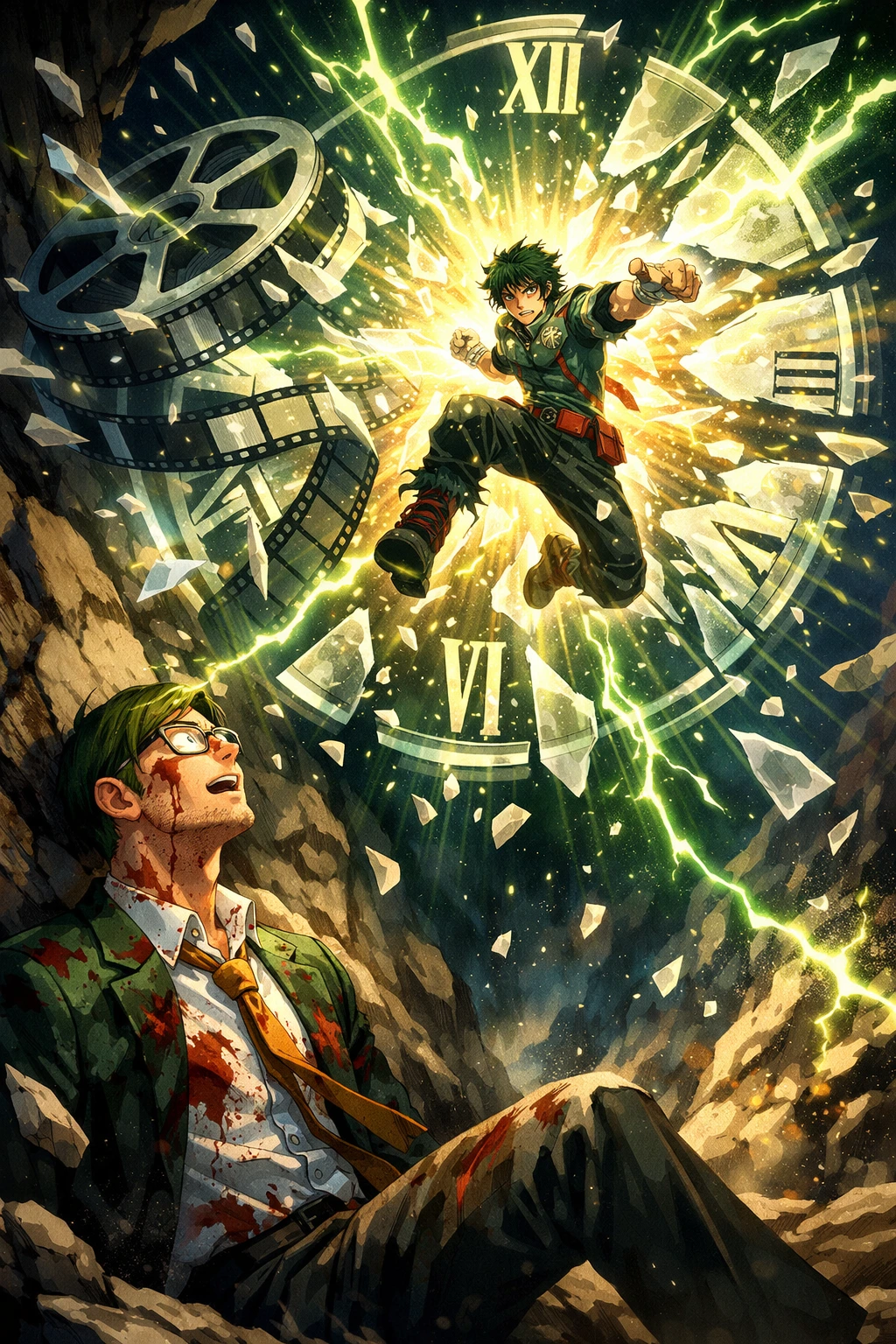
What happened next remains one of the most awe-inspiring, paradigm-shifting moments in hero history. Izuku Midoriya, refusing to accept the “absolute” future Nighteye had proclaimed, strapped the child Eri to his back. Fueled by a desperate, suicidal determination and utilising Eri’s “Rewind” Quirk to constantly heal his shattering body, Midoriya accessed 100% of One For All.
As Nighteye watched, bleeding to death, the impossible occurred. Midoriya moved with a speed and ferocity that did not exist on the film reel Nighteye had just watched. The young hero physically outpaced the predicted frames, twisting destiny with his bare hands. He was completely overwhelmed and defeated Overhaul, surviving the encounter.
In that transcendent moment, as the sky broke open, Nighteye realised that the immutable, absolute laws of his Foresight Quirk had been broken. Destiny had been shattered by the sheer, unquantifiable willpower of a boy he had deemed unworthy.
The Final Vision (The Energy of Hope)
The Apology to the Successor
The aftermath of the raid shifted to the sombre, sterile environment of a hospital room—a poetic, tragic echo of the very room where he and All Might had their falling out years prior.
Surrounded by his peers, All Might, and his students, Nighteye faced his final moments. In a heartbreaking display of humility, the man who had lived his entire life by the rigid rules of logic offered a profound apology to Izuku Midoriya. He acknowledged that his calculations were flawed.
Midoriya’s chaotic, unquantifiable passion, his reckless love for others, and his sheer refusal to yield to a dark fate were, in fact, the correct choice for One For All. Nighteye, in his dying breaths, admitted that he was wrong to dismiss the boy, finding peace in the knowledge that All Might’s legacy was safe in the hands of a true hero.
The Theory of Collective Energy
As his life faded, Nighteye formulated one final, brilliant theory to explain the impossible phenomenon he had witnessed. How had Midoriya broken a Quirk that had never once been wrong in decades? Nighteye concluded that the future was not altered by Midoriya’s physical strength alone. Instead, he theorised the existence of a “collective energy.”
The desperate, unified desire of everyone present—Midoriya, Mirio, Uraraka, Tsuyu, Kirishima, Aizawa, and the police force—all radiating an intense, unified wish to “save Eri,” converged into a singular, overwhelming force.
This collective energy of hope and determination became so dense and powerful that it literally warped the fabric of destiny itself, rewriting the future. It was Nighteye’s final, beautiful concession that the human spirit possesses a power far greater than any mathematical certainty.
The Final Smile
Sir Nighteye’s last act on earth was reserved for his greatest masterpiece, his beloved student, Mirio Togata. Mirio had lost his Quirk protecting Eri, a sacrifice that devastated both of them. Yet, as Mirio wept over his dying mentor, Nighteye utilised his “Foresight” one final time.
Looking into the boy’s future, Nighteye saw beyond the immediate tragedy. He saw the magnificent hero Mirio was destined to become. With his final breath, Nighteye assured Mirio that his future was bright, commanding him to keep smiling, because a society without smiles has no future.
Sir Nighteye passed away with a gentle, peaceful smile on his face, proving definitively that the spirit of heroism, the enduring legacy of hope, and the power of a smile will always outlive the fragile flesh.
Conclusion
The Casualty of Logic
Sir Nighteye stands as one of the most tragic and deeply complex figures in the My Hero Academia narrative. He was a casualty of his own logic. His Quirk forced him to view the world as a rigid, unchangeable equation, blinding him to the true, unpredictable miracles that can be birthed from human willpower.
He spent years alienated from his greatest friend, trapped in a self-imposed prison of fatalism. Yet, his tragedy is beautifully resolved in his final moments.
His death was not in vain; it was the catalyst that allowed him to finally see the light he had spent so long hiding from. He died a man who had his entire worldview shattered, and he was profoundly grateful for it.
Actions Have Fatal Consequences
The death of Mirai Sasaki permanently altered the tonal landscape of the series. It served as a brutal, irrevocable wake-up call to Izuku Midoriya, Mirio Togata, and the entire next generation of heroes.
Nighteye’s demise proved that the world they inhabit is not a playground where heroes always walk away unscathed. It demonstrated that the war against villainy carries permanent, fatal consequences. By dying, Nighteye forced his students to instantly grow up, shedding their naivety.
He left behind a legacy of meticulous preparation, the absolute necessity of psychological resilience, and the undeniable truth that the future is never written in stone—it is forged, moment by moment, by those brave enough to fight for it with a smile.