
Introduction
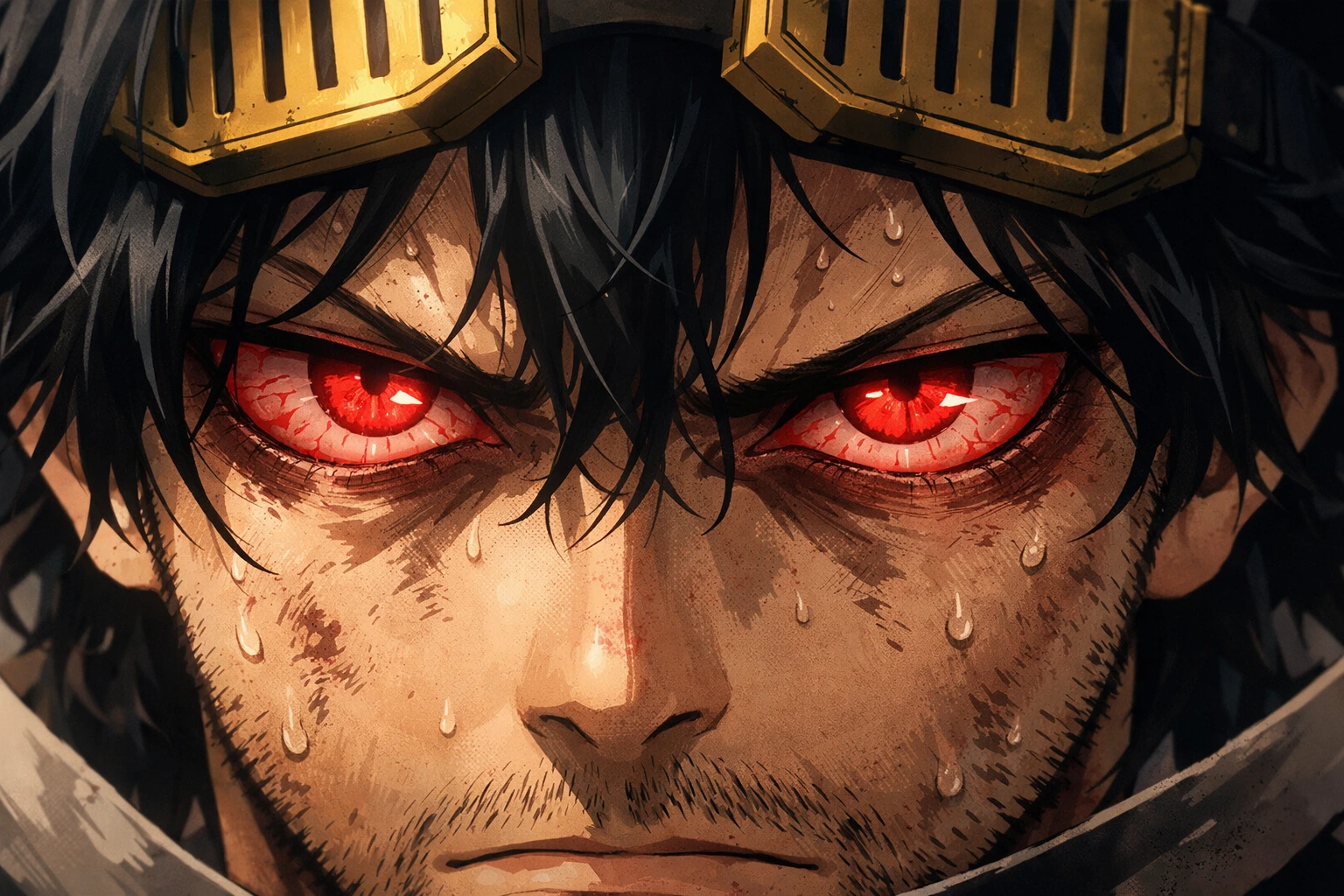
The Power of Nullification: Defining Shota Aizawa (Eraser Head) not by what his Quirk can do, but by what it prevents others from doing. He is the ultimate equalizer in a society built on genetic superiority.
In the superhuman society of My Hero Academia, value, potential, and social hierarchy are almost entirely dictated by the genetic lottery of Quirks. From the moment of birth, individuals are categorized by the destructive output, the physical enhancement, or the sheer spectacle of their inherent abilities.
Society worships the flashy, the bombastic, and the god-like—figures who can summon infernos, manipulate gravity, or level city blocks with a single punch. Within this blindingly bright ecosystem of genetic superiority, Shota Aizawa, known professionally as the Pro Hero Eraser Head, exists as a profound anomaly.
He is not defined by what his Quirk can create, destroy, or enhance, but rather by what it prevents others from doing. Aizawa is the ultimate equalizer. In a world of literal gods among men, his singular ability is to rip those gods back down to a mortal baseline.
He strips away the genetic advantages that villains and heroes alike have relied upon for their entire lives, forcing them into a state of sudden, terrifying vulnerability. His power is the power of nullification—a stark, silent void in a world defined by noise. It is a terrifying proposition for any adversary: the sudden realization that their fire, their speed, their invulnerability is gone, leaving only the fragile human underneath.
The Underground Philosophy: A brief overview of his deliberate rejection of media, fame, and the traditional “Symbol” status, operating strictly in the shadows where real crime happens.
This unique, subversive power set perfectly mirrors Aizawa’s personal philosophy regarding heroism. He is a staunch, unapologetic Underground Hero, a classification that actively rejects the commercialization, media presence, and celebrity status that defines the top echelon of the Pro Hero Billboard Chart.
While heroes like All Might and Endeavor operate as dazzling beacons of hope or intimidation in the broad daylight, plastering their faces on billboards and giving charismatic interviews, Aizawa operates strictly in the shadows. He recognizes that while “Symbols of Peace” are necessary for public morale, the true, rotting core of villainy does not operate in front of news cameras.
Real crime happens in the alleyways, the abandoned warehouses, and the dead of night. By remaining an unknown entity to the general public and the media, Aizawa weaponizes his obscurity. A villain cannot prepare for a hero they do not know exists.
This deliberate rejection of fame is not born of arrogance, but of a calculated, pragmatic understanding of his own abilities and the nature of his work. He is a predator in the dark, dismantling criminal syndicates with surgical precision, unbothered by rankings or merchandise sales, driven only by the grim necessity of keeping the streets clean.
Article Scope: Establishing this as the definitive, expert-level breakdown of the biological mechanics of “Erasure,” the physics of his Capturing Weapon, the psychological trauma that dictates his teaching methods, and his role as the absolute anchor of the hero forces.
This article serves as a definitive, expert-level breakdown of the multifaceted entity that is Shota Aizawa. To truly understand Eraser Head, one must look far beyond a surface-level summary of his actions. We will deconstruct the in-universe biological mechanics and strict limitations of his Quirk, “Erasure,” exploring the agonizing physiological toll it takes on his body.
We will analyze the physics and martial arts mastery required to wield his signature Capturing Weapon, effectively weaponizing a state of Quirklessness. Furthermore, we will delve deep into the psychological trauma of his past—specifically the tragedy of Oboro Shirakumo—to understand the grim, uncompromising “Logical Rationale” that dictates his infamous teaching methods.
Finally, we will trace his harrowing journey through the series’ most brutal conflicts, from the USJ incident to the catastrophic Paranormal Liberation War, cementing his status not just as a teacher, but as the absolute, bleeding anchor of the entire Pro Hero force.
The Biology of “Erasure” (The Stare)
Pausing the Quirk Factor: Deconstructing the actual science of his Quirk. Clarifying the massive misconception that he “deletes” powers. He actually temporarily blocks the genetic Quirk Factor from activating the body’s Quirk appendages/emitters.
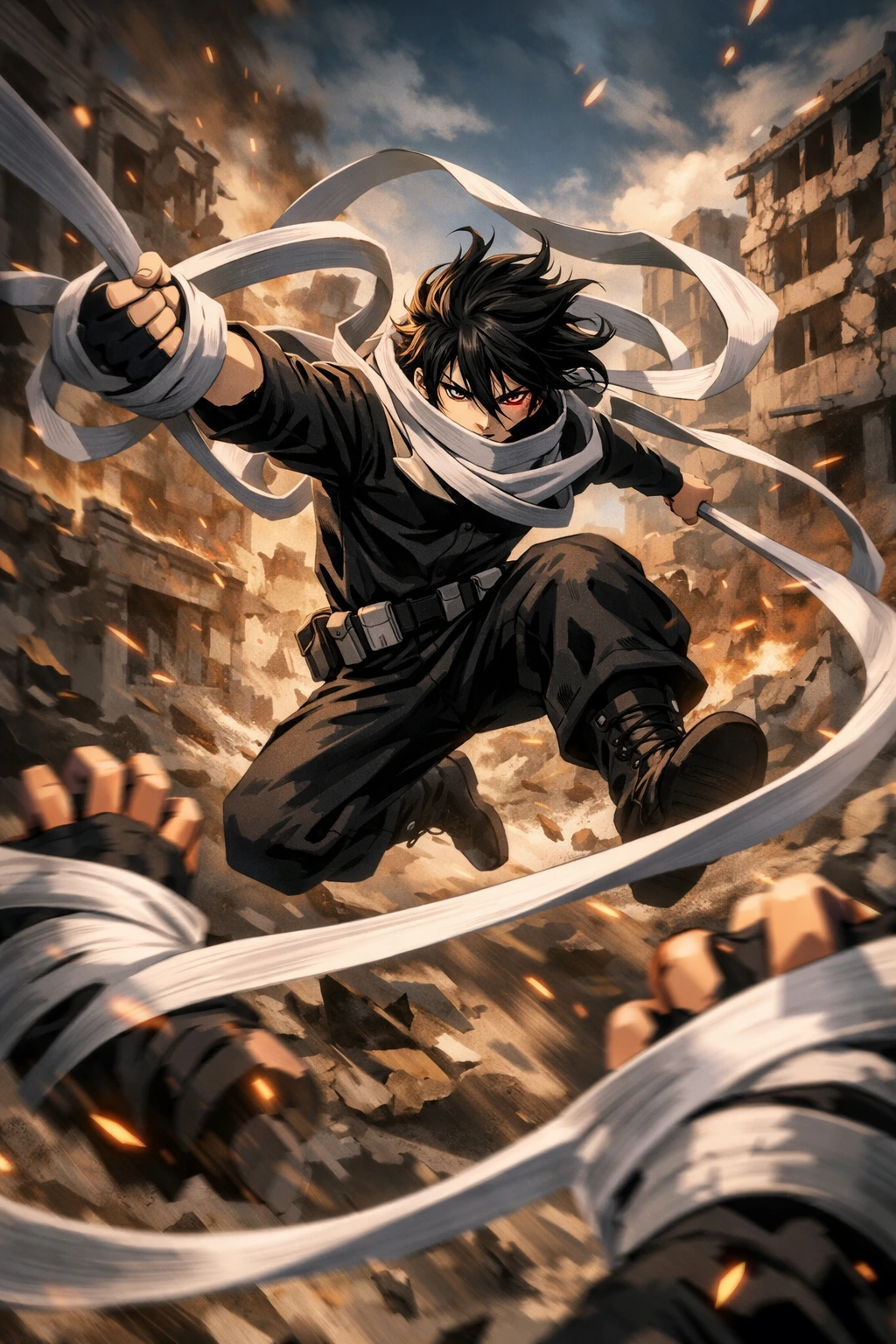
To analyze Aizawa’s effectiveness on the battlefield, one must first dissect the actual, biological science behind his Quirk, “Erasure.” There is a widespread, fundamental misconception among both the public within the series and casual observers that Aizawa “deletes” or “removes” a person’s power.
This is biologically inaccurate. In the lore of My Hero Academia, Quirks are governed by the “Quirk Factor”—the collective genetic and physical traits that allow an ability to function, including the specific neural pathways, organs, and the mysterious “Plus Alpha” elements unique to the superhuman anatomy. Aizawa’s visual technique does not erase this genetics; rather, it acts as a severe, localized neural block.
When Aizawa locks eyes with a target, he essentially severs the internal communication between the target’s brain, their Quirk Factor, and the physical appendages or emitters required to manifest the power. He hits the “pause” button on their genetic expression. The villain still possesses their Quirk; their body simply receives an overriding biological command preventing it from activating.
This effect requires uninterrupted visual contact. The moment Aizawa blinks, or his line of sight is obstructed by a solid object, the neural block lifts, and the target’s Quirk Factor instantly re-engages. This makes Erasure a power of absolute suppression, but one balanced on the razor’s edge of human physiology.
The Mutant Loophole: The strict biological limitation. Why he cannot erase physical mutations (like Ojiro’s tail or a Nomu’s raw muscle density), but can stop a mutant from using secondary emission abilities.
However, Erasure is not an omnipotent switch; it possesses a strict, highly documented biological loophole regarding Heteromorphic, or “Mutant” type Quirks. Aizawa’s ability interrupts activation signals; it cannot magically alter physical matter or rewrite existing anatomy in real-time.
Therefore, if a person’s Quirk is a permanent physical mutation—such as Mashirao Ojiro’s prehensile tail, Mezo Shoji’s multiple limbs, or the terrifying, bio-engineered raw muscle density of an upper-tier Nomu—Aizawa cannot “erase” these features. A tail will not suddenly fall off, and enhanced muscle tissue will not spontaneously shrink. The physical structure remains.
Yet, the nuance of Erasure lies in its ability to halt secondary functions. If a mutant-type individual possesses an active ability generated by their mutation—for example, if a villain with a reptilian mutation can spit acid from glands in their throat, or if a Nomu possesses a rapid-regeneration factor triggered by cellular commands—Aizawa can erase those specific active functions.
He cannot remove the acid glands, but he can paralyze the mechanism that fires the acid. This limitation forces Aizawa into a state of hyper-vigilance, requiring him to instantly categorize a villain’s Quirk type upon sight and adjust his combat strategy to account for enduring physical anomalies.
The Hardware Flaw (Dry Eye): The physiological toll. How maintaining the stare creates severe, crippling dry eye syndrome, and how every second he keeps his eyes open in combat is a battle against his own body’s blink reflex.
The most tragic and defining limitation of Erasure, however, is not external, but internal: the severe physiological toll it takes on Aizawa’s own body. Aizawa is plagued by a chronic, debilitating condition of “Dry Eye,” a direct byproduct of keeping his eyes forced open in high-wind, high-debris combat environments for extended periods. The human blink reflex is an involuntary, instinctual mechanism designed to lubricate and protect the cornea.
Every second Aizawa suppresses this instinct to maintain Erasure, the tear film on his eyes evaporates, leading to intense burning, friction, and microscopic corneal abrasions. In the heat of battle against multiple overpowered villains, blinking is synonymous with death; a fraction of a second is all it takes for a villain’s power to reignite and obliterate him.
Thus, his fights are not merely physical brawls; they are agonizing endurance tests against his own anatomy. He relies on specialized eye drops, but these are only temporary reprieves. As battles wear on, his vision blurs, the pain becomes blinding, and the duration he can hold his stare drastically decreases.
His Quirk, while conceptually overpowering, is inextricably linked to the most fragile, sensitive organ in the human body, turning his greatest weapon into an agonizing ticking clock.
Weaponizing Quirklessness: The Capturing Weapon
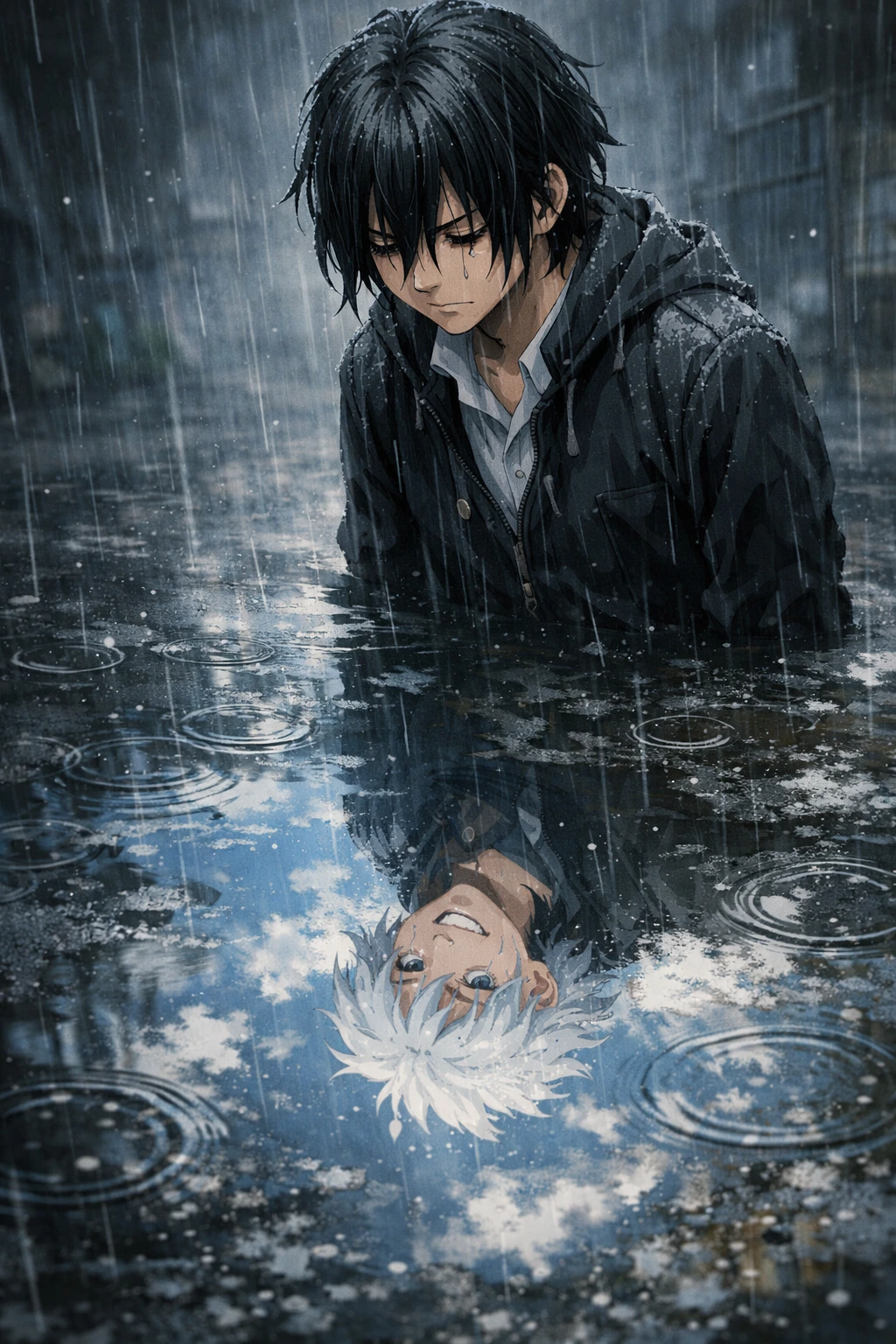
The Physics of the Binding Cloth: Analyzing the signature scarf. A complex alloy woven from carbon fiber and a special metal wire, designed to respond to his subtle upper-body movements.
Because Erasure inherently forces both Aizawa and his opponent onto a level playing field stripped of superpowers, Aizawa must bridge the gap in fundamental physical combat. To achieve this, he wields his signature Capturing Weapon (the Sōfu Bakufu). To the untrained eye, it appears to be mere cloth, but it is a marvel of tactical engineering and applied physics.
The scarf is constructed from a highly advanced, proprietary alloy: a weave of carbon fiber laced with a specialized, flexible metal wire. This unique composition gives the material incredible tensile strength, capable of restraining individuals with superhuman base strength, while remaining incredibly lightweight. The true mastery, however, lies in how Aizawa manipulates it.
The weapon is not automated; it does not move on its own. It is designed to respond dynamically to the kinetic energy generated by Aizawa’s subtle, high-speed upper-body movements, combined with his manipulation of static electricity and momentum.
By snapping his wrists, shifting his shoulders, and controlling the tension of the weave, he can command the ribbons to lash out like prehensile limbs, ensnaring targets, redirecting attacks, or acting as grappling lines to propel himself through three-dimensional space.
The Combat Disadvantage: The terrifying reality of Aizawa’s fighting style. Because Erasure offers zero physical enhancement, he is essentially a Quirkless martial artist the moment he enters close-quarters combat against villains whose base strength exceeds normal human limits.
The necessity of the Capturing Weapon underscores the terrifying reality of Aizawa’s fighting style: he operates at a severe combat disadvantage. Unlike heroes with Quirks that grant super-strength, hyper-speed, or kinetic shielding, Erasure offers zero physical enhancement to Aizawa’s own body.
When he leaps into a fray, he is essentially operating as a completely “Quirkless” martial artist relying entirely on baseline human conditioning, agility, and spatial awareness. When he erases a villain’s Quirk, he may nullify their fire or ice, but if that villain is simply a massive, 300-pound brawler, Aizawa must physically subdue a larger, stronger opponent using only his bare hands and his scarf.
If he misses a dodge, a punch from a physically imposing villain will break his bones just as easily as it would a civilian’s. This dynamic means his fighting style cannot rely on overwhelming force; it must rely entirely on misdirection, leverage, grappling, and the element of absolute surprise. He is the ultimate glass cannon of martial arts, where a single misstep or a momentary lapse in spatial awareness can result in lethal consequences.
The Goggles: The tactical genius behind his headgear. Hiding his line of sight so groups of villains cannot determine whose Quirk is currently erased, forcing them into a state of hesitation.
To maximize his effectiveness and manipulate the battlefield psychology, Aizawa integrates a crucial piece of support equipment: his slotted goggles. While they offer minor protection against debris, their primary function is purely tactical misdirection. Erasure only works on targets Aizawa is directly looking at.
If he is facing a group of five villains, he might only be able to actively erase the Quirks of two or three depending on their positioning in his visual field. Without the goggles, the villains could easily track his eye movements and deduce who is currently suppressed and who is free to attack.
The golden, slotted design of the goggles completely obscures his eyes, hiding his line of sight from the enemy. This creates a state of “Schrödinger’s Erasure.” A group of villains is forced into a state of panicked hesitation, as none of them can be certain if their Quirk will activate if they try to use it, or if attempting an attack will leave them defenseless. The goggles weaponize fear and uncertainty, stalling groups of enemies and buying Aizawa the precious seconds he needs to close the distance and employ his Capturing Weapon.
The Ghost of Shirakumo (The Origin of “Logical Rationale”)
The Trauma of Loss: How the death of his best friend, Oboro Shirakumo, permanently altered his worldview. The transition from an insecure, hesitant student to a ruthless pragmatist.
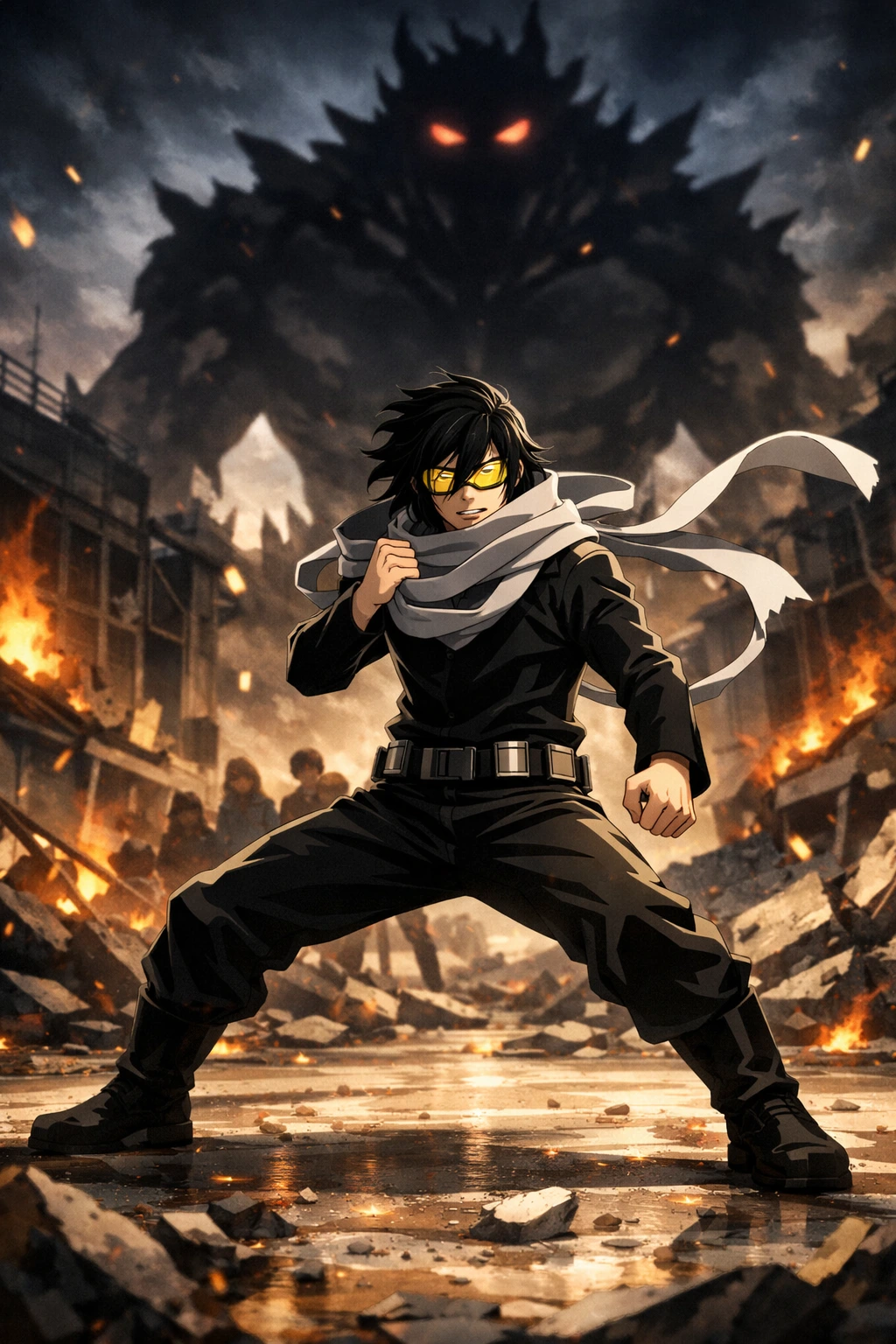
To understand the grim, uncompromising demeanor of Shota Aizawa, one must look back to his formative years at U.A. High School, before he was the hardened Eraser Head. The core of his psyche is inextricably anchored to the trauma of loss—specifically, the tragic death of his best friend and classmate, Oboro Shirakumo.
During their student days, Aizawa was heavily insecure about the combat viability of his Quirk, often doubting his potential to be a hero on the front lines. Shirakumo, the buoyant and endlessly optimistic wielder of the “Cloud” Quirk, was his anchor, constantly pushing Aizawa to believe in his own utility and envisioning a future where they would start a hero agency together.
This dream was violently shattered during a work-study patrol when a villain attack brought a building crashing down, crushing Shirakumo to death before Aizawa’s eyes. This sudden, brutal loss of the brightest light in his life permanently fractured Aizawa’s worldview. It ripped away any lingering youthful naivety about the glamour of heroism.
He realized, with visceral horror, that in the hero profession, a single mistake, a moment of hesitation, or a lack of absolute preparation results in permanent, irreversible death. The insecure student died under that rubble alongside his friend, and the ruthless, hyper-pragmatic Eraser Head was born from the ashes.
The “Expulsion” Metric: Deconstructing his infamous reputation as a teacher. Why he expelled an entire class of first-years. It is not malice; it is a desperate, calculated psychological tactic to teach them the reality of death, ensuring no one ever dies a pointless death like Shirakumo.
This profound trauma is the direct origin of Aizawa’s controversial educational philosophy, which he terms “Logical Rationale.” When he is introduced as the homeroom teacher for Class 1-A, his reputation precedes him as an exceptionally harsh instructor who once expelled an entire class of 154 first-year students.
To the uninitiated, this seems like an act of extreme malice or unfitness for teaching. However, a deeper analysis reveals that his “expulsion” metric is born entirely out of a desperate, calculated love for his students, fueled by the ghost of Shirakumo. Aizawa views the traditional, encouraging methods of teaching as dangerous coddling.
If a student is complacent, overly reliant on a flashy Quirk, or lacks the instinct for survival, allowing them to graduate into the field is tantamount to signing their death warrant. His threat of expulsion—and his willingness to follow through—is a psychological tactic designed to simulate the absolute stakes of the real world.
By artificially cutting away their safety net and forcing them to face the “death” of their academic careers, he pushes them to their absolute limits to see who possesses the grit to survive. Furthermore, it is revealed that he often “re-enrolls” expelled students, using the trauma of the expulsion to force a reset in their mentality.
He subjects them to cruelty in the classroom so that they do not bleed out in the streets. He would rather be hated by his students than attend their funerals.
The Guardian of Class 1-A
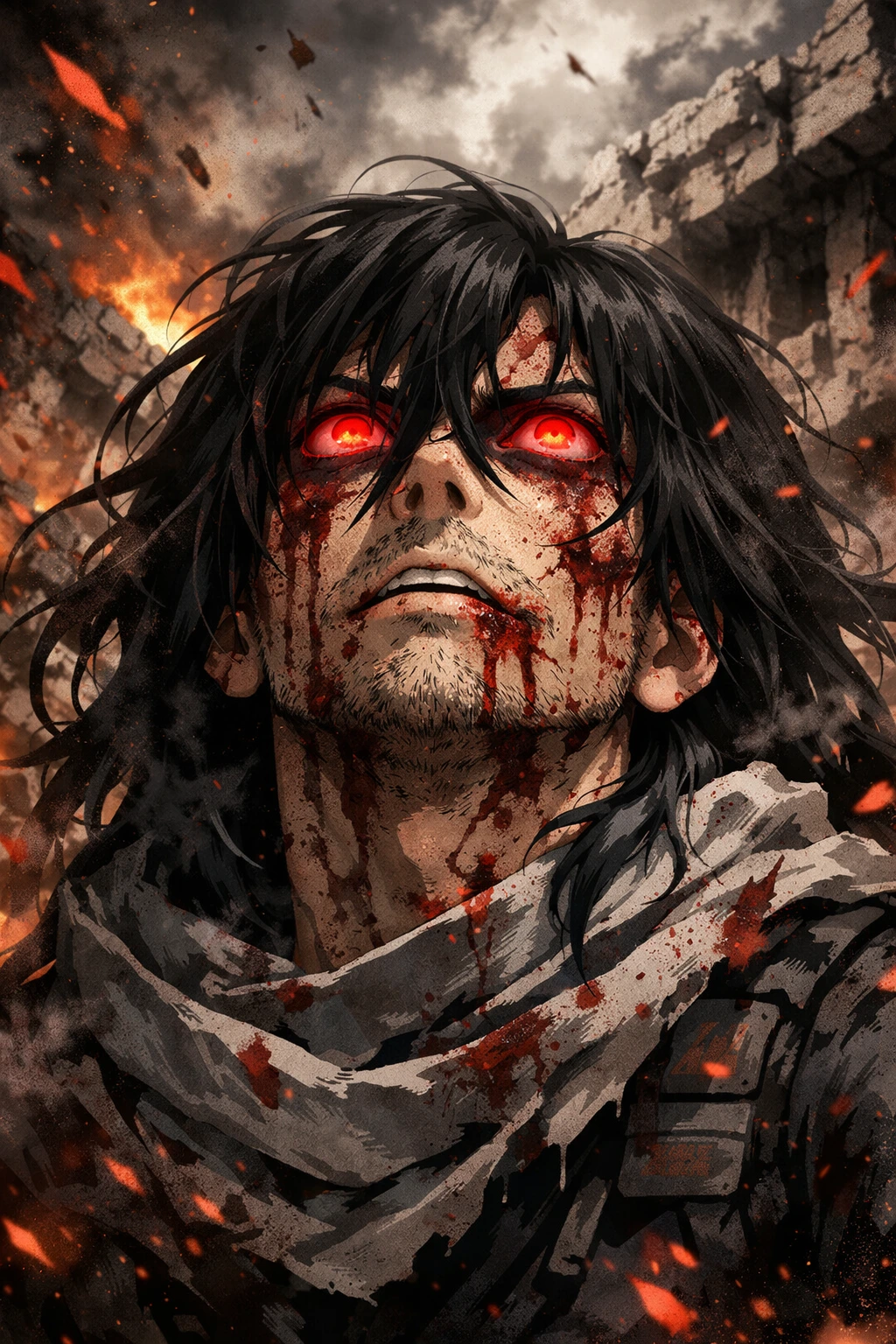
The USJ Masterpiece: The tactical breakdown of his first major battle protecting the students. Diving headfirst into a horde of villains to buy seconds of time.
The true testament to Aizawa’s methodology and his unyielding dedication to his students is forged in blood during the Unforeseen Simulation Joint (USJ) incident. When the League of Villains suddenly ambushes the training facility with an army of low-to-mid-tier thugs, Aizawa’s reaction is an absolute masterclass in tactical threat assessment and self-sacrifice. He instantly recognizes that his students are utterly unprepared for a lethal skirmish.
Despite being surrounded by over seventy villains in an open plaza—an environment perfectly designed to exploit the physical weaknesses of his Quirk—Aizawa dives headfirst into the horde without a second of hesitation. His goal is not to win the war, but to buy seconds of time.
He prioritizes ranged fighters, erasing their Quirks mid-attack to sow confusion, using his Capturing Weapon to vault over heavily mutated brawlers, and dismantling the enemy’s formation through sheer speed, martial arts, and the terrifying illusion of omnipresence created by his goggles. It is a desperate, high-wire act of crowd control, where he willfully acts as the singular target of all hostile aggression to ensure his students can scatter to safety.
The Biological Beatdown: The visceral horror of his fight against the USJ Nomu. Having his skull fractured and arms snapped, yet continuing to stare down Shigaraki to save Midoriya’s life.
However, the tactical brilliance of the USJ battle quickly devolves into one of the most viscerally horrific physical beatdowns in the series, highlighting the extreme vulnerability of Aizawa’s combat style. When Tomura Shigaraki unleashes the bio-engineered Nomu, Aizawa is confronted with an adversary whose base, Quirkless physical strength is designed to rival All Might.
Erasure is useless against the Nomu’s raw mass. The resulting confrontation is not a fight; it is a massacre. The Nomu shatters Aizawa’s arms like twigs and pulverizes his face into the concrete pavement, fracturing his orbital floor and inflicting traumatic brain injury.
Yet, the defining moment of Aizawa’s character occurs in the immediate aftermath of this mutilation. As he lies immobilized, bleeding out, and fading from consciousness, Shigaraki lunges to decay Tsuyu Asui and Izuku Midoriya.
Through agonizing pain, fighting against a shattered skull and failing vision, Aizawa manages to lift his head, force his bloodied eyes open, and erase Shigaraki’s Quirk a fraction of a second before contact. He defies his own broken biology to fulfill his duty as a guardian.
The Kamino Press Conference: His role as the ultimate psychological shield. How he completely reversed the media’s narrative against U.A., defending Bakugo’s character on national television and proving he understands his students better than anyone.
Aizawa’s role as a guardian extends far beyond physical violence; he is also the ultimate psychological and institutional shield for Class 1-A. This is perfectly encapsulated during the Kamino Ward arc, following the kidnapping of Katsuki Bakugo.
The national media launches a vicious campaign against U.A. High School, questioning their competence and suggesting that Bakugo’s aggressive demeanor makes him a prime candidate to turn to villainy. Forced into a deeply uncomfortable public press conference alongside Principal Nezu and Vlad King, Aizawa, clad in formal attire and still heavily bandaged from previous battles, delivers a devastatingly cold, precise rebuttal.
He does not offer platitudes; he offers clinical analysis. He publicly dismantles the media’s superficial assessment of Bakugo, defending the boy’s unwavering, albeit ferocious, dedication to becoming a top hero. Aizawa flatly states that anyone who thinks Bakugo could be swayed by villainy has not spent a single second actually looking at him.
In doing so, Aizawa completely reverses the hostile media narrative, taking the collective blame onto his own shoulders while reinforcing a wall of absolute trust around his student. He proves that behind his lethargic, uncaring exterior, he possesses a profound, almost terrifyingly accurate psychological understanding of the children under his care.
The Jaku Hospital Anchor (The War Arc)
The Only Countermeasure: The terrifying realization during the Paranormal Liberation War. Once Tomura Shigaraki awakened with All For One’s Quirks, Aizawa became the singular, fragile thread keeping the entire Pro Hero force from being instantly dusted.
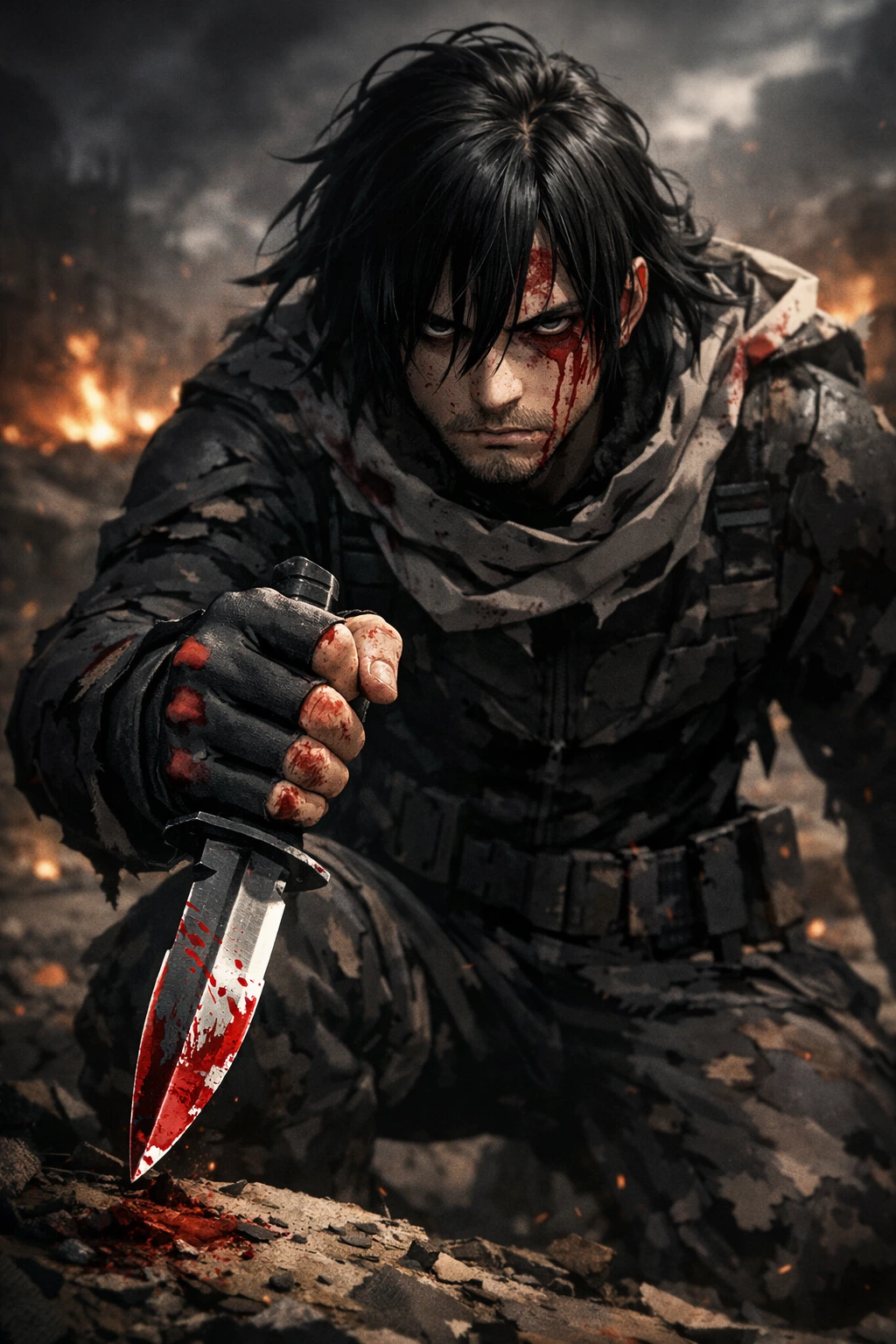
The pinnacle of Aizawa’s importance to the world at large, and the ultimate test of his endurance, arrives during the catastrophic Paranormal Liberation War, specifically during the raid on Jaku Hospital. The hero society’s worst nightmare is realized when Tomura Shigaraki awakens prematurely from his bio-engineering slumber, having inherited the foundational All For One Quirk alongside a massively enhanced, city-leveling version of his own Decay Quirk.
The sheer magnitude of Shigaraki’s new power scales him beyond the capabilities of even the highest-ranking Pro Heroes. A single touch to the ground can obliterate entire city blocks and dust thousands of heroes instantly. In this apocalyptic scenario, the overwhelming destructive force of the enemy renders traditional hero tactics useless.
A terrifying realization sweeps through the vanguard: Shota Aizawa is the only viable countermeasure. He transforms from an underground skirmisher into the most critical asset on the battlefield. By keeping his eyes locked on Shigaraki, Aizawa acts as the singular, fragile thread holding back armageddon.
Without Erasure suppressing the hyper-regeneration, the radio waves, and the decay, the war would end in a villain victory within a matter of seconds. Aizawa becomes the anchor upon which the survival of Japan’s hero society relies.
The Agony of the Stare: The physical climax of his Quirk’s limits. Holding his eyes open while Shigaraki physically mutilated his face and body, fighting through impossible pain to keep the villains’ powers locked down.
What follows is an agonizing display of willpower that transcends human limits. Shigaraki, possessing the intellect of All For One, immediately recognizes that Aizawa is the lynchpin and targets him with singular, violent intent.
The battle rapidly devolves into a desperate effort to protect Aizawa while he maintains the stare. Shigaraki utilizes his enhanced physical speed and strength to bypass the heroes, launching devastating, physically mutilating attacks directly at Aizawa. Aizawa’s body is battered, his limbs are crushed, and his face is lacerated. Yet, the true horror is the internal battle.
The ambient destruction fills the air with dust and debris, exacerbating his severe dry eye to torturous levels. Every instinct in his brain is screaming at him to blink, to shut his eyes against the agony of the lacerations and the burning wind. But Aizawa knows that a single blink means the death of everyone around him.
He forces his eyes to remain wide open, blood streaming down his face, absorbing impossible physical punishment, utilizing sheer, uncompromising mental fortitude to keep the god-like villain locked in a mortal state. It is the absolute climax of his Quirk’s physiological limitations pushed beyond the breaking point.
The Ultimate Sacrifice (Self-Amputation)
The Quirk-Destroying Bullet: The split-second tactical decision when Shigaraki shot him with the engineered drug.
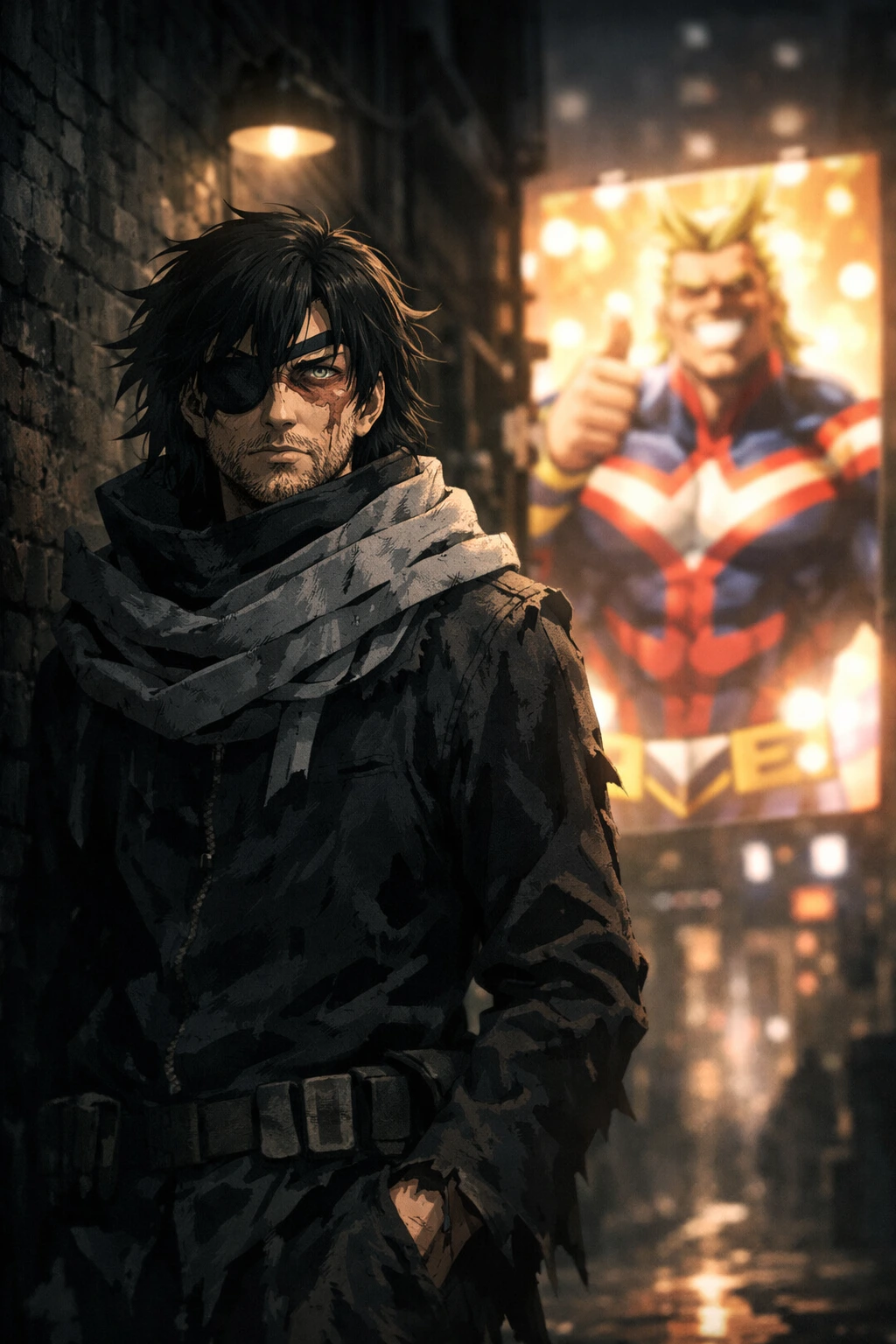
The climax of Aizawa’s stand at Jaku Hospital forces him into a situation that demands the ultimate application of his “Logical Rationale.”
Unable to break Aizawa’s stare through physical trauma alone, Shigaraki resorts to a specialized weapon: a projectile loaded with the Quirk-Destroying Drug, engineered from the blood of Eri. Shigaraki manages to fire the dart, lodging it directly into Aizawa’s right leg.
In that microscopic fraction of a second, Aizawa understands exactly what has happened. He is intimately familiar with the drug from the Shie Hassaikai raid; he knows that the moment the substance enters his bloodstream and circulates to his brain, his Quirk Factor will be permanently eradicated.
If he loses Erasure, Shigaraki’s powers will instantly reactivate, and Endeavor, Deku, Bakugo, Gran Torino, and everyone else on the battlefield will be immediately slaughtered by a wave of Decay. The fate of the entire war hinges on a decision that must be made in less than a heartbeat.
Logic Over Limb: The absolute pinnacle of Aizawa’s “Logical Rationale.” Without a millisecond of hesitation, using a knife to amputate his own leg before the drug could circulate to his brain and destroy his Quirk Factor.
What Aizawa does next is arguably the most hardcore, ruthlessly pragmatic act committed by any hero in the series. It is the absolute pinnacle of his “Logical Rationale.” He does not scream, he does not panic, and he does not waste precious milliseconds hoping for a miracle.
Without a single moment of hesitation, Aizawa draws a combat knife and violently amputates his own leg just above where the dart struck. He manually saws through his own flesh, muscle, and bone in a desperate bid to sever the infected limb before the drug can circulate through his cardiovascular system.
It is a grotesque, harrowing act of self-mutilation driven entirely by cold, utilitarian calculus. He sacrifices a piece of his own body, condemning himself to permanent disability and unimaginable agony, solely to preserve the tool (his Quirk) required to save the lives of his students and comrades.
It is a chilling embodiment of his belief that heroism is not about glory, but about doing whatever is necessary, no matter the personal cost, to ensure survival.
The Post-War Era: The aftermath of his injuries. Losing an eye and effectively crippling his ability to use Erasure independently, forcing him into a tactical command role and relying on Neito Monoma to copy his Quirk in the final battle.
The tragedy of this ultimate sacrifice is that it is only partially successful. While the amputation prevents the total loss of his Quirk Factor, the subsequent physical trauma inflicted by Shigaraki during the fall out leaves Aizawa grievously wounded. The most devastating blow is a massive slash across his face, permanently destroying his right eye.
Because Erasure is fundamentally reliant on binocular vision to maintain a stable, continuous neural block, the loss of an eye effectively cripples his ability to use his Quirk independently for any meaningful duration. In the post-war era, Aizawa is confined to a wheelchair, missing a leg and an eye, physically broken by the weight of the war. However, his mind remains sharp.
Recognizing his physical limitations, he transitions seamlessly into a tactical command role. For the final, apocalyptic battle against Shigaraki and All For One, Aizawa utilizes his ultimate strategic contingency: Neito Monoma.
By having Monoma use his “Copy” Quirk to replicate Erasure, Aizawa acts as the battlefield commander, guiding Monoma’s application of the power while physically supporting him. Even broken and bleeding, Aizawa refuses to leave the front lines, adapting his strategy to ensure his defining power remains the anchor of the hero forces.
Conclusion
The Truest Hero: Summarizing Shota Aizawa as a man who wielded the weakest physical Quirk, suffered the most profound personal trauma, yet saved the world purely through intellect and an unbreakable stare.
In the grand tapestry of My Hero Academia, Shota Aizawa stands as a paradox. He is a man who was granted a Quirk that offered absolutely no physical enhancement, a power that could be defeated by simply closing his eyes.
He is a man who suffered profound, world-shattering personal trauma at a young age, an event that could easily have driven him to villainy or despair. Yet, he weaponized that trauma, forging it into an unbreakable will. He took the “weakest” physical Quirk and, through grueling martial arts, tactical genius, and sheer endurance, transformed himself into the single most vital asset in the war against absolute evil.
He did not save the world with a blazing inferno or a heaven-piercing punch; he saved it with intellect, a strip of carbon fiber, and an agonizing, unblinking stare. He willingly absorbed the physical and psychological damage that would break lesser men, sacrificing his own body piece by piece to protect the next generation.
Closing Thoughts: Final expert analysis on how he represents the harsh, unglamorous reality of heroism that All Might’s smile always tried to hide.
Ultimately, Shota Aizawa represents the grim, unglamorous reality of heroism that All Might’s dazzling smile was designed to obscure. All Might represented the ideal—the untouchable, smiling god who assured the public that everything would be okay.
But the peace All Might built was a fragile illusion resting atop a volcano. When that volcano erupted, it was not the smiling god who held back the ash; it was the bleeding, broken underground hero in the shadows. Eraser Head is the embodiment of the sacrifice required to maintain society.
He is the grueling, painful, utterly terrifying reality of putting one’s life on the line. Through his sacrifices, his teachings, and his uncompromising logic, Aizawa proves that true heroism is not about being the strongest or the brightest; it is about standing in the dark, eyes wide open, refusing to blink when the abyss stares back.