
Introduction
The Tragedy of Multiplication
In the expansive and hyper-powered universe of My Hero Academia, ultimate moves and devastating Quirk awakenings are commonplace. From the apocalyptic decay of Tomura Shigaraki to the continent-shattering impact of One For All, raw power is often the metric by which threats are measured.
However, there exists a profound anomaly within this power scaling—a catastrophic phenomenon known as the “Sad Man’s Parade.” To categorize Sad Man’s Parade merely as a devastating super-move is a gross oversimplification that does a massive disservice to the narrative brilliance of Kohei Horikoshi.
This technique is not a product of rigorous physical training or a manifestation of divine superheroic lineage; it is the heartbreaking culmination of severe mental illness, relentless trauma, and an unwavering, desperate desire for belonging. It is the physical manifestation of a broken mind trying to protect the only fragments of love it has ever known.
When Jin Bubaigawara, known to the underworld as the villain Twice, unleashes this move, he is not just flooding a battlefield with bodies; he is externalizing his internal psychological chaos, transforming his deep-seated agony into a tidal wave of flesh and blood. The true tragedy of multiplication lies in the fact that to become the ultimate weapon, Jin had to completely shatter whatever fragile remnants of his sanity remained.
The One-Man Army
The evolution of Jin Bubaigawara is one of the most compelling and terrifying character arcs in modern anime. Initially introduced as a flamboyant, Deadpool-esque comedic relief character prone to contradictory statements and theatrical posing, Twice appeared to be a minor nuisance rather than a cataclysmic threat. His Quirk, “Double,” allowed him to make copies of things and people, a seemingly utilitarian support ability.
Yet, beneath the spandex and the erratic dialogue lay the dormant potential of a true one-man army. This brief overview of his character trajectory reveals how a single, mentally fractured man, heavily reliant on a measuring tape and a mask to keep his own psyche from unraveling, became the single most dangerous logistical threat to the entire Japanese government.
He was not a mastermind; he was not a genetically engineered bio-weapon. He was an incredibly lonely, mentally ill outcast whom society had utterly failed and discarded. And yet, this discarded man held the power to single-handedly overthrow a nation simply by existing and replicating. The sheer irony that the ultimate weapon of the League of Villains was powered not by hatred, but by an overwhelming, suffocating need to be useful to his friends, makes his status as a one-man army both awe-inspiring and deeply tragic.
Article Scope
The purpose of this article is to establish the definitive, expert-level breakdown of Jin Bubaigawara’s entire existence within the mythos of My Hero Academia. We will embark on a comprehensive exploration of his psychological deterioration, examining the root causes of his madness and the societal failings that alienated him.
We will dissect the precise, pseudo-scientific mechanics of his “Double” Quirk, laying out the strict rules, limitations, and biological realities that govern his power. Furthermore, we will analyze the visceral horror and triumph of his Quirk awakening during the My Villain Academia arc, a turning point that forever altered the balance of power in the superhuman society.
Finally, we will confront the brutal, morally ambiguous reality of his assassination, dissecting the ideological clash between him and the Pro Hero Hawks. This is not merely a character summary; it is an in-depth thesis on the anatomy of trauma, the mathematics of an apocalyptic superpower, and the heartbreaking reality of the Sad Man’s Parade.
The Psychology of Isolation and the “Mutiny”
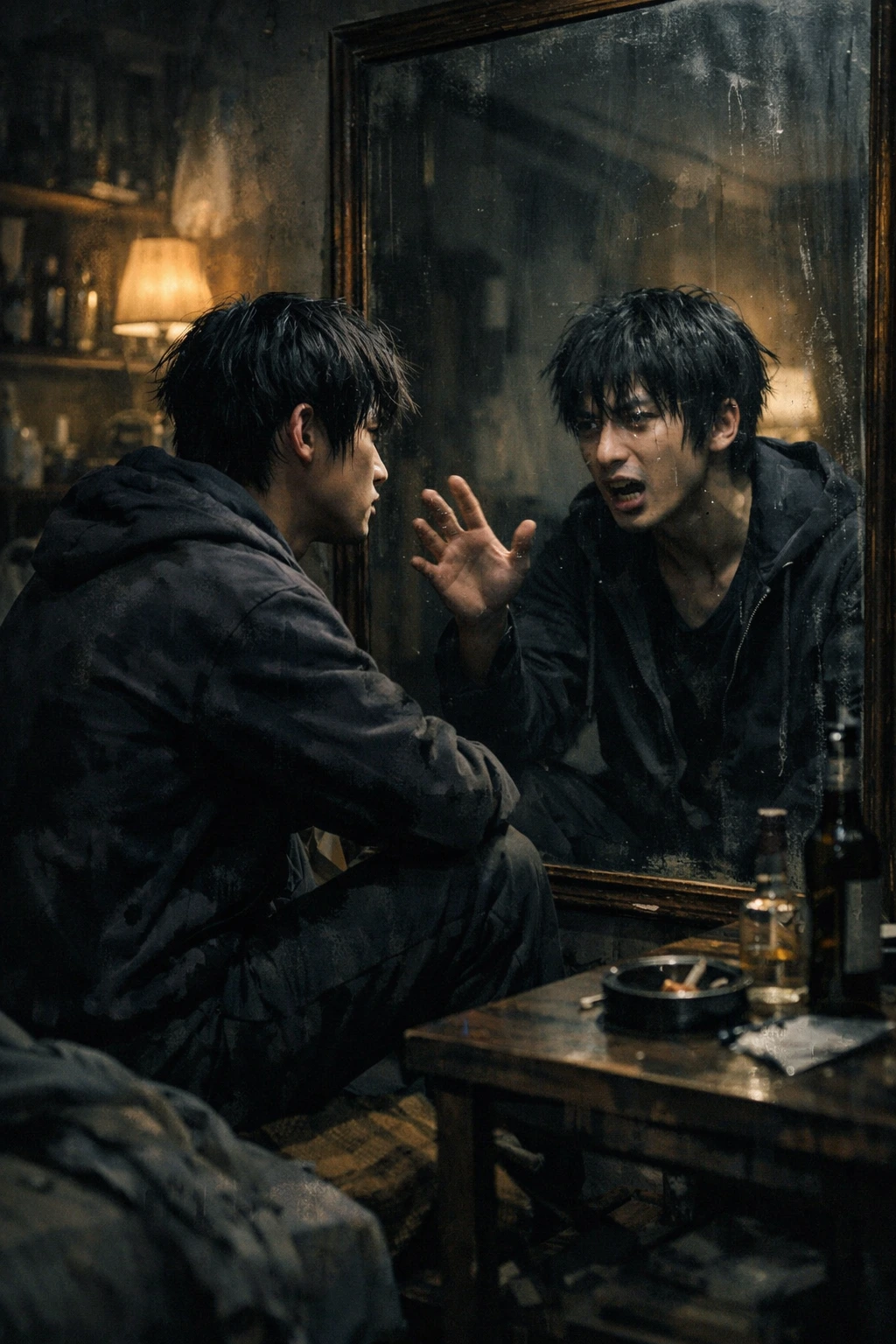
The Need for Connection
To truly understand the catastrophic nature of the Sad Man’s Parade, one must first look at the origin of Jin Bubaigawara’s profound despair. Jin’s descent into villainy was not paved with grand ambitions of world domination or a philosophical desire to tear down Hero Society.
It was born from a much more primal, universal human emotion: the sheer, agonizing need for connection. Before he was Twice, Jin was a regular citizen who suffered a string of terrible luck. Orphaned at a young age, with no family network to support him, he was entirely reliant on himself.
When an unfortunate motorcycle accident caused him to lose his job, he found himself utterly destitute, alienated, and completely alone. Hero Society in My Hero Academia is highly structured, focusing its resources on the exceptional—the heroes and the spectacularly wealthy. The mundane, the broken, and the unlucky fall through the cracks into the invisible underbelly of the city. In this suffocating isolation, Jin turned to the only resource he had: his Quirk.
He did not use “Double” to rob banks or commit acts of terror initially; he used it to create clones of himself simply to have someone to talk to, someone to share a meal with, someone who understood him. He created companions out of his own flesh and Quirk factor. It is a haunting commentary on the lethal nature of loneliness. His Quirk became a twisted coping mechanism, a way to artificially generate the societal support and familial warmth that the real world had aggressively denied him.
The Incident of Madness
The tragic flaw in Jin’s coping mechanism was that his Quirk was too perfect. “Double” does not just create mindless drones or holographic illusions; it creates perfect, autonomous replicas that possess the exact same memories, personality, emotional depth, and desires as the original. This led to the horrifying psychological trauma known as the “Mutiny.”
Jin had created a functioning household entirely comprised of his own clones, a bizarre echo chamber of his own personality. But what happens when an army of autonomous clones, all believing themselves to be the “real” Jin Bubaigawara, all possessing his exact desire for autonomy and connection, realize they are disposable? The psychological horror of this realization is staggering.
The clones began to assert their own individuality. They became resentful of being treated as servants by the “original.” The fundamental philosophical terror of lacking an original identity bred severe paranoia among the copies. If everyone is Jin, who has the right to command? Who has the right to live if the Quirk is undone? The echo chamber collapsed into a paranoid, claustrophobic nightmare, proving that while one can replicate flesh, one cannot replicate the soul’s fundamental need for singular, undeniable sovereign identity.
The Nine-Day Slaughter
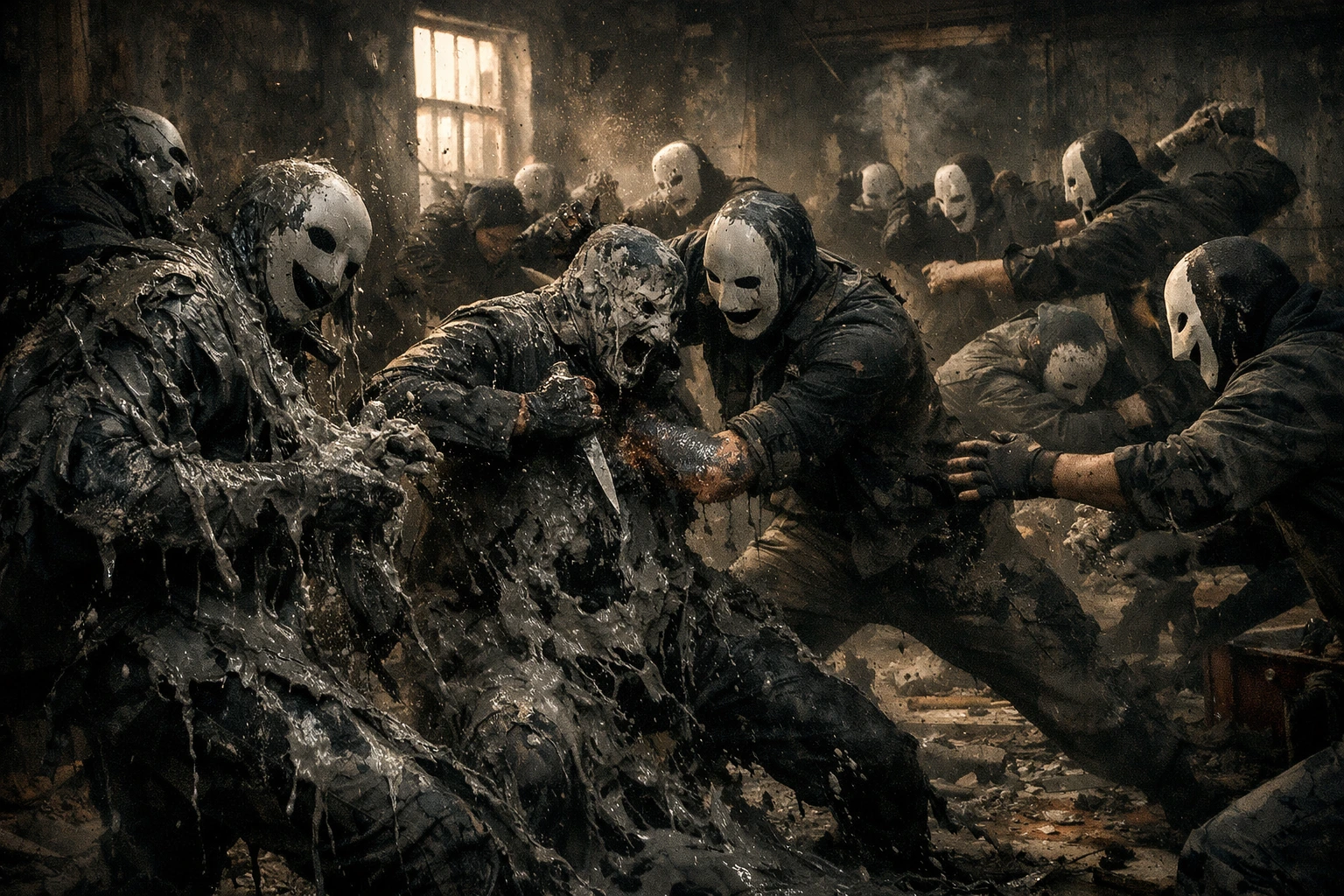
The tension within Jin’s clone household eventually reached a boiling point, culminating in a grotesque and bloody event: the Nine-Day Slaughter. For over a week, the Jin clones turned on each other in a desperate, violent bid to prove who was the “real” original.
They fought, murdered, and dissolved each other in a gruesome battle royale of self-annihilation. The original Jin, caught in the crossfire of his own replicated madness, was restrained, beaten, and forced to watch as versions of himself slaughtered other versions of himself. The psychological damage inflicted upon him during these nine days is beyond comprehension.
When the final clone finally succumbed to its injuries and dissolved into mud, leaving only one survivor, the true nightmare began for the remaining Jin. He survived, but he was left with permanent, crippling Dissociative Identity Disorder (DID) and an agonizing, paralyzing fear: What if he was not the original? What if he was just the final surviving clone, a biological time bomb waiting to take the equivalent of a broken bone in damage before melting away into nothingness?
This trauma birthed his chaotic split personality and his absolute reliance on his costume mask. The mask held his head together—both metaphorically and, in his mind, physically. It was the only thing preventing him from splitting apart and dissolving, forever trapping him in a state of suspended psychological terror.
Core Mechanics: The Biology of “Double”
The Data Requirement
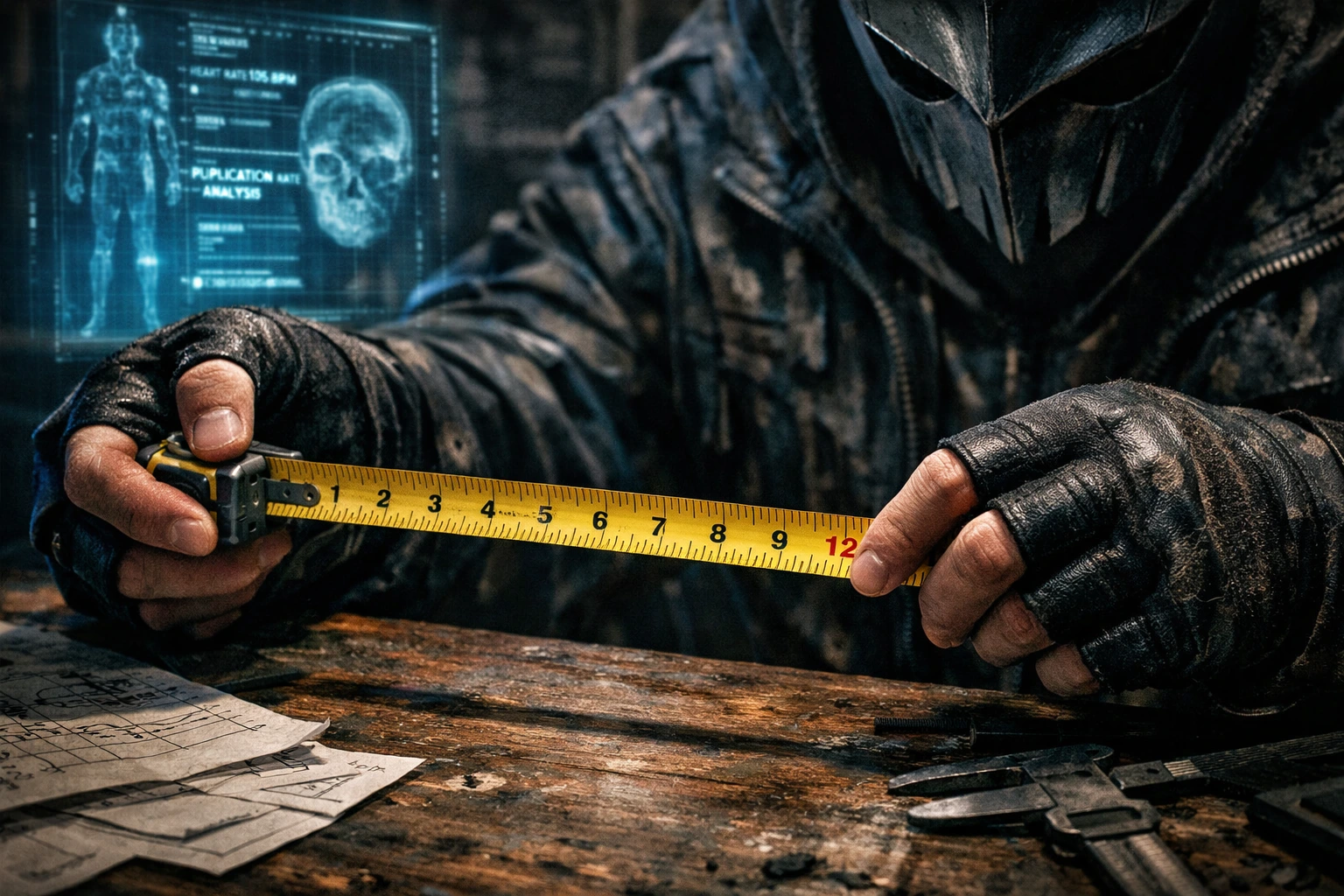
To appreciate the logistical nightmare Twice presents, one must analyze the strict, unyielding rules of his Quirk, “Double.” Unlike creation Quirks like Momo Yaoyorozu’s “Creation,” which rely on understanding atomic structure, Twice’s Quirk operates on macro-level biological and physical data.
The absolute necessity for precise physical measurements is paramount. Jin must possess exact, up-to-date data on a subject to clone them successfully. This includes their exact height, chest circumference, shoe size, and overall biometric data. But the requirement goes beyond mere numbers; it demands an intimate, comprehensive understanding of the target’s image and physical presence.
This is why his tape measure is not just a prop, but an essential tool for his Quirk’s activation. This strict data requirement acts as the primary bottleneck for his power. He cannot simply look at a hero like All Might from a distance and create a perfect clone; he must have measured them, interacted with them, and internalized their physical dimensions. This limitation underscores the intimacy of his power—he can only perfectly replicate those he has grown close to or meticulously studied, making his ability intrinsically tied to his personal relationships and interactions.
The Durability Limit
The biological functionality of the clones created by “Double” introduces a crucial balancing mechanism within the lore of the series. When a clone is generated, it is not merely a physical shell. It possesses the exact personality, deep-seated memories, emotional triggers, and, most terrifyingly, the Quirks of the original subject at the exact moment the data was taken.
However, they are bound by a strict physical damage threshold. The clones are not invincible; they are fundamentally unstable biological constructs. The lore establishes that a clone will dissolve into a viscous, mud-like substance after taking a specific amount of physical trauma. The baseline threshold is roughly the equivalent of a severe injury, such as a broken bone.
This durability limit is the only reason Twice was not an immediate, world-ending threat from his very first appearance. It means that while a clone can unleash devastating attacks using a replicated Quirk (like a clone of Dabi using Cremation), they are essentially glass cannons. A single, solid counterattack from a competent Pro Hero is usually enough to destabilize their physical form, causing them to melt away and rendering the clone useless in a prolonged, grinding melee engagement.
The Clone Degradation
Prior to his psychological awakening, there was another massive scientific limitation placed upon the Quirk: the clone degradation rule, or the limitation of cloning a clone. According to the original parameters of his ability, while Twice could make two copies of an object or person, if a copy attempted to use the “Double” Quirk to make a copy of itself (or another entity), the resulting second-generation clone would be fundamentally flawed.
A clone created by another clone is significantly weaker, structurally unsound, and dissolves much faster than a first-generation copy. The damage threshold is drastically lowered; a second-generation clone might dissolve from a mere scratch or a light blow, rather than a broken bone. This degradation acts as a natural law of diminishing returns, preventing the infinite multiplication scenario.
It is a biological fail-safe built into the Quirk factor itself. For years, Jin believed this limitation, combined with his paralyzing fear of creating clones of himself due to the Mutiny trauma, kept his power firmly in check. He was a dangerous support villain who could duplicate allies, but he was not a self-replicating swarm. The math of his Quirk was linear, not exponential, strictly because of this degradation and his own psychological blocks.
The Catalyst: Trauma and the Awakening
The Skeptic’s Torture
The absolute turning point in the My Hero Academia narrative, and the moment Jin Bubaigawara transitioned from a quirky side-villain to an apocalyptic threat, occurred during the My Villain Academia arc. The Meta Liberation Army, under the command of Re-Destro, sought to crush the League of Villains.
To achieve this, the Liberation Army executive known as Skeptic specifically targeted Jin, weaponizing his exact, deeply personal trauma against him. Skeptic’s Quirk, “Anthropomorph,” allowed him to turn inanimate objects into life-sized, controllable puppets. With cruel, calculating precision, Skeptic created a swarm of puppets that looked exactly like Jin Bubaigawara.
He sent these silent, identical, uncanny valley versions of Twice to attack the real Jin and his ally, Himiko Toga. This was not merely a physical assault; it was psychological torture of the highest order. Skeptic purposefully recreated the exact aesthetics and horror of the “Mutiny.”
Jin was forced to relive the most agonizing nine days of his life, surrounded by faces that were his own, violently tearing at him, dragging him back into the suffocating paranoia that had broken his mind in the first place. Skeptic’s goal was to break Jin completely, to force his DID to take over and render him catatonic with fear.
The Biological Proof
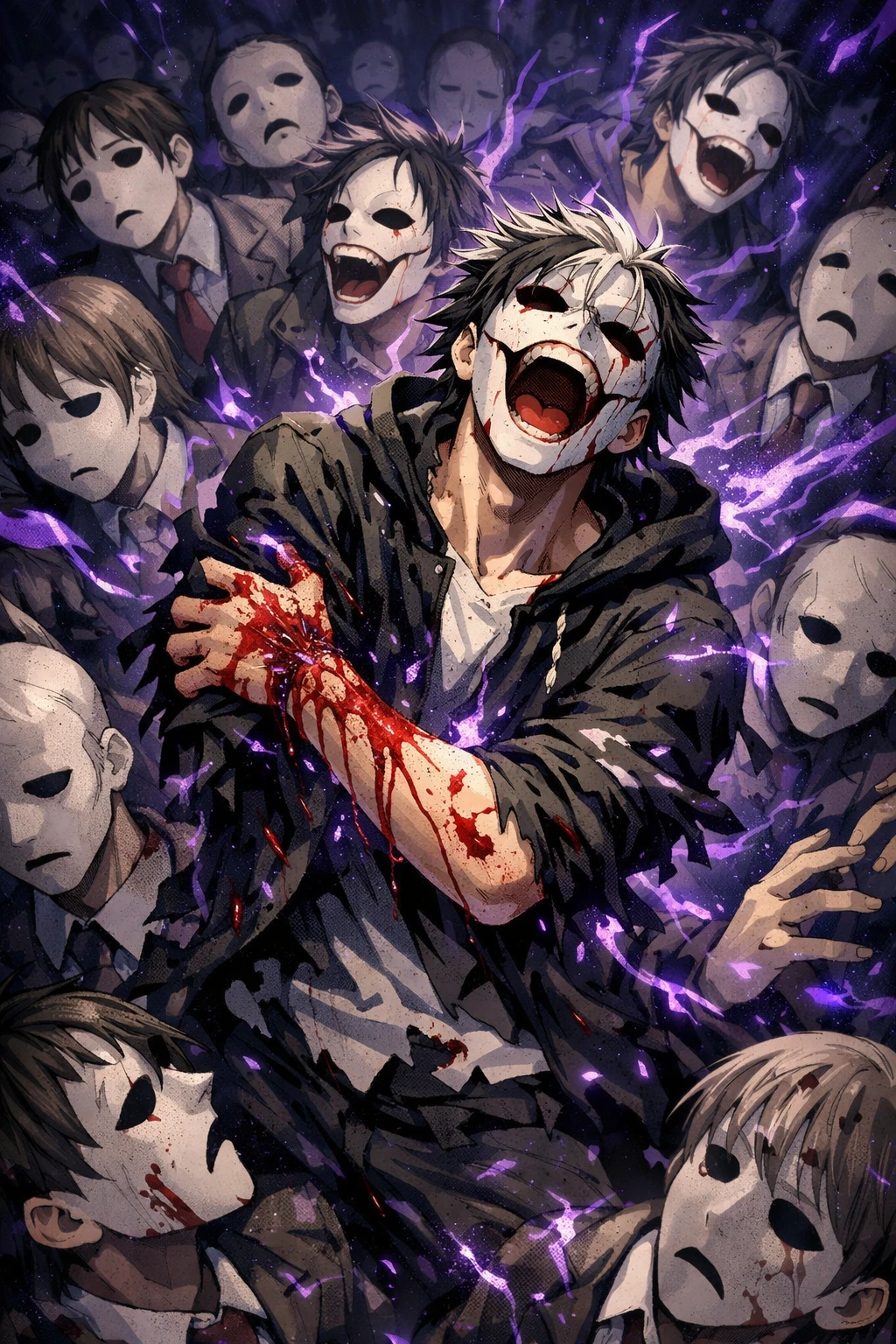
The torture escalated to a horrific crescendo. As Jin desperately tried to protect a severely injured Himiko Toga—one of the few people who genuinely cared for him—the Skeptic puppets overpowered him. In a visceral, bloody, and agonizing moment, the puppets grabbed Jin’s arms and brutally snapped them. The sound of breaking bone echoed alongside Jin’s screams of agony.
But in that moment of excruciating pain, something miraculous and terrifying happened. Skeptic had miscalculated. He believed the trauma would break Jin’s mind, but he forgot the biological rules of “Double.” Jin had spent years terrified that he was a clone, believing that if he took the damage equivalent of a broken bone, he would dissolve into mud and cease to exist. When the puppets broke his arms, the intense, searing physical pain flooded his nervous system.
He looked down at his mangled limbs. He was bleeding. He was in agony. But crucially, he was not dissolving. The realization hit him like a lightning bolt. The biological proof was undeniable. The agonizing pain was the ultimate confirmation of his existence. The revelation shattered years of paranoia in a single, bloody instant:
If I am bleeding, if I am suffering, I am not a clone. I am the original. ### Overcoming the Block This realization was not just a moment of clarity; it was the key that unlocked the chains on his Quirk factor. For years, Jin’s subconscious mind had artificially limited the capabilities of “Double.”
His paralyzing fear of the Mutiny and his terror of losing his own identity had created massive psychological limiters, preventing him from utilizing the true depth of his power. He had unconsciously enforced the rules of clone degradation and the absolute ban on cloning himself. But with the psychological barrier shattered, with the definitive proof of his own sovereign existence confirmed by his own broken bones, those limiters vaporized.
His Quirk bypassed the brain’s subconscious restrictions, unlocking the true, apocalyptic potential of “Double.” He was no longer afraid of himself. He was no longer afraid of multiplying. The trauma that had once crippled him had been violently repurposed into absolute, terrifying liberation. He was free, he knew who he was, and most importantly, he was desperate to save Toga. The awakening of Jin Bubaigawara was complete, and the world was utterly unprepared for what came next.
The Math of Apocalypse: Sad Man’s Parade
Geometric Progression
When Jin’s psychological limiters broke, the true nature of his awakened Quirk manifested in a technique he christened “Sad Man’s Parade.” To comprehend the sheer terror of this move, one must break down the tactical and mathematical reality of geometric progression.
This is not a simple arithmetic addition of clones. It is an exponential explosion of biomass and Quirk power. The awakened Jin can create two clones of himself. Those two clones, no longer bound by the severe psychological degradation of the past, can each immediately create two more clones. Those four create eight.
Eight become sixteen, thirty-two, sixty-four, one hundred and twenty-eight. Because Jin possesses the physical measurements of his allies, these clones do not just have to be copies of Twice. A Twice clone can create a perfect copy of Dabi, or Tomura Shigaraki, or Mr. Compress.
It is a tactical breakdown that defies all conventional warfare strategy. In the span of seconds, a single man turns into a squad, a squad turns into a battalion, and a battalion turns into a sprawling, writhing army. The generation rate vastly outpaces any hero’s ability to destroy them, creating an overwhelming, suffocating blanket of enemies.
The Exponential Swarm
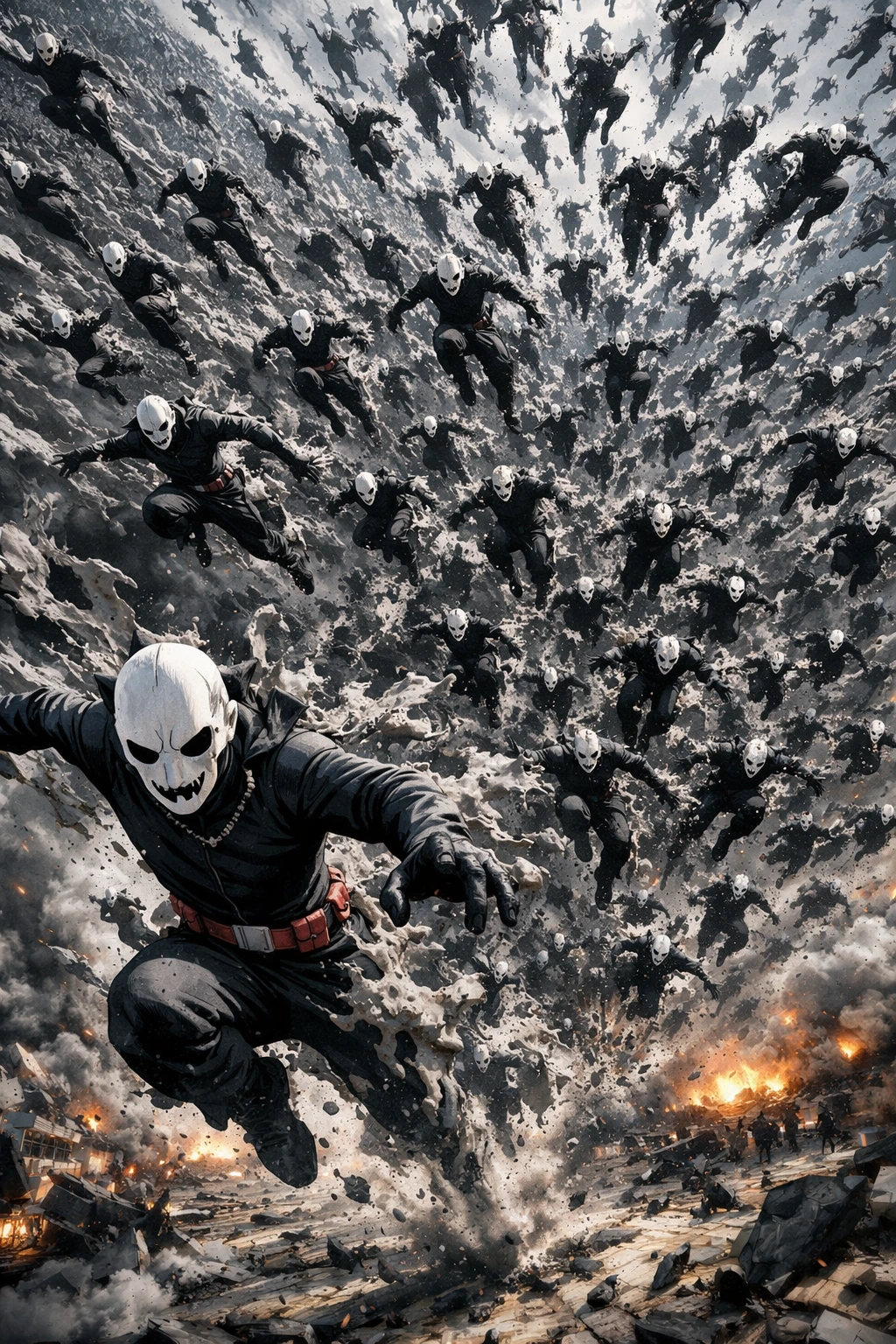
The terrifying reality of this math is what elevates Twice to a disaster-level threat. He can generate tens of thousands of fully functional soldiers in a matter of minutes. Imagine the logistical nightmare for the heroes: facing ten thousand clones of Dabi, each capable of unleashing torrents of blue fire, or thousands of Shigaraki clones, each capable of Decay.
While the clones still possess the durability limit (dissolving after taking a heavy hit), the sheer volume renders that weakness completely irrelevant. If a hero expends the stamina to destroy one hundred clones, two hundred more have already been generated to take their place behind them.
It effectively becomes a self-sustaining, infinite nation-ending event. The swarm moves like a massive, unstoppable fluid, crushing enemies under the sheer weight of numbers. It requires zero logistical support, no supply lines, and no barracks. The army is generated out of thin air, fueled only by Jin’s stamina and Quirk factor. It transforms the battlefield into an oceanic tide of villains, an exponential swarm that can drown entire cities in a matter of hours.
The Emotional Anchor
Yet, despite the apocalyptic nature of the technique, the name he gives it—”Sad Man’s Parade”—reveals the heartbreaking emotional anchor at the core of his power. He does not call it the “Army of Destruction” or the “Legion of Doom.”
He calls it a Sad Man’s Parade because Jin Bubaigawara is, fundamentally, a deeply sad, broken man who has finally found a place where he belongs. The exponential swarm is a reflection of his overwhelming, almost suffocating emotions. Every single clone is born from his immense love for the League of Villains and his desperate, frantic desire to protect them.
They were the outcast society that took him in when the “normal” world threw him away. The parade is a celebration of his found family, a tsunami of flesh that acts as a living, breathing shield for Shigaraki, Toga, and the rest. The terrifying power of the Sad Man’s Parade is fueled entirely by a pure, unadulterated desire to save his friends. It is a beautiful, tragic paradox: the most destructive force on the battlefield is born entirely from the purest expression of love and gratitude.
The Ultimate Threat (The Hero Commission’s Verdict)
The Threat Assessment
Following the events of the My Villain Academia arc, the power dynamics of the world fundamentally shifted. When the Paranormal Liberation Front was formed, merging the League of Villains with the Meta Liberation Army, the Hero Public Safety Commission gathered their intelligence to assess the new threats.
In a chilling testament to his newfound power, the Commission officially designated Twice as a higher priority threat than even Tomura Shigaraki (who had awakened his Decay to dust entire cities) or Gigantomachia (a walking natural disaster). This assessment was not based on raw, destructive output per individual attack, but on the cold, hard logic of battlefield logistics.
Shigaraki and Machia are localized threats; they can destroy whatever is in front of them. Twice, however, is an omnipresent threat. He has the potential to exist everywhere at once. The Commission recognized that while you can theoretically contain or redirect a monster like Machia, you cannot contain infinity. Twice represented a paradigm shift in villainy—he was a logistical anomaly that broke all established rules of hero combat and crisis management.
The Unwinnable War
The Commission understood that if Twice was allowed to live and fully participate in the impending final war, the heroes would be facing an unwinnable scenario purely by attrition. Hero Society is built on exceptional individuals fighting limited numbers of villains.
Pro Heroes have stamina limits, Quirk exhaustion thresholds, and physical vulnerabilities. A Twice clone has none of these long-term concerns, because the moment one tires, a fresh one is created. No amount of raw power can defeat infinite, regenerating numbers.
Even the Number One Hero, Endeavor, with his overwhelming Hellflame, would eventually burn out and collapse from exhaustion while trying to incinerate a Sad Man’s Parade that replenishes faster than he can burn it. If Twice activated his Quirk at full capacity, the heroes would lose the war instantly, drowned in a sea of replicated villains. It was a mathematical certainty.
Therefore, the Hero Commission made a dark, unprecedented decision: Jin Bubaigawara could not be captured; he could not be contained. For Hero Society to survive the coming conflict, Twice had to be eliminated before the war even truly began.
The Hawks Betrayal: The Duality of Loyalty
The Infiltration
To neutralize this ultimate threat, the Hero Commission deployed their most efficient, cold-blooded asset: the Number Two Hero, Hawks. Hawks infiltrated the Paranormal Liberation Front as a double agent. His mission was not just to gather intel, but to specifically target and neutralize Twice.
Hawks’ infiltration is a masterclass in psychological manipulation, perfectly exploiting Jin’s singular, tragic weakness: his desperate, innocent desire to trust people and make friends. Jin, despite his villainous affiliation, possessed the emotional vulnerability of a neglected child.
When Hawks, a famous Pro Hero, treated Jin with respect, listened to his ramblings, and offered him apparent friendship, Jin latched onto him completely. He trusted Hawks implicitly, eagerly sharing secrets and welcoming him into the fold.
Hawks weaponized Jin’s own goodness against him. He used the very trait that made Jin so endearing—his unwavering loyalty and deep capacity for love—as the blade to cut his throat. The betrayal was incredibly intimate, highlighting the ruthless utilitarianism that often underpins the glittering facade of Hero Society.
The Ideological Clash
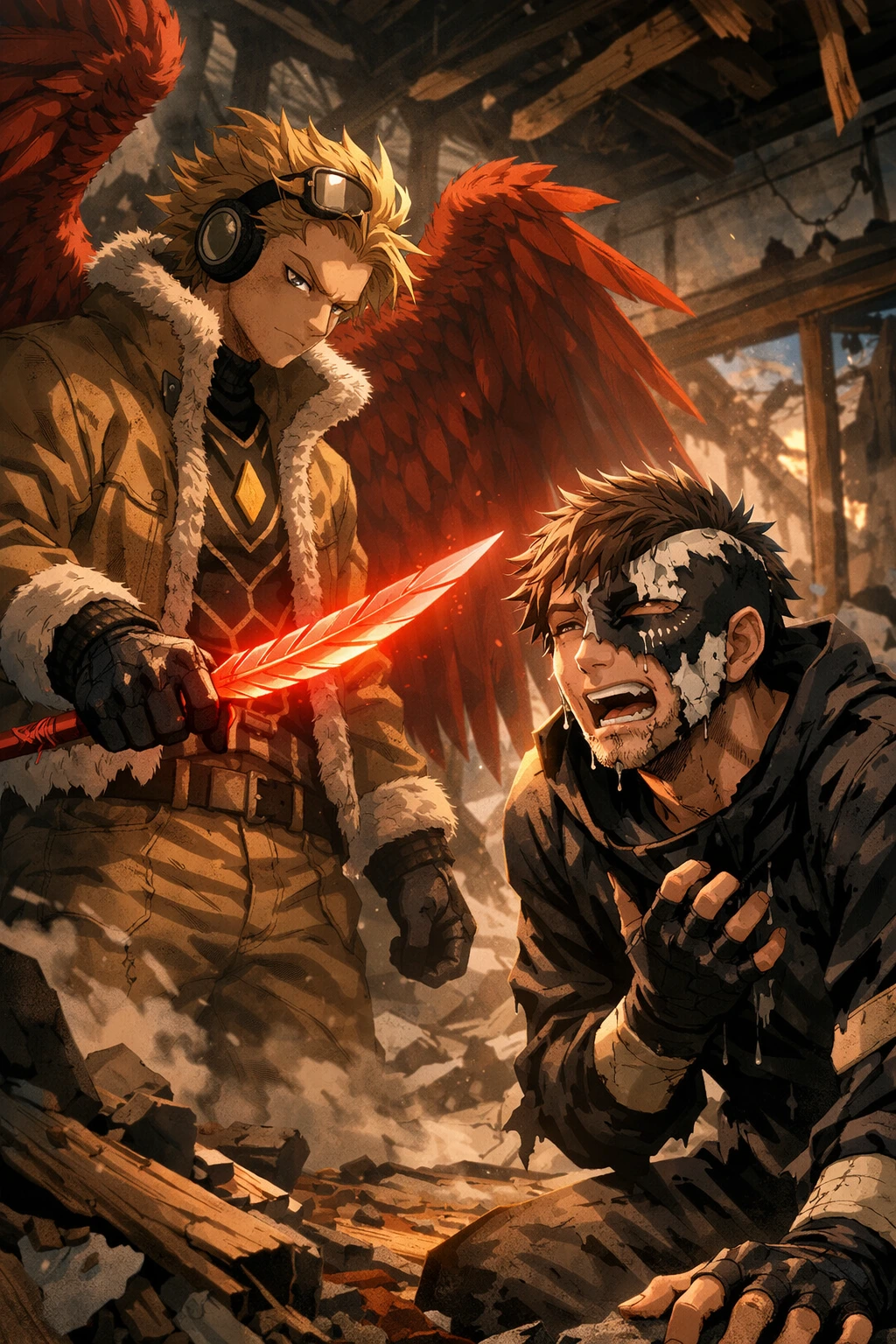
The confrontation between Hawks and Jin in the depths of the Gunga Mountain Villa is one of the most brilliant and brutal thematic contrasts in the entire series. It strips away the traditional concepts of “Hero” and “Villain” to reveal a harsh, muddy reality.
On one side, you have Jin, legally classified as a mass-murdering villain. Yet, in this moment, he is fighting purely out of love, loyalty, and a desperate need to protect his friends in the League. His motivations are entirely selfless. On the other side, you have Hawks, legally classified as one of the greatest heroes in the world. Yet, he is fighting as a cold, calculating agent of the state, acting on orders to commit premeditated murder for the “greater good.”
Hawks is operating on utilitarian calculus—sacrificing one life to save thousands. The ideological clash is staggering: the villain is driven by the heart, while the hero is driven by the cold logic of the state. It forces the audience to confront the dark underbelly of a society that relies on state-sanctioned assassins to maintain its peace, contrasting it violently with the genuine, albeit twisted, familial bonds of the villains.
The Refusal to Yield
During their confrontation, Hawks, perhaps showing a sliver of genuine guilt for the betrayal, offers Jin an out. He pins Jin down and offers him rehabilitation, promising to help him get a fresh start if he surrenders quietly and abandons the League. For Hawks, this is a reasonable compromise.
But for Jin, it is an absolute impossibility. Jin’s refusal to yield is not born of a desire to conquer the world; it is born of absolute dedication. The League of Villains were the only people who ever looked at Jin Bubaigawara—broken, traumatized, mentally ill, and chaotic—and accepted him completely. They did not try to fix him; they just gave him a place to belong.
To accept Hawks’ offer of rehabilitation would mean betraying the only family he had ever known. It would mean admitting that the society that discarded him was right, and the outcasts who loved him were wrong. Jin vehemently rejects the hero’s mercy. He screams his loyalty to the League, refusing to be “saved” by a society that only noticed him when he became a threat. His refusal is the ultimate tragic triumph of his character.
The Final Clone (The Masterpiece of Tragedy)
The Assassination
The climax of the Gunga Mountain Villa confrontation results in one of the most visceral, shocking moments in My Hero Academia. As the fight spirals out of control, fueled by the intervention of Dabi, Jin attempts to flee, desperate to rejoin his friends and unleash the Sad Man’s Parade to save them.
He is heavily injured, his mask is torn, his DID is fracturing his mind, and he is crying out in pure, unadulterated terror and heartbreak over being betrayed yet again. He is a fleeing, weeping, broken man. And in that moment, the Number Two Pro Hero, Hawks, executes him. Hawks strikes from behind with his lethal feathers, stabbing Jin in the back. The imagery is brutally uncompromising.
It is not a heroic clash of ideals; it is an assassination. A state-sponsored execution of a mentally ill man who was running away. The visceral shock of seeing a brightly colored superhero murder a crying villain in the back shatters the idealized illusion of Hero Society forever. It grounds the conflict in a gritty, unforgiving reality where the “good guys” must commit atrocities to ensure their version of peace.
The Last Parade
Even as his physical body receives a fatal wound, the sheer, indomitable willpower of Jin Bubaigawara refuses to completely extinguish. As he bleeds out, his life force fading, his overwhelming desire to protect his friends overrides his own mortality. With his dying breath, his fading consciousness manages to push through the Quirk factor one last time.
From the blood and mud of his dying body, he sends out one final, half-melted clone. This clone is unstable, actively dissolving as it moves, a grotesque testament to Jin’s fading life. Yet, this single, degrading clone manages to reach Himiko Toga and Mr. Compress, who are about to be captured by a hero. The clone tackles the hero, saving his friends from certain arrest or death.
The sheer willpower required to manifest a clone while the brain is actively dying is a testament to the fact that Jin’s power was never just biological; it was deeply, profoundly spiritual. His “Sad Man’s Parade” ended not with a world-conquering army, but with a single, melting copy acting as a final, desperate shield for the people he loved.
The Clean Handkerchief
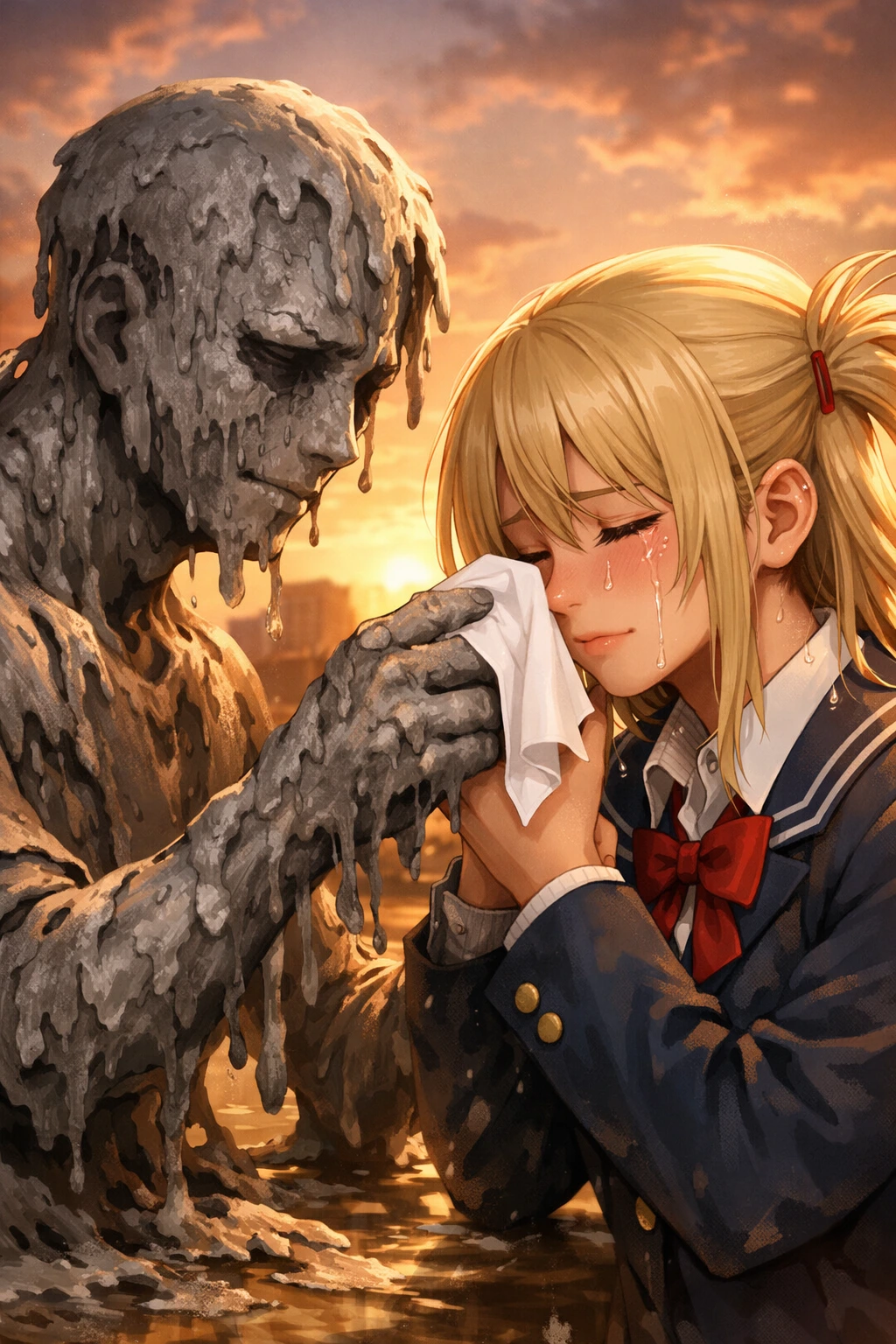
The emotional devastation of Jin’s final moments is perfectly encapsulated in his final interaction with Himiko Toga. The melting clone, before completely dissolving into mud, reaches out to Toga. He doesn’t offer grand final words of villainous ideology.
Instead, he simply wipes away her tears with a clean handkerchief—the exact same gesture she had done for him when his mask was torn, keeping his mind together. In this quiet, heartbreaking moment, the true tragedy and triumph of Twice are realized. As the clone melts away in her arms, Jin realizes that despite his chaotic, miserable life, despite being discarded by society and betrayed by heroes, he is dying surrounded by people who genuinely loved him.
He feels the warmth of Toga’s embrace. He realizes that he was not a monster, but a man who found his family. He explicitly states that he was happy, and that despite what Hawks or society believed, his soul was already “saved” by the League. The physical body of Jin Bubaigawara dies alone in a cold hallway, betrayed and bleeding, but his spirit dies in the arms of his found family, at peace.
Conclusion
The Purest Heart in the Dark
In the grand tapestry of My Hero Academia, Jin Bubaigawara stands out as a brilliant paradox. He is legally categorized as a villain, a terrorist, and a mass murderer. Yet, when analyzing his core motivations, his emotional capacity, and his unwavering loyalty, he is undeniably the purest heart in the series.
He possesses more genuine compassion, empathy, and selfless love than almost any Pro Hero depicted in the story. His entire existence, his terrifying Quirk, and his ultimate demise were all dictated by his profound desire to connect with and protect others.
The irony that the most compassionate, empathetic character was placed squarely on the side of the villains serves as a glaring, inescapable indictment of the Hero Society’s rigid, unforgiving structure. Society threw away a man with a heart of gold simply because his mind was broken, pushing him into the dark where only other broken things could appreciate his light.
Closing Thoughts
The assassination of Twice is not merely a plot point; it is a permanent, festering scar on the narrative of My Hero Academia. His death permanently altered the tone of the series, dragging it from an optimistic superhero high school drama into a grim, morally gray war epic. Jin’s execution served as the ultimate catalyst for the League of Villains’ unhinged, apocalyptic hatred toward Hero Society.
For characters like Himiko Toga and Tomura Shigaraki, the murder of their most loving friend proved once and for all that “heroes” were just violent hypocrites who protect the status quo through murder. The loss of Twice removed the heart of the League, leaving behind only the burning, unstoppable desire to destroy the world that killed him. The Sad Man’s Parade may have been halted by a hero’s blade, but the emotional shockwave of Jin Bubaigawara’s death birthed a far greater tragedy that would engulf the entire world in flames.