
Introduction: The Sorcerer’s Battle Royale
The world of Jujutsu Kaisen has never been a playground for the faint of heart, but following the catastrophic events of the Shibuya Incident, the narrative shifted from a secret war in the shadows to a nationwide ritual of carnage. Welcome to the Culling Game Explained (Shimetsu Kaiyu), an arc that fundamentally redefines the scale of Gege Akutami’s magnum opus.
Imagine The Hunger Games, but replace desperate teenagers with centuries-old sorcerers, grade-one curses, and modern geniuses who have just awakened their powers. Now, expand the arena from a controlled dome to the entirety of Japan. This is not merely a tournament arc; it is a forced evolution mechanism, a violent crucible designed to churn humanity into something… new.
The setup for this nightmare was laid centuries ago, but the trigger was pulled by the pseudo-Geto, Kenjaku, in the smoking ruins of Shibuya. By absorbing Mahito and utilizing the chaotic energy of the incident, Kenjaku cast “Remote Idle Transfiguration” across the Japanese archipelago.
In a single instant, he awakened thousands of dormant sorcerers—people like Hiromi Higuruma, who had the potential for cursed techniques but no outlet—and unsealed ancient sorcerers like Hajime Kashimo, who had made binding vows to traverse the ages in cursed objects.
The result is a societal collapse. The Culling Game is not simply a battle for survival; it is a ritualistic engine. The Japanese government is paralyzed, Tokyo is a ghost town overrun by curses, and civilians are trapped inside massive barriers. The premise is terrifyingly simple: kill or be killed to earn points.
But beneath the surface of this bloody battle royale lies a complexity that rivals the most intricate legal systems and a philosophical dark ambition that threatens to merge all of humanity with the star plasma vessel, Tengen.
For fans, the Culling Game represents the peak of Jujutsu Kaisen’s complexity. It introduces a rule-heavy power system, a non-linear narrative spread across multiple colonies, and a villain whose plan is so vast it spans a millennium.
To understand the Culling Game is to understand the true horror of Jujutsu—it is not just about fighting monsters; it is about the monstrous lengths one will go to for the sake of “optimizing” cursed energy. This article is your definitive guide to the madness, breaking down the mechanics, the lethal rules, the players, and Kenjaku’s endgame.
The Mechanics: Colonies and Barriers
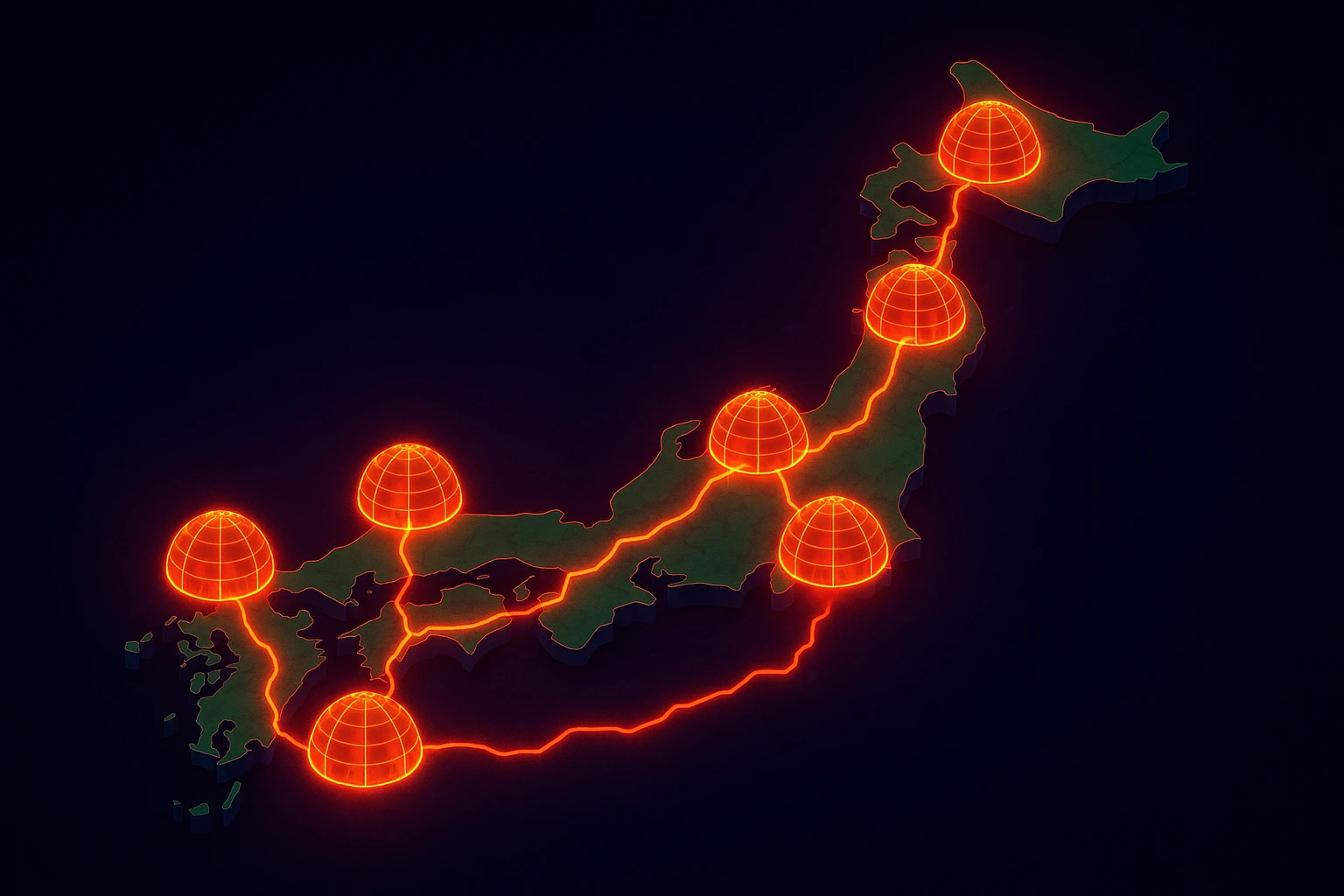
To grasp the Culling Game Explained, one must first understand the board on which it is played. Kenjaku did not just declare a war; he physically restructured Japan using high-level barrier techniques.
The Map of Ten Colonies
The game takes place within ten distinct barriers, known as Colonies, scattered across Japan. These are not random locations; they are strategically placed along a longitudinal line that cuts through the Japanese archipelago. Major locations include:
- Tokyo No. 1 Colony: The heart of the chaos, centering on the metropolitan area.
- Tokyo No. 2 Colony: Covering the eastern bayside areas.
- Sendai Colony: A brutal battleground in the north, home to some of the heaviest hitters.
- Sakurajima Colony: Located in the far south, becoming the stage for the Zenin clan’s evolution.
- Aomori, Iwate, Miyagi, etc: Other barriers that create a net across the nation.
These colonies are massive, encompassing entire cities. Civilians caught inside when the barriers were erected were given one chance to leave, but many remained, becoming unwitting fuel or obstacles for the players.\
The Line and The “Other Side”
Why these specific locations? The ten colonies are connected by a barrier that effectively bisects Japan. This line is crucial. Kenjaku’s ritual requires Cursed Energy to be harvested and sent somewhere. The barriers act as a conveyance system, sending the entropy and energy generated by death and violence toward the “Other Side”—the boundary between the dream and reality, the chaotic realm where the merger with Tengen is destined to happen. The placement of the colonies is essentially a gigantic transmutation circle drawn over the country.
Entry Mechanics and Random Teleportation
Entering a Culling Game colony is a commitment to violence. The barriers allow anyone to enter, but leaving is technically impossible under the initial rules. Upon passing through the barrier, a player is subjected to a spatial distortion.
- Random Spawn: You do not get to choose where you land. Players are teleported to one of nine distinct points scattered across the colony.
- The Spawn Campers: This mechanic immediately favors the strong and the ruthless. Predatory sorcerers quickly realized they could camp these nine spawn points and ambush confused newcomers (or “windfalls”) the moment they materialized. This was seen immediately when Yuji Itadori entered Tokyo No. 1 and was instantly attacked by jet-fighter sorcerer Hanyu and helicopter-head Haba.
The Kogane: The Interface of Death

Every player in the Culling Game is assigned a Kogane. These are small, shikigami-like entities that resemble bugs or fairies with skeletal features. The Kogane serves as the player’s interface, gamifying the slaughter.
- The Game Master: The Kogane tracks your points, displays the rulebook, and processes rule changes.
- The Communicator: It allows players to see how many players are in a colony and who possesses high points.
- The Watcher: The Kogane is not your friend. It is an extension of the Culling Game’s barrier master (the Game Master program). It exists solely to facilitate the ritual. It will pester you to make a move, remind you of impending deadlines, and ruthlessly announce rule additions.
The Kogane represents the horrifying modernization of ancient jujutsu rituals. It turns murder into a digital score, stripping the humanity away from the act. When a sorcerer checks their Kogane, they aren’t looking at people; they are looking at numbers, reinforcing the “Game” aspect of this genocide.
The 8 Rules of Death (Simplified & Analyzed)
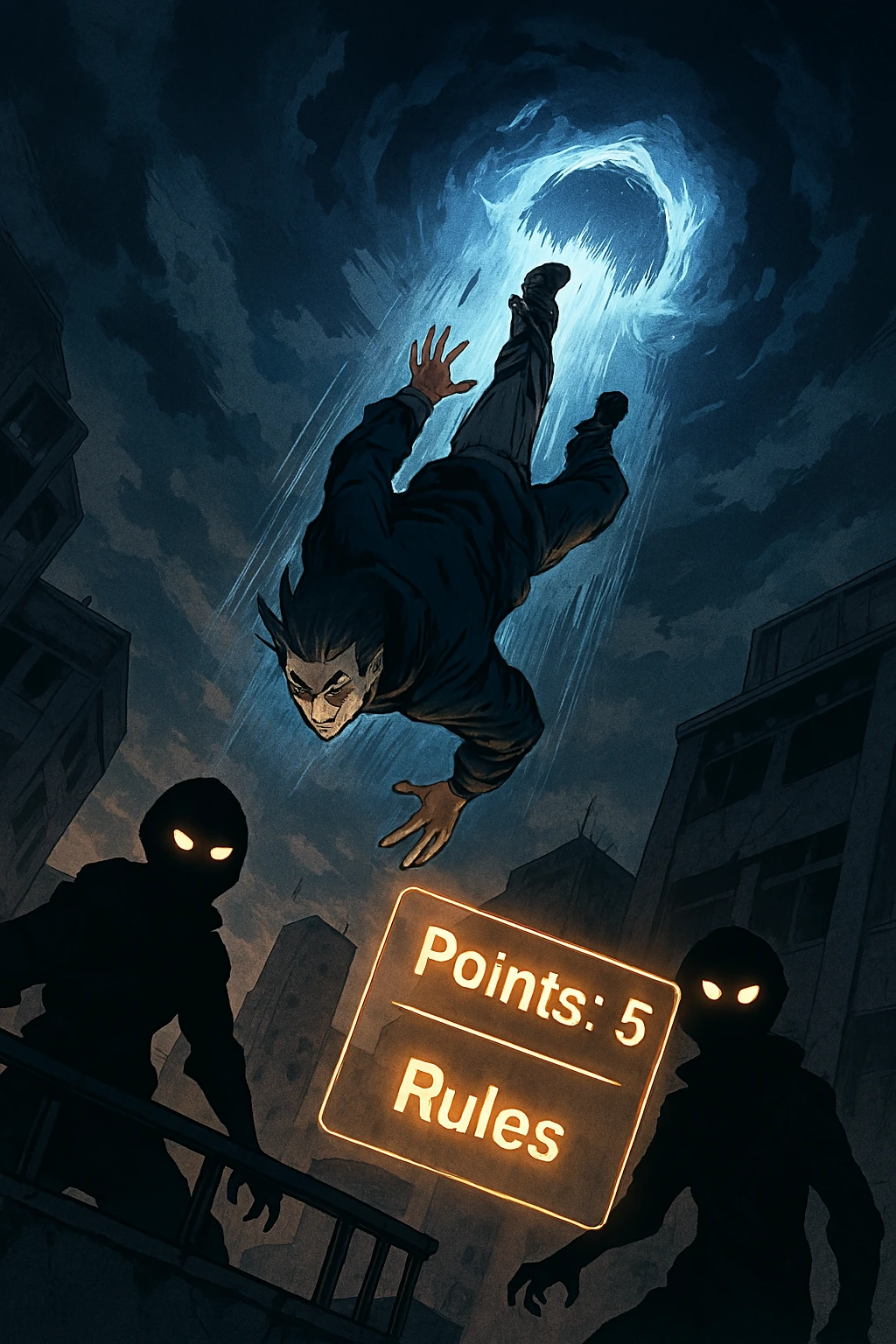
The backbone of the Shimetsu Kaiyu Rules is a binding vow system consisting of eight initial laws. These rules are absolute. Breaking them isn’t a matter of getting a penalty; it usually results in death. However, like any legal system, there are loopholes, interpretations, and clauses that intelligent sorcerers like Megumi Fushiguro exploit.
Rule 1: The Awakening Deadline
After awakening a cursed technique, players must declare their participation in the Culling Game at a colony of their choice within 19 days.
Analysis: This rule targets the “Awakened” players—modern humans Kenjaku modified (like Higuruma). They didn’t ask for this. They woke up with powers and a ticking clock. If they refuse to play, they die. This forced conscription ensures the game is populated immediately. The 19-day timer accounts for the time it took Kenjaku to set up the game after Shibuya (Oct 31st) and gives new sorcerers just enough time to panic before forcing them into a kill box.
Rule 2: The Consequence of Refusal
Any player who breaks the previous rule shall be subject to cursed technique removal.
The Lethal Fine Print: “Cursed Technique Removal” sounds like you just lose your powers and go back to being normal. False. Shoko Ieiri explains that for a sorcerer, the brain is wired for the technique. Removing the technique forcibly via the Game’s binding vow would invariably destroy the brain, killing the host. Therefore, “Removal” = Death. This is the gun pointed at every player’s head.
Rule 3: The Non-Player Participation
Non-players who enter the colony become players at the moment of entry and shall be considered to have declared participation.
Analysis: This traps civilians and voluntary participants (like Yuji and Megumi). You don’t need to sign a form. Crossing the physical threshold of the barrier is the signature. This rule effectively locks the doors behind anyone foolish enough to enter, or anyone unfortunate enough to be trapped inside when the barrier went up.
Rule 4: The Scoring System
Players score points by ending the lives of other players.
Analysis: The core engine of the game. It incentivizes murder directly. There is no reward for incapacitation or knockout. The game demands death because death releases cursed energy, fueling the merger.
Rule 5: Point Values
Points are determined by the Game Master, the value of a sorcerer’s life is 5 points and a non-sorcerer’s life is 1 point.
Analysis:
- Sorcerers (5 pts): High-value targets. Killing 20 sorcerers gets you 100 points.
- Non-Sorcerers (1 pt): Civilians. This rule encourages the mass slaughter of innocent bystanders for “pocket change” points, which evil sorcerers use to grind their score. It also forces moral dilemmas on our heroes—they cannot kill civilians, putting them at a mathematical disadvantage against ruthless players.
Rule 6: The Rule Maker
Excluding the point value of one’s own life, players may expend 100 points to negotiate with the Game Master to add one new rule to the Culling Game.
Analysis: This is the only “freedom” in the game. If you become a top-tier killer (accumulating 100 points), you can alter the reality of the game. However, you cannot remove rules, only add them. And the Game Master (the Kogane/System) can reject a rule if it “markedly affects the lasting operation of the Culling Game.
” Strategic Importance: This is the only hope for Tsumiki Fushiguro. Megumi’s plan relies entirely on farming points to add a rule that allows players to exit or transfer points, saving his sister from the death match.
Rule 7: The Equivalence Clause
In accordance with the previous rule, the Game Master must accept any proposed new rule unless it has a marked and long-lasting effect on the Culling Game.
Analysis: This implies the game is biased toward complexity. It wants more rules. It wants the chaos to evolve. It forces players to be creative.
Rule 8: The Participation Clause (The Camper Killer)
If a player’s score remains the same for 19 days, that player shall be subject to cursed technique removal.
Analysis: This is the “No Camping” rule. You cannot just enter, kill one person, and hide. You must constantly kill. If your score doesn’t change (either go up by killing or go down by spending), you die. This forces constant aggression. It prevents peace treaties or stagnation. Even the pacifists are forced to kill eventually, or at least trade points, to reset their 19-day timer.
The Players: Ancient vs. Modern
The JJK Battle Royale is defined by its roster. Kenjaku curated a mix of the most vicious sorcerers from history (The Heian and Edo periods) and thrust them against modern prodigies.
The Awakened Sorcerers (The Past Incarnated)
Hajime Kashimo (The God of Lightning)
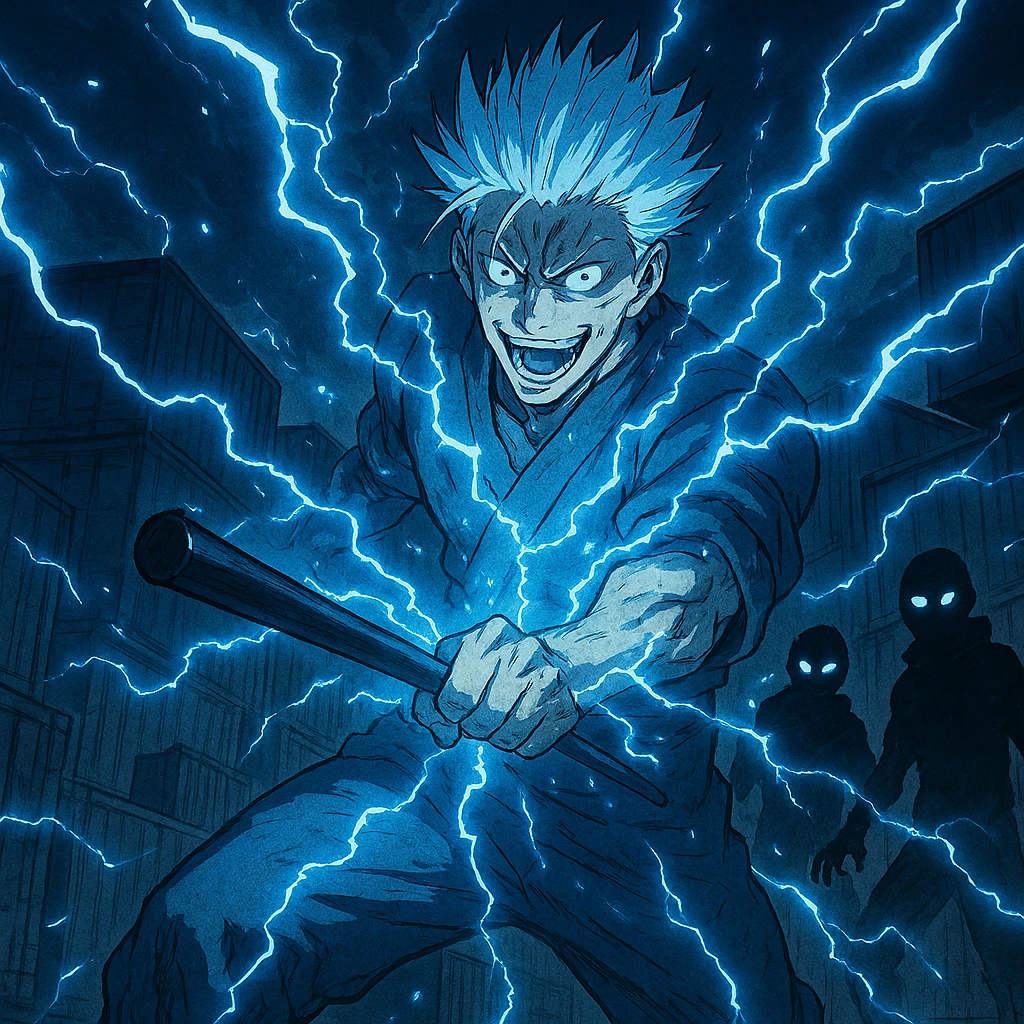
- Origin: A sorcerer from 400 years ago who made a deal with Kenjaku solely to fight Sukuna.
- Ability: His Cursed Energy has the properties of electricity. He doesn’t even need a domain to hit sure-hit attacks; he builds up a charge on his opponent and discharges a lightning bolt that is indefensible.
- Role: He rules the Tokyo No. 2 Colony. He is the embodiment of the battle-hungry ancient mindset. He doesn’t care about the game’s politics; he just wants the strongest fight. His clash with Hakari is legendary, highlighting the difference between ancient “honor” and modern “fever.”
Ryu Ishigori (The Cannon)
- Origin: Sendai Colony player from 400 years ago.
- Ability: Granite Blast. He has the highest Cursed Energy output of all players. He is a man obsessed with “dessert”—finding a fight that satisfies his hunger.
- Role: He represents the sheer destructive power of the past. He forces Yuta Okkotsu to go all out, proving that the ancient sorcerers are not to be trifled with.
Takako Uro (The Assassin)
- Origin: Captain of the Sun, Moon, and Stars Squad from the Heian Era (Fujiwara Clan).
- Ability: Sky Manipulation. She can turn the sky into a surface, warping space to deflect attacks or crush opponents.
- Role: She brings the political baggage of the Heian era into the modern game, showing that the golden age of sorcery was also an age of betrayal and cruelty.
The Modern Sorcerers (The New Wave)
Hiromi Higuruma (The Genius Lawyer)
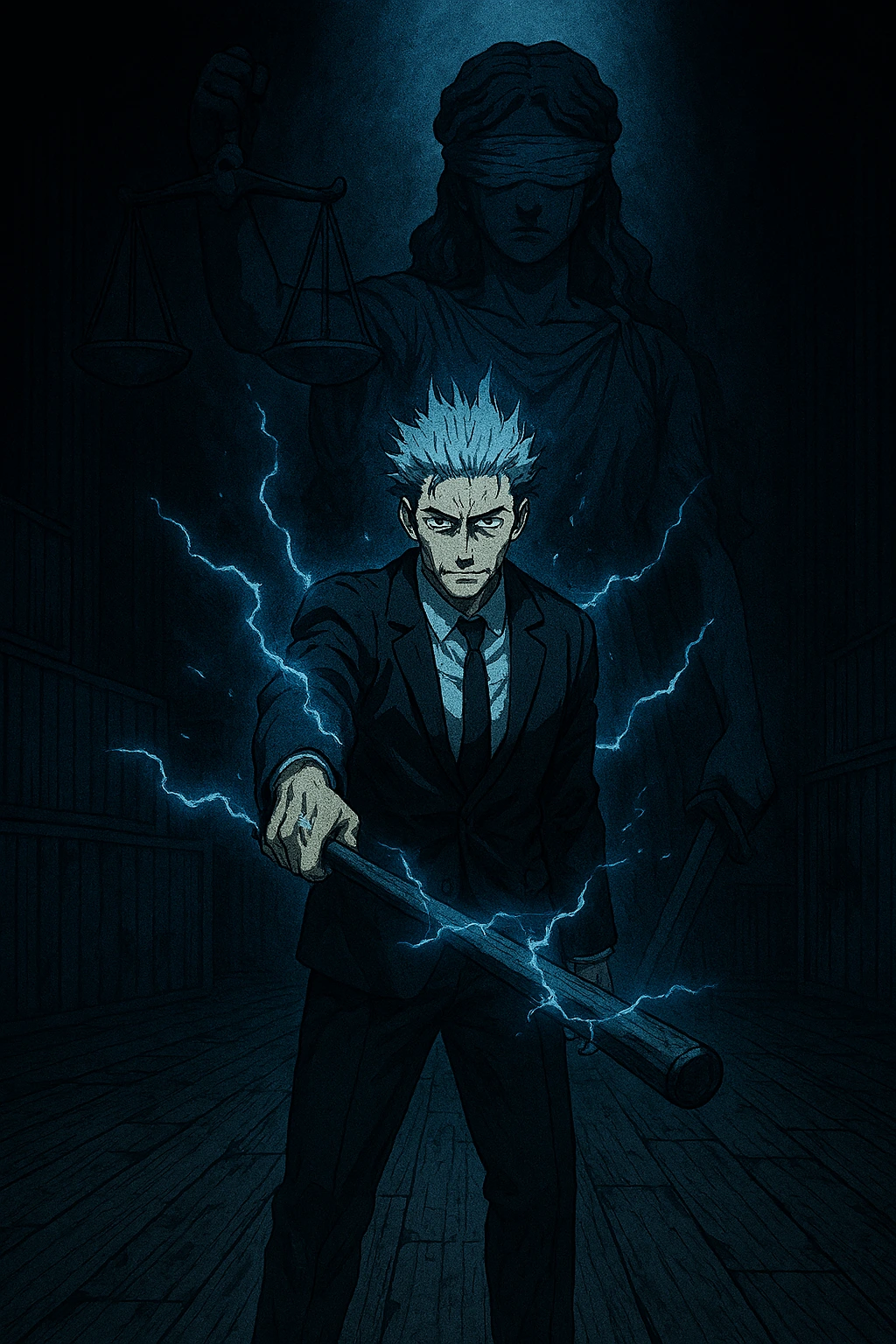
- Profile: A defense attorney disillusioned by the Japanese justice system. He awakened his technique just as the game started.
- Ability: Deadly Sentencing. Within 12 days of awakening, he mastered his technique to the level of a Grade 1 sorcerer. His domain is non-lethal but bans violence, forcing the opponent into a court trial. If found guilty, they lose their cursed technique (Confiscation) or their life (Death Penalty).
- Significance: Higuruma is the dark horse. He represents the potential of modern humanity. His arc is tragic yet redemptive; he starts as a killer enforcing his own twisted justice but is eventually swayed by Yuji’s honesty. He is the tactical MVP for the heroes.
Yuta Okkotsu (The Heavy Hitter)

- Profile: The protagonist of Volume 0.
- Feat: Enters the Sendai Colony—arguably the most dangerous pit of monsters—and kills the heavy hitters (Dhruv, Kurourushi) while defeating Ryu and Uro in a 1v1v1.
- Role: Yuta is the safety net. While Yuji and Megumi struggle ethically and physically, Yuta enters the game ready to bear the burden of murder. He gathers points rapidly, aiming to add rules to help his friends.
Hakari Kinji (The Gambler)
- Profile: The suspended third-year student.
- Ability: Idle Death Gamble. His domain is a pachinko machine. If he hits a jackpot (1/239 chance), he gains infinite cursed energy and immortality for 4 minutes and 11 seconds.
- Role: He fights Kashimo. Hakari represents the chaotic, unmanageable nature of modern sorcerers that the conservatives hated. His fight is purely about momentum and luck, contrasting with the rigid logic of the ancient sorcerers.
Maki Zenin (The Glitch)
- Profile: After the death of Mai, Maki has zero cursed energy.
- The Glitch: Because she has no cursed energy, the barriers cannot detect her. She can enter and leave colonies at will. She is invisible to the Kogane unless she voluntarily agrees to join. She is the wild card that Kenjaku could not fully account for—a monster physically on par with Toji Fushiguro, tearing through the Sakurajima colony.
Kenjaku’s True Goal: The Merger

Why orchestrate this madness? Why the Culling Game Colonies? Is it just for fun? No. It is a ritual of cosmic proportions.
The Engine of Chaos
The Culling Game is not the goal; it is the process. Kenjaku compares it to a centrifugation machine. By forcing sorcerers to fight and die within the barriers, he generates a massive amount of cursed energy. This energy is contained by the barrier line traversing Japan.
The Fuel: The US Military Invasion
One of the most shocking twists in the arc is Kenjaku’s involvement of foreign nations. He traveled to the USA and China, demonstrating the existence of Cursed Energy to world leaders. He framed sorcerers as a clean energy source, prompting the US military to invade the colonies to “capture” sorcerers for research. The Grim Reality: This was a trap.
The soldiers were not hunters; they were cattle. Kenjaku needed a massive influx of cursed energy to jumpstart the game’s deeper phases. He lured thousands of non-sorcerer soldiers into the colonies, where they were slaughtered by Cursed Spirits. The fear, pain, and death of these soldiers flooded the colonies with cursed energy, effectively “greasing the gears” of the ritual.
The End Product: The Merger with Tengen
Master Tengen has evolved beyond humanity. He is now more spirit than human, and his consciousness is connected to the very land of Japan. Kenjaku’s goal is to force a merger between this evolved Tengen and the entirety of the Japanese population (non-sorcerers).
- The Theory: Usually, a merger with Tengen creates a stable, higher being. But by merging Tengen with everyone—millions of impure, chaotic souls—Kenjaku hopes to create something uncontrollable.
- The Motivation: Curiosity. Kenjaku is a mad scientist. He wants to see the “form of cursed energy” that lies beyond human potential. He believes that by mixing humanity into a singularity of chaos, he will create a god-like entity reminiscent of a giant Cursed Spirit—a catastrophe that humanity can never turn back from.
The Culling Game is the prep work. It prunes the weak, gathers the energy, and prepares the “Other Side” to accept the merger.
Conclusion: The End of the Game
The JJK Culling Game Explained reveals a narrative that is bleak, complex, and incredibly high-stakes. It is a masterclass in raising the ceiling of a shonen manga. What started as a hunt for fingers has evolved into a metaphysical battle for the definition of humanity.
The arc concludes not with the game simply ending, but with the rules being shattered. Through the efforts of Yuta, Hakari, and a tragic sacrifice by Megumi (whose body is seized by Sukuna), the points were gathered. Rules were added to allow movement between colonies. But Kenjaku was always one step ahead. The game was rigged from the start to continue until all players except for Geto (Kenjaku) and Megumi (Sukuna) were dead.
The Culling Game served its purpose: it successfully gathered the energy required to threaten the Merger. It cleared the board of the old guard of Jujutsu society, killed the higher-ups, and left the students of Jujutsu High as the last line of defense against an apocalyptic evolution.
As the barriers fall and the final battle approaches, the lessons of the Culling Game remain: evolution requires sacrifice, and in the world of Jujutsu, the only truth is power. The surviving players are no longer students; they are soldiers who have survived hell, ready for the final confrontation in Shinjuku.