
Introduction: The Leakage of the Soul
Curses Are Not Ghosts; They Are the Sediments of Humanity
In the vast, terrifying lexicon of supernatural fiction, we are accustomed to monsters that come from “elsewhere.” Aliens descend from the cold vacuum of space; demons claw their way up from biblical hells; ghosts drift in from the afterlife.
JJK Cursed Spirits, however, presents a far more disturbing reality. The monsters in this world do not come from a different dimension. They come from us. They are the sludge, the runoff, and the toxic byproduct of human existence.
To understand Cursed Spirits (Jurei), one must first dismantle the traditional idea of a “haunting.” A Cursed Spirit is not a soul left behind by a dead person—that is a Vengeful Spirit, a specific and rare sub-category we will discuss later.
The vast majority of Curses are born from the living, not the dead. They are the sediments of humanity, the tangible manifestation of our collective negativity. They are the shadows cast by the light of human consciousness.
The Science of the Curse: Why Energy Leaks

The metaphysics of Gege Akutami’s world operates on a rigid system of energy management. In the Jujutsu Kaisen universe, every human being produces Cursed Energy (Juryoku). It is generated physiologically and psychologically through negative emotions.
Every time a salaryman stifles a scream of frustration on a crowded train, every time a student feels the crushing weight of academic failure, and every time a patient in a hospital room feels the cold grip of mortality, Cursed Energy is born. It is the electricity of negative emotion.
For a Jujutsu Sorcerer, this energy is a closed loop. Sorcerers are analogous to efficient engines; they produce energy, but they circulate it within their bodies. They burn it as fuel for their techniques or reinforce their bodies with it. Very little, if any, escapes their pores. They are sealed vessels.
Non-sorcerers—99% of the human population—are inefficient engines. They produce the same volatile emotions, but they lack the spiritual piping to contain them. Consequently, this energy leaks out. It drips from their bodies like sweat. It is invisible, odorless, and intangible to the common man, but to those with the “eyes” to see, it is heavy. It sinks and pools in the metaphysical architecture of the world.
The Accumulation: When Negativity Gains Consciousness
This leakage is not harmless. Imagine Cursed Energy as radioactive waste. If one person has a bad day, the “radiation” is negligible. It dissipates into the atmosphere as “Residuals”—faint traces that a sorcerer can track but that pose no threat.
But in a metropolis like Tokyo, where millions of people are stressed, angry, fearful, and jealous, the leakage creates a massive, swirling pool of toxicity. Like dirt piling up in the neglected corner of a room, this energy accumulates. It binds together, coalescing into form. At a certain critical mass, this pool of energy achieves a grotesque form of sentience. It grows a mouth to curse you, claws to tear you apart, and eyes to witness your fear.
This is the birth of a Cursed Spirit. They are not born; they congeal.
Thesis: The Mirror of Humanity
Therefore, Curses are the mirror of humanity. They are not an external invasion; they are an internal rot. To look at a Curse is to look at the ugly reflection of human society. If Mahito is cruel, it is because humans are cruel to one another. If Jogo burns with volcanic rage, it is because we fear the burning earth.
To defeat them, a Sorcerer cannot simply swing a sword; they must understand the fundamental emotional gravity that birthed the monster in front of them. Understanding the origin is the first step in exorcism.
The Hierarchy of Fear (The Grading System)
The Jujutsu society categorizes these horrors based on their lethality. This is not just a power ranking; it is a measure of the fear that birthed them.
Grade 4 to Grade 2: The Pests of Society
Grade 4 (The Fly Heads):
At the absolute bottom of the food chain, we find the “Fly Heads” (Ha). These are Grade 4 curses, usually smaller than a dog, often resembling distorted insects or flying fish with grotesque faces. They are the spiritual equivalent of dust bunnies or mosquitoes.

They possess no intelligence and attack purely on instinct. Fly Heads are born from minor, fleeting annoyances. The irritation of stubbing your toe, the flash of anger when you miss a train, the momentary jealousy of a coworker’s promotion—these emotions are not strong enough to birth a demon, but they are substantial enough to birth a pest.
Fly Heads are everywhere. They swarm in cities, feed on low-level negativity, and are generally harmless to a healthy human. However, they serve as a crucial indicator of the “sanitation” of an area. A swarm of Fly Heads indicates a gathering of filth, often serving as a prelude to a stronger, more dangerous curse emerging.
Grade 3 & Grade 2: As the emotion intensifies, so does the curse. Grade 2 curses are dangerous to the average person. They can use simple jujutsu and are difficult to kill with conventional weapons (though a shotgun might work on a Grade 3, a Grade 2 requires a Sorcerer). These are often born from specific, localized anxieties—fear of dogs, hatred of a specific teacher, or the gloom of a rainy season.
Place-Specific Curses: The Memory of the Land
Moving up the hierarchy, we encounter Curses that are tethered to specific locations. These are born not just from general negativity, but from memories attached to the land.
Why are schools, hospitals, and graveyards such hotspots for JJK Cursed Spirits? It is a question of emotional density.
- Hospitals: These are factories of despair. The fear of death, the pain of injury, and the grief of loss are constant, high-intensity emissions in a hospital. The walls soak up this energy for decades. A Curse born in a hospital is often sluggish, rotting, and obsessed with biology and sickness.
- Schools: As explained early in the series, schools are particularly dangerous breeding grounds. This is not because schools are inherently evil, but because the “donors” of the energy are adolescents. Teenagers possess high, volatile, and unregulated emotions. Their heartbreak feels like the end of the world; their academic stress feels life-threatening. This intensity creates Curses that are erratic, violent, and surprisingly powerful for their grade.
- Graveyards: Interestingly, graveyards often produce fewer curses than hospitals. The dead do not produce energy; only the grieving living do. Once the grief fades to acceptance, the energy supply cuts off.
Imaginary Vengeful Spirits: The Power of Urban Legends
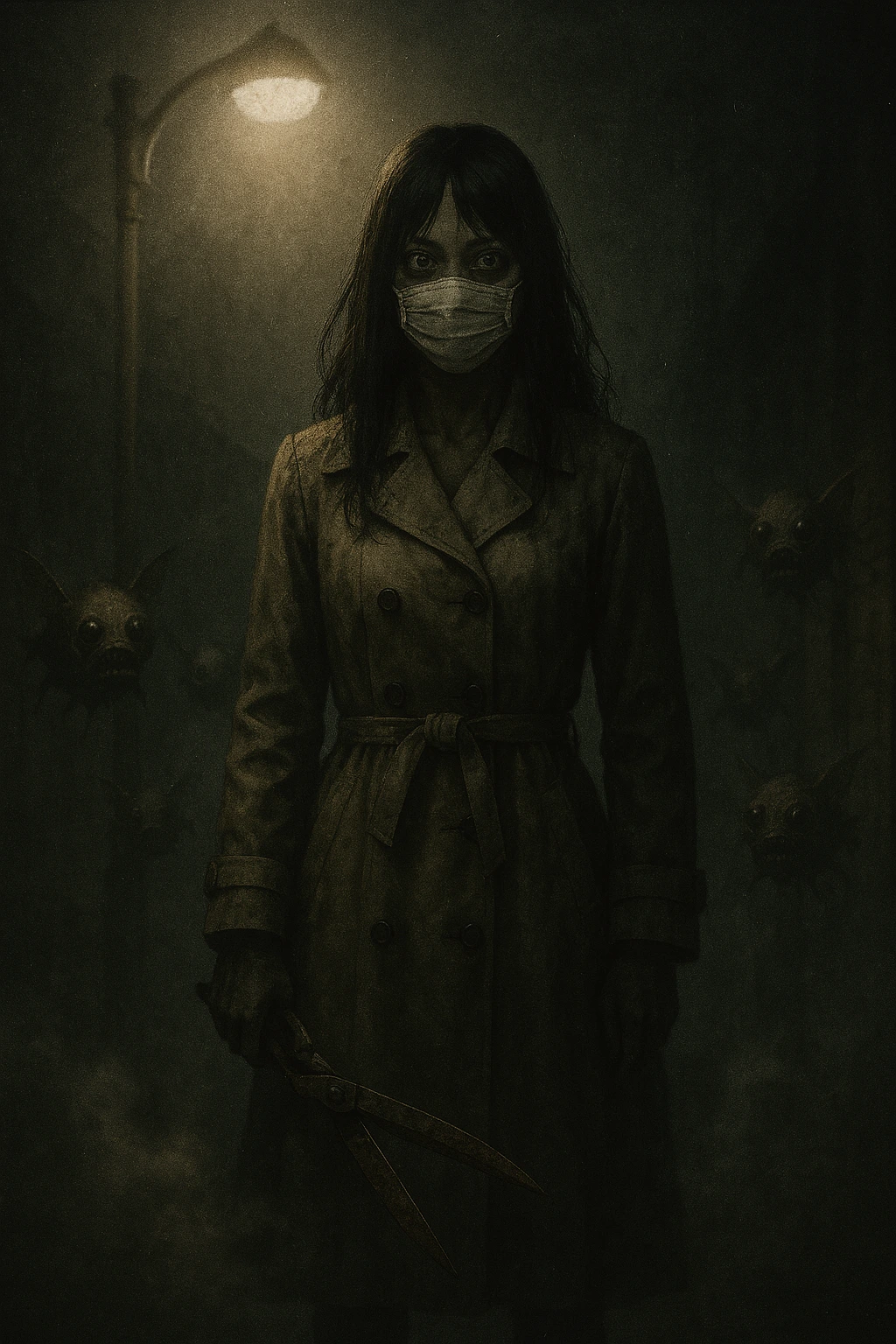
This category represents a fascinating psychological phenomenon in Jujutsu Kaisen: the “Imaginary Vengeful Spirit.” These are Curses born from folklore, urban legends, and collective mass hysteria.
A prime example is the Kuchisake-Onna (Slit-Mouthed Woman) or Toilet Hanako-san. These entities did not exist historically as specific individuals who died with regrets. Instead, they exist because people believe they exist.
If a million people share a campfire story about a woman with scissors who asks, “Am I pretty?”, the collective fear of that specific image pools together. The universe fills the mold created by human imagination with Cursed Energy. The result is a Curse that acts, looks, and behaves exactly like the legend.
These Curses are particularly tricky because their abilities often follow the “rules” of the story (e.g., you must answer her question correctly to survive). They are memes—ideas given flesh through fear.
The Disaster Curses: Nature’s Wrath (The Special Grades)
The Concept: Intelligent Fear
If Fly Heads are born from annoyance, and Imaginary Spirits are born from stories, what happens when the entire human race fears a fundamental aspect of the planet? What happens when humanity fears the ground they walk on, the forests that surround them, or the oceans that isolate them?
You get the Disaster Curses.
These are Special Grade spirits of the highest caliber. In the official ranking, “Special Grade” denotes an anomaly—something that conventional jujutsu logic cannot easily categorize or defeat. Unlike the mindless beasts of lower grades, the Disaster Curses possess high intelligence, complex speech, social structures, and philosophies.
They believe themselves to be the “True Humans” because they are born of pure, unadulterated truth (emotion), whereas humans are a mix of truth and lies.
Jogo: The Wrath of the Earth
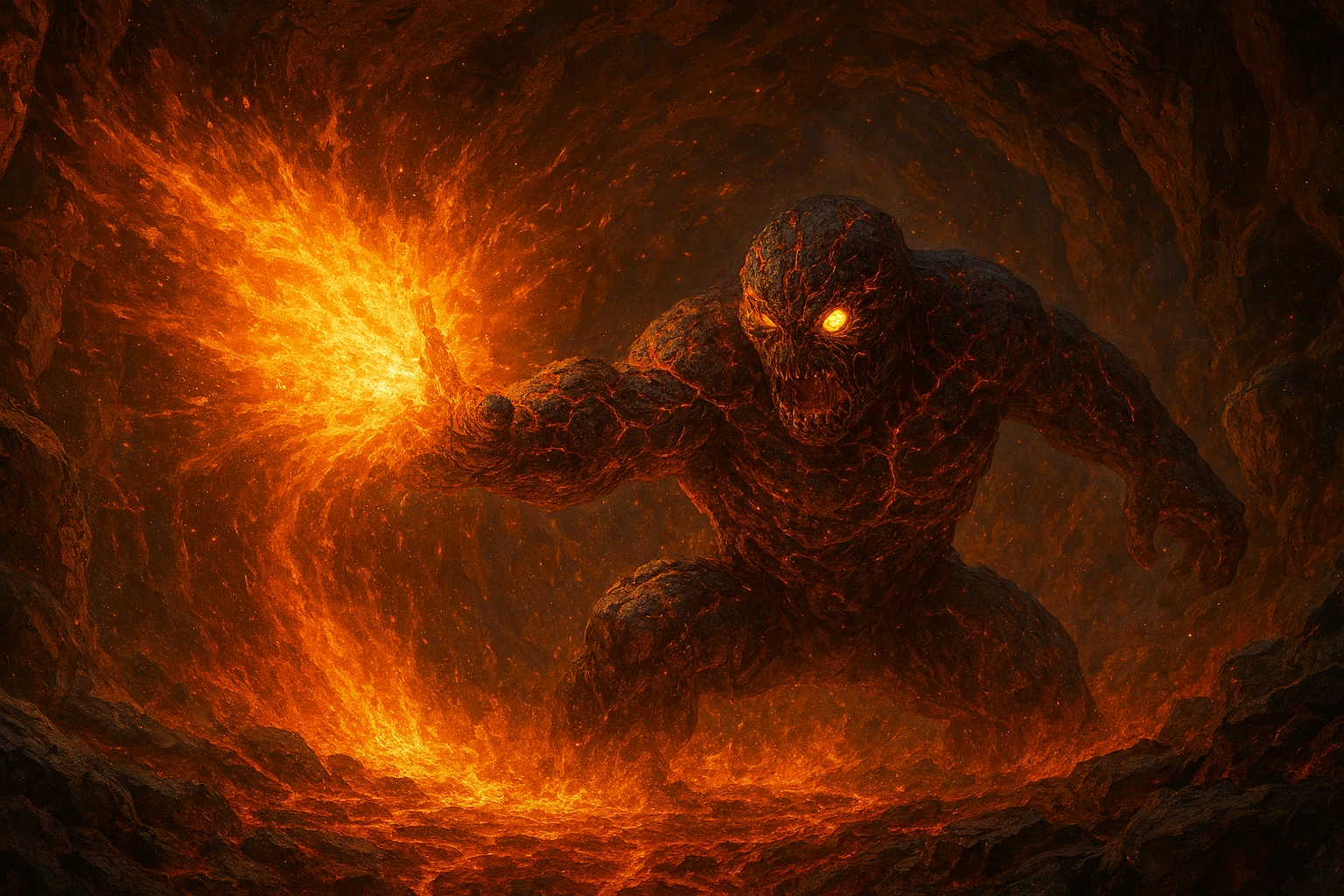
Origin: Jogo represents the collective fear of the earth: volcanoes, earthquakes, and magma. Since the dawn of time, humans have feared the ground shaking beneath them and the fire erupting from mountains. This primal fear created Jogo.
Appearance & Personality: Visually, he is a walking eruption, with a single eye and a volcano-like head. Jogo is the most vocal advocate for the “Curses as True Humans” ideology. He possesses a strange sort of dignity. He is short-tempered and arrogant, yet he deeply cares for his fellow Disaster Curses. He mourns them when they die. This empathy for his own kind makes him paradoxically “human.”
Abilities & Domain: His firepower is catastrophic. He can summon meteorites and flood entire city blocks with magma. His Domain Expansion, Coffin of the Iron Mountain, is the interior of an active volcano. Upon activation, the heat alone is enough to incinerate an average sorcerer instantly.
The Tragedy of Jogo: Despite his immense power (stated by Kenjaku to be equal to 8 or 9 of Sukuna’s fingers generously), Jogo is constantly humiliated because he keeps picking fights with the two strongest beings in the verse: Gojo Satoru and Ryomen Sukuna. He represents the overwhelming, unavoidable destruction of a natural disaster, yet he falls victim to the “apex predators” of the sorcery world. His death scene, where he seeks validation from Sukuna, reveals a deeply human desire: the desire to be recognized.
Hanami: The Wrath of the Forest
Origin: Hanami is born from the fear of forests and, more specifically, the planet’s hatred toward humanity for environmental destruction. Hanami is unique among the group for having a gentle, almost soft demeanor, despite being a terrifying killer.
Philosophy: Hanami is an eco-terrorist in spirit form. She speaks directly into the minds of her victims, bypassing language barriers. Her goal is simple: Humans are a plague upon the earth. To save the planet, the “time of the humans” must end so the time of the plants can begin. She is the manifestation of nature reclaiming civilization.
Abilities: Hanami represents the durability of nature. She is as tough as the roots of an ancient tree, capable of withstanding bombardments that would vaporize other curses. Her technique involves manipulating plant life, draining life force (Solar Ray-style attacks), and using “Cursed Buds” that feed on the opponent’s energy. Her Domain Expansion, Ceremonial Sea of Light, was teased but tragically interrupted by Gojo Satoru, leaving its full capabilities a mystery.
Dagon: The Terror of the Deep
Origin: For a long time, Dagon existed merely as a “Cursed Womb,” a cute, octopus-like creature floating in the background. However, upon evolving, he revealed his true nature: the fear of the ocean.
Philosophy: The ocean is vast, dark, and filled with unknown monstrosities. Dagon represents the thalassophobia innate in humans—the fear of what lies beneath the surface. While he speaks less philosophically than Jogo, his bond with his “family” is just as strong.
Abilities & Domain: Dagon proves that Curses can learn and evolve rapidly; he went from a passive observer to a tactical genius capable of overwhelming two Grade 1 sorcerers (Nanami and Naobito) simultaneously. His Domain Expansion, Horizon of the Captivating Skandha, is a beach paradise. While it looks serene, it is a death trap. He controls the environment completely, summoning infinite waves of carnivorous fish (Shikigami) that do not exist until they bite you. This “Sure-Hit” effect makes him a nightmare to fight without a Domain counter.
Mahito: The Mirror of Humanity

Mahito is the leader of the Disaster Curses, not because he is the oldest (he is actually the youngest), but because he is the most dangerous.
Origin: Mahito is born from the hatred and fear humans have for other humans. He is the manifestation of war, murder, deceit, and sociopathy. Since humans hate each other more frequently than they hate volcanoes or forests, Mahito has the highest potential for growth.
The Philosophy of the Soul: Mahito’s technique, Idle Transfiguration, allows him to touch and reshape the soul. Because the body follows the shape of the soul, he can twist humans into grotesque monsters, heal himself instantly, or shapeshift into weapons. His philosophy is nihilistic: “Life has no weight. It is just floating dust.” He believes the soul came before the body, and thus the body is malleable putty.
The Anti-Yuji: Mahito is the narrative foil to Yuji Itadori. Yuji wants to save people and give them a “proper death.” Mahito kills people indiscriminately and desecrates their bodies. Mahito’s growth parallels Yuji’s. When Yuji gets stronger, Mahito gets stronger. He represents the chaotic potential of humanity. He is playful, cruel, and completely devoid of the “dignity” that Jogo possesses. He kills because he enjoys it, just as a human might enjoy a game. This makes him the truest reflection of humanity’s darkest impulses.
Domain Expansion: His Domain, Self-Embodiment of Perfection, is a terrifying construct of giant hands. Inside the Domain, he is essentially touching the soul of everyone present at all times. The moment it activates, the victory condition is met. It is an instant-kill technique, making him the most lethal of the group against anyone who cannot protect their soul.
The Hybrid Taboo: Cursed Womb: Death Paintings
While not purely Cursed Spirits, the Death Painting Wombs deserve a critical mention in the taxonomy of curses because they bridge the gap between human and monster.
The Origin: A Sin of the Meiji Era
In the Meiji Era, a woman with a unique genetic constitution discovered she could become pregnant by JJK Cursed Spirits. She was exploited by the evil sorcerer Noritoshi Kamo (Kenjaku), who forced her to abort nine pregnancies at various stages. These aborted fetuses became the Cursed Objects known as the Nine Death Paintings.
When forced into a human host, they incarnate. Unlike Mahito or Jogo, who are pure energy, the Death Paintings (Choso, Eso, Kechizu) possess physical bodies of flesh and blood. They can bleed, they can feel pain, and they do not disappear when killed—they leave a corpse.
Choso: The Big Brother
Choso is the masterpiece of this experiment. He is a Special Grade threat who wields the Kamo clan’s Blood Manipulation technique. He represents the ultimate bond of blood. Because he is half-curse, he can convert his cursed energy into blood, bypassing the usual weakness of the Kamo clan (running out of blood). Choso’s existence challenges the black-and-white morality of Jujutsu society. He is not evil; he simply loves his brothers. His transition from enemy to Yuji’s ally highlights that “Curses” born of human biology may possess human hearts.
Vengeful Cursed Spirits: The Human Ghosts
The Distinction: Sorcerer vs. Curse
It is vital to distinguish between a Cursed Spirit (born of leaked energy) and a Vengeful Cursed Spirit (a human soul transformed into a curse). This transformation is one of the most tragic mechanics in Jujutsu society.
How a Sorcerer Becomes a Curse
Jujutsu Sorcerers spend their lives controlling Cursed Energy. However, the moment of their death is critical. If a sorcerer is killed by something other than Jujutsu (e.g., a conventional gun, a knife, a car accident, or old age) and they die harboring intense regret or malice, their soul does not pass on. Instead, their own Cursed Energy collapses inward, binding their soul to the mortal plane and warping them into a Vengeful Spirit.
This is why Sorcerers are trained to kill other Sorcerers using Cursed Energy. It is not just about power; it is a mercy killing to prevent the creation of a demon. A sorcerer killed by a bullet may return as a god-like demon; a sorcerer killed by a Cursed Technique stays dead.
The Three Great Vengeful Spirits of Japan
The lore of JJK borrows heavily from real Japanese history. The series acknowledges the “Three Great Vengeful Spirits” (San-dai Onryo), historical figures whose wrath was so great they were deified to appease them.
- Sugawara no Michizane: Mentioned early in the series, Michizane is a historical figure and one of the “Big Three.” He is the ancestor of both Satoru Gojo and Yuta Okkotsu. His existence proves that this phenomenon has plagued Jujutsu society for a millennium. His bloodline carries immense Cursed Energy reserves, explaining Yuta’s boundless power.
- Taira no Masakado: While less prominent in the main JJK text, his influence is felt in the world-building regarding barriers and the spiritual protection of Tokyo.
- Emperor Sutoku: The third of the great spirits, representing the fear of authority turned sour.
Rika Orimoto (The Queen of Curses)
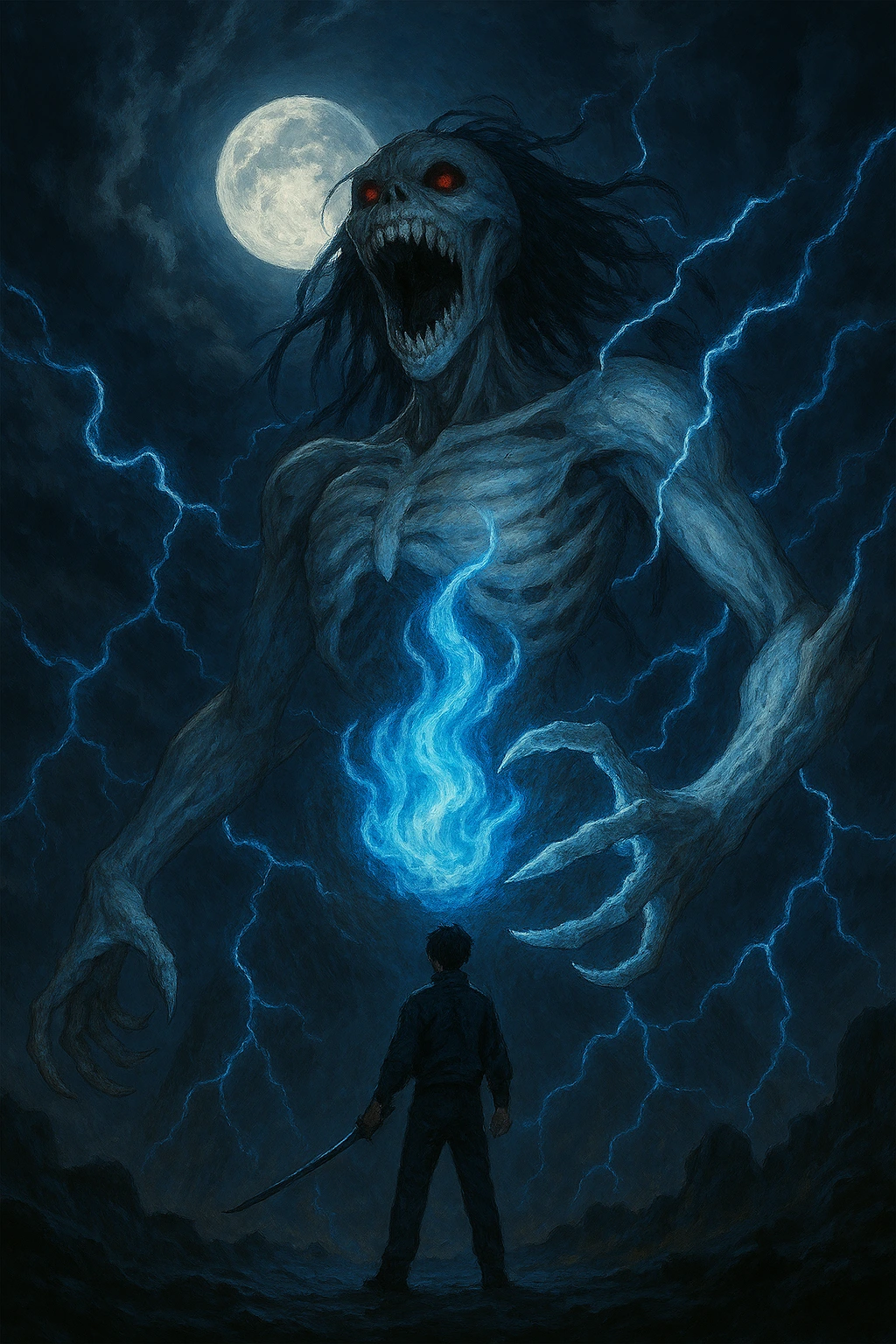
Rika is the most prominent example of a Vengeful Spirit created by love rather than hate. This subverts the usual trope. When Rika died in a traffic accident, Yuta Okkotsu’s refusal to accept her death—combined with his immense latent energy—cursed her soul.
He did not haunt her; he haunted her. He bound her soul to the living world. Rika became a monstrous entity of boundless power, capable of copying techniques and storing infinite energy. She was dubbed the “Queen of Curses” because her power source (love) is arguably more infinite and volatile than simple malice. She represents the toxic side of attachment—the refusal to let go.
Naoya Zenin (The Speedster Demon)
(Note: Major spoilers for the Culling Game arc) Naoya Zenin serves as the perfect case study for Vengeful Spirit creation. In life, he was arrogant, misogynistic, and obsessed with superiority. He was killed not by a Cursed Technique, but by Maki Zenin’s mother using a kitchen knife—a non-cursed weapon.
Because he died with his ego shattered and without Cursed Energy finishing him off, he returned. Evolution: He initially appeared as a “Cursed Womb,” a grotesque worm-like creature. However, his ego allowed him to evolve rapidly into a humanoid skeleton-jet hybrid. He retained his Projection Sorcery (super speed) and amplified it to reach Mach 3. He embodies how personal obsession can transcend death, turning a bad man into a worse monster.
The King of Curses: The Exception
Ryomen Sukuna is NOT a Cursed Spirit
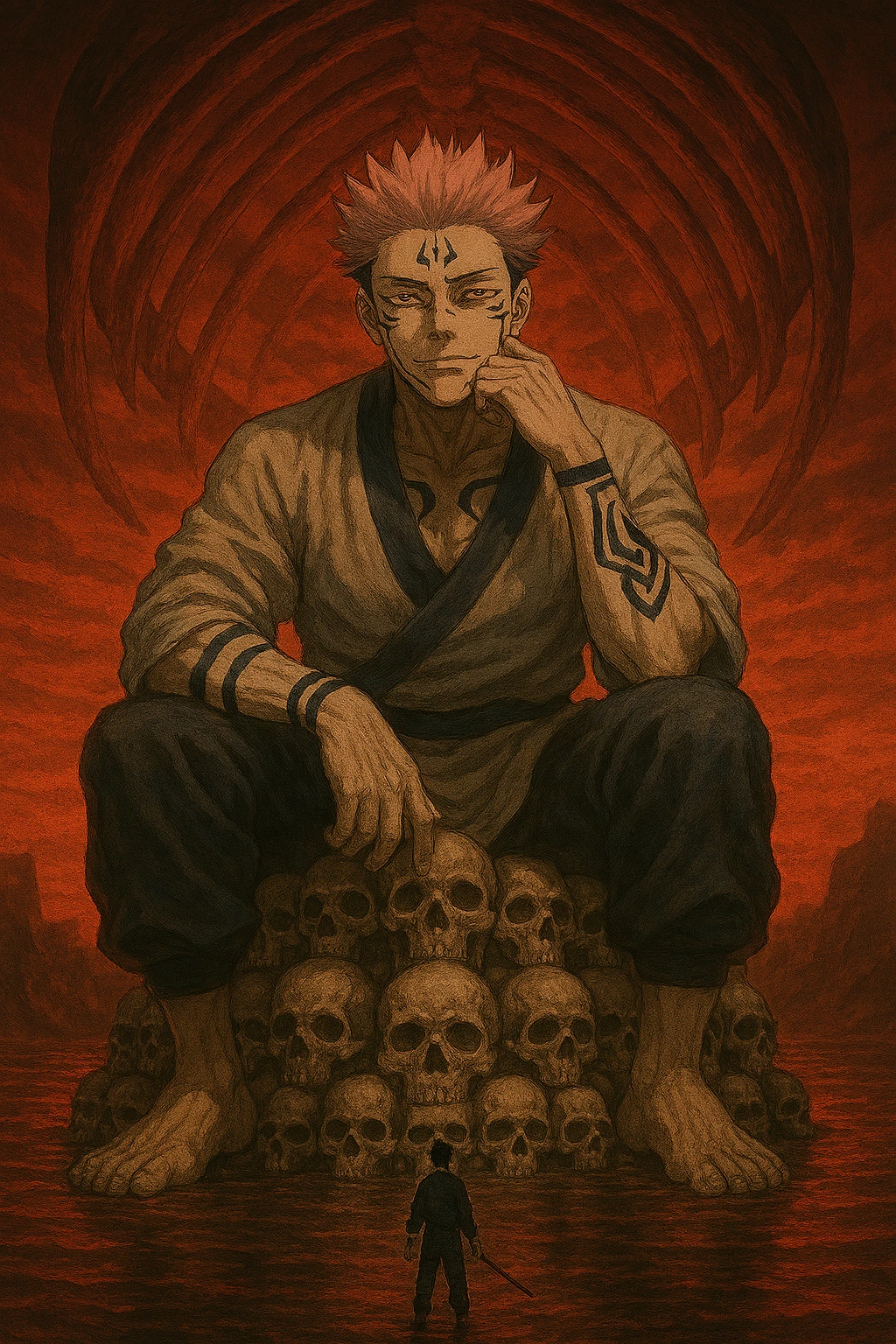
A common misconception among casual fans is classifying Ryomen Sukuna as a Cursed Spirit. This is factually incorrect and crucial for understanding the power dynamics of the series.
Ryomen Sukuna was a human sorcerer from the Heian Era (the Golden Age of Jujutsu). He was so powerful that he was regarded as a natural calamity. When he was defeated (or rather, when he chose to transcend), he participated in a ritual known as “The Bath” (metaphorically speaking regarding his preservation) to split his soul into twenty indestructible Cursed Objects (his fingers).
Why the Distinction Matters:
- Incarnation: Sukuna is an Incarnated Sorcerer. He requires a human vessel (Yuji Itadori or Megumi Fushiguro) to manifest. A Cursed Spirit like Mahito has a body made entirely of Cursed Energy; if he dies, he vanishes. Sukuna has a body of flesh and blood (borrowed from his host).
- Reverse Cursed Technique (RCT): This is the smoking gun. Because Cursed Spirits are made of negative energy, positive energy (RCT) acts like acid to them. If you pour positive energy into a Curse, they disintegrate (as Yuta did to Kurourushi). However, because Sukuna is incarnated in a human body, positive energy heals him. This makes him significantly harder to kill than any Cursed Spirit. He is not a ghost; he is a cannibalistic human sorcerer living on borrowed time.
Sukuna is the “King of Curses” not because he is one of them, but because he reigns over them. He sits atop the hierarchy of all things negative, ruling with the selfishness of a human and the brutality of a demon.
Conclusion: The Cycle Never Ends
The Tragedy of the Human Heart
The lore of Jujutsu Kaisen presents a bleak reality: as long as humans have hearts, they will create curses. We are the architects of our own destruction. Every war, every murder, and every quiet moment of self-loathing feeds the ecosystem of monsters that lurk in the shadows. We fear the dark, so we create monsters that live in it. We fear each other, so we create Mahito.
This cycle is what drove Suguru Geto into madness. His solution—genocide of all non-sorcerers—was extreme, but scientifically sound within the logic of the world. If only Sorcerers existed, Cursed Energy would not leak, and Cursed Spirits would cease to be born. It was a “final solution” to the problem of suffering.
On the other end of the spectrum, Yuki Tsukumo sought to eradicate Cursed Energy entirely from humanity, creating a world like Toji Fushiguro’s—a world of pure physics, free from the curse of emotion.
The Ultimate Game
We have now mapped the taxonomy of the enemy. We know that Fly Heads are the dust, Disaster Curses are the natural laws, and Vengeful Spirits are the ghosts of our failures. But knowing the enemy is only half the battle. To harness this chaotic energy, the ancient sorcerer Kenjaku initiated a ritual to force the evolution of humanity itself.
He does not want to eliminate curses; he wants to merge humanity with Tengen to create something even greater—a chaotic swirl of cursed energy encompassing all of Japan.
Now that we know the monsters, we need to understand the ultimate game created to harness this energy.