
In the chaotic, blood-soaked tapestry of Jujutsu Kaisen, power is usually quantified by destruction. We look at Satoru Gojo’s “Hollow Purple” erasing city blocks, or Ryomen Sukuna’s “Malevolent Shrine” slashing through reality itself.
These are the faces of war; they are the active forces that shape the narrative through violence. However, beneath the flash of Cursed Techniques and the roar of battle, there is a silent, static force that holds the entire Jujutsu world together. Without this force, there is no Jujutsu High, no safety for sorcerers, and arguably, no organized Jujutsu society in Japan at all.
That force is Master Tengen.
While Gojo Satoru bears the title of the “Strongest Sorcerer,” Master Tengen holds a title that carries far more weight: the “Foundation.”
Tengen is an enigma wrapped in a riddle, hidden behind a thousand doors deep beneath Tokyo. He is the omnipresent observer who sees everything but interferes with nothing. To the average fan, he might initially seem like a passive NPC (Non-Player Character) who exists solely to provide exposition.
But a deeper, expert-level analysis reveals that Tengen is the linchpin of the entire series. His existence is the reason Japan is the superpower of Cursed Energy. His biological clock determines the fate of the world. And ultimately, his “evolution” is the gun pointed at the head of humanity.
In this comprehensive, 3,500+ word analysis, we will strip away the barriers surrounding the “Star” of Jujutsu Kaisen. We will dissect his immortality, the tragic mechanism of the Star Plasma Vessels, the invisible architecture of his barriers, the tactical failures that led to the Culling Games, and why his existence has now become the ultimate threat to mankind.
The God Who Doesn’t Fight: Identity and History
To understand Master Tengen, you must first understand the hierarchy of necessity within the Jujutsu world. If Satoru Gojo were to disappear (as he did in the Shibuya Incident), the balance of power would shift, and chaos would ensue, but the fundamental mechanics of the world would remain. Auxiliary Managers could still cast curtains. Jujutsu High would still stand. The physics of sorcery would remain constant.
If Master Tengen were to disappear, the infrastructure of Jujutsu society would collapse instantly.
The Identity of the Star
Who is Master Tengen? He is an immortal Jujutsu Sorcerer who has existed for over 1,200 years. His origins date back to the Nara Period (roughly 710–794 AD), a time when the boundaries between the physical world and the spiritual world were thinner, and the foundations of modern Jujutsu were being laid. He is a contemporary of the original legendary sorcerers, including Kenjaku and likely Ryomen Sukuna.
However, unlike the ancient sorcerers who sought conquest, battle, or the hedonistic pleasure of slaughter, Tengen sought preservation. He recognized early on that Cursed Energy was a volatile force that, if left unchecked, would consume humanity.
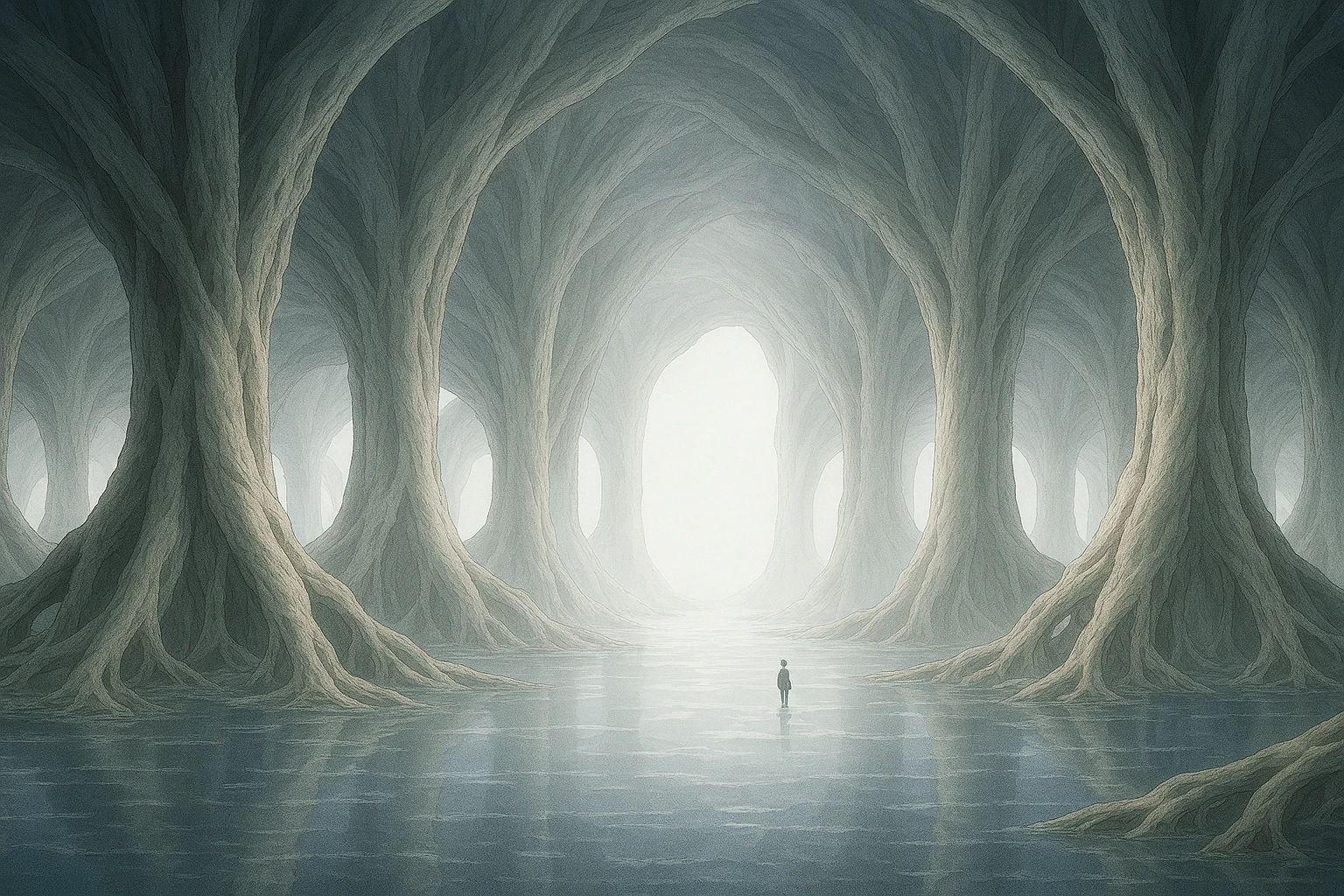
He resides in the Tombs of the Star Corridor (Korkorhu), a special barrier space located deep beneath Tokyo Jujutsu High. This location is not merely a basement; it is a separate dimension governed by Tengen’s will. It is a place where giant roots twist into architecture, the floor reflects a white void, and the air hums with the density of centuries of Cursed Energy.
Gender and Form
Tengen is often referred to as “He,” but strictly speaking, his gender has become irrelevant through the passage of time. In the past, he may have been a woman—this is strongly hinted at by his compatibility with female vessels and the fact that his avatar during the Nara period took a female form. However, in the current timeline, Tengen identifies as something beyond gender—a granny, a grandpa, or perhaps just “existence” itself.
His current appearance is shocking to those seeing him for the first time. He is no longer human in shape. He appears as a strange, cylindrical being with four eyes, resembling a giant thumb or a warped totem. This is not a costume; this is the result of biology spiraling out of control, a concept we will explore in the section on Evolution.
The Policy of Non-Interference
One of the most frustrating aspects of Tengen for the characters (and the audience) is his strict policy of non-interference. He does not involve himself in the politics of the Zenin, Gojo, or Kamo families. He does not step in to stop tragedies like the Shibuya Incident. He effectively allowed the Higher-Ups to rot in corruption for centuries.
Why? Because Tengen operates on a macro-cosmic scale. His concern is the stability of reality and the suppression of Cursed Spirits on a national level. He views himself as a part of the system, not a player within it. This detachment makes him seem cold, but it is a necessary condition of his existence. If the being responsible for maintaining the barriers of Japan started playing favorites, the resulting chaos could destabilize the barriers themselves.
However, this passivity is also his greatest flaw. By refusing to act until the danger was at his doorstep, Tengen allowed Kenjaku—an ancient evil with whom he has a personal history—to maneuver pieces into place for over a millennium. Tengen is the “God who doesn’t fight,” but as we learn in the Culling Games, pacifism in the world of curses is a luxury that even gods cannot afford forever.
The Cursed Technique: Immortality vs. Evolution
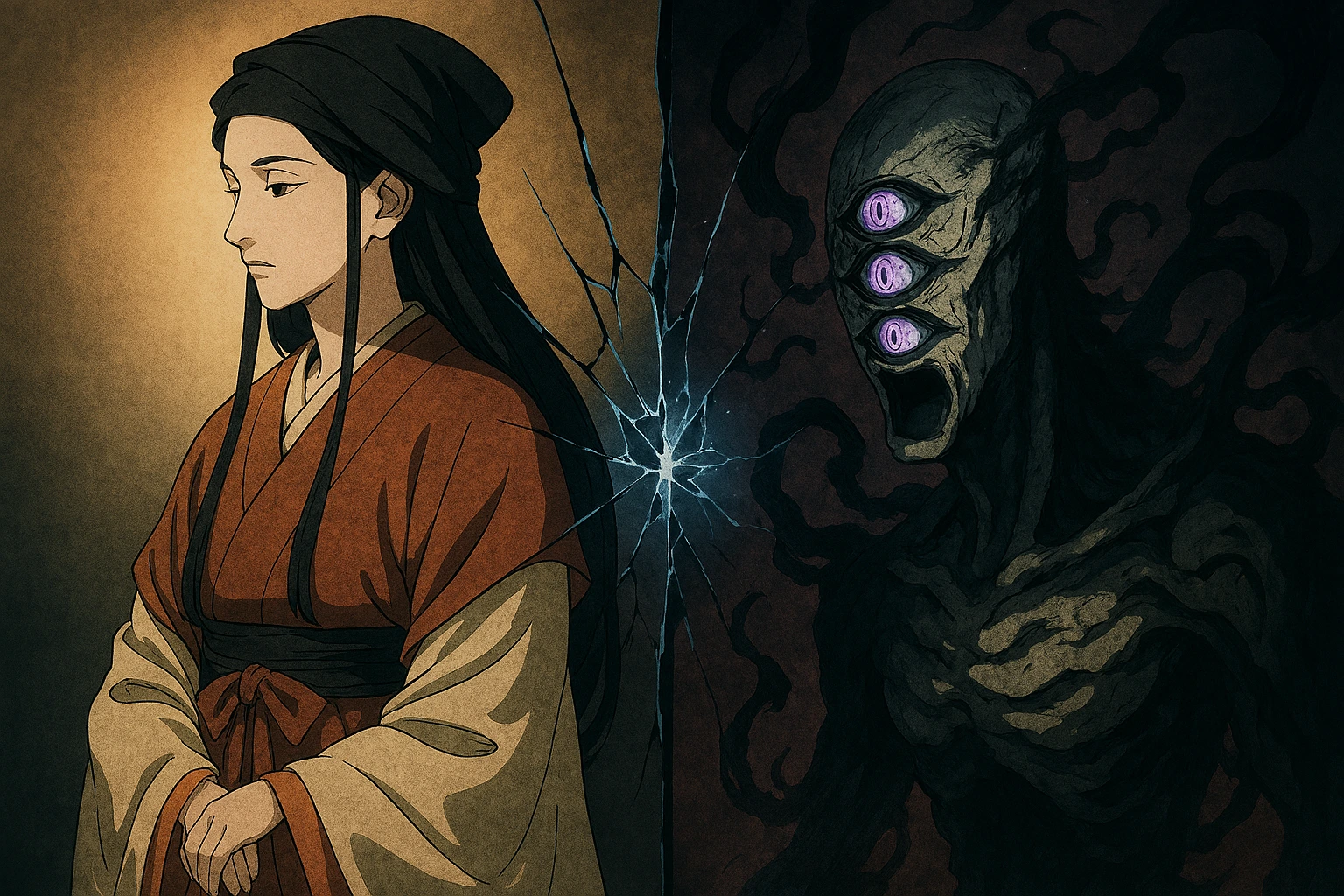
The core of Tengen’s existence—and the source of all the conflict surrounding him—is his Innate Technique: Immortality.
At first glance, this sounds like the ultimate blessing. It is the prize sought by emperors and alchemists throughout history. However, Gege Akutami, the creator of Jujutsu Kaisen, adds a horrifying, biological twist to the concept of living forever. In the world of Jujutsu, immortality is a technicality, not a divine gift.
The Crucial Distinction: Immortality (Fushi) vs. Eternal Youth (Furo)
It is crucial to understand the rules:
- Immortality (Fushi): You cannot die from natural causes or aging. Your soul remains anchored to your body indefinitely.
- Eternal Youth (Furo): Your body stops aging and remains in its prime.
Master Tengen has Immortality, but he does not have Eternal Youth.
This means that while Tengen cannot die of old age, his body continues to age, wither, and transform. Imagine a human body that keeps aging past 100, past 200, past 500 years. The flesh degrades, the bones change, and the biology shifts. This creates a terrifying biological imperative: Tengen must reset his body periodically, or he will cease to be human.
The Horror of “Evolution”
What happens if Tengen ages too much? He does not die. Instead, he evolves.
After a certain point (approximately every 500 years), Tengen’s aging body reaches a critical threshold where the boundary between “self” and the “world” blurs. His consciousness expands. He loses his ego, his personality, and his human will. He ceases to be an individual sorcerer and becomes a higher state of existence—closer to a force of nature, a tree, or even a Cursed Spirit.
If Tengen evolves, he becomes a being that exists everywhere and nowhere. While this sounds like enlightenment (Nirvana), in the context of Jujutsu Kaisen, it is catastrophic for humanity.
- Loss of Control: An evolved Tengen might not care about maintaining the barriers that protect humans. He would transcend human morality.
- Susceptibility: An evolved Tengen is structurally more similar to a Cursed Spirit than a human. This makes him vulnerable to Cursed Spirit Manipulation—the technique possessed by Suguru Geto (and hijacked by Kenjaku).
The Current State: The Thumb Appearance
In the current timeline of Jujutsu Kaisen (post-Shibuya), Tengen has already begun this evolution. When Yuji Itadori and the others finally meet him, he does not look human. The “Thumb” appearance is the result of the failure of the Star Plasma Vessel merger 11 years ago (during the Hidden Inventory Arc).
Because Toji Fushiguro killed Riko Amanai, the reset button was never pressed. Tengen’s body continued to age past its limit.
He has managed to maintain his sanity and individuality purely through his immense barrier proficiency, effectively “holding his soul together” with sheer willpower and complex barrier techniques. But he is living on borrowed time. He is a precarious bubble of consciousness floating in an ocean of evolved instinct. He is no longer human, and that loss of humanity is exactly what Kenjaku needed to initiate the final phase of his plan.
The Barrier System: The Invisible Shield of Japan

If Tengen is the server administrator of the Jujutsu world, the Barriers (Kekkai) are the firewalls and operating system. Without them, the masquerade of the hidden world would fall apart in days.
Most fans understand barriers simply as “walls” or “curtains,” but Tengen’s barrier techniques are complex metaphysical constructs that dictate the rules of reality within Japan.
How Barriers Work
A barrier is essentially a designated space where the caster imposes their will upon reality. It can conceal, contain, or change the laws of physics inside.
- Curtains (Eishou): The black domes used by auxiliary managers to hide Cursed Spirits from the public.
- Colonies: The massive barriers used in the Culling Games (which are actually based on Tengen’s own barrier principles).
- Pure Barriers: The high-level barriers Tengen maintains constantly.
The Japan-Wide Network: The Cursed Energy Condenser
Tengen’s most significant contribution is a massive barrier network that covers the entirety of the Japanese archipelago. This barrier does not physically block people from entering or leaving Japan; rather, it acts as a Cursed Energy Condenser.
This is the canonical explanation for why Jujutsu Kaisen is set almost exclusively in Japan and why Japanese sorcerers are so much stronger than foreign ones. Tengen’s barrier traps and optimizes Cursed Energy within the country. It creates a “hothouse” effect where Cursed Energy circulates, concentrates, and evolves.
- Inside Japan: Cursed Spirits and Sorcerers are common and powerful. The energy is recycled and intensified.
- Outside Japan: Cursed Spirits are rare anomalies, and Sorcerers are few and far between (like Miguel or the foreign military personnel seen later).
Without Tengen’s barrier, Cursed Energy would diffuse across the globe, becoming thinner and weaker. The Jujutsu society as we know it—the Three Great Families, the Technical Colleges, the Grades—only exists because Tengen created an environment where they could flourish.
The Hokkaido Exception
An interesting piece of lore that showcases the limits of Tengen’s power is the Hokkaido Exception. The barrier that covers Japan encompasses the main islands (Honshu, Kyushu, Shikoku) but does not perfectly cover Hokkaido. Historically, the Ainu lands of Hokkaido were considered separate and sacred.
As a result, the Jujutsu society in Hokkaido is distinct, and the concentration of Cursed Energy there is different. This is why the Culling Games colonies were established across Japan except for Hokkaido. The barrier system there was too weak or incompatible to support the massive ritual Kenjaku intended.
The Pure Barriers of Jujutsu High
On a more localized level, Tengen maintains the Pure Barriers that hide the two Jujutsu High schools (Tokyo and Kyoto). These barriers are sophisticated. They don’t just make the schools invisible; they randomize the location of the entrances.
To enter the Tombs of the Star Corridor, one must pass through a barrier that shuffles over 1,000 doors. Unless you are invited, or you possess the specific route data, it is impossible to find the core. This effectively makes Jujutsu High the safest place in the world—in theory.
However, barriers have a weakness: they are designed to hide Cursed Energy. They are not designed to hide from physical prowess devoid of Cursed Energy. This was the loophole Toji Fushiguro exploited. Since he had zero Cursed Energy due to his Heavenly Restriction, he could slip through the barriers undetected, like a ghost walking through a motion sensor. This failure of the barrier system to account for “physicality” led to the greatest tragedy in modern Jujutsu history.
The Stabilizer Role
Beyond concealment, Tengen’s barriers stabilize the techniques of other sorcerers. When an Assistant Manager casts a “Curtain,” they rely on Tengen’s underlying network to process the request. Tengen acts as a signal booster or a Wi-Fi router for the entire country. If Tengen were to disappear, the ability to cast Curtains would become significantly more difficult, perhaps impossible for weaker managers, exposing Curses to the general public immediately.
The Star Plasma Vessel: The Cycle of Sacrifice
The stability of the barrier system and Tengen’s immortality comes at a steep, bloody price. This is the dark secret at the heart of Jujutsu High: The Star Plasma Vessel.
The 500-Year Reset
Because Tengen’s immortality does not grant eternal youth, his body must be refreshed every 500 years. To do this, he must perform a Merger. He must fuse with a specific human being who possesses a unique genetic and spiritual compatibility—a Star Plasma Vessel.
When the merger happens, the Vessel ceases to exist. Their body becomes Tengen’s new vessel, and their soul is assimilated into Tengen’s consciousness. It is, for all intents and purposes, a human sacrifice. The Jujutsu higher-ups view this as a necessary evil. One girl dies, and in exchange, the barriers hold, and millions are saved from Cursed Spirits. Utilitarianism in its coldest form.
The Tragedy of Riko Amanai
The most significant arc regarding this system is the Hidden Inventory / Premature Death Arc. In 2006, the designated vessel was a middle school girl named Riko Amanai.
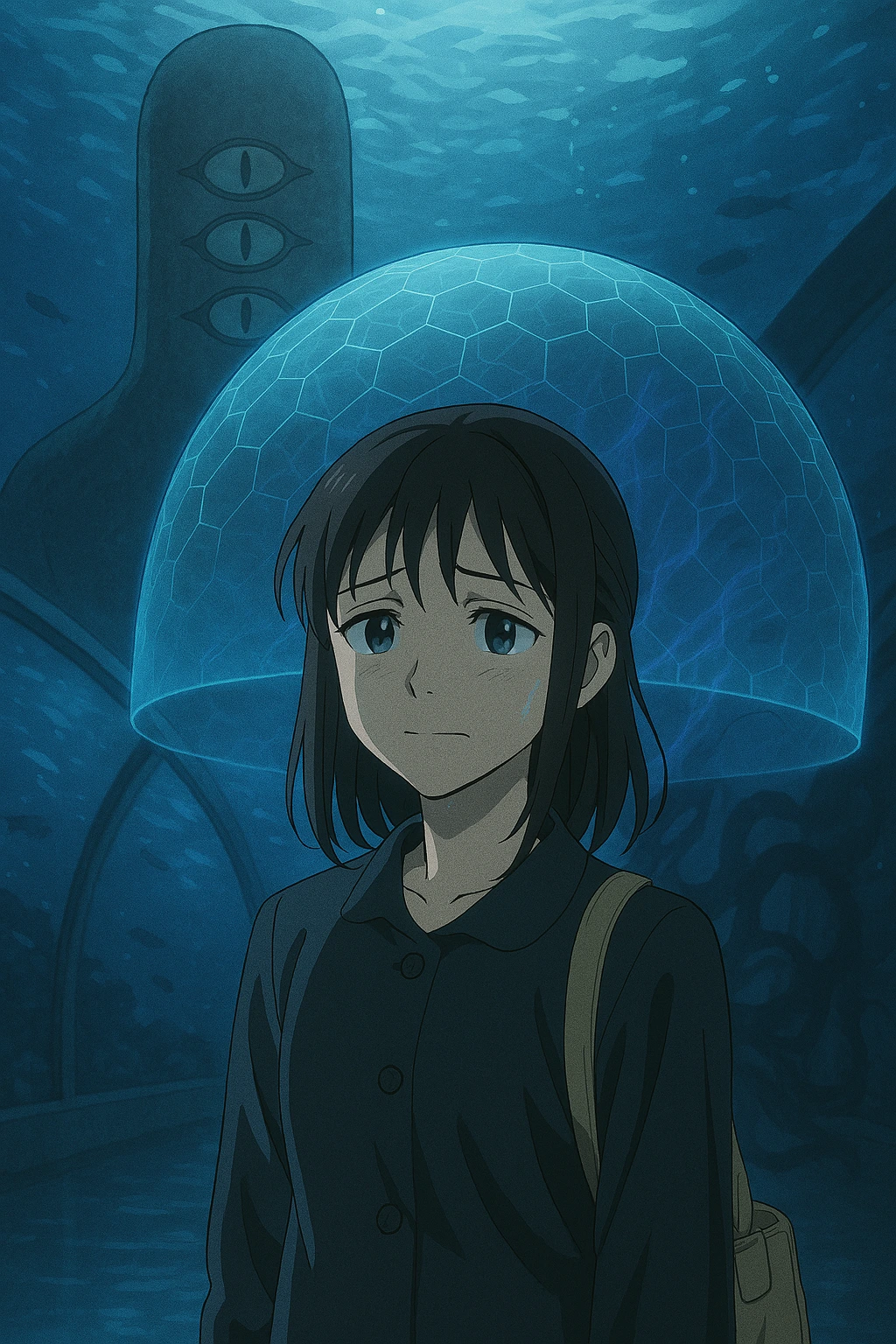
Riko was not just a plot device; she was a vibrant, living character who accepted her fate with a heartbreaking bravery. She believed she was special, that merging with Tengen was a holy duty. However, through her interactions with Gojo and Geto—who took her to the aquarium, let her go to school, and treated her like a human rather than a resource—she realized she wanted to live.
In the Tombs of the Star Corridor, just steps away from the merger site, she admitted she wanted to spend more time with everyone. Just as she chose to live, she was shot in the head by Toji Fushiguro.
The Breaking of Destiny
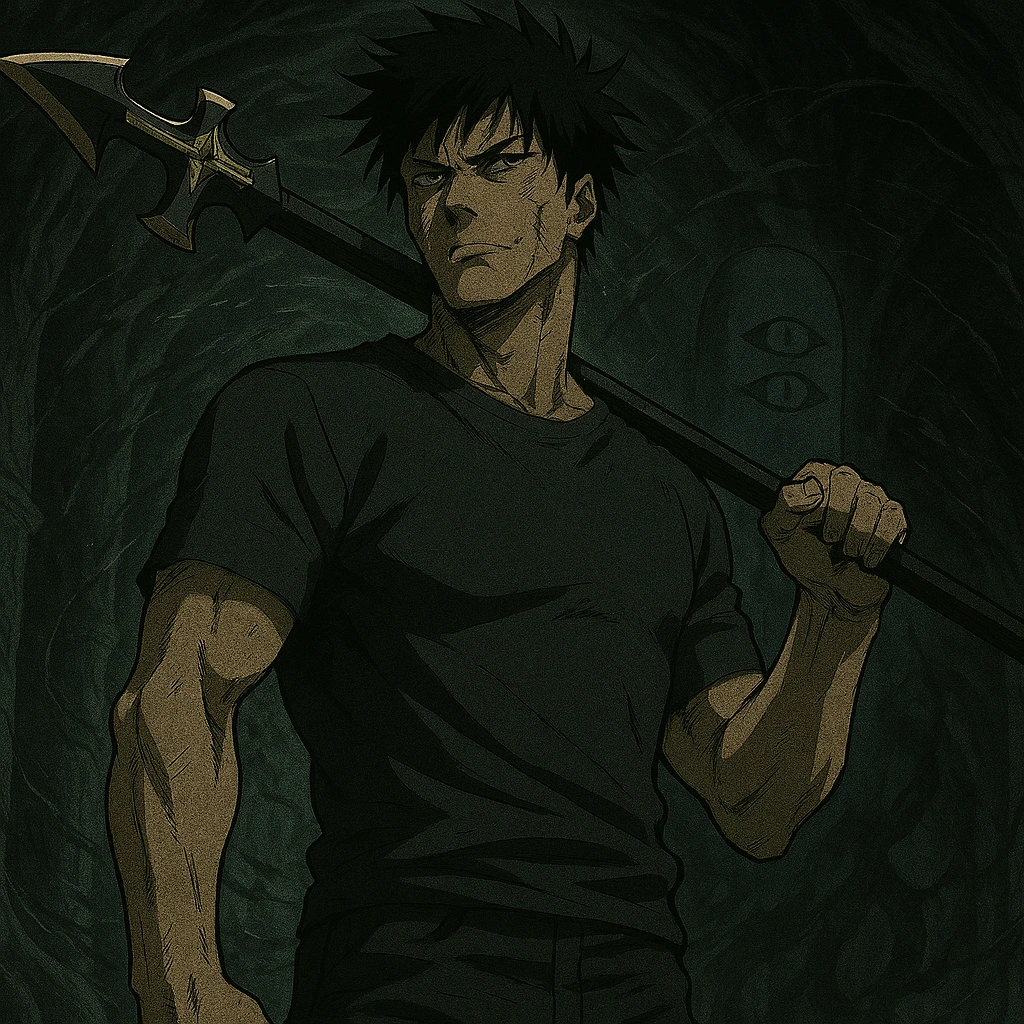
The death of Riko Amanai was not just a murder; it was the shattering of “Fate.” Kenjaku later explains that Tengen, the Star Plasma Vessel, and the Six Eyes (Gojo) are bound by the threads of fate. Every 500 years, they appear together to ensure the merger happens. Kenjaku had tried twice before to kill the Six Eyes or the Vessel to stop the merger, but fate always corrected itself—a new vessel would appear, or the merger would happen anyway.
Toji Fushiguro, the man with zero Cursed Energy, was the only one capable of breaking this chain because he existed outside the logic of Cursed Energy “Fate.” He was a glitch in the system.
By killing Riko, Toji forced Tengen to evolve. This single bullet arguably caused every disaster that followed:
- Geto’s Fall: Failing to protect Riko broke Suguru Geto, leading him down the path of genocide and eventually his body being taken by Kenjaku.
- Tengen’s Vulnerability: Tengen evolved into a spirit-like state, making the merger with humanity possible.
- The Culling Games: Kenjaku’s plan relies entirely on Tengen being in this evolved state.
Yuki Tsukumo’s Philosophy and the “Voice” of the Vessels
It is impossible to discuss the Vessels without mentioning Special Grade Sorcerer Yuki Tsukumo. Yuki despised the Star Plasma system. She was a former Vessel herself (or at least compatible), and she viewed the sacrifice of children as abhorrent.
When she finally meets Tengen in the current timeline, she asks a haunting question: “Can you hear the voices of the past vessels within you?” Tengen confirms that he can. The girls he has merged with are not simply erased; they exist within him, part of his collective consciousness. However, Tengen admits that now that he has evolved, the voices have quieted, merging into the background hum of his existence.
Yuki’s philosophy was to treat the cause, not the symptom. Tengen treats the symptom (hunting curses, putting up barriers). Yuki wanted to eradicate Cursed Energy entirely so that curses—and the need for Tengen—would disappear.
Her confrontation with Tengen in the Tombs of the Star Corridor highlights the moral bankruptcy of the Jujutsu higher-ups. They rely on an ancient, rotting system that feeds on children to maintain a status quo that is barely holding together.
The Battle of Strategy: Tengen vs. Kenjaku
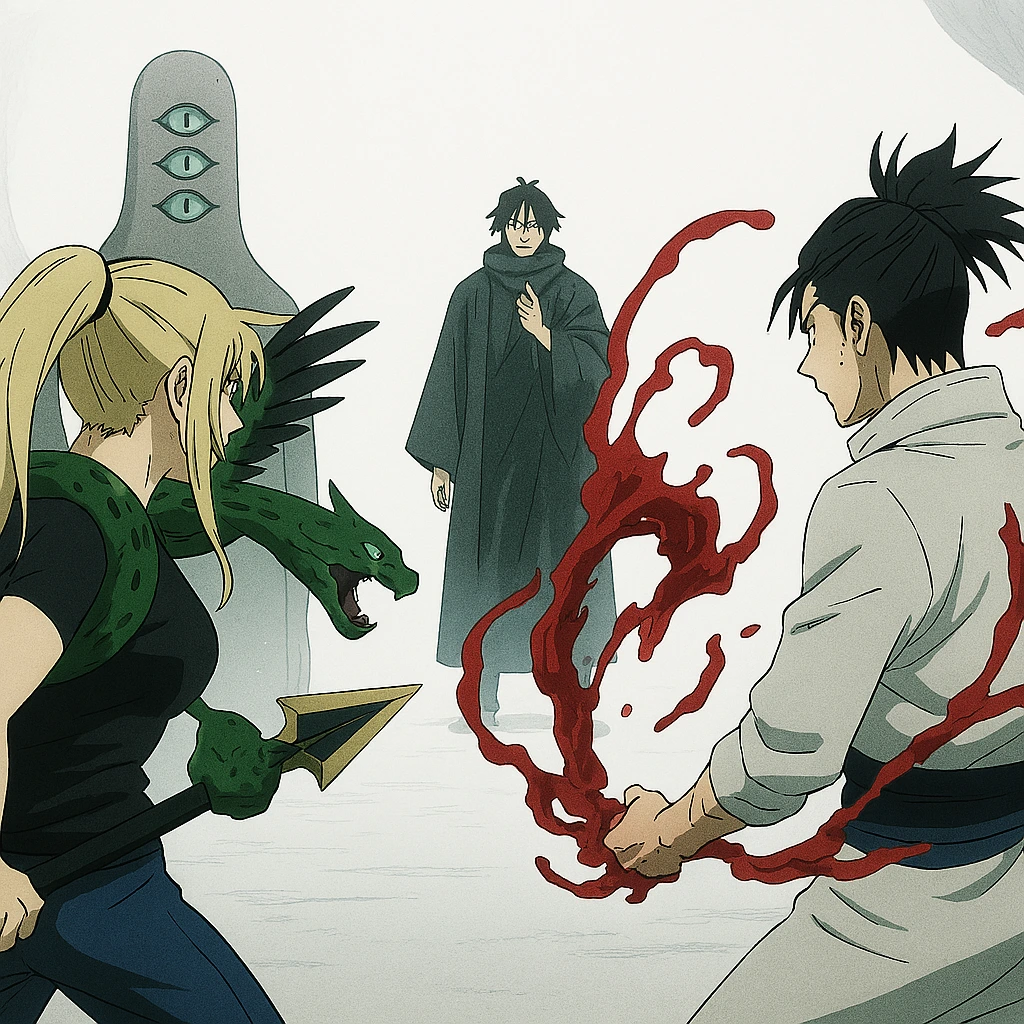
For most of the series, Tengen is a background element. However, during the Culling Games arc, Tengen becomes an active participant in the war against Kenjaku. This shift reveals Tengen’s tactical capabilities and, ultimately, his limitations.
The Guardian of the Back Gate
When Gojo was sealed in the Prison Realm, the heroes were desperate to free him. Tengen revealed that he possessed the “Back” of the Prison Realm—a secondary entrance to the sealing object. He had hidden it deep within his barrier to prevent Kenjaku from finding it. This reveals that Tengen was not entirely passive; he was making moves to counter Kenjaku, albeit defensively.
However, Tengen’s assistance came with a price: he demanded that Yuki Tsukumo and Choso stay behind as his bodyguards. He knew Kenjaku was coming for him.
The Tactical Failure
The battle that ensued in the Tombs of the Star Corridor (Yuki & Choso vs. Kenjaku) was overseen by Tengen. Tengen devised the strategy:
- Use the barrier to suppress Kenjaku’s domain.
- Force Kenjaku to burn out his technique.
- Have Yuki strike when he is vulnerable.
The plan failed because Tengen underestimated Kenjaku. Kenjaku didn’t use a closed barrier domain; he used an Open Barrier Domain (like Sukuna’s Malevolent Shrine). An open domain does not have a shell to strip away. Tengen, the master of barriers, was outplayed in his own field of expertise.
This failure highlights a critical theme in JJK: The Old Generation vs. The New. Tengen, despite having 1200 years of experience, was stagnant. He relied on conventional Jujutsu wisdom. Kenjaku, who had spent those 1200 years experimenting, killing, and evolving, had surpassed the “textbook” rules that Tengen lived by.
In the end, Tengen was captured. Kenjaku, utilizing Geto’s body, used Cursed Spirit Manipulation to absorb Tengen. The foundation of Jujutsu society was swallowed whole by the very evil it was meant to repel.
The Merger: The Ultimate Doomsday Scenario
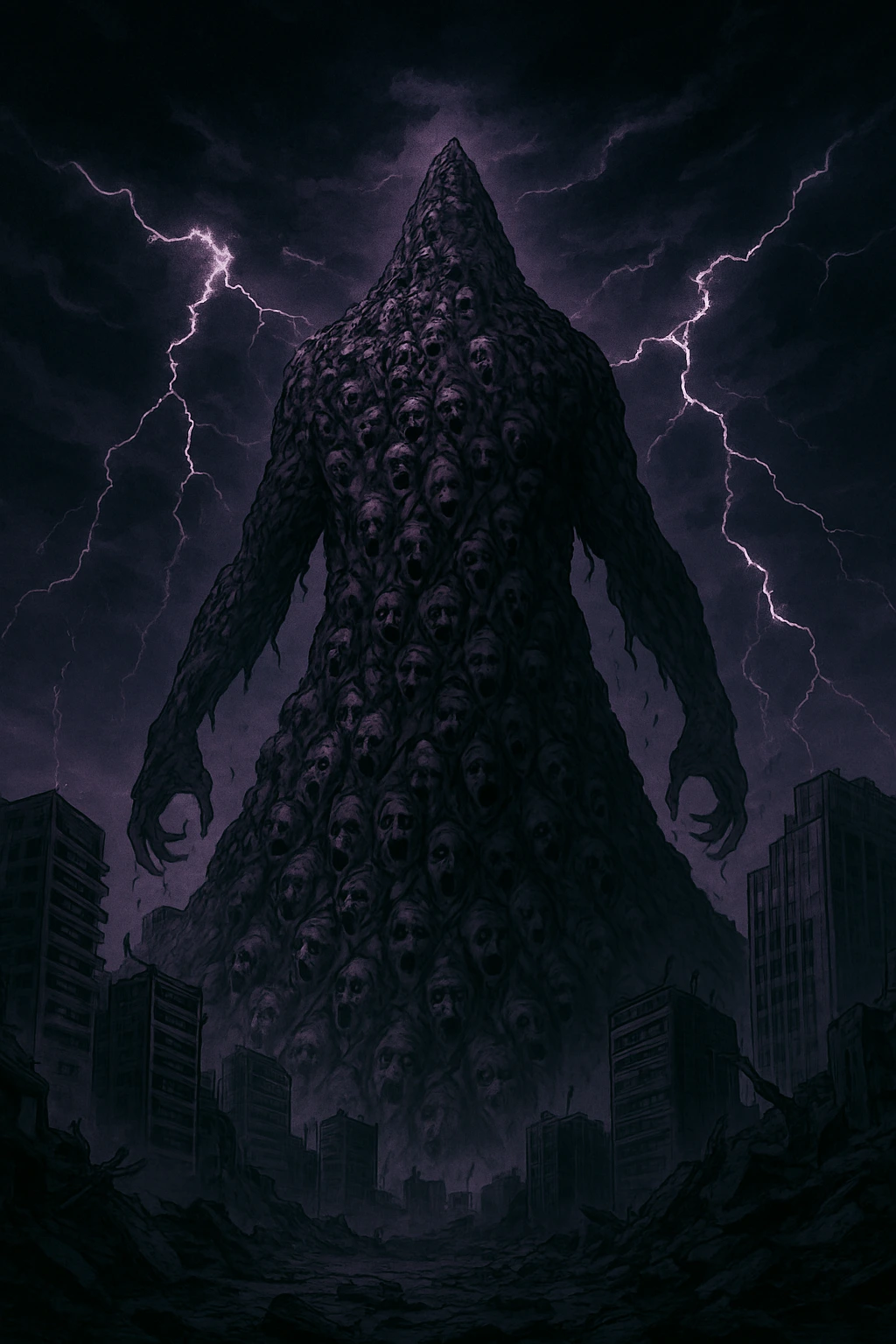
Everything we have discussed—Immortality, Barriers, Vessels—converges into the singular threat that drives the final saga of Jujutsu Kaisen: The Merger.
This is the endgame of the villain, Kenjaku.
Kenjaku’s Goal: The Evolution of Humanity
Kenjaku is a mad scientist. His goal is not world domination or destruction in the traditional sense. He wants to optimize Cursed Energy to its absolute limit to see “something he has never seen before.” He believes the current form of humanity and sorcery is stagnant. He calls this the “chaos that even I cannot control.”
His plan is to force a merger between Master Tengen and the entire population of Japan.
Why Tengen is the Key
Remember that Tengen has evolved. He is no longer just a sorcerer; he is “the world” itself. His soul is everywhere within his barriers. Because he is now more Cursed Spirit than human, his composition allows him to absorb and assimilate souls on a mass scale.
Usually, a merger requires a high-compatibility Star Plasma Vessel. However, because Tengen has evolved and expanded his ego boundaries, he can now technically merge with anyone. Or in Kenjaku’s case, everyone.
The Consequence: A Monster of Infinite Evil
If Kenjaku succeeds in forcing Tengen to merge with the 100+ million non-sorcerers in Japan, the result would not be a hive mind or a peaceful collective consciousness.
As Tengen explains to the protagonists, human souls are impure. If they merge with him without the filter of a Vessel, the impurities of 100 million people would congregate. The result would be a single, colossal Cursed Spirit.
- Imagine a Cursed Spirit with the negative energy of an entire nation.
- It would not have reason or morality. It would be a catastrophic entity of pure malice.
- If one person in that collective goes insane or feels rage, the entire collective feels it. There is no individual constraint.
This is visually and conceptually similar to the “Human Instrumentality Project” from Neon Genesis Evangelion, but stripped of its philosophical hope and replaced with pure biological horror. It is the end of humanity as a species and the birth of a chaotic god.
The Culling Games were essentially a ritual to prepare the “ingredients” (Cursed Energy) to activate this merger. Tengen, captured by Kenjaku, is forced to initiate the ritual, turning the protector of Japan into the executioner.
Conclusion: The Silent Watcher and the Price of Stagnation
Master Tengen is one of the most tragic and pivotal figures in Jujutsu Kaisen. He is often viewed by casual readers as a mere plot device, but he represents the stagnation of the Jujutsu world.
For 1,200 years, he sat in a dark basement, maintaining a system that required the sacrifice of young girls. He kept the lights on for Jujutsu society, ensuring that sorcerers could operate and regular humans could sleep soundly. He is the ultimate public servant, working a shift that never ends.
But his story is a cautionary tale about reliance on old systems. By refusing to change, by refusing to step out of his tomb and address the threats directly, he allowed the rot to fester. The “Foundation” of the world became unstable. He relied on “Fate” to solve his problems, assuming that a Six Eyes user would always appear to save him. But when Fate broke, he had no backup plan.
The irony is palpable: The entity dedicated to preserving humanity is now the vehicle for its extinction. The barriers that protected Japan are now the cage for the Culling Games. The immortality that kept order is now the fuel for chaos.
As the series hurtles toward its conclusion, the fate of Tengen is synonymous with the fate of the world. Even if the heroes defeat Sukuna and Kenjaku, the question remains: What happens to Tengen? Can the world return to how it was, or must the system of barriers and sacrifices be dismantled forever?
Now that we understand the metaphysical infrastructure of the world—the Barriers and the Immortal Master—we must look at the soldiers who fight within it. How does Jujutsu Society measure power within this system? What defines a Grade 1 Sorcerer from a Special Grade?