
In the grim, blood-soaked tapestry of Hajime Isayama’s Attack on Titan, no entity is as controversial, as structurally complex, or as thematically divisive as “The Global Alliance”(Global alliance in attack on titan)
Born in the ashes of the Yeagerist coup and forged in the quiet despair of a forest campfire, this ragtag group of former enemies represents the narrative’s final, agonizing scream: that talking is painful, but silence is fatal.
For years, fans have debated the morality of the Rumbling. But the true moral crucible of the series is not Eren Yeager’s apocalyptic march; it is the formation of the group trying to stop him. Are they the saviors of a world that despises them, or are they traitors who doomed their own homeland to future annihilation?
To understand the ending of Attack on Titan, one must dissect the Global Alliance—not just as a plot device, but as a philosophical argument that Isayama presents to the audience, daring us to take a side.
This is the complete analysis of the Global Alliance: their formation, their hypocrisy, their sacrifice, and their flawed, beautiful, tragic victory.
I. Introduction: Eating with the Enemy
The most tense battle in Attack on Titan does not involve thunder spears, hardening crystals, or lightning transformations. It takes place around a bubbling pot of stew in a quiet forest.
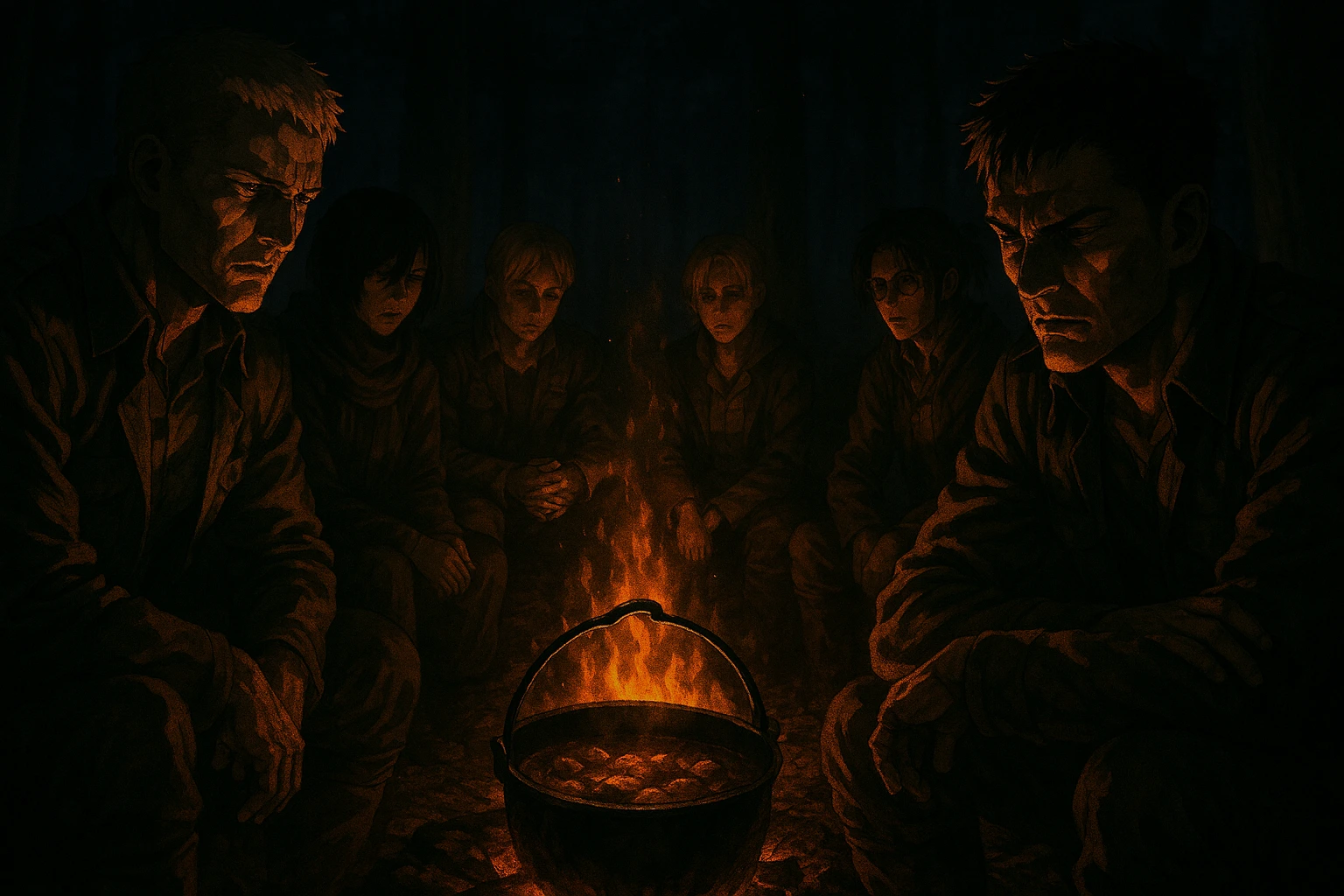
Chapter 127, “Night of the End,” opens with a scene that is almost domestic in its presentation but horrific in its context. We see Hange Zoë, the Commander of the Survey Corps, acting as a frantic mediator between two groups of people who have spent the last four years—and in some cases, centuries—killing each other.
On one side, the remnants of the Scouts: Jean Kirstein, Mikasa Ackerman, Armin Arlert, and Connie Springer. On the other, the Warriors of Marley: Reiner Braun, Annie Leonhart, Pieck Finger, Falco Grice, and Gabi Braun.
The sensory details of the scene emphasize the absurdity of their situation. The warmth of the fire contrasts with the cold reality of the looming apocalypse. The smell of the stew masks the scent of the blood that is metaphorically on everyone’s hands.
Isayama forces these characters to engage in the most basic human act—eating—while the ghost of Eren Yeager marches across the ocean to flatten civilization.
The thesis of the Global Alliance is established here: Unity is not pretty.
In most shonen anime, the “team-up” is a moment of hype. Rivals put aside their differences to fight a common foe, usually accompanied by swelling music and triumphant handshakes. Attack on Titan subverts this trope violently.
The formation of the Global Alliance is not triumphant; it is nauseating. It is filled with resentment, guilt, and the grinding friction of incompatible worldviews colliding.
Hange’s desperate attempt to forge this unity represents Isayama’s core message: communication is the only alternative to violence, but communication is incredibly difficult. It requires swallowing pride, acknowledging one’s own sins, and sitting dow
n with the monster who killed your friends. But we must ask the critical question: Was this unity realistic? Or was it desperate idealism in the face of extinction? Was Hange right to gather these broken soldiers to save a world that wanted them dead, or was Eren right to reject the table entirely?
II. The “Night of the End”: Airing the Sins
The “Night of the End” is not just a chapter title; it is a description of the psychological state of the Alliance. Before they could physically fight the Founding Titan, they had to survive the battlefield of their own history.
The catalyst for this confrontation was Yelena, a character often dismissed as a zealot, but who serves a crucial narrative function in this moment: she is the mirror.
Yelena’s Trial: The Hypocrisy of “Justice”
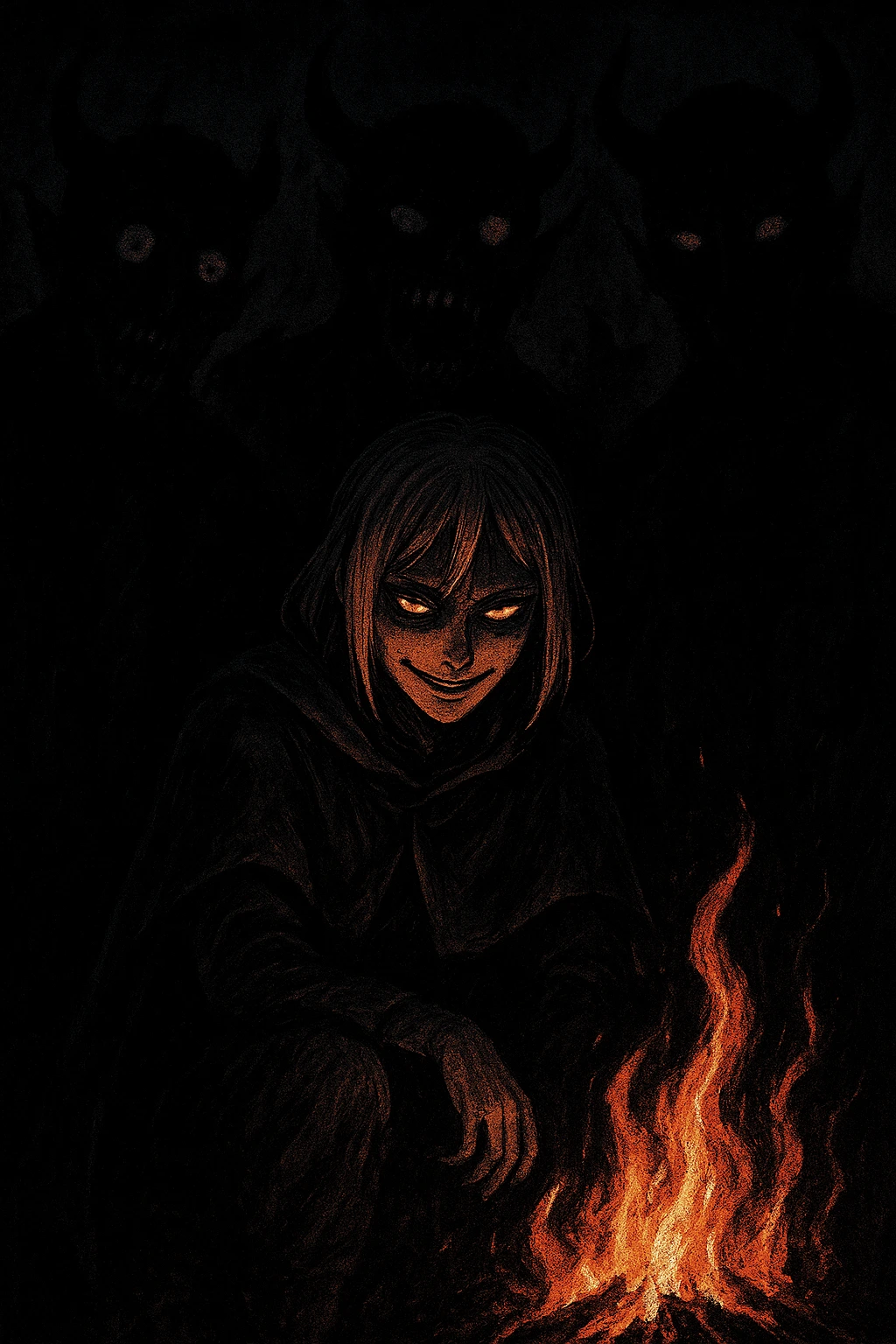
Yelena, bound and seemingly powerless, dominates the campfire conversation. She systematically dismantles the moral high ground of every person present. She reminds Jean of the deaths he caused in Liberio.
She reminds the Warriors of the walls they breached. She forces them to look at the uncomfortable truth: No one at that campfire is innocent.
This scene is essential because it strips the “heroism” away from the Alliance. If they had simply teamed up to “save the world” without this conversation, it would have felt unearned and hollow. By having Yelena air their sins, Isayama acknowledges the audience’s potential criticism.
The narrative admits that these people are murderers. They are not white knights riding to save the princess; they are sinners trying to stop the ultimate sin.
Yelena’s monologue exposes the fragility of their truce. They are not united by friendship; they are united by a shared culpability. They are all “devils” in someone’s story. By forcing them to confront this, the story moves from a black-and-white conflict of nations to a gray struggle of individuals.
Jean’s Rage: The Voice of the Common Man
Amidst the titans and supersoldiers, Jean Kirstein stands out as the most human element of the Alliance. Jean has always represented the “common man”—he is not a genius like Armin, a supersoldier like Mikasa, or a titan shifter like Reiner.
He is a normal person who just wants a comfortable life and a drink of good wine. This makes his arc in the forest the most compelling.
Jean is the only one who tempts the audience with the selfish option: Why not just stay on the island? Why not let Eren finish it? If Eren wins, Jean gets his comfortable life in the Interior. He gets to live. The struggle for Jean isn’t just physical; it’s the struggle against apathy.
When the truth about Marco’s death is finally revealed—that Reiner watched him die while Marco begged to talk—Jean’s explosion of rage is the audience’s catharsis. For years, we waited for the Scouts to learn the specific cruelty of Marco’s death.
Jean beating Reiner into the ground is not just an act of violence; it is an act of grief. It is the release of years of gaslighting and betrayal.
Crucially, Gabi Braun—the child soldier indoctrinated to hate Eldians—throws herself in the way. Gabi’s plea is the turning point. When she begs for help to save her family in Liberio, Jean sees the cycle of hatred staring him in the face.
He sees a child terrified of the same violence that terrified him in Trost. Jean’s decision to miss his aim, to stop beating Reiner, and eventually to join the Alliance the next morning, is the moment the Alliance truly forms. It wasn’t formed by Hange’s speech; it was formed by Jean’s mercy.
The Truce: A Ceasefire for Survival
The eventual truce that emerges from the forest is not based on forgiveness. Jean does not forgive Reiner. The Scouts do not forgive Annie for spinning a soldier like a yo-yo. The Warriors do not forgive the destruction of Liberio.
Instead, the truce is a pragmatic ceasefire based on a shared recognition of a greater horror. They realize that clinging to the past grudges is exactly what led to the Rumbling. If they cannot move past the “who started it” argument, they will all die.
The “Night of the End” proves that peace is not the absence of conflict; it is the management of conflict for a higher goal. They move from “killing each other” to “saving the world” not because they like each other, but because they finally understand that the world is bigger than their vendettas.
III. The “Traitor” Label: Abandoning Paradis?
This is the central controversy that split the Attack on Titan fandom in half. By stopping Eren, did the Alliance betray Paradis?
The Yeagerist Argument: Survival at Any Cost
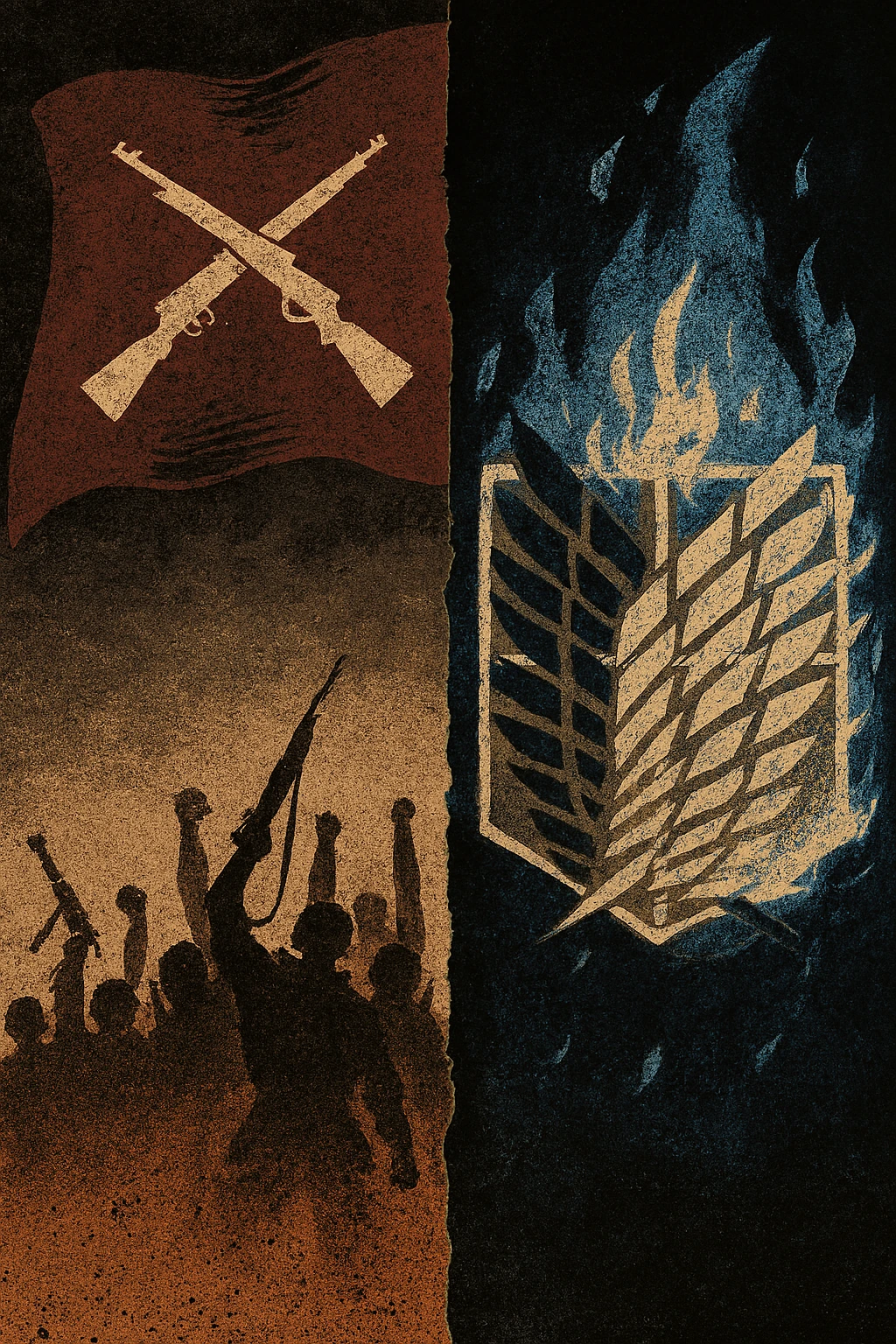
The Yeagerist perspective, championed by Floch Forster, is brutally simple: It is us or them. The world has declared war on Paradis. They have gathered a global fleet to scorch the island. Diplomacy has failed for 100 years. Therefore, the only way to ensure the survival of Eldians on Paradis is to remove the threat entirely.
From this perspective, the Alliance are undeniably traitors. They are actively working to save the very people who want to exterminate them. They are killing their own comrades (the Yeagerists at the port battle) to save the oppressors.
It is an argument rooted in extreme nationalism and survivalism. If the Alliance stops Eren, the world will eventually recover and retaliate. The extra pages of the manga, depicting the eventual bombing of Paradis centuries later, seem to validate the Yeagerist fear: Without the Rumbling, Paradis was doomed.
Hange’s Rebuttal: The Moral Absolute
Hange Zoë represents the counter-argument: Genocide is wrong.
It sounds simple, almost childishly naive in the face of complex geopolitics, but Hange’s stance is the moral anchor of the series. For Hange, there is no context that justifies the slaughter of billions of innocent people, plants, and animals. The “freedom” bought by trampling every other living thing on earth is not freedom; it is a grotesque mockery of it.
Hange argues that the Survey Corps never fought for “Eldia” or “Paradis” alone. Their creed was “Dedicate your hearts to humanity.” The Wings of Freedom represented the curiosity to understand the unknown, not the desire to destroy it. To accept a safety bought with the blood of the entire outside world would be to spit on the graves of every Scout who died dreaming of a world beyond the walls.
For Hange, being a “traitor” to the state is preferable to being a monster to humanity. It is a rejection of the “us vs. them” binary. Hange chooses to die on the hill of moral absolutism rather than live in the valley of pragmatic genocide.
Connie’s Arc: The Confusion of the Soldier
Connie Springer serves as the bridge between these two ideologies. His subplot involving his titanized mother and Falco is critical. Connie initially wants to feed Falco to his mom to bring her back. It is a selfish, understandable, human desire. He wants his family back.
But when stopped by Armin, Connie realizes the horror of his own logic. To save his mother, he has to murder a child. To save Paradis, Eren has to murder the world. Connie’s decision to let go of his mother’s restoration is the micro-version of the Alliance’s decision to stop the Rumbling.
He chooses the hard right over the easy wrong. He accepts loss to prevent further sin. Connie proves that the “Traitor” label is a matter of perspective; to the Yeagerists, he is a traitor. To the innocent civilians of the world, he is the only soldier doing his duty.
IV. Comparison Table: The Blood on Their Hands
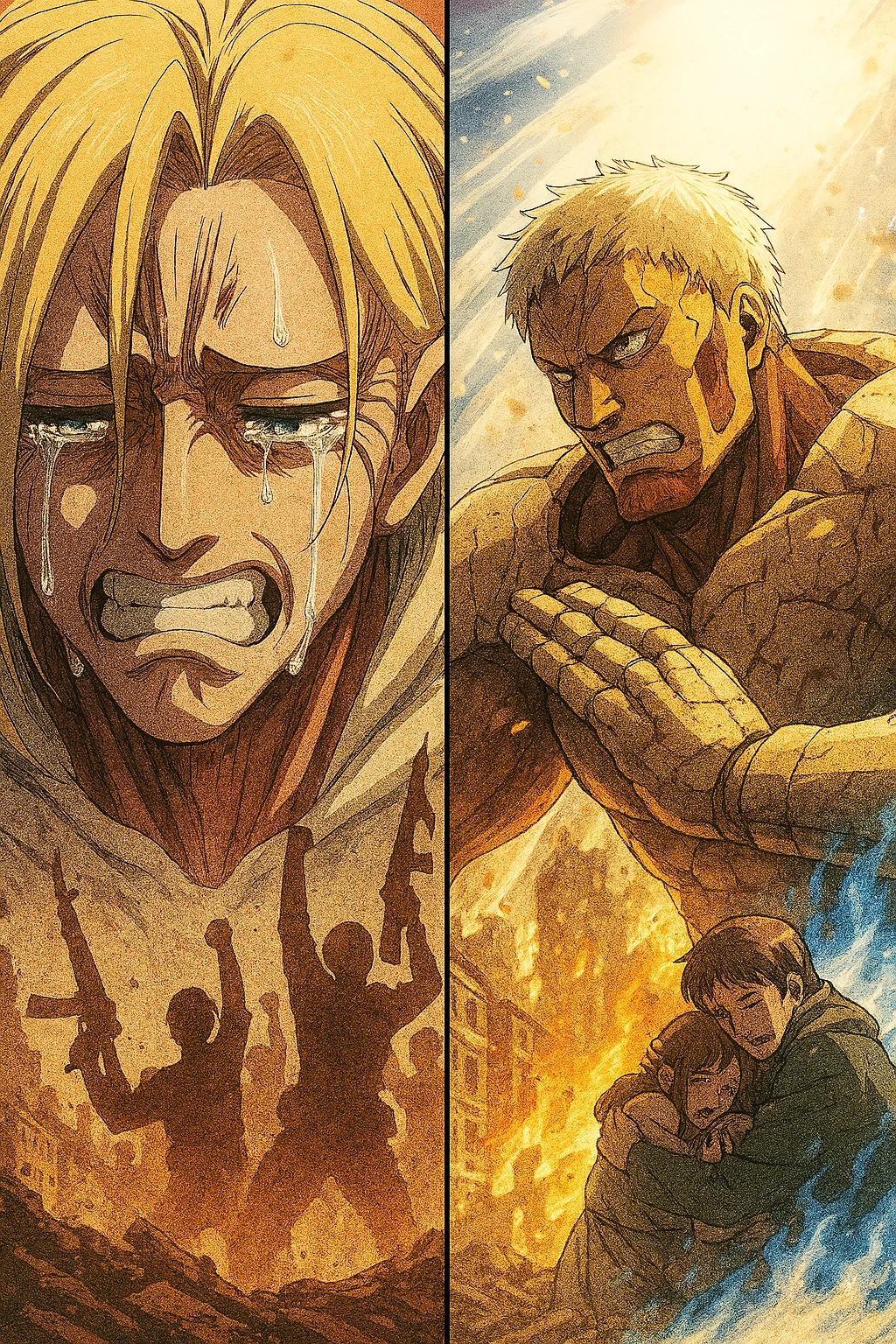
To fully understand the “Night of the End,” we must visualize the moral ledger. Yelena’s point was that everyone is stained. Below is a breakdown of the key Alliance members, contrasting their worst crimes with their redeeming actions in the final arc.
| Character | The “Devil” Within (Worst Crimes) | The “Savior” Within (Redeeming Acts) |
| Reiner Braun | Breached Wall Maria, directly causing the deaths of 20% of Paradis’ population. Orchestrated the death of Marco. | Shielded the Alliance from the Worm (Hallucigenia). Held the line against the endless horde of past Titans to buy time for Armin and Mikasa. |
| Annie Leonhart | Slaughtered Squad Levi brutally. Killed civilians in Stohess District. Treated human life as disposable obstacles. | Returned to the fight after securing safety. Assisted in holding off the Yeagerists. Played a key role in the final assault on the Founding Titan. |
| Armin Arlert | Nuked the Liberio port, killing thousands of civilians and naval officers instantly. Orchestrated the deceptive coup against his former comrades. | Talked Zeke Yeager out of his nihilism in the Paths. Commanded the final battle. Saved humanity by promoting dialogue over destruction. |
| Jean Kirstein | Led the assault on Liberio (alongside the others). Killed fellow Scouts (Yeagerists) during the port battle to secure the ship. | Refused the easy life to save the world. Functioned as the tactical leader of the Alliance. Saved Reiner (his enemy) multiple times. |
| Hange Zoë | Tortured Sannes (MP). Complicit in the Liberio raid. Killed former subordinates (Yeagerists) to secure the flying boat. | Sacrificed their life to slow down the Wall Titans. Kept the Alliance together when it was fracturing. Upheld the true spirit of the Survey Corps. |
| Mikasa Ackerman | Slaughtered Yeagerists at the port with brutal efficiency. Complicit in the Liberio raid. | Killed Eren Yeager, the person she loved most, to end the Titan curse. Protected the Alliance throughout the final battle. |
| Connie Springer | Killed fellow Scouts (Samuel and Daz) at the port, betraying his former friends to save the world. | Saved Falco from himself. Fought on the front lines against the ancient Titans. |
| Gabi Braun | Killed Sasha Braus. Killed Lobov. Indoctrinated to kill Eldians. | Saved Kaya (Sasha’s sister). Shot the Okapi Titan to save Armin. Broke the cycle of hatred by acknowledging the “devils” were just people. |
| Pieck Finger | Assisted in the gassing of Ragako village (turning Connie’s family). Main transport for Zeke’s slaughter of the Scouts. | Vital in the port battle. Delivered the explosives to Eren’s neck. Fought until her Titan body was literally torn apart. |
This table visualizes the complexity. There are no clean hands. The Alliance is not a gathering of saints; it is a coalition of penitent sinners trying to balance the ledger before the end.
V. The Wings of Freedom: Hange Zoë’s Final Flight
No analysis of the Alliance is complete without examining the death of its leader, Hange Zoë. This moment is arguably the last spark of the “old” Attack on Titan spirit—the spirit of the pre-timeskip Survey Corps.
The Sacrifice
By the time the Alliance reaches Odiha, the situation is dire. The Wall Titans are imminent. Floch, in his dying breath, damages the fuel tank of the flying boat. They need time to weld it, but the Rumbling is moments away.
Hange’s decision to stay behind is not just tactical; it is thematic closure. Since assuming command from Erwin Smith, Hange struggled with feelings of inadequacy. Hange was a scientist, an explorer, not a ruthless war general like Erwin. The burden of leadership in a time of political intrigue weighed heavily on a soul that just wanted to study Titans.
However, in this final moment, Hange embodies the Survey Corps more than anyone. Hange names Armin the 15th Commander—passing the torch—and then turns to face the apocalypse alone.
The visual of Hange fighting the Colossal Titans is tragic but glorious. We see Hange maneuvering with the ODM gear, taking down gargantuan enemies that emit heat hot enough to burn flesh instantly. Hange is literally burning alive, cape catching fire, skin blistering, yet Hange’s eyes are wide with that familiar, manic curiosity.
“Titans really are incredible,” Hange marvels, even while dying. It is a callback to the character’s introduction—a pure obsession with the world, untainted by hate.
The Afterlife and The Wings of Freedom
Hange’s death serves a specific purpose: it validates the ideology of the Alliance. Hange dies not for a country, but for the concept of hope. As Hange falls, crushed by the heat and the footsteps of the Titans, the scene transitions to a “wake up.”
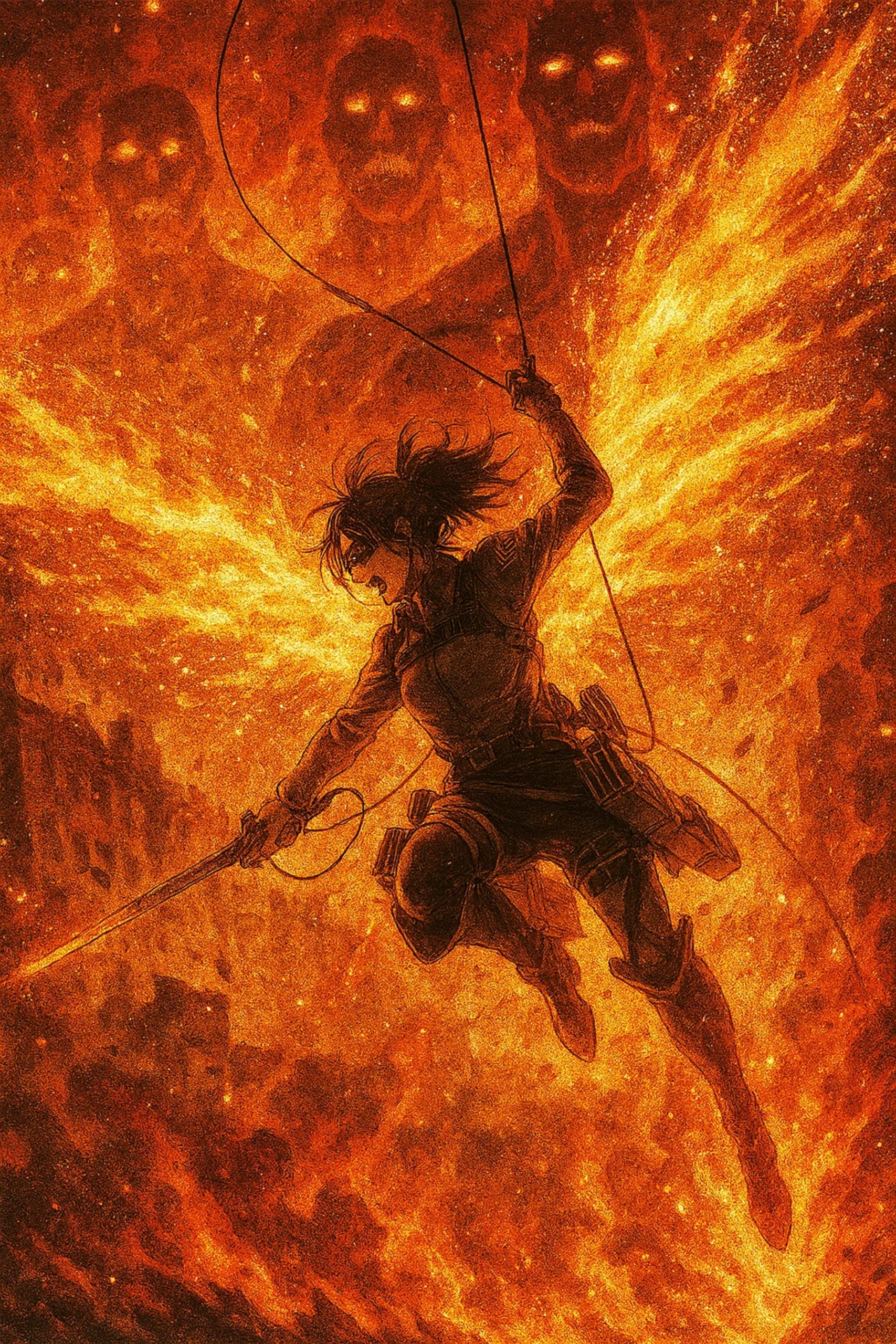
Hange is lifted from the ground by Erwin Smith. Around them are Moblit, Mike, Sasha, and the countless other fallen Scouts. This “force ghost” moment is controversial to some who prefer a grounded reality, but narratively, it answers the question Hange posed earlier: “Is everyone watching?”
Yes, they were. The hallucination (or afterlife) confirms that Hange’s actions aligned with the spirit of the fallen comrades. They didn’t die so that Eldia could become a fascist empire; they died for the betterment of humanity.
Hange reporting, “Being commander was exhausting,” and Erwin replying, “You did well,” provides the emotional closure the Alliance arc needed. It frames their “betrayal” of Paradis as loyalty to the fallen.
Magath and Shadis: The Old Guard Bows Out
Parallel to Hange, we have the sacrifice of Theo Magath and Keith Shadis. These two men were the trainers of the child soldiers on both sides. They were the perpetrators of the system that created Eren, Reiner, and the cycle of war.
Their decision to blow themselves up in the cruiser to protect the Alliance’s escape is symbolic. The “Old Generation”—the ones who taught hate, who militarized children—must die so that the “New Generation” (the Alliance) can cooperate. Magath apologizes to the Scouts.
Shadis acknowledges his students have surpassed him. Their death clears the board of the old prejudices, leaving the fate of the world in the hands of the young.
VI. The Battle of Heaven and Earth: Pragmatism vs. Plot Armor
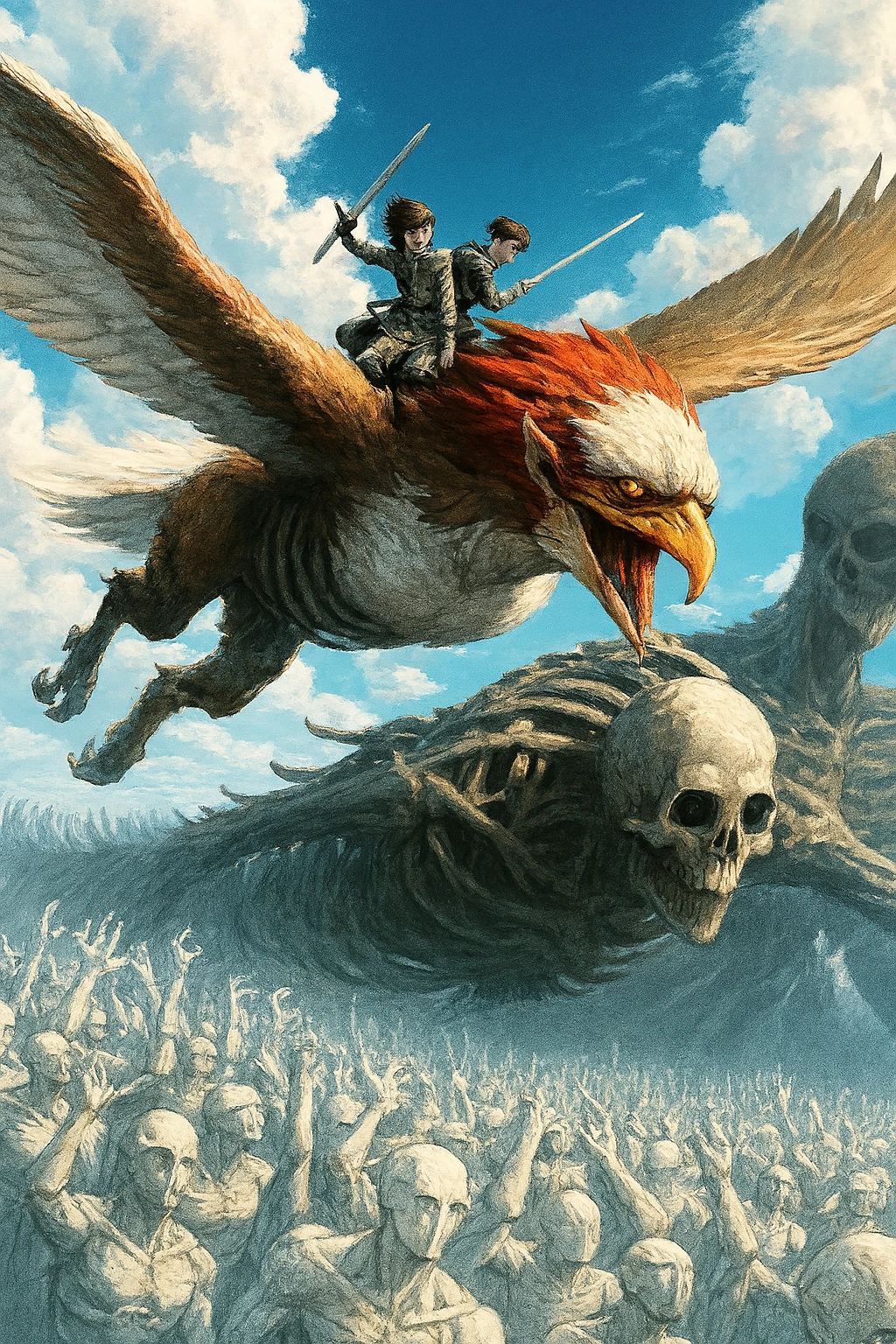
The final confrontation on the back of Eren’s Founding Titan—often called the “Battle of Heaven and Earth”—is where the Alliance faces the most criticism regarding realism and “plot armor.”
The Mechanics of the Fight
The Alliance drops from the flying boat onto a literal skeletal ribcage suspended in the sky. They are immediately swarmed by hundreds of “War Hammer” constructs—copies of the Nine Titans from throughout history.
Critics often point out the improbability of survival here. How can Mikasa, Jean, and Connie (humans with swords) survive against an army of Titan shifters when seasoned veterans died against mindless titans in Season 1? The Yeagerist critique is that the story bends logic to allow the Alliance to win.
However, there are explanations. These ancient Titans are mindless husks, not intelligent shifters. The Alliance members are the absolute elite, survivors of hell who have mastered ODM gear to a level previously thought impossible. Furthermore, they are fighting on the Titan, a terrain that favors ODM mobility.
But the real “turn” of the battle comes from Falco Grice. Falco’s Jaw Titan manifesting wings and becoming a bird is a major point of contention. Is it a deus ex machina? Perhaps. But it was foreshadowed by Falco’s delirious rambling about “flying with swords” in his introduction and the Beast Titan spinal fluid he ingested.
Falco represents the “Wings of Freedom” literally. He is the first Titan to fly, breaking the shackles of the earth-bound hatred.
Violence vs. Understanding: Levi and Armin
The climax involves two distinct victories: one of violence and one of understanding.
Levi Ackerman fulfills his promise to Erwin by decapitating Zeke Yeager. It is a grim, bloody act. Zeke, having realized the beauty of life through his conversation with Armin, offers himself up to stop the Rumbling. Levi’s victory is the closure of the old soldier’s duty.
But the true victory belongs to Armin. While the physical battle rages, Armin fights a metaphysical battle in The Paths. He doesn’t defeat Zeke with force; he defeats Zeke’s nihilism with philosophy. He uses a leaf—a symbol of the small, precious moments in life (running up a hill, throwing a ball)—to convince Zeke that life is worth living even if it is cruel. This is the ultimate vindication of the Alliance’s ideology.
They win not just because they have strong soldiers (Levi/Mikasa), but because they have the capacity to understand and connect (Armin).
If the Alliance had simply blown up Eren without this conversation, the ending would have failed Isayama’s thesis. The violence (Levi/Mikasa) was necessary to create the opening, but the dialogue (Armin) was necessary to effect the change.
VII. Conclusion: A Flawed Peace
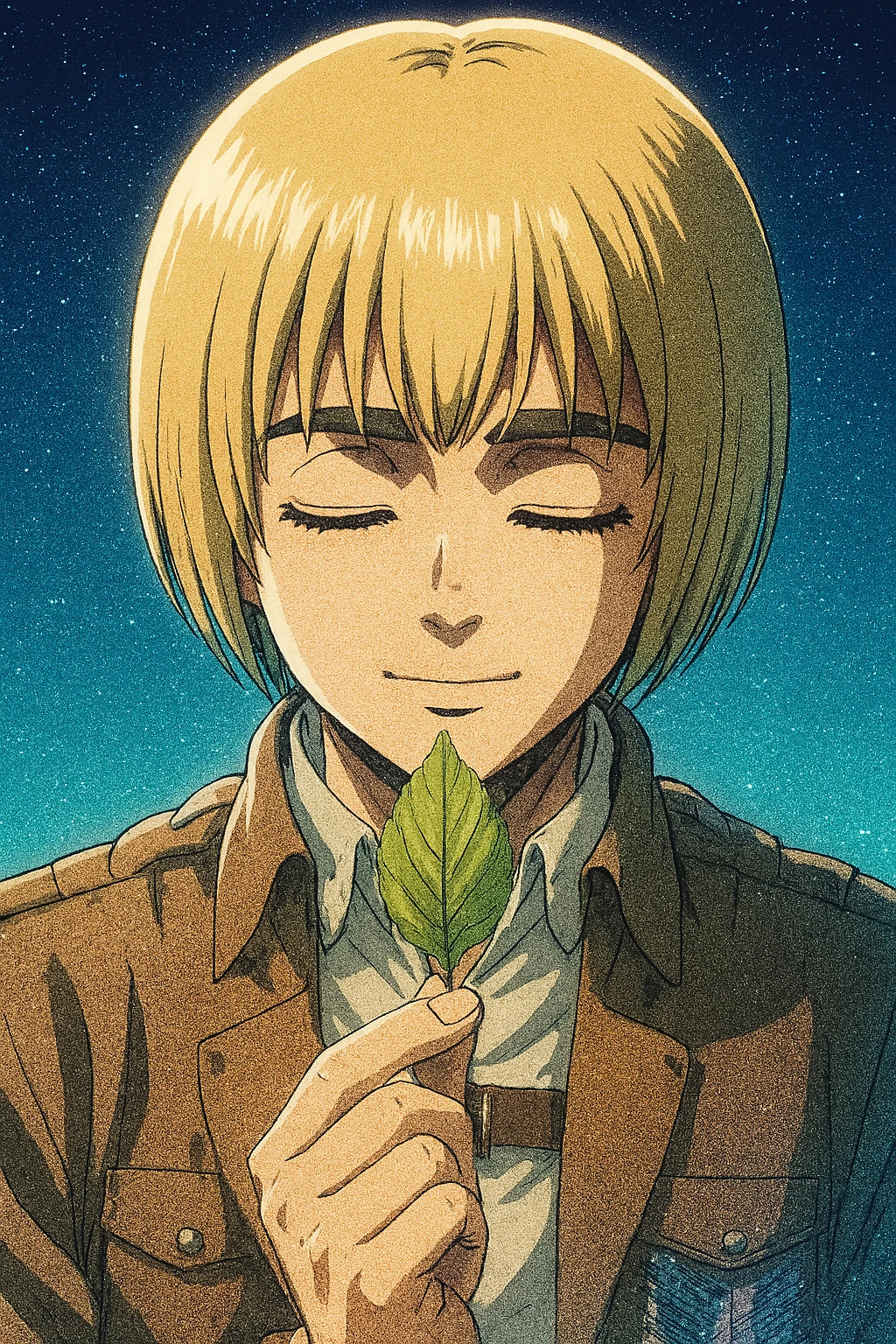
The Global Alliance succeeded. They stopped the Rumbling at 80%. They saved the remnants of humanity beyond the walls. But was it worth it?
The ending of Attack on Titan is notoriously bittersweet. The Alliance members become peace ambassadors, sailing back to Paradis to negotiate with the Yeagerists. They are heroes to the world, but traitors to their home. They live long lives, and Mikasa dies peacefully of old age.
However, the extra pages show the grim reality. Decades, perhaps centuries later, Shiganshina is firebombed into oblivion. War returns. The cycle continues.
Does this mean the Alliance failed? Does this prove Floch was right?
No. To interpret the destruction of Paradis as the Alliance’s failure is to misunderstand the story’s scope. Isayama never promised an eternal utopia. The Alliance proved that enemies can come together.
They proved that for a brief, shining moment, humanity could look past its differences to save itself. They bought peace for their lifetime and likely several generations after. In the world of Attack on Titan, that is a miracle.
The Alliance was a temporary bridge over a river of blood. Eventually, the bridge collapsed, and the river rose again. But the fact that they built it at all—that Hange died for it, that Jean fought for it, that Gabi learned from it—matters. They were not the saviors of humanity forever, nor were they merely traitors to a state. They were the embodiment of the struggle against our own worst nature.
They showed us that while we may be destined to fight, we are also free to choose not to. Even if that choice only lasts for a moment. Even if we are just eating stew in a forest before the end of the world.
Call to Action: The debate will likely never truly end. Do you view the Alliance as the moral heroes of the story, or do you believe their idealism doomed their people? Did Hange make the right call, or was Erwin’s ruthless pragmatism missed? Share your thoughts and vote in the comments below.